Showing posts with label horses. Show all posts

Friday, November 18, 2022

Short Book Reviews: A Fabled Journey to the East, With Horses

 All the Horses of Iceland, by Sarah Tolmie (Tordotcom)
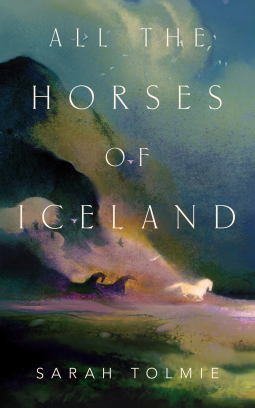

In a long-ago time, a Norse trader embarks upon an expedition to Central Asia in search of riches. He hooks up with an experienced Jewish merchant as they travel through Khazaria to the steppes of Mongolia, through war-ravaged territory and vast, open lands. He encounters new peoples and their magic, bringing the wisdom of his people and learning much more. When he returns to his home in Iceland many years later with a herd of tough steppe horses, led by a white mare without a name that sometimes only he can see, he is a changed man.

The best thing about this short novel is the wonderful authorial voice. Tolmie conveys both familiar and unfamiliar customs and assumptions without modern exposition. That is, Eyvind remarks on events from the context of his own culture and understanding of others, not from a modern narrator’s viewpoint. The effect is to immerse us into a world view informed by his open-mindedness. He takes the customs and teachings of the people he encounters on their own terms, with an occasional dry and witty comment. He’s incredibly generous, even when he disagrees. His open-mindedness evokes an open landscape, both of thought and of physical distance. It’s very deftly done. While there is plenty of adventure to be had, for me the heart of the story is very much the exploration of a vivid world only hinted at in history books.


Monday, June 8, 2020

Horses in The Seven-Petaled Shield


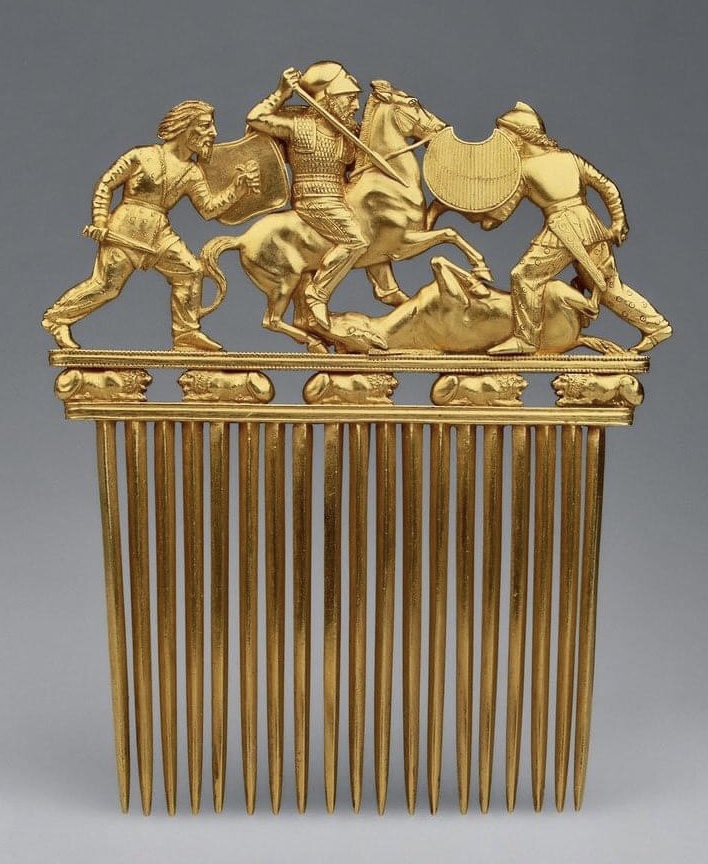
Scythian gold comb


The stories that gave rise to The Seven-Petaled Shield began with my love of horses and a special exhibit at the Natural History Museum of Los Angeles County of the art of the nomads of the Eurasian steppe. I marveled at the beautiful gold artifacts of the Scythians, depicting horses, elk, and snow leopards, and the lives and adventures of these people. The Greek historian Herodotus described the Scythians as “invincible and inaccessible,” and Thucydides asserted, “there is none which can make a stand against the Scythians if they all act in concert.” This world, its people, and its marvelous horses practically begged for stories to be written about them.

The Scythians were only one of many nomadic horse-faring peoples who roamed the Central Asian steppe from the beginning of the first millennium before the Common Era into the 20th Century. Sarmatians, Cimmerians, Massagetae, Alani, and many others were followed by such groups as the Hun, Kazars, Uzbeks, Bulgars, and Magyars. Although these peoples differed in culture, language, religion, and place of origin, they shared the characteristics of nomadic horse folk. They were highly mobile, superb archers, and their survival depended on their horses.

Tuesday, October 2, 2018

NORTHLIGHT on sale, this week only!


 October 2-8, 2018, Nortlight in multi-format ebook edition from Book View Cafe for only $1.50.

She’s a Ranger, a wild and savvy knife-fighter, determined to get help in finding her partner who’s lost on the treacherous northern border. He’s a scholar who sees visions, eager to escape the confines of city life and the shadow of his charismatic mother. With the assassination of a beloved leader and the city in turmoil, the two have only each other to turn to. What begins as a rescue mission turns deadly as together they unravel the secret that lies beneath Laurea’s idyllic surface.

REVIEWS
“A beautifully constructed fantasy with characters who grow and mature before the reader’s eyes and who are engagingly human while being fantastically heroic. Her writing flows and the point of view switches are interesting and exciting. This book is a keeper.” — Rickey Mallory, Affair de Coeur
“A style and manner reminiscent of McCaffrey’s Crystal Singer series.” — The Bookwatch
“An unusual saga that starts slowly but builds to a startling climax.” — Sherry S. Hoy, Kliatt
“Solid characters and a well-designed world make for good reading.” — Philadelphia Press
“The plot moves briskly from crisis in Laureal to capture by the Norther barbarians to discovery of the true meaning of the Northlight of the title, with ample foreshadowing from the mysterious spooky something in the air of the frontier. And the culmination quite satisfactorily evokes the sense of wonder.” –Tom Easton, Analog

Tuesday, October 17, 2017

Horse Fodder and Other Incredibly Cool Science Stuff

Grazing horses on better pastures

Annual grasses offer options during summer slump


Sudangrass and sorghum-sudangrass showed the greatest yields and regrew the most after grazing. Siberian millet was the lowest yielding grass. Horses most preferred the annual cool-season ryegrass, but among the warm-season grasses, they highly preferred teff and sudangrass. All of the grasses were found to supply adequate nutrition for horses. 


Citrus fruit peel: Potential alternative to mosquito control discovered


The essential oils were extracted in large amounts from the peel of a fruit similar to an orange, which is available throughout many countries in the world. With such ease of access and productions of the oils, it could potentially be used in areas which have little or no access to an alternative.
Believed to be the first ever example of such an experiment, it was found that the essentials oils were highly effective in mosquitocidal activity on the larvae, leading researchers to conclude it could be used as an eco-friendly alternative in mosquitoes control programs.


Bizarre Dwarf Planet Haumea Has Rings


"We started to see something weird in the light curve," Santos Sanz said. The light dimmed just before and after Haumea passed in front of the star, as if something else were obscuring it. "I remember that José Luis, from the first [moments], said, 'OK, this could be a ring,'" Santos Sanz said. Months of scrutiny bore out the scientists' initial suspicions: The results suggest that Haumea's equator is encircled by a 43-mile-wide (70 km) ring of debris located about 620 miles (1,000 km) from the dwarf planet's surface.


Ancient Mars Likely Had Deep-Sea Hydrothermal Vents


"Ancient, deep-water hydrothermal deposits in Eridania basin represent a new category of astrobiological target on Mars," researchers said in the statement. "Eridania seafloor deposits are not only of interest for Mars exploration, they represent a window into early Earth."

Friday, May 13, 2016

Become a Literary Patron (and Support a Lipizzan Horse!)

Pooka hug
I am constantly heartened by the community of readers/writers/horse-lovers and the many ways we support one another. Now one of our own -- a true treasure of our field -- needs our help. Judith Tarr is an icon of historical fantasy; she's also written other sorts of fantasy and even some very nifty space opera. She's inspired a generation of new writers. In addition, she breeds and trains Lipizzan horses ("dancing white horses")
-- check them out
here. And now she needs our help.  See her letter below.

What you can do:

  • Pledge a few dollars a month through Judy's Patreon
  • Sponsor a horse (see below) in full or part
  • Buy her books. If you have an ereader, buy them from Book View Cafe, which gives authors a whopping 95%. You'll find a wonderful range of books, including the essential guide "Writing Horses"
  • Post reviews of her books on sites like Amazon, Barnes & Noble, and GoodReads
  • Tell your friends! (Maybe get together to sponsor a horse?)
  • If you're a writer, especially a newer writer, consider engaging her services as a mentor or editor
  • Boost this signal!


From Judith Tarr: May 3, 2016: I'm continuing the editing and Horse Camp sale, and the Patreon page for new fiction is ongoing--many thanks to those who have joined the adventure so far.

Those who know me well know that when I break down and offer a sale, it's because I've run out of options. The past few years have been increasingly difficult, and last year was brutal. This year has been, emotionally, much less awful--and I have my writing mojo back. But in all other ways it's been worse than any year before it.

Right now I do not know how I'm going to feed the horses for the rest of the month. I have managed to scrape out enough to pay for the last load of hay (if that late check finally gets here), but once it's eaten, which it will be in about ten days, I don't know what I'm going to do. The farm will be gone by midsummer unless I find a steady source of sufficient income. I've been hustling like a hustling thing but so far with minimal results.

The market does not want either me or the horses. The horses are all old and therefore retired and unsalable, or else would require thousands of dollars' worth of training and show fees to have any sale value. No one can take them. The market is saturated with unwanted horses and the rescues are overloaded. I am over 60, hearing impaired (ergo, unable to use the phone), and with chronic fatigue syndrome which makes office or minimum-wage work difficult to impossible. And minimum wage would not support the animals, let alone me. All my income streams from backlist books, editing, writing, etc. have shrunk to a trickle or dried up. No one has booked a Camp in over a year.

I have had a few small things come through, but as with everything else, they've fallen short or failed to produce. I continue to push, and with the fiction writing regaining its old fluidity, I may manage to make something happen there. I've been urged to try an Indiegogo for a short novel, and I am closing in on that. (Indiegogo, unlike Kickstarter, offers an option that pays even if the goal is not met. The goal would be enough to cover mortgage, horses, and utilities for a month.) Since for the first time in my life I'm able to write more than one project at a time, that means I can continue to meet my obligation to backers of last November's Kickstarter for a science-fiction novel, and also write the novella (and short stories, too).

Thursday, May 21, 2015

[links] Fishing With Horses and other cool links

Fishing With Horses:  There are only about 11 horse fishermen in the area of Oostduienkerke but the two men I have photographed are the only ones who actually drag for the shrimp for part of their income the rest just do it for tourism of the town. I am not sure how much longer this old tradition will stay alive in this actual form but I am glad to have a chance to photograph these amazing draft horses and the men that work with them. The horses are so relaxed and I realized after going into the sea my self how much the waves have so much force and the sand shifts under you feet as you sink slowly into the wet sand. I think for these horses it is such a unnatural thing for them to do, but you can see that they have total trust that their riders will guide them and that is what true horsemanship really is, working with a trusted partner to get the required job done easily.Before mules were used for the job but because of the weight of the larger nets the Brabant draft horse is now used because of their tremendous strength and easy going attitudes. They could not have picked a better breed.


The Evolution of Snakes: “We infer that the most recent common ancestor of all snakes was a nocturnal, stealth-hunting predator targeting relatively large prey, and most likely would have lived in forested ecosystems in the Southern Hemisphere,” said Dr Allison Hsiang of Yale University, lead author on the study.


Science Fiction Fodder: Ether-Based "DNA":In the search for life beyond Earth, scientists have justifiably focused on water because all biology as we know it requires this fluid. A wild card, however, is whether alternative liquids can also suffice as life-enablers. For example, Saturn's frigid moon Titan is awash in inky seas of the hydrocarbon methane. Here on warm, watery Earth, the molecules DNA and RNA serve as the blueprints of life, containing creatures' genetic instruction manuals. An immense family of proteins carries out these instructions. A new study proposes that molecules called ethers, not used in any genetic molecules on Earth, could fulfill the role of DNA and RNA on worlds with hydrocarbon oceans. These worlds must be a good deal toastier though than Titan, the study found, for plausibly life-like chemistry to take place.

Tuesday, April 14, 2015

[link] Horses, Trust, and Patience

The blog Spellbound features a fascinating article on how horses that are worked "on the ground" are more relaxed when ridden under saddle than those which are not. It's actually a report and commentary on a study done in Germany on dressage horses. The scientists were actually studying something else and found this correlation fortuitously.

From this, the researchers concluded that, “Perhaps horses trained in ground work had more trust in their rider.”
Trust

We tend to think about riders trusting their horses and forget that this is a partnership. Skilled horse people understand that the horse must trust its rider as well. Once we stop thinking about horses as animate transportation machines or ego-appendages but sensitive, responsive creatures whose intelligence is different from ours but nonetheless exists, we open the door to a relationship of mutual respect. "Training" should not mean "instilling automatic responses through discipline." Perhaps we need a different term to get away from the old association. Training is establishing a relationship in which communication becomes clear and trust is established. It's learning to "talk horse" and "listen horse."

The blog concludes,

I’m glad to learn research revealed ground work is good for horses. Horses with a low heart rate are relaxed and relaxed horses perform better and live longer. In this day and age of people starting horses under saddle in under an hour and increasing monetary rewards for the “young horse dressage program“, everything seems to be done in a hurry. The entire horse culture seems to privilege “getting up there and riding your horse”. But as one of my favorite writers and accomplished horsewoman,Teresa Tsimmu Martino writes, “In today’s horse culture there are clinics that brag about starting a colt in a day, as if the quickness of it was the miracle. But old horse people know it takes years to create art. Horses as great masterpieces are not created in a day. An artist does not need to rush.” We need more scientific studies like this one to encourage us to slow down and take our time with our horses.

Tuesday, February 26, 2013

The Feathered Edge: A Woman Warrior's Tale

Last year I began this series on "the stories behind the stories" in this anthology of marvelous fantasy stories I was privileged to edit. I got about halfway through when life in the form of writing deadlines intervened. So I'm going to repost them and hopefully finish the series, then put them together in a companion volume. to The Feathered Edge.

"The Woman Who Fell In Love With The Horned King" is the second story with a woman warrior-as-champion/paladin. One of the most interesting things about putting together these anthologies of romantic, swashbuckling fantasy (2 volumes of Lace and Blade, and now The Feathered Edge: Tales of Magic, Love, and Daring) is the synchronicity -- or parallelism -- or "great minds work alike" thematic resonances. The first had 2 stories about Spanish highwaymen, and the second had 2 stories with Chinese generals. I'm not in the least surprised, but I am delighted and a bit awestruck by the way life works. The cover for The Feathered Edge could illustrate either this story or Sean McMullen's "Culverelle." You get to pick.

Now to the story. No, wait, background! I've loved Judith Tarr's work since I picked up A Wind In Cairo when it first came out. The horse got me into the book, as I'm a sucker for well-written horse characters, but the sheer mastery of storycraft, the depth and nuance, the use of language, all kept me wanting more. None of this should come as a surprise. Judy knows more about horses than any ten fantasy writers put together, and what she doesn't know, one or another of her nine amazing Lipizzan horses will enlighten us about. She's written the best guide to horses in writing I've ever seen, Writing Horses; The Fine Art of Getting It Right, and if you are a writer and need a horse in your story, it's a must-read.

Wednesday, October 3, 2012

ROUND TABLE: Animals in Fantasy (Part II)

Hello and welcome back for the second part of a fascinating discussion of animals in fantasy. 

Valjeanne Jeffers: The Newest Nonhumans on the Block.

My decision to write about shape shifters and animalsespecially werewolves was first met with shock...by me. When I was growing up, and until say the last ten or so years, the cast of animals in science fiction/fantasy was pretty limited. You had your choice of evil and doomed or tragic and doomed. Either way somebody, usually your animal, was doomed. Remember the “salt monster” from the original Star Trek series? It was a beast with no other desire than to assume the shapes of the crewlike a deadly chameleon. All the better to suck the salt from your body until you're dead. That was pretty much the fare of traditional SF films and books.

Whenever I sat down to watch a werewolf film, I already knew the beginning and the end. I already knew the skinny. It definitely wasn't cheerful. Some poor man or woman got bitten or scratched and went through a period of: “I can't believe this is happening to me!” Then eventually, like The American Werewolf In London, they all turned into hairy, psycho killers and proceeded to murder anyone unlucky enough to get in their way—including their own family members. That was the traditional SF nonhuman. That was his or her fate.


So why would I chose such a tragic protagonist? Now the plot, as they say, thickens. There is a nontraditional SF animal, oftentimes also a shape shifter, that has made his/her way into the SF/fantasy genre. These new animals or shape shifters can be loosely grouped into two categories: a thinking being that thwarts the heroine or hero, or one that helps them on their journey.

In The Talisman by Stephen King and Peter Straub, a science fiction/horror odyssey, there is a whole host of supernatural creatures: werewolves, were-goats,  lizards... some good, some malevolent, but all with human intellecta sharp break from the traditional werewolf formula. In fact, “Wolf,” a gentle, werewolf is pivotal to the hero's success. When Wolf runs with the moon, he too becomes a killing machine, losing his human ability to think and reason. Yet Wolf's humanity, unlike that of his literary forefathers, conquers this brutal calling.

But animals such as the talking familiars of A. Jarrell's Detecting Magic With Dick Hunter, and the magical crow of Balogun Ojetade's Once Upon a Time in Afrika showcase animals that completely belong to a new breed of SF/Fantasy animals. 


Wednesday, September 26, 2012

ROUND TABLE: Animals in Fantasy (Part I)


Pegasus by Odilon Redon
Here we are, back with another Amazing Traveling Round Table, and what a great topic! Animals and fantasy just seem to go together for many of us, whether we love fantastical creatures or wish we could talk to our beloved pets, whether we dream of worlds only horses (or dragons) can take us to or the places we dare not venture without our trusty animal companions.

To get the ball rolling on this topic, I'd like to point out some general aspects of the use of animals in fantasy. The first is simply their presence. Many fantasy tales take place in low-technology worlds (with the recent exception of urban and other contemporary fantasy subgenres). This generally means that animals will fulfill the same functions as they have historically been used for, such as transportation (horses, mules, donkeys, oxen, reindeer...), food, clothing (cattle, sheep, goats, rabbits, pigs...), hunting/protection (dogs, cheetahs), and so forth. The exceptions (exotic animals or using an animal for an unusual purpose) can be lots of fun, but it's important to do the research and understand the proper handling and temperaments of whatever species is being portrayed. The ridiculously romanticized and unrealistic portrayals of horses in fantasy are notable, and what's sad is that there is a wealth of accurate information available, such as Judith Tarr's excellent Writing Horses .

A second role for animals in fantasy involves changing the nature of existing species,
such as making them telepathic or giving them magical abilities. I suspect that much of the allure of these animals is our own desire to communicate, but in our own terms. If a dolphin or a dog or an eagle speaks to us mind-to-mind, it is in human thoughts, from a primate perspective. Once we step outside the paradigm of projecting our own thought patterns and emotional responses on to another creature, however, we open the door to true encounters with the "other," which may not only be our equal but our superior, beings who can teach and inspire instead of be tools that obey us. Is there anything more magical than seeing the world through the eyes of someone -- no less a person -- with radically different senses, desires, thought processes, and knowledge?

A third, and perhaps the most challenging, way animals appear is as fantastical beings in themselves - dragons, phoenixes, unicorns, and the like. Every culture has such beings, so there is a wealth of material from which to draw. They can resemble ordinary animals (the kelpie appearing as a black horse, often to the peril of anyone who accepts a ride) or be chimeras, combinations of different animals, or be ordinary animals modified in some way (winged cats). Or they may be essentially different from animals we know, transcending the limitations of terrestrial biology.

A fourth category, perhaps a subset of the third, involves human/animal combinations -- hybrids, if you like. Certainly werewolves (and were-other-animals) fall into this category, as do centaurs and mermaids. One might argue that vampires do, as well. Whether they are essentially humans with the added physical (and magical) attributes of animals, or have a very different consciousness, culture, and personal goals, they offer a chance to explore what it is to be human, to be a person, to be kin to both people and animals. And that sort of exploration is, after all, one of the most profound gifts fantasy has to offer.


************************************


Theresa Crater: Getting inside the perspective of an animal is one of the pleasures of fantasy. Kate Forsyth’s dragons, horses and the witches who talk to them have always stuck with me. Kate Forsyth is an Australian fantasy writer of two well-known series, The Witches of Eileanan and Rhiannon’s Ride. Kate’s dragons are the most noble of all I’ve read—and they’re damned scary. When people come into their presence, they realize quite quickly how puny humans are. Their bowels always threaten to turn to liquid and their brains are beat upon by intelligence vaster and more powerful than they can comprehend.

One variety of psychics talks to animals, and there is one who is at pains to argue for animal rights. This young woman represents animals in human councils. One horse in her book reminds me of Malcolm X. He is proud and refuses to allow himself to be ridden. He sees horses are somewhat superior to humans, who have treated his kind like brutes. But when the fate of the world and his new human friend rests on him alone, he decides to allow one person on his back—without a saddle or bridle of course. If the human cannot trust him, she cannot ride. She accepts his terms and the day is won.

Monday, February 27, 2012

The Feathered Edge: A Woman Warrior and The Horned King

"The Woman Who Fell In Love With The Horned King" is the second story with a woman warrior-as-champion/paladin. One of the most interesting things about putting together these anthologies of romantic, swashbuckling fantasy (2 volumes of Lace and Blade, and now The Feathered Edge: Tales of Magic, Love, and Daring) is the synchronicity -- or parallelism -- or "great minds work alike" thematic resonances. The first had 2 stories about Spanish highwaymen, the second 2 stories with Chinese generals. I'm not in the least surprised, but I am delighted and a bit awestruck by the way life works. The cover for The Feathered Edge could illustrate either this story or Sean McMullen's "Culverelle." You get to pick.

Now to the story. No, wait, background! I've loved Judith Tarr's work since I picked up A Wind In Cairo when it first came out. The horse got me into the book, as I'm a sucker for well-written horse characters, but the sheer mastery of storycraft, the depth and nuance, the use of language, all kept me wanting more. None of this should come as a surprise. Judy knows more about horses than any ten fantasy writers put together, and what she doesn't know, one or another of her nine amazing Lipizzan horses will enlighten us about. She's written the best guide to horses in writing I've ever seen, Writing Horses; The Fine Art of Getting It Right, and if you are a writer and need a horse in your story, it's a must-read.