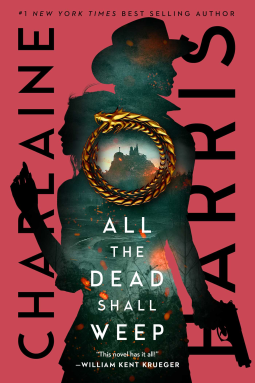
All the Dead Shall Weep, by Charlaine Harris (Saga)
I’m a long-time fan of Charlaine Harris, and she gets
better all the time. All the Dead Shall Weep, the fifth installment in her
“Gunnie Rose” series, is a showcase of her strengths: vivid characters, a
gritty and believable post-apocalytic world with diverse cultures, and superb
handling of dramatic tension and pacing. All conveyed in deceptively simple, evocative
prose that captures the nuanced emotional literacy of the viewpoint characters
(Lizbeth Rose and her sister, the fugitive grigori Felicia). Her portrayal of
the resilience and resourcefulness of poor residents of Texoma is both stark
and compassionate.
Newly weds Lizbeth and Eli, along with Felicia and Eli’s
brother, Peter, take refuge in Lizbeth’s home town after fleeing the Holy Russian
Empire in San Diego. Soon, they’re besieged by strange magic-wielders seeking to
court Felicia because of her powerful death magic, and those with even more
nefarious aims. Matters explode when armed paramilitary ride into town. Part
mystery, part love story, all wrapped up in breathless, page-turner action.
I will be at the World Fantasy Convention in Oakland. Come say hi!
Friday Mass autographing in the Grand Ballroom 8-10 pm;
Saturday, 10:00 AM - 11:00 AM, Room 202: Typing Uphill Both Ways… What’s the Trick? with Michael Kurland, Bruce McAllister, Sharon Shinn, and moderator Tim Melody Pratt
Saturday 5:00 PM - 6:30 PM, Salon 3 & 4: READING: Treehouse Writers Group with Chaz Brenchley, Nancy Jane Moore, Pat Murphy, and Madeleine Robins.
I am appalled by the recent rush to executions, horrified by the possibility of a televised firing squad, and deeply disturbed by the two botched attempts, and this is why:
In 1986, my 70-year-old mother was asleep in her own bed
when a teenage neighbor broke into her home, raped her, and then beat her to
near death and left her face down in a partially filled bathtub. It was a
spectacularly brutal, banner headline crime, called by the District Attorney
one of the most heinous in the history of the county.
Even in light of what happened, I am opposed to capital
punishment, and I'd like to tell you why. I want to emphasize that I do not
speak for anyone else. We all have different experiences, different histories,
different internal and external resources. If there is one thing I'd like you
to take away from my story, it is that not all the families of murder victims
want the perpetrators to be executed.
I believe that capital
punishment harms the survivors by interfering with the natural recovery
process. In other words, when we focus on revenge instead of healing, we never
heal.
A number of years
ago, when I was being interviewed about my mother's death, the interviewer said
to me, “You seem like such a sweet person. Most of us just aren't that
spiritual.” What she meant was, “How could you not want revenge?” What I
thought was, You have no idea how angry I
was and how much I wanted to hurt the man who did this.
The rage I felt
and that I've heard expressed by other murder survivors is so overwhelming,
it's hard to find words to describe it. You feel as if your skin is going to
crack open and out will pour enough molten hatred to incinerate the entire world.
For years after my mother's murder, I obsessed over exactly how I would kill
the perpetrator with my bare hands and how much I wanted him to suffer for
every moment of terror and pain he'd caused her. The images were so vivid, I
couldn't tell if I was awake or dreaming.
Adrenaline-fueled
anger enables us to get through those early days and weeks. It sharpens our
senses and focuses our thoughts. Our hearts pump faster. Biologically, we are
primed to do whatever is necessary to meet the threat. We don't feel our own
injuries, either of body or of mind or spirit. All our resources are devoted to
our immediate survival. In some circumstances, this lasts only a short period
of time. I know people who have lost loved ones to murder, but in that same
incident, the murderer was also killed. At the other extreme are instances
where the perpetrator is never discovered and the survivors must cope with the
nightmare of walking down the street, suspecting every passer-by or wondering
if the murderer has taken another life. I know people in that situation, too.
Anger and the
craving for revenge are normal reactions when someone you love has been
viciously attacked, their dignity as well as their lives stripped from
them.At the same time, these feelings
fuel the illusion that retribution erases pain, and popular media constantly
reinforce this illusion.
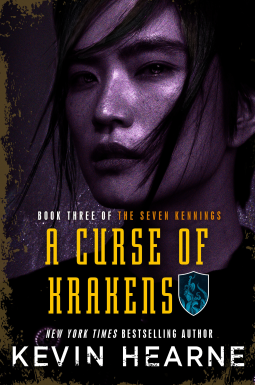
This is the third installment in Kevin Hearne’s “The Seven
Kennings” series, and it’s structured like the others, alternating third-person
present-day narrative with first-person narratives of various characters
involved in the overall story arc. It takes place in a complex, nuanced world,
a “huge canvas” with different cultures, alliances, personalities, and pieces
of the larger plot. It’s a little hard to follow as an entry to the series or
if it’s been awhile since you read it, but I found that by relaxing into the various
stories, the overall picture emerged.
Some of the narratives (channeled through a bard) felt like
sitting down with old friends and savoring the details of their lives. Often,
the stories would overlap, told from different viewpoints. Each character came
to the same set of events from their own unique history and culture. My
favorites remained Pen, a sort of tree guardian, and Abhi, who speaks to
animals.
It’s a long, leisurely read sure to please fans of the
series.
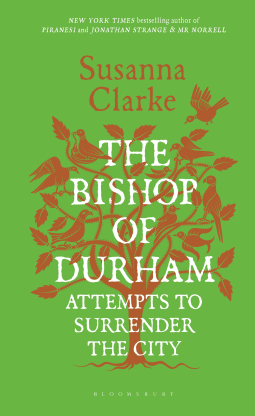
The Bishop of Durham Attempts to Surrender the City, by
Susanna Clarke (Bloomsbury)
First of all, this is a physically gorgeous book with
illustrated borders very much like medieval books. It’s a prequel to Jonathan
Strange & Mr Norrell, set 700 years in the past. Northern England has
been conquered by a fairy host, and the city of Durham is surrounded by a
mysterious, eerie wood. Ranulf, Bishop of Durham, determines to negotiate for
the city’s freedom. That is, if he can find someone to talk to. When he eventually
finds the leader of the fairy host, he encounters an adolescent human boy who is
unable to speak any human language.
The plot is straightforward and the language is understated,
inviting the reader to make connections and fill in the gaps, as it were. To
me, these qualities added to the charm of this book. It can be enjoyed without
having read Jonathan Strange & Mr Norrell, and would make a lovely gift
for a fantasy reader.
Note: This book will be released on October 20, 2026
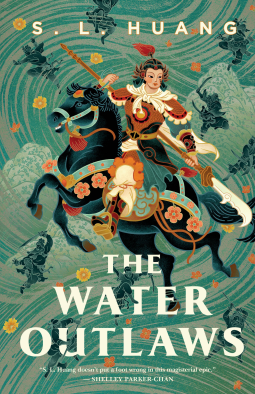
The Water Outlaws, by S. L. Huang won an
impressive list of award nominations and rave reviews. I hesitate to offer a
contrary opinion because it did not work for me. Fortunately, we do not all
enjoy the same books, so I offer these comments as solely my own.
I have a background of over 25 years in Chinese martial arts
and I often feature women warriors in my own novels, so I dove into The
Water Outlaws eagerly, confident that it would be just the kind of story I relish.
I enjoyed the opening, especially the protagonist, expert martial arts
instructor Lin Chong. Her personal prowess and teaching style were portrayed
wonderfully. Other, equally fascinating and sympathetic characters soon
followed. Lin Chong works for the Emperor, training his soldiers even when her
superiors are fine with sloppy technique and incompetent military strategy. She’s
unthinkingly loyal, but more than that, she has a profound ethical center.
About halfway through the book, it was clear to me that the
villains were two-dimensional caricatures of wealthy, powerful, manipulative
but ultimately insecure men. There was not just one, but three major villains,
for the most part interchangeable and acting in highly predictable ways. I have
no idea of the historical accuracy of this portrayal, only that I found them
extremely unpleasant to read about. The real world has enough hideous,
exploitive strong men in it without my giving free rent in my head to those
without any discernible redeeming virtues.
Before too long, Lin Chong fends off a rape attempt by a
corrupt, powerful official and finds herself in disgrace, tattooed as a
criminal, and sentenced to slave labor that amounts to a death sentence. In desperate
condition, she is rescued and then recruited by the women bandits of Liangshan,
mountain outlaws who proclaim their belief in justice. The outlaws are a mixed
group, some spiritual, others brutal, some leaders, some followers, and still
others out only for their own power. The way the story is set up, Lin Chong has
nowhere else to go, so she does her best to forge a new life. After a great
deal of power wrangling within the bandits, she gains a measure of trust and responsibility,
but at the cost of her own integrity.
The turning point for me happened when Lin Chong made a
decision that, in my mind, compromised her ethics and integrity. Here is where
I suspect other readers will disagree with me. I realized that I did not want
to know what happened next. Maybe she redeemed herself. Maybe she found safety
and power as just another outlaw leader. Maybe she used her remarkable skills
to take down the villains. I didn’t care, and most importantly, I didn’t want
to find out.
All this is my highly subjective opinion. I concede that I
might have missed out on a story that is ultimately about redemption,
forgiveness, and the triumph of sisterhood. I just couldn’t bridge the gap. From
the reviews, many other readers loved this book, and I hope that nothing in my
review dissuades someone from checking it out. I leave this review where I
began it: this book did not work for me.
When survivors of trauma recount their experiences, they are often questioned because of how they relay their stories. They may have problems remembering what happened, or their memories may be jumbled or even contradictory. People hearing those stories – attorneys, reporters, healthcare workers or friends – may expect a clearer, linear narrative.
Those unaffected by trauma may also be surprised to hear how the person acted in the moment. It’s easy to assume that someone experiencing a traumatic event would have a “fight or flight” response, instinctively fighting off a perpetrator or fleeing the scene – but that might not be the case.
Understanding the science of how trauma affects memory and behavior reveals why these responses can actually be expected and are not contradictory.
In both my academic and clinical work as a psychologist, I have witnessed the impact trauma has on people’s memories and behaviors, especially when an event in their present life triggers something from their past.
Research shows that taking a trauma-informed approach, which prioritizes understanding and curiosity about someone’s experience as opposed to judgment or critical evaluation, increases empathy for survivors’ thoughts, feelings and behaviors.
How trauma affects the brain
According to the World Health Organization, approximately 70% of people worldwide report experiencing a traumatic event in their lifetime. The majority of these people do not develop PTSD, a clinical diagnosis of symptoms, such as having nightmares and flashbacks about the event, avoiding places that are reminders of it, and increased arousal that can make concentration and sleep difficult. Many survivors don’t meet criteria for PTSD but struggle with feeling distressed, depressed or anxious.
In traumatic situations, people often respond in unexpected ways, and they may second-guess themselves. This may happen particularly when someone experiences a repeated trauma, which is more likely than not due to how many people experience traumatic events.
Research indicates that people experience traumatic memories differently than memories of other significant events, such as sad or positive experiences. Two of the main brain structures scientists believe are involved in storing traumatic memories are the hippocampus – responsible for memory storage – and the amygdala, which is responsible for processing emotions.
During trauma, the amygdala becomes highly active, processing emotions such as fear, and the hippocampus becomes overwhelmed by stress, leading to problems with memory storage.
Traumatic memories do not follow a neat, linear story. Instead, people may experience the memory as disconnected fragments of sensations, emotions, smells or images. Such memories cause the body to reexperience the past threat as if it is happening in the moment. This may cause a person to feel like running away or fighting back – flight or fight. Or they may freeze.
In other words, people don’t have the distant perspective they often feel with other memories from the past. Rather, they may feel they are reliving the original experience.
With this understanding, consider someone who experiences a trauma at the hands of a professional during an appointment. They may appear outwardly calm while it happens and then leave the session as they typically would – checking out, providing payment and possibly even scheduling the next appointment. While their response to act normally may seem odd, such behavior makes sense for someone trying to escape a threat.
Fight, flight or freeze responses have become widely known in popular culture. In a freeze response, a person’s mind goes blank and they may be unable to speak, leading to a “deer in the headlights” behavior.
On the other hand, a person may act paradoxically – perhaps by going on about their day as if nothing happened. They may not report the event or may question whether the incident even occurred. This represents another survival response – the lesser-known fawn response. This way of handling stress occurs when someone acts calm, appeases the threatening person and retreats to de-escalate the situation. Instead of literally backing away, in this example, the person metaphorically backs away by completing the session and exiting as expected without further conflict.
Outsiders may misconstrue these behaviors as evidence that a trauma did not actually happen or that a survivor lacks credibility. But that logic reflects common misconceptions about how people “should” remember or respond to trauma.
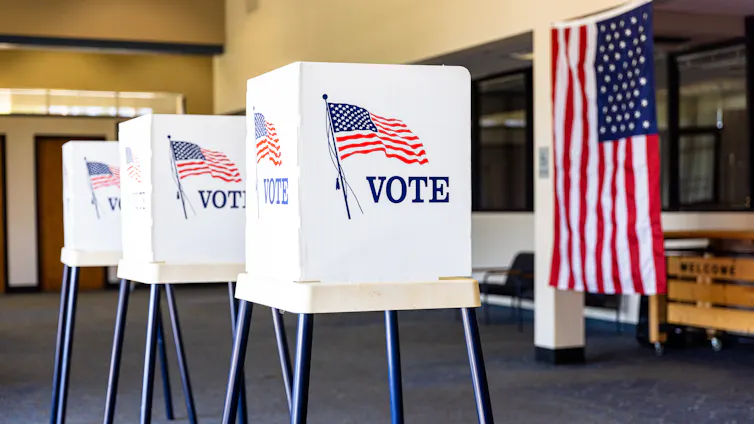
As the 2026 midterm elections enter the final stretch, it’s important to know your rights in case your vote is challenged.
The best way to ensure that your vote is counted is to advocate for yourself. I’m a an attorney and lecturer for the University of Southern California’s undergraduate civil rights advocacy initiative, Agents of Change. Here are several straightforward ways to ensure your vote is counted and two practical remedies for you to consider if your vote remains challenged.
A major part of ensuring that you are able to vote is doing the necessary preparation before you even get to the polling place. Read on to find out how and where to register, where and when you can cast your ballot, and what numbers to call for any information you can’t find online.
Are you registered to vote? Check it out
Before you vote, you need to ensure that you’re registered to vote. You can verify your registration status using this tool. If you can’t use an online tool, then call your local election office or a voter help line like the ones listed in the hotline section below.
If you find you’re not registered, you can use this tool from the National Conference of State Legislatures to find your state’s online registration application. If you need to do this in person, then call your local election office for instructions.
At this point, you may have missed your state’s deadline for voter registration. But it may not be too late to register.
Many states allow same-day registration at the polling site. You can find your state’s same-day voter laws detailed here. Ask the poll worker, at the correct polling location, for a same-day registration form; complete the form and then ask for a “conditional ballot.” A conditional ballot allows election officials to count your vote after verifying your voter eligibility. If you can’t research online, you can call your local election office to find out if you can register on Election Day.
Marchellos Scott, right, helps Morehouse College students fill out a voter registration form at a college registration booth on Aug. 19, 2024, in Atlanta.Elijah Nouvelage/AFP via Getty Images
Gather documents to verify your identity
If you live in a state that requires identity verification to vote in person, gather the required documents – which may range from a driver’s license to bank statements with identifying information – before traveling to the correct polling place. You can find your county election office’s contact information here. This webpage includes a table listing each state’s acceptable ID documents and possible exceptions for some people. You may also call your local election office to find out what’s required.
Absentee voters: Locate your state’s identity verification rules here.
Find the correct polling location
You can ensure that you’re headed to the right polling place with this tool. Or call your county election office to find your polling place and its hours of operation; you can look up your county’s election office contact information here.
Once you know your polling place and its hours, you can go there and check in. In most cases, you’ll be handed a ballot, shown where to vote and asked to put your ballot in a machine or a box, and then you can go merrily along your way.
But the moment of check-in is where things might go wrong.
Fake Query Letters by Dead Authors: A Satirical Craft
Guide to Writing Queries That Survive the Slush Pile, by David Brown
and Michelle
Barker (Darling Axe Publishing)
How-to books for authors abound in today’s market. Not
all the advice is worth taking. Indeed, much of it seems to be based on
outdated practices, flawed “conventional wisdom,” or is intended for novice
self-published authors. Very little is aimed at serious authors interested in
traditional publishing or established midlist authors scrambling to keep up
with today’s rapidly changing market. Much of it is contradictory and involves
a great deal of telling the author how to get an agent instead of showing
pitfalls and best practices.
The latest entry in this field is the delightful, highly
informative book, Fake Query Letters by Dead Authors: A Satirical Craft
Guide to Writing Queries That Survive the Slush Pile, by David Brown
and Michelle
Barker of Darling Axe. They open with this intriguing premise:
What if the greatest novels ever written had to
survive today's slush pile? No reputation to fall back on—just a cover letter
and first page... and an agent who's already read 200 queries before lunch.
Spoiler: most of them wouldn't make it.
Using five classic novels (Pride and Prejudice, Wuthering
Heights, The Scarlet Letter, Anne of Green Gables, and Jane
Eyre) they first demonstrate the worst possible way the authors could query
an agent and how to fix their disastrous mistakes.
Query guidelines for literary agents vary, but most include
a letter, synopsis, and sample pages, which are often the first chapter). We already
know (and, hopefully, love) the text, which gives us a foundation to evaluate each
horrible, rejection-guaranteed sample letter and synopsis. The authors invite
us to imagine ourselves as literary agents at the end of a punishing work week,
facing an Inbox jammed with queries. (So much fun!) What would tempt us to read
the entire query and then—oh joy!—request the entire manuscript?
Highly recommended for fiction writers at all stages of
their careers for whom a literary agent is appropriate. Also highly
recommended for indie (self-published) writers for invaluable insights into how
to craft a compelling novel and then present it at its best. After all, in
today’s overcrowded market, readers will decide to pick up a book on the same
basis of a dynamite pitch.
Whether in an Oval Office proclamation signing about commercial fishing or during a Fox News interview while discussing Iran, President Donald Trump finds opportunities to share his views on transgender people.
During a June 2026 signing event, Trump claimed, in response to a question about proposed legislation regarding election procedures, called the SAVE America Act: “We are talking about saving America, right? No men in women’s sports.” He continued, “And we have no mutilization of your children for transgender purposes … where your child leaves your house, and they take your child from you. … In six states, they take the child and do what they want to do. What they do is, is I don’t even want to talk about it. No transgender mutilization of your children.”
Meanwhile, public approval of Trump’s approach to trans issues is relatively high, as compared with his approval ratings on other issues.
A 2024 report by the Human Rights Campaign decried an “epidemic of violence” against trans and gender-expansive people. A 2025 Pew report found that 70% of trans adults have feared for their personal safety, and only 13% of LGBTQ respondents reported social acceptance of trans people.
Though the causes for changing trans views are complex, research suggests Trump’s rhetoric and policies have powerful influence, the ramifications of which are clear. Anti-LGBTQ+ laws and debates negatively affect young queer people, according to the Trevor Project’s 2025 U.S. National Survey on the Mental Health of LGBTQ+ Young People, and are associated with increased stress, discrimination and suicide attempts.
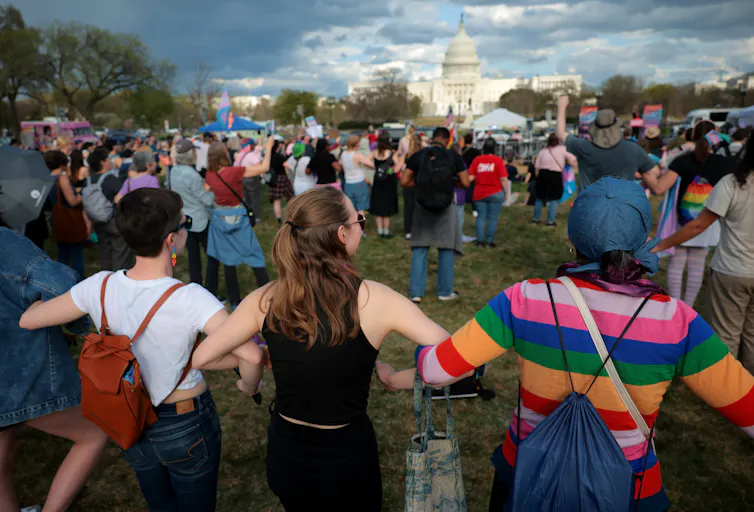
Trans people and their allies have pushed back against a recent wave of restrictions. Here, supporters rally for the Transgender Day of Visibility in March 2025.Kayla Bartkowski/Getty Images
Moral panic as political strategy
From the Salem witch trials in the 17th century to the war on drugs in the 20th century, moral panics have emerged across history to stoke fear against a perceived threat to a society’s values or well-being.
Moral panics, coined by sociologist Stanley Cohen in 1972, follow a similar pattern: a threat is defined, media exaggerates the threat, public concern increases, authorities respond with laws and policies, and society is transformed.
Moral panics elicit a range of negative emotions, but disgust and paranoia are especially potent. Originally a response meant to protect us from disease and spoiled food, disgust has evolved to also express social inappropriateness. Disgust asserts that its object is inherently bad. Since disgust is culturally dependent, it can also be used to marginalize groups of people.
Meanwhile, paranoia focuses on visualizing and preparing for future threats. When experienced as an emotion – outside of psychiatric disorders – paranoia has a righteous undertone, as it seeks to uncover perceived enemies.
Disgust and paranoia are a powerful combination for sustaining moral panics. While disgust produces an intense, immediate physical feeling, paranoia is long-lasting, stewing and existential.
Stimulating disgust and paranoia
Trump’s offhand remarks often invoke disgust and paranoia against perceived enemies – for example, toward immigrants, whom he has repeatedly described as dangerous criminals. These same patterns emerge in the Trump administration’s formal communication regarding trans issues.
The release asserts that former President Joe Biden’s 2024 Proclamation of Transgender Day of Visibility “desecrated Easter Sunday with a ‘transgender’ message that elevated radical leftist ideology over faith, family, and biological truth.” Rousing paranoia, “radical leftist ideology” (and later in the release, “gender ideology”) is portrayed as an existential threat that puts Americans and their beliefs in danger.
The release also claimed that “the Trump Administration is celebrating a decisive victory: the swift and unrelenting dismantling of subversive, woke policies that endangered children, eroded women’s rights, assaulted common sense, and dragged America toward moral and cultural decline.”
As a rhetoric scholar, I read these allusions to religion and war – using words like “desecrate” and “victory,” respectively – as implications that the U.S. is in a battle between good and evil. Schools, hospitals, bathrooms, locker rooms, sports facilities and military bases are spaces declared under attack.
The release also condemns “the chemical and surgical mutilation of minors” and “child mutilation programs” – revolting imagery that misleadingly depicts gender-affirming care and incites shock, concern and disgust.
Similarly, invoking images of nonconsenting, victimized children and women, the release denounces “the un-American indoctrination of schoolchildren” and “the unfair, demeaning practice of forcing women to compete against biological men in sports.” Stimulating anger and moral panic, these descriptions encourage anti-trans views and discrimination.
Recognizing these rhetorical patterns is key to understanding how politicians use inflammatory language to denigrate trans people and other marginalized groups, including women, Black people and immigrants.
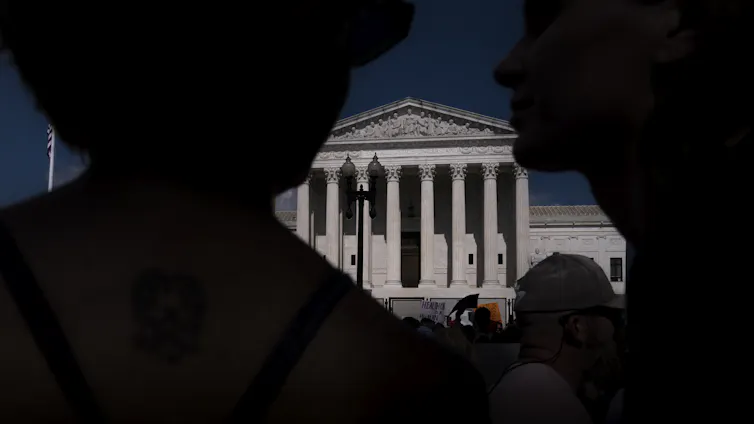
But four years later, one of the most impactful developments has been less visible: a significant, sustained and politically consequential shift in public opinion. In the wake of Dobbs, the debate over abortion rights did not simply return to the states. It fundamentally altered how many Americans think about the issue and how they vote.
In our recently published book, “Not Going Back: Public Opinion on Abortion in Post-Dobbs America,” we examined how and why these changes have occurred, and what they mean for U.S. politics. We believe the shift could have real consequences for the November 2026 midterms.
Post-Roe stability
Drawing on several nationally representative surveys conducted before and after Dobbs, we examined how Americans’ abortion attitudes, political priorities and voting behavior have changed in response to the most significant shift in abortion policy in half a century.
For nearly 50 years after Roe, public opinion on abortion was remarkably stable. In 1975, Gallup found support for legal abortion in certain circumstances at 54% and support for a ban in all circumstances at 22%. In 2021 – the year before the Dobbs decision – these figures were virtually the same: 48% and 19%, respectively.
Despite heated political rhetoric, most Americans held nuanced views. They were neither fully anti-abortion nor fully pro-abortion. Instead, they supported legal abortion in some circumstances and not in others.
That underlying stability shaped both policy and politics for decades. Republicans were able to rally a committed core of supporters around opposition to Roe, while the underlying constitutional right to access abortion remained unchanged.
As states moved quickly after the Dobbs decision to enact abortion bans and strict gestational limits, public opinion moved in the opposite direction.
Today, more Americans identify as pro-choice than they did before Dobbs. And, as we document in our book, more Americans are now taking absolutist positions. They support legal access to abortion in all or most cases and oppose government regulation altogether.
How Dobbs shattered the equilibrium
One of the most striking changes in the post-Dobbs era concerns who cares most about abortion. For decades, abortion was a higher priority for Republicans and those identifying as pro-life.
That dynamic has now flipped. In both 2022 and 2024, Democrats and pro-choice Americans were more likely than Republicans to say abortion was a top political issue shaping their vote. In our book, we document how in both 2022 and 2024, pro-choice Democrats were especially motivated to vote and remained highly loyal to Democratic candidates.
At the same time, the considerable minority of Republicans who support legal abortion found themselves politically cross-pressured, meaning they experienced conflicting political influences.
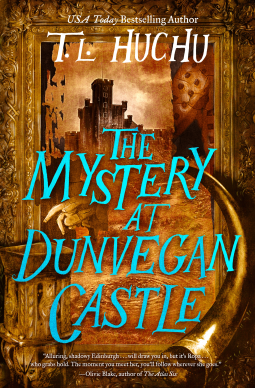
The Mystery at Dunvegan Castle, by T. L. Huchu
(Tor)
This is the third volume of T. L. Huchu’s wonderful “Edinburgh
Nights” series. I love the protagonist, a feisty, resourceful slum kid, Ropa
Moyo. In magic-imbued, dystopic post-apocalyptic Scotland, Ropa and her sister
live with their grandmother, who is steeped in the ancient ritual magic of her
African ancestors. Ropa’s magic is of a different sort: she can talk to ghosts.
Ropa’s path out of abject poverty lies through the formal academy of Scottish magic.
At the beginning of The Mystery at Dunvegan Castle, Ropa is struggling
with an unpaid internship, doing scut work for an international magical
conference at Dunvegan Castle on the Isle of Skye. It’s the perfect opportunity
for her to make connections and further her career. That is, until a vital
magical scroll goes missing, a librarian is murdered, and her mentor casts a
force-field spell over the castle to prevent the culprit’s escape.
On one level, this is a classic Agatha Christie style murder
mystery, with suspects galore confined in a castle. Political and personal
frictions abound, everyone has an ax to grind—including the resident ghosts—and
the characters and plot twists kept me turning the pages. On another, it’s a
story about difficult choices, about whether Ropa will be being valued or
manipulated as a pawn. One of the things I look for in a compelling
protagonist, particularly a young one, is agency: how much resourcefulness does
this person have, and how will they determine their own fate? Ropa may not have
material wealth or status, but her other qualities, including her unerring
sense of justice, more than compensate.
Middle books present challenges, as exemplified by the
dreaded second book of a trilogy that falls flat. Lots of things happen but the
dramatic shape doesn’t match the dynamic beginning or the climactic end. In
this case, the book is a bridge between Ropa finding her place at the academy
and the choices she makes at the end. We don’t know where those choices will
lead; that’s for the next book. Seen as a bridge with a significant amount of lack
of conclusion, Mystery works well. These shortcomings are less
significant than they would be for a stand-alone book or even the second book
in a series because readers who have been following Ropa’s journey have already
fallen in love with her over the previous two books. I know that I did!
Not a stand-alone, but readers of the series will want to
gobble up the next volume!
Each year, doctors treat more than 6 million bone fractures in the United States. And while it takes only a few seconds for a bone to break, the processes that keep your bones strong and allow them to heal are taking place continuously throughout your life.
Beneath their hard surface, your bones are alive with activity, continuously being broken down, rebuilt and reshaped. Far from being static structures that simply support the body, bones are dynamic, living tissues that respond to physical activity, hormones and the body’s changing needs.
I am a research scientist who studies bone biology and mineral metabolism. To me, one of the most striking things about bone is how dynamic it is, despite its static appearance. Research over the past 15 to 20 years has demonstrated that this is even more true than scientists had previously realized.
More than just structural support
For decades, scientists have known that bone provides support, stores minerals and continuously remodels itself. This remodeling is the process bone uses to renew itself, maintaining its strength while allowing the skeleton to adapt over time.
Different kinds of bone cells work together to maintain bone structure. Cells called osteoclasts remove old or damaged bone, while osteoblasts build new bone in its place. Osteocytes, which are cells embedded within bone, help sense mechanical strain and coordinate how bone responds. Together, these cells help the skeleton stay strong.
Medical research has made tremendous strides in our understanding of how to prevent--or, at very least, delay--dementia. Many of these factors are within our control. Even better, many of them also lower the risk of cardiovascular disease and cancer.
Here's the abstract from The Lancet. <-- Click the link to register for access to the entire article.
The 2024 update of the Lancet Commission on dementia provides new hopeful evidence about dementia prevention, intervention, and care. As people live longer, the number of people who live with dementia continues to rise, even as the age-specific incidence decreases in high-income countries, emphasising the need to identify and implement prevention approaches. We have summarised the new research since the 2020 report of the Lancet Commission on dementia, prioritising systematic reviews and meta-analyses and triangulating findings from different studies showing how cognitive and physical reserve develop across the life course and how reducing vascular damage (eg, by reducing smoking and treating high blood pressure) is likely to have contributed to a reduction in age-related dementia incidence. Evidence is increasing and is now stronger than before that tackling the many risk factors for dementia that we modelled previously (ie, less education, hearing loss, hypertension, smoking, obesity, depression, physical inactivity, diabetes, excessive alcohol consumption [ie, >21 UK units, equivalent to >12 US units], traumatic brain injury [TBI], air pollution, and social isolation) reduces the risk of developing dementia. In this report, we add the new compelling evidence that untreated vision loss and high LDL cholesterol are risk factors for dementia.
This is so important to those affected by LGBTQ+ stigma and those who love them, I am reprinting it in its entirety (under Creative Commons license).
Childhood experiences of LGBTQ+ stigma can harm romantic relationships decades later – psychologists explain how to reconnect with yourself and your partner
Childhood rejection, discrimination and bullying can affect your well-being as an adult. If your friends, family or community pushed you away because of your sexuality or gender, these childhood experiences of prejudice can also affect your future relationships.
We found that a factor called internalized stigma can notably affect the romantic relationships of LGBTQ+ people. Internalized stigma refers to when society’s negative views and biases toward a part of your identity shapes how you think and feel about yourself. This can influence how you view romantic relationships and how you interact with your romantic partners.
People with higher levels of internalized stigma report more conflicts and less satisfaction in their relationships. Research suggests that internalized stigma can negatively affect key aspects of romantic relationships that keep people satisfied with their partners, including trust, connection and intimacy.
Blind Date With a Werewolf,
by Patricia Briggs (Ace)
When Asil, an ancient, deadly,
and drop-dead gorgeous werewolf, becomes the recipient of five blind dates arranged
via online dating apps by his anonymous “Concerned Friends,” the fun begins. These
“friends” are concerned about Asil becoming a recluse, which these social encounters
are supposed to rectify. They have not only created a profile for him in his
human form, but they have pretended to be him in corresponding via email with
his prospective dates. There are rules to this game, of course, including the
length of time each date must last and how much bloodshed is acceptable.
Intrigued, Asil accepts the challenge…only to discover that his first date,
Kelly, is a gay man, while Asil is firmly straight. (Oops!) But Kelly is a pleasant
dinner-and-dance companion, as much confused by the mix-up as Asil. It also
turns out that the “vampire”-themed event is attended by actual vampires out
for their next victims. Then, of course, chaos ensues and bodies pile up.
Although this book features a
recurring series character, it works well as a stand-alone. The author has done
a wonderful job weaving together episodes into a dynamic flow, and balancing
inner and outer dramatic tension. The unifying theme is the relationship
between the human Asil and his inner wolf, which adds deep psychological
resonance to this urban fantasy.
Live Science, one of my favorite news sources (yay, science!) recently published this fascinating report. It's perfect for futuristic science-fiction world-building!
From the article: Life on Earth could continue for another 1.8 billion years, according to new research. This figure, which is based on complex climate models, is far longer than many previous studies indicated.
In 1982, James Lovelock and colleagues estimated that Earth's photosynthetic biosphere — which includes all plants and forms the basis for most of the planet’s biology — would end about 100 million years from now. Successivestudies have pushed back the deadline for the death of all life on Earth. Published in the journal JGR Atmospheres, researchers suggest that plant life could continue about 1.8 billion years into the future. That nears the time when Earth would lose its oceans to space, either through radiation splitting water atoms or runaway evaporation, in about 2 billion years.
Life on Earth relies on photosynthesis, the process used by plants, algae and some bacteria to turn sunlight into energy. The mechanism chemically converts carbon dioxide and water into sugars and oxygen. It requires both CO2 and sunlight.
But at certain temperatures, plants' photosynthetic machinery shuts down. Eventually, the sun will warm Earth to the point that plants are no longer able to photosynthesize, which would in turn cause entire food webs to collapse and all life to perish.
Another issue is that as the sun dies and it gets brighter, there will be less carbon dioxide in the atmosphere, effectively starving plants.