Showing posts with label PTSD. Show all posts

Monday, October 19, 2026

My Mother Was Murdered, and That's Why I Oppose the Death Penalty


I am appalled by the recent rush to executions, horrified by the possibility of a televised firing squad, and deeply disturbed by the two botched attempts, and this is why:

In 1986, my 70-year-old mother was asleep in her own bed when a teenage neighbor broke into her home, raped her, and then beat her to near death and left her face down in a partially filled bathtub. It was a spectacularly brutal, banner headline crime, called by the District Attorney one of the most heinous in the history of the county.

Even in light of what happened, I am opposed to capital punishment, and I'd like to tell you why. I want to emphasize that I do not speak for anyone else. We all have different experiences, different histories, different internal and external resources. If there is one thing I'd like you to take away from my story, it is that not all the families of murder victims want the perpetrators to be executed.

I believe that capital punishment harms the survivors by interfering with the natural recovery process. In other words, when we focus on revenge instead of healing, we never heal.

A number of years ago, when I was being interviewed about my mother's death, the interviewer said to me, “You seem like such a sweet person. Most of us just aren't that spiritual.” What she meant was, “How could you not want revenge?” What I thought was, You have no idea how angry I was and how much I wanted to hurt the man who did this.

The rage I felt and that I've heard expressed by other murder survivors is so overwhelming, it's hard to find words to describe it. You feel as if your skin is going to crack open and out will pour enough molten hatred to incinerate the entire world. For years after my mother's murder, I obsessed over exactly how I would kill the perpetrator with my bare hands and how much I wanted him to suffer for every moment of terror and pain he'd caused her. The images were so vivid, I couldn't tell if I was awake or dreaming.

Adrenaline-fueled anger enables us to get through those early days and weeks. It sharpens our senses and focuses our thoughts. Our hearts pump faster. Biologically, we are primed to do whatever is necessary to meet the threat. We don't feel our own injuries, either of body or of mind or spirit. All our resources are devoted to our immediate survival. In some circumstances, this lasts only a short period of time. I know people who have lost loved ones to murder, but in that same incident, the murderer was also killed. At the other extreme are instances where the perpetrator is never discovered and the survivors must cope with the nightmare of walking down the street, suspecting every passer-by or wondering if the murderer has taken another life. I know people in that situation, too.

Anger and the craving for revenge are normal reactions when someone you love has been viciously attacked, their dignity as well as their lives stripped from them.  At the same time, these feelings fuel the illusion that retribution erases pain, and popular media constantly reinforce this illusion.

Monday, September 28, 2026

[Reprint] How Trauma Shapes Memory


Traumatic memories are often fragmented – a psychologist explains how and why that happens

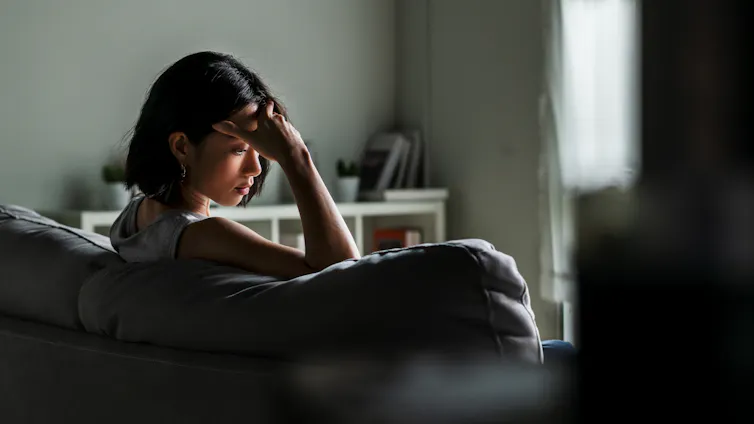
Young Asian woman sits on a sofa looking sad and worried.
Traumatic memories are not recalled the same way pleasant memories are. Filmstax/E+ via Getty Images
Michele Patterson Ford, Dickinson College

When survivors of trauma recount their experiences, they are often questioned because of how they relay their stories. They may have problems remembering what happened, or their memories may be jumbled or even contradictory. People hearing those stories – attorneys, reporters, healthcare workers or friends – may expect a clearer, linear narrative.

Those unaffected by trauma may also be surprised to hear how the person acted in the moment. It’s easy to assume that someone experiencing a traumatic event would have a “fight or flight” response, instinctively fighting off a perpetrator or fleeing the scene – but that might not be the case.

Understanding the science of how trauma affects memory and behavior reveals why these responses can actually be expected and are not contradictory.

In both my academic and clinical work as a psychologist, I have witnessed the impact trauma has on people’s memories and behaviors, especially when an event in their present life triggers something from their past.

Research shows that taking a trauma-informed approach, which prioritizes understanding and curiosity about someone’s experience as opposed to judgment or critical evaluation, increases empathy for survivors’ thoughts, feelings and behaviors.

How trauma affects the brain

According to the World Health Organization, approximately 70% of people worldwide report experiencing a traumatic event in their lifetime. The majority of these people do not develop PTSD, a clinical diagnosis of symptoms, such as having nightmares and flashbacks about the event, avoiding places that are reminders of it, and increased arousal that can make concentration and sleep difficult. Many survivors don’t meet criteria for PTSD but struggle with feeling distressed, depressed or anxious.

In traumatic situations, people often respond in unexpected ways, and they may second-guess themselves. This may happen particularly when someone experiences a repeated trauma, which is more likely than not due to how many people experience traumatic events.

Trauma also distorts how memories are stored and retrieved.

Research indicates that people experience traumatic memories differently than memories of other significant events, such as sad or positive experiences. Two of the main brain structures scientists believe are involved in storing traumatic memories are the hippocampus – responsible for memory storage – and the amygdala, which is responsible for processing emotions.

During trauma, the amygdala becomes highly active, processing emotions such as fear, and the hippocampus becomes overwhelmed by stress, leading to problems with memory storage.

Traumatic memories do not follow a neat, linear story. Instead, people may experience the memory as disconnected fragments of sensations, emotions, smells or images. Such memories cause the body to reexperience the past threat as if it is happening in the moment. This may cause a person to feel like running away or fighting back – flight or fight. Or they may freeze.

In other words, people don’t have the distant perspective they often feel with other memories from the past. Rather, they may feel they are reliving the original experience.

Single working mother and her teenage daughter talk with much emotion in the kitchen.
Emotionally intense conversations can bring up past traumas, causing a person to freeze or feel numb. Olga Rolenko/Moment via Getty Images

Misinterpreting victims’ behaviors

With this understanding, consider someone who experiences a trauma at the hands of a professional during an appointment. They may appear outwardly calm while it happens and then leave the session as they typically would – checking out, providing payment and possibly even scheduling the next appointment. While their response to act normally may seem odd, such behavior makes sense for someone trying to escape a threat.

Fight, flight or freeze responses have become widely known in popular culture. In a freeze response, a person’s mind goes blank and they may be unable to speak, leading to a “deer in the headlights” behavior.

On the other hand, a person may act paradoxically – perhaps by going on about their day as if nothing happened. They may not report the event or may question whether the incident even occurred. This represents another survival response – the lesser-known fawn response. This way of handling stress occurs when someone acts calm, appeases the threatening person and retreats to de-escalate the situation. Instead of literally backing away, in this example, the person metaphorically backs away by completing the session and exiting as expected without further conflict.

Outsiders may misconstrue these behaviors as evidence that a trauma did not actually happen or that a survivor lacks credibility. But that logic reflects common misconceptions about how people “should” remember or respond to trauma.

Monday, April 27, 2026

Reprint: Resilience and "Bouncing Back"

‘Bouncing back’ is a myth – resilience means integrating hard experiences into your life story, not ignoring them

Into each life some rain must fall. Anastasiia Voloshko/Moment via Getty Images
Keith M. Bellizzi, University of Connecticut

When Maria looked at herself in the mirror for the first time after her mastectomy, she stood very still.

One hand rested on the bathroom counter. The other hovered near the flat space where her breast had been. The scar was raw and angry. The loss was quiet but enormous. Her body felt foreign.

In moments like these, people are often urged to be resilient – which can feel like being told to show no weakness, to push through no matter what. Or they imagine resilience as bouncing back: returning somehow unscathed to be the person you were before.

But standing in that bathroom, Maria knew there was no going back. And toughness wouldn’t change what had happened. The real question was how she could move forward, carrying this experience into her new reality.

Maria’s story, one I came to know personally, is far from unique. Loss, trauma and illness often bring the same wrenching questions of identity and the painful uncertainty of what comes next.

I’ve spent more than two decades studying resilience, particularly among individuals and families navigating these kinds of life-changing events. I am also a four-time cancer survivor and author of a new book, “Falling Forward: The New Science of Resilience and Personal Transformation.” If there is one myth I wish society would retire, it’s the idea that resilience means “toughness” or “bouncing back.”

woman wearing hat seated in wheelchair looks outside
Resilience doesn’t rely on relentless positivity in the face of traumatic challenges. pocketlight/iStock via Getty Images Plus

Rethinking resilience based on research

Moments like Maria’s reveal something important: The way people tend to talk about resilience often doesn’t match how people actually live through adversity.

In popular culture, resilience is often equated with grit, toughness or relentless positivity. People celebrate the warrior, the fighter, the triumphant survivor.

But across research, clinical practice and lived experience, resilience is something far more nuanced, raw and human.

It’s not a personality trait that some people simply have and others lack. Decades of research show resilience is a dynamic process. It’s shaped by the small, everyday decisions and adjustments individuals make as they adapt to significant adversity while maintaining, or gradually regaining, their psychological and physical footing over time.

And importantly, resilience does not mean the absence of distress.

Research on people facing serious life disruptions shows that distress and resilience often coexist. For example, in my study of adolescent and young adult cancer survivors, participants reported being upset about finances, body image and disrupted life plans, while simultaneously highlighting positive changes, such as strengthened relationships and a greater sense of purpose.

Resilience, in other words, is not about erasing pain and suffering. It is about learning how to integrate difficult experiences into a life that continues forward.

Tuesday, January 21, 2025

In Times of War: A Flood of Horrific News

This was originally posted in April, 2022, as the Russian invasion of Ukraine was getting underway. It seems just as urgent now. 

After the 2016 Presidential election, I wrote a series of blog posts, “In Troubled Times.” In them I explored my evolving feelings of disbelief, shock, horror, despair, fury, and rising determination. “Nevertheless, She Persisted” became our mantra. I hoped that my words provided solace and inspiration to others, and the process of putting them down did for me.

Now we face new, often overwhelming challenges to sanity. I find myself reacting to the news of the war in Ukraine, and yet being unable to look away. Then my friend, Jaym Gates, wrote this on her Facebook page, posted here with her permission. 

Be really careful on social media for the next few days, friends. A lot of footage of Russian Federation war crimes, torture, rape, and murder just came out from Mariupol and other occupied cities. It is *horrific.* While it needs to be seen, shared, and remembered, it is going to be extremely traumatic to engage with.

If you're a survivor of abuse or trauma, in particular, please be especially careful.

And send support to Ukraine if you can. What's happening there is awful beyond words.

 My daughter, a psychology student, spotted this article by Heather Kelly in the Washington Post: How to stay up-to-date on terrible news without burning out.

It can be hard to look away from your phone and live your life while terrible events are unfolding, Kelly writes. There’s an unrelenting flow of images, videos and graphic updates out of Ukraine, filling social media, messaging apps and news sites.

It’s important to stay informed, engaged and even outraged. But it’s also important to pay attention to our own limits and mental health by taking breaks, looking for signs of burnout and consuming news in the smartest way possible.

That means setting some ground rules for the main portal connecting us to nonstop tragedy: our phones [or computers]. Here are some suggestions:

1.       Give yourself permission to take a break

It is okay to hit pause on the doom and go live your life, whether that means going outside with the kids or just losing yourself on the silly side of TikTok. It’s necessary for everyone’s mental health.

2.      Take time for self-care

A break is not a few minutes away from Twitter. Start with real breaks of at least 30 minutes to an hour so that your brain has time to come down from what you were last watching or reading. Ideally, you’ll put your phone down and take a technology break … or do some activities known to help with stress reduction, including exercise, mindfulness and meditation, journaling, engaging in hobbies and other activities you enjoy, spending time with family and friends, and doing faith-based activities if you practice.

3.      Change your news habits

Disinformation like propaganda is designed to capture your attention and elicit strong emotions, which can contribute to any anxiety you’re already feeling. Instead, stick with reputable sources. If you can wait, opt for deeply reported stories at the end of the day over constant smaller updates. Avoid using social media for news, but if you do, follow sources and people that contribute to your understanding of an issue rather than those that just generate more outrage.

4.      View your phone in black and white

In your smartphone’s accessibility settings there is an option to make the screen black and white instead of color. Some studies have indicated that turning this on leads to less screen time.

5.      Know when to ask for help

Look for signs that you are burned out or experiencing serious anxiety. First, consider whether you’re predisposed to reacting strongly to a particular issue. Anyone who has personally dealt with similar trauma or war in the past might find constant vivid social media posts about Ukraine to be triggering. [Italics mine.]


In conclusion: be kind to yourself, friends. Practice healthy boundaries and filters, and good self-care. Ask for help, whether it’s a friend or family member screening news for triggers, or a companion on a hike through the redwoods. Find safe people to reach out to. I'll be writing more about our journey together.


Monday, January 29, 2024

When You Can't Write

For a long time, I used to joke that I couldn't afford writer's block. I began writing professionally when my first child was a baby and I learned to use very small amounts of time. This involved "pre-writing," going over the next scene in my mind (while doing stuff like washing the dishes) until I knew exactly how I wanted it to go; when I'd get a few minutes at the typewriter (no home computers yet), I'd write like mad. I always had a backlog of scenes and stories and whole books, screaming at me to be written. The bottleneck was the time in which to work on them.

I kept writing through all sorts of life events, some happy, others really awful and traumatic. Like many other writers, I used my work as escape, as solace, as a way of working through difficult situations and complex feelings. I shrouded myself with a sense of invulnerability: I could write my way through anything life threw at me!

Unfortunately, I was wrong.

I hit an immovable wall during a PTSD meltdown following the first parole hearing of the man who raped and murdered my mother. For weeks at a time, I battled flashbacks and nightmares. I couldn't eat, I couldn't sleep, and I couldn't stop crying. Also, I couldn't write. That creative paralysis added another dimension to the crisis. If I couldn't write, who was I? Where were my secret worlds, my journeys of spirit and heart where people healed and things got better? Gone...and I didn't know if I'd ever get them back.

I was fortunate to have a lot of help, professional and friendly, during those dark weeks and months, some of it from fellow writers. No pep talks, just friendship, constant and true. Eventually, as I recovered, I was able to return to fiction writing as well, although by then, I found myself a single working mom and had a new set of demands on my time.

Writers stop writing for all kinds of reasons. In my case, it was personal and emotional, part of a larger crisis. Other times, however, the well runs dry when the rest of life is going smoothly. Quite a few years ago, I ran into a writer I greatly admired (at an ABA convention), and I'd not seen anything from this writer in quite a few years. I introduced myself and asked when the next book would be coming out. Only when I saw the change in the writer's expression did I realize how difficult the subject was. I was probably the hundredth person that weekend to ask. (Eventually, this writer came out with several new books; I wonder now if the appearance at the ABA wasn't a way of trying to get the head back into writerly-space.)

Sometimes, a writer feels they've said everything they have to say. Or that one book or one series is it; there are no new worlds begging to be explored. They can rest on their laurels with a feeling of satisfaction and closure. For the rest of us, though, not writing is anywhere from excruciating to devastating.

I  think it's not at all helpful to try to "cheer up" a writer in the middle of a dry period. The specific reasons--creative paralysis, personal crisis, discouragement--vary so much. I think it's safe to say that each of us has to find our own way through. For me, it's helped immensely to know I'm not the only one to go through it--and that's the operational term "go through it." Come out the other side. Talk about what happened, in the hopes of being the light in the darkness for someone else.

Monday, January 2, 2023

Revisiting Nightmares: Fantasy/Horror Crossovers and Trauma Recovery


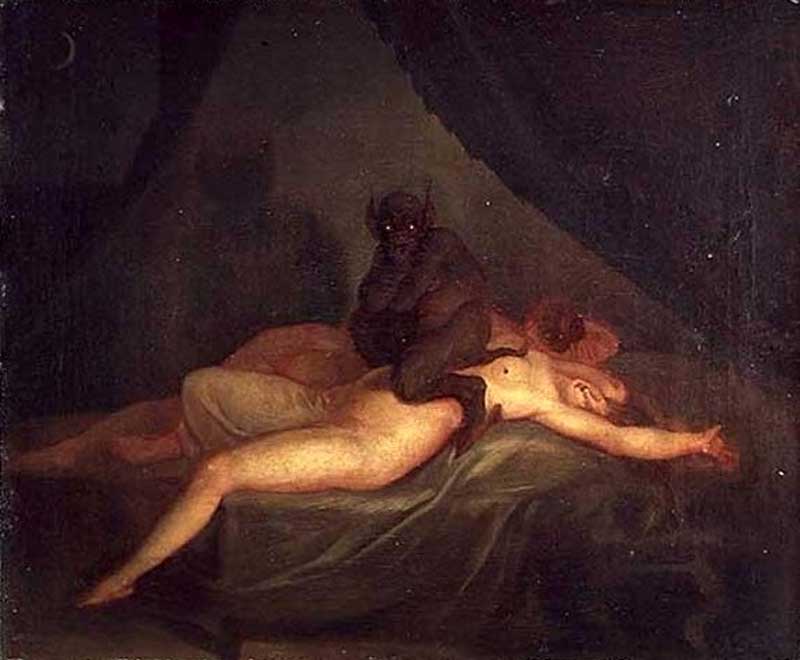
Nightmare by Abildgaard

Fantasy and horror have a natural affinity, one that goes back to the pre-literate times when people sat around the campfire, terrifying each other with stories of ghosts and skin-walkers and things-that-go-bump-in-the-night or that-are-not-quite-dead. Supernatural elements infused these tales with delightful spine-tingling shivers. One might speculate that way back then, the entire world must have seemed a perilous place, filled with phenomena beyond human understanding. I think that does a discredit to peoples who might have a much lower level of technology than we do but were nonetheless extremely sophisticated in their conceptualization and emotional understanding of the world around them. For all our computers and skyscrapers, we are just as enthralled by the uncanny and that jolt of adrenaline.
 
Nightmare by Gauguin
Of course, as individuals we vary in what is pleasurable to us. One person’s fun may be the trigger that causes months of terrifying nightmares for another person. This is especially true for people who have themselves been the victims of trauma, whether the assault has come in the form of physical violence or from psychological or emotional abuse. Reading horror or dark fantasy is not an approved method of psychotherapy, but encountering these stories mindfully can shift our perspective. Good fiction of any kind does not “stay on the page” but has the power to change the way we see ourselves and our lives. Horror, by its focus on frightening elements, carries a particular emotional punch.

Monday, April 25, 2022

In Times of War: Taking a Break

These days I’m very aware of the need to click off social media, put down the newspaper, or turn off the radio. All too often the war news becomes overwhelming. The increased bombardment, the discovery of more atrocities, threats and counterthreats, nightmares and triggers. Every day the reports are the same or worse, or so it seems. I go out in my garden or take a walk in the redwoods or call a friend.

I’m acutely aware that being able to step away is a privilege. Ukrainians can’t take a break in the same way I, living in my nice safe neighborhood in a country not at war, can. They may have times when life goes on as usual, depending on where they live, but somewhere else in their country, cities are being pulverized and ordinary people—perhaps their friends or loved ones—are the targets of unspeakably brutal attacks. I don’t see how they can pretend that isn’t happening. Perhaps they find islands of mental refuge in the small joys of family and friends, human and furred. I hope so.

That bears repeating: When I see the smiles of my loved ones or feel the tiny leap of joy when one of my cats comes running to me, clearly delighted to see me, or a moment of awe in music or dance, or breathless wonder beneath the stars, I wish the same for people living in the war zone.

I fear for them, for their lives and mental health. At the same time, I am reminded how adaptable human beings are. I remember, in the midst of thrashing through my own PTSD recovery, my therapist remarking on the amazing ability we all have to overcome what has happened to us. That we are more than those events. I find stories of people who have survived war and torture, the Holocaust and similar devastating experiences, who are nonetheless compassionate, loving people capable of great joy. With shadows on their hearts, to be sure. I can never go back to the person I was before my own trauma. There is no magic to erase the memories in the very fibers of our selves. But we can and do heal into a new pattern. I so much wish that for the people whose lives are currently being torn apart.

Sooner or later, the war will end. The cost, already horrendous, will be even greater. I hold on to the hope that every moment of kindness and every shred of our collective experience recovering from violence will help to mend this broken world. Taking a break is not turning away or shutting down. It’s recharging our spiritual batteries for the work yet to come. My hope for Ukraine helps to keep me engaged in ways that will not leave me exhausted when the time for healing comes.

That time will come.

Meanwhile, take it easy.

On a parting note, Ukrainians are not the only ones suffering in today’s world. I’ll write about that in an upcoming post.

Tuesday, October 23, 2018

Herpes, PTSD, Organ Transplant Rejection, and Stars: Short Science Articles

How to make organ transplants last: New approaches try to train the body to welcome the replacement parts

A discussion of various strategies to prevent rejection in transplanted organs: 

Because transplanted skin has a high likelihood of provoking an immune attack, researchers were skeptical that faces or extremities could be transplanted, Cameron says. But people who have gotten face and hand transplants have needed surprisingly few drugs to minimize rejection. A recipient gets a bit of a donor’s immune system, in the form of blood-producing bone marrow stem cells within the donor’s jaw, hand or arm bones.

No one knows which, if any, of these approaches will free transplant recipients to live without fear of rejection. None of the techniques has been vetted enough yet, and none has worked for everyone, Luo points out. Each patient may need a different strategy or a combination of rejection-soothing therapies. Researchers need to push ahead on all fronts and not be afraid to explore other strategies, she says: At this stage of research, “we just cannot be … fixated on one idea.”


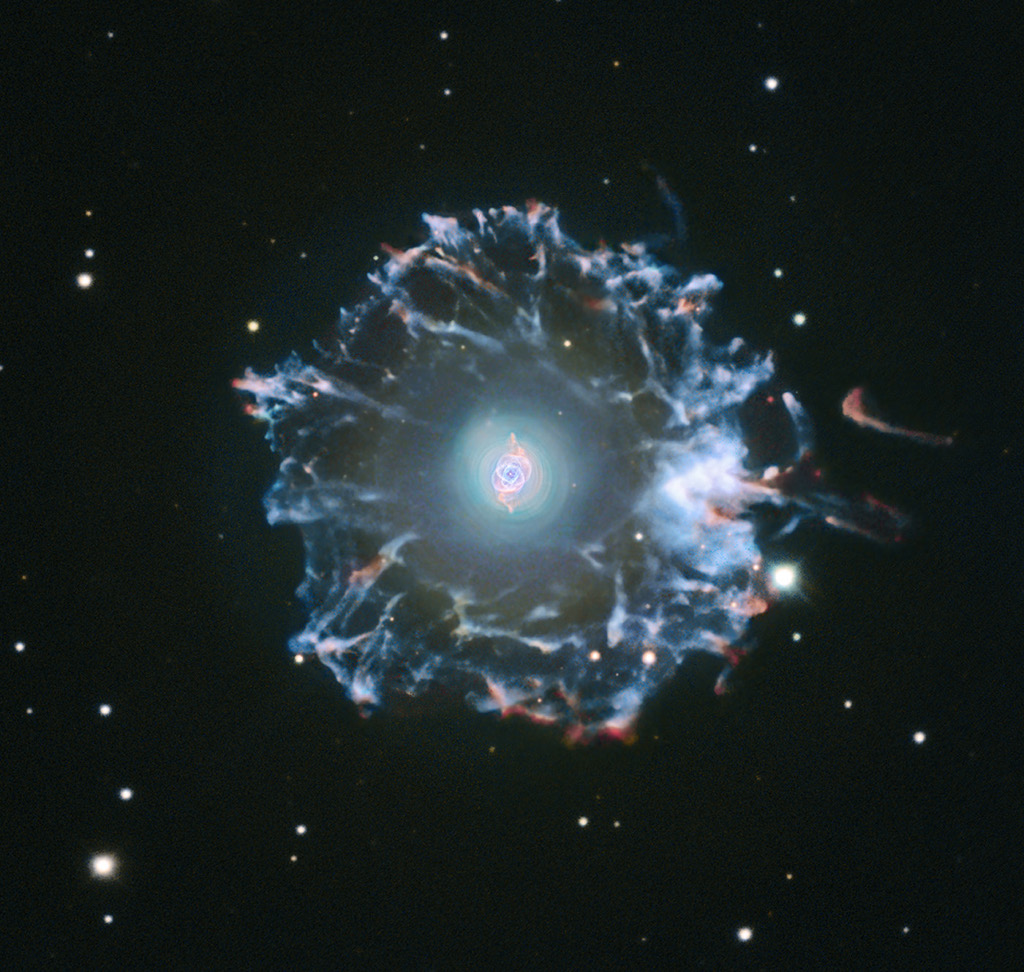
The Cat's Eye Nebula


Cat's Eye Nebula (NGC 6543) is one of the best known planetary nebulae in the sky. Planetary nebulae have long been appreciated as a final phase in the life of a sun-like star. But only more recently have some planetaries been found to have halos like this one, likely formed of material shrugged off during earlier active episodes in the star's evolution. While the planetary nebula phase is thought to last for around 10,000 years, astronomers estimate the outer filamentary portions of this halo to be 50,000 to 90,000 years old.

Friday, September 7, 2018

Short Book Reviews: An Unrealistic Depiction of Recovery


The Shifting Pools, by Zoë Duncan (Trafalgar Square Publishing)

I requested a review copy of this book based on its description: 
Fleeing war and the death of her family, Eve has carefully constructed a new life for herself in London. Yet she is troubled by vivid, disturbing dreams, symptoms of her traumatic past, which intrude increasingly on her daily life. As she is drawn further into her dream world, she finds herself caught up in a fresh battle for survival. A dark, lyrical fantasy about healing and reconnecting with the full richness of the self.

As the family member of a murder victim, I am especially interested in stories of survival and healing. Although competently written on a prose level, The Shifting Pools turned out to be an example of telling the reader how to feel. (Actually, bashing the reader over the head.) Sections alternate between modern London, where Eve has begun psychotherapy (not, as the author says, psychoanalysis, a mistake that threw me out of the story!), Eve’s childhood trauma, Eve’s dreams that make no more sense than any other dreams, and a “fantasy” fairy tale that lacks the internal structure, sense, and mythic elements that make such a tale work psychologically.

Besides being confused by constantly switching from one brief scene to another, I found each thread unbelievable. I’ve already remarked on the fairy tale. Although Eve and her family are brutalized by an invading army, they read like an ordinary Western family. Given what has been happening to refugees in the past few centuries, this depiction of white privilege, with all its wealth and resources, struck me as shallow. Certainly, wealthy people can be victims of violence, but in this case there was the opening for a deeper cultural context.

More than that, modern Eve didn’t feel like a person grappling with buried trauma. Her journey into the dark places of her own psyche came across as superficial and trite, much too easily accomplished, without the soul-deep agony and strength of real survivors. The list of references at the end is light on psychology, and includes the outdated psychoanalytic work of Frankl and Jung but none of the modern understanding of PTSD and its treatment. Medication, CBT (cognitive behavioral therapy), EMDR (eye movement desensitization and reprocessing), PE (prolonged exposure) and other clinically proven methods aren’t even mentioned. The result might be poetic and overly dramatic but struck me as not at all realistic. My suggestion is to go spend some time with people who actually have survived PTSD and listen to how they talk because I didn’t believe Eve was one of them.

The usual disclaimer: I received a review copy of this book, but no one bribed me to say anything about it.


Friday, May 25, 2018

[personal] Hope for Our Kids

Renoir, Maternite, 1887

On Mother’s Day, May 13 2018, I attended the graduation of my youngest daughter from medical school. While this is surely an occasion of joy and pride for all families, in this case it is especially so. Rose had a long, hard struggle through her adolescence and teen years. As her (single, working) mother, I couldn’t wave a magic wand and make her problems go away; what she needed was patience and love, especially my unwavering belief that she was resourceful enough to cope her challenges. One of the things that helped me during those difficult years was hearing from another mother about the rough time her son had gone through, but that he had come through those times, rebuilt his life, and was now a successful emergency room physician. (Both our kids becoming doctors is an interesting coincidence.)

For quite a while, I blamed myself for Rose’s difficulties. She’d been an intense, fiery toddler, than an easy-going child. When my mother was murdered, Rose was only 3 months old, so she grew up with me struggling through initial PTSD recovery. It was sheer awful luck that her puberty and my crisis (after the first parole hearing of the man who did it) and subsequent breakup of the family happened about the same time. She and I ended up moving to a different part of the state, both of us trying to restart our lives. Marion Zimmer Bradley had invited me to collaborate with her on Darkover, so my writing career was getting started again. I was dating the man I eventually married, so many aspects of our lives were happier and more stable. Except, of course, for adolescent hormones.

After doing well in middle school, Rose starting having difficulty, including self-harm. It was clear to me that if I got on her case about it, the only result would be that she would stop talking to me and I could not help her. So I took my worries elsewhere, including to the friend who told me about how her son had overcome drug addition and other serious problems, then finished college and went on to medical school. Another story I heard involved a kid who was living at home and not doing much. When his parents issued an ultimatum to either go to school or get a job. the kid moved out, became a drug dealer, and ended up in prison. The friend who told me this story was at a loss to do with her own son, who had dropped out of college and moved back home. Her thought was that at least she knew where her son was, and he was in a safe place until he could figure things out.

Wednesday, February 8, 2017

In Troubled Times: Seeking Courage, Finding Strength

Given everything I’ve been dealing with – fear about the unfolding political scene on one hand and the recurring nightmare of an upcoming parole hearing for the man who raped and murdered my mother on the other – I have at times felt powerless. Not just powerless but unable to summon the energy to continue what seems like an endless, life-draining battle. I become prey to fear at these times, fear that I will slip back into unending waking nightmare that was my experience of PTSD. I have worked hard to claw my way back to health, and when I am overwhelmed, I forget all the lessons I have learned and the ways I have changed.

It’s said that fear is False Evidence Appearing Real (or Fuck Everything And Run). It takes courage and a dedication to clear-sighted integrity, seeing what is real both in myself and in the world, to overcome those fears.

But I’ve also heard courage is fear that has said its prayers. I don’t have to be fearless. I’m not sure that’s possible without massive self-delusion. To do what I am called to do even though I am afraid is the essence of courage.

Where do I find such courage? It’s commonplace to suppose that “doing something for someone else” or because no one else can do it is the best way to overcome fear. I’ve done my share of acting according to this belief. I find that although it is sometimes effective, it’s harsh instead of nourishing. It’s a position of desperation. I soon find myself “running on empty.” I’m the last person I take care of or even give consideration to. In fact, the very notion that taking action when afraid can be nourishing came as a startling revelation to me.

There are so many things I cannot change, the past being at the top of that list. But I do have some say in my own attitude. Instead of seeing myself as desperate and without any choices but to plunge ahead, gritting my teeth the whole way, I can see myself as resourceful. I learned to do this for others when my kids were having a hard time in their teenaged years and my therapist pointed out that they didn’t need me to inflict my own worries on them, communicating that I thought they were incapable of handling their problems; what they needed was my faith in their ability to find their own creative solutions.

So if I’m going to be creative and resourceful in facing the parole hearing and the distress rampant in my community, I need to think “outside the box.” Not attending the hearing is an option that never occurred to me in the early years. Once I let go of “I have to do this,” I see other possibilities. Some I can anticipate on a reasonable basis (another family member might attend, a representative of the D.A.’s office might – actually, does – attend; I could send a video of my statement; I could hire an attorney to attend in my place), but I must also keep in mind that my imagination doesn’t dictate what happens. Many times I thought I knew all the possible outcomes, only to discover that what actually happened was something I had no way of anticipating.

Wednesday, January 25, 2017

In Troubled Times: Letting Others Shield Me

It should come as no surprise to anyone who knows me well that I’m a dragon-slayer. I place myself squarely between my loved ones and anything that threatens them. It’s a longstanding family joke that the only time I used the physical aspect of 30+ years of Chinese martial arts was when I jumped between my preschool-aged daughter and a rampaging swan (and kicked the swan in the head). Now I’m in the position of the taken-care-of, the protected, not the protector.

This sea change came about as a result of a series of family conferences about the upcoming parole hearing. I mentioned earlier that I’ve learned to pay careful attention when people who love me express concern for my mental health. They have good reason to. At every parole hearing I’ve attended in person, I have been the family spokesperson. That meant staying focused and present, no matter what was happening. It meant putting my own needs and reactions on hold so that I could act.  The first hearing took place in San Quentin State Penitentiary. I cannot begin to tell you what a not-nice place that is, even if you know you can walk out. Yet I was so focused on my responsibility to prevent the perpetrator from hurting anyone else, I never thought twice about attending or speaking, and it took a terrible toll on my health and sanity. My family and my close friends know what a dark time I went through and how hard I worked to recover. I have learned the hard way that just because I am capable of doing something scary and hard does not mean that I have to.

The last hearing took place in 2008, and neither my sister nor I attended it. We arrived at our decisions independently but in conversation; we each supported the other’s decision, recognizing that we don’t have to do make the same choice in order to support one another. A month before the hearing, the inmate – Sean DeRutte -- sent a letter to us via Victim Witness Services. When mine arrived, I asked my husband to look at it first. When he read it, he turned sheet white and said, “Don’t read this.” On the first page was a description of the sexual assault, containing details never before divulged.

In all the years since his incarceration, De Rutte never admitted to the sexual assault. Doubtless his attorney counseled him to not mention any crime for which he was not convicted (and this was a plea bargain, so he was not convicted of rape). However, the Parole Board Commissioners had previously made it clear that until he was able to express understanding and remorse, he was never going to be released. That he chose to inflict the details of a violent sexual assault on the daughters of his victim demonstrates he has no empathy for other people’s pain.

Once I stopped shaking and made some outreach calls, I tried to telephone my sister. I was too late in reaching her, for she had already opened and read her letter, and while in a public place, the post office. She was terribly distressed by it, as any person with a shred of sensitivity can imagine. I had my husband fax the letter to the District Attorney to use during the hearing. Apparently, even more shocking details came out then, so much so that the D.A. cautioned us to not read the transcript.

Fast forward 5 years to the current hearing, I contemplated whether or not to attend, resolved not to, and decided furthermore that since I have so far been spared these additional, appalling details of the assault, it would be in my best interest to continue to shield myself and to allow people who love me to help me.

Not knowing things doesn’t come easily to me. Most of my life I’ve used knowledge as a way of gaining control over my life. I found much truth in the saying, “We’re only as sick as our secrets.” So to deliberately not open a file or a letter, to not search out facts that have great emotional importance in my life, feels cowardly and counterproductive. And yet that is also what seems healthiest for me to do now. I truly do not want to know any more about what my mother suffered in the last minutes of her life. It’s easier to remember that and respect the boundaries I’ve set for myself if I have help.

This means, among other things, that not only am I not going to attend this hearing – at which time the letter and other aspects of the crime will undoubtedly be discussed – but I must guard myself carefully in the weeks to come. At the same time, I must remember that I am not alone. How does this translate into action? It means two things. First, it’s up to me to ask for help. This is both difficult and easy. Easy because it feels active, and I’ve found that taking empowering action lowers my anxiety. I’m doing something. At the same time, it’s hard to step away from the solo paladin, front-line role. I have a long-time habit of mistrusting any action that I haven’t done myself or personally observed when it comes to this area of my life. Now I must shift to relying on the judgment of others, to take their word on what is safe for me. I know they’ll make errors, but I hope these will be in the direction of protection I may not actually need and not in the other direction. If one of them misjudges the emotional pain something might cause me and as a result I don’t learn certain details of the assault or subsequent events, that is not a problem. It doesn’t endanger my safety.

For someone as information-centered as I have been, it’s a big deal to relinquish specific accuracy for the bigger picture. I am not a prosecuting attorney arguing the case, requiring that high degree of precision. I already know far more than is emotionally healthy for me. At one time, I believed that no information could be worse than what I imagined, but as I have learned more with each successive hearing, I see that is not true. Rather, the reverse. I have learned more than I ever wanted or needed to, and now it is time to close the door and say No more.


My gratitude to those loved ones who are willing to act as buffers for me is immense. I understand that the same details that might give me nightmares for years are horrific but not nearly as traumatizing for them. Nevertheless, it is sometimes a struggle to allow them to place themselves between me and the fire. I wrestle with stepping back and accepting their help. That part feels passive in the sense of not doing anything but is actually receptive. I think of how a gift enriches both the recipient and the giver, and how good it feels when I am able to help someone else. When I see that I am offering that same opportunity to my loved ones, I feel empowered rather than indebted. This isn’t charity, it’s compassion in action. And for that to happen, I have to hold open the space for others to act on my behalf.

Monday, January 16, 2017

In Troubled Times: A Personal Sanctuary

When I received a letter from the Department of Corrections, informing me of the late March parole hearing for the man who raped and murdered my mother, I felt overwhelmed. It had been as much as I could do to maintain emotional equilibrium in the face of the election and then the illness and death of our wonderful German Shepherd Dog, Tajji. I knew the next hearing was schedule for 2017, but I did not expect to begin the year in dread of that ordeal. I know what these hearings have done to me in the past and how hard I have had to work on survival and recovery. Each hearing has not only opened old wounds but created new ones as more was revealed.

Almost immediately, I started noticing worrisome changes in my mental health. In the 30 years since my mother was killed, I’ve come to know the “warning signs” quite well. I no longer ignore them as I once did. I dare not “soldier on” or bury myself in work: that way lies madness. Thank goodness, I have never been tempted to use substances, legal or not, to escape. Instead, I run to anxiety as my drug of choice. This time I decided to take action on my own behalf before I got into serious trouble.

First I enlisted allies. At the top of that list is my family, both my daughters (one at home, one across the country) and husband, and my sister, with whom I’m very close but who lives in a different part of the state. I let them know I was having a hard time and that if I was distracted or irritable (or flaming irrational), to not take it personally because that meant I needed help. No matter what’s going on, extra hugs are always helpful! So it goes without saying that I am asking for – and receiving – more physical affection. I find my whole body relaxing into a hug and I often fall asleep while cuddling with my husband, I feel so safe and loved.

I decided to tackle my broken sleep first. My daughter and I had gotten into the habit of watching videos until it was bed time. We made a pact (and shook on it) to turn off the television early, to not begin a new episode of whatever program we were streaming after 9 pm. I was delighted at her enthusiasm for meditating with me. We got out our cushions and sat on the living room floor, facing one another. The first evening, we lasted only 5 minutes, but that was enough to produce a sound night’s sleep. Since then we’ve missed a night here and there, but have been continuing the practice for progressively longer times. I don’t need an hour; 10 or 15 minutes seem enough right now. Soon we realized that one of the cats was joining us, sitting in between us or on my lap, and purring. I found the purring added to my relaxation and mental calm.

Monday, January 9, 2017

In Troubled Times: Overwhelm

Life has treated me to a bumpy ride recently. I’ve written about challenging times following the election, with all the fear, confusion, and so on. It seemed the bad news would never end when Carrie Fisher and Debbie Reynolds died. We lost our old German Shepherd Dog after a short but difficult illness that turned all our lives inside out. Through this, I tried to practice good self care, cultivate insight and perspective, and share my journey. Mostly I was able to regain my emotional and spiritual balance, and the periods of feeling at a loss grew shorter. The grief for our dog felt natural and healthy; she had gone peacefully in the end, surrounded by love, and we all had so many happy memories of her.

And then I received a letter from the Department of Corrections with the date of the next parole hearing of the man who’d raped and murdered my mother. It’s such a horrendous thing to be reminded of at the best of times, but now, when my stability is already fragile, it’s particularly awful. I’ve written about the murder many times over the years, from my introduction letter upon joining SFWA to a recent post as part of #HoldOnToTheLight (a blog campaign encompassing posts by fantasy and science fiction authors around the world in an effort to raise awareness around treatment for depression, suicide prevention, domestic violence intervention, PTSD initiatives, bullying prevention and other mental health-related issues). I tell my story when I campaign against the death penalty. As much as I do not want to give a single thought to the murder and its aftermath right now, I’m going to have to deal with it. Whether or not I attend in person, send a letter, record a video statement, ask friends to write letters opposing his release, it’s in my mind. Like some particularly vile parasitic worm, it’s wending its way from my thoughts into my guts.

Sometimes treading water is the best you can do, and that’s enough. Running as fast as you can to just stay in place at least keeps you in place. Life flattens us and we have a good cry and then pick ourselves up. Our friends (and sometimes strangers) give us a hand up. We do the same for them. But sometimes what life piles on us is Just. Too. Much.

I didn’t get to vote on this. I didn’t ask for it. My mother was an amazing, compassionate, intelligent, radiant soul. Even if I walk away, the way her life ended will still be with me. I can’t take it out of my mind and body, let alone my spirit.

It sucks bigtime.

That’s where I am today. Despite all the self care, I’m sleeping badly. I’m irritable, at times bordering on irrational, although my family nudges me back to sanity. My muscles reflect the inner escalation of tension. Most of the time, it’s a lot of fun to be me, but not now. I’m not sure why the people who love me put up with me.

Sleep is my miner’s canary, my early-warning signal that I’m no longer treading water, I’m sinking. I don’t ever, ever want to go back to what happened to me after the first parole hearing, so I take these signals very seriously. I take it even more seriously when a dear friend and, separately, a family member express concern for me. I’ve learned to not brush off such concerns with, “I’m fine.” I’m so clearly not fine. If someone who cares about me sees something in my behavior, or hears something behind my words or in my unguarded expression, for them to say something to me is an act of pure love.

When we’re drowning, we need all the love we are offered.

I am loved, and that’s how I’m going to get through this as a sane, loving person.


In the next installment of “In Troubled Times,” I’ll share some of the ways I’m giving myself extra help. I don’t expect it to be an easy passage, but I’ve learned a lot over the years about surviving even what seems to be unsurvivable. Please come on that journey with me: it’s not one anybody should ever take alone.

Friday, September 16, 2016

Surviving A Murder: A #HoldOnToTheLight Post


In 1986, my 70-year-old mother was asleep in her own bed when a teenaged neighbor broke into her home, raped her, and then beat her to near death and left her face down in a partially filled bathtub. It was a spectacularly brutal, banner headline crime, called by the District Attorney one of the most heinous in the history of the county. On hearing this story, many people ask me, “How did you survive?”

I don't think survival is the question. Although numb with shock and drenched in grief, we get up in the morning. We brush our teeth. In my case, I had two daughters, one almost seven and the other 3 months old, to care for. We cry. We scream. We comfort one another. We go back to work. We take on the trappings of an ordinary life, carrying on in the blind faith that our insides will someday match the artificial normality of our outsides. Or we find our days transformed by what we have lost, not only our loved ones but our belief in the decency of our fellow humans and our sense of safety in the world. Some families dedicate themselves to finding the killer or to participating in punishment. Others become radicalized in other ways.

In other words, we do what seems best to us in order to survive. We do everything except tend to the grievously wounded parts of ourselves.

We know today that post-traumatic illness is not limited to soldiers in battle or the surviving loved ones of murder victims. We know that for most of us, it does not go away simply because we ignore it. Some people live reasonably functional lives by walling off their pain like an abscess, refusing to talk about it and “acting as if” everything is fine. I make no judgment about them; I am the last person to advise anyone else about how to live with something only they can understand. I know only that I was not among them.

I tried my hardest to be strong. Instead, I broke.

The man who killed my mother had pleaded guilty to a lesser charge, thus sparing my family the ordeal of a trial but leaving many questions unanswered. In 1995, he became eligible for his first parole hearing. There was no question in my mind about attending and speaking against his release. I poured myself into writing a speech, I marched into San Quentin Prison, I stood up in the presence of the perpetrator, I addressed the Parole Commissioners in the strongest possible language, and then I went home.

I thought it was over when parole was denied. I was wrong.

A year later, I went into a psychological and spiritual crisis. A series of increasingly troubling symptoms should have alerted me to my own emotional deterioration, but I clung too tightly to the appearance of normality to pay attention. When the break came, I folded like a house of cards: I couldn't eat, I couldn't sleep, I couldn't stop crying. I would look in the mirror and not recognize the person who looked back at me. It seemed to me that nobody was home behind those glassy, deer-in-the-headlight eyes. I've heard almost those same words from other murder victim family members. I call us “murder survivors.” This time, there was no question of “carrying on.” Slowly and painful, with many missteps and amazing, often unexpected, kindness from those around me, I began to heal from the inside out.

Because I am a writer, much of what I experienced — not the external circumstances but the emotions and insights — made its way into my stories. Why fiction? Stories keep our intellects busy while the deeper parts of our psyches grapple with things that are not easily put into words. 

I am not a psychotherapist or an expert on recovery from trauma. Nor am I a military veteran or law enforcement officer, or war refugee, or family member of someone who has been executed, so I cannot speak from my own experience about the horrendous stresses those people face. However, I have found that I have much in common with folks who suffer from post-traumatic illness from other causes. I have exchanged support and become an ally of family members of offenders, as well. Their grief and pain is no less overwhelming than my own.

We are all survivors, and all of us are wounded in ways we sometimes cannot name. And there is hope for all of us. One of the most powerful ways we can help one another is by telling stories and listening to each other with open hearts.

You are not what happened to you, and you are not alone.


About the campaign:
#HoldOnToTheLight is a blog campaign encompassing blog posts by fantasy and science fiction authors around the world in an effort to raise awareness around treatment for depression, suicide prevention, domestic violence intervention, PTSD initiatives, bullying prevention and other mental health-related issues. We believe fandom should be supportive, welcoming and inclusive, in the long tradition of fandom taking care of its own. We encourage readers and fans to seek the help they or their loved ones need without shame or embarrassment.

Please consider donating to or volunteering for organizations dedicated to treatment and prevention such as: American Foundation for Suicide Prevention, Home for the Warriors (PTSD), National Alliance on Mental Illness (NAMI), Canadian Mental Health Association, MIND (UK), SANE (UK), BeyondBlue (Australia), To Write Love On Her Arms and the National Suicide Prevention Hotline.

To find out more about #HoldOnToTheLight, find a list of participating authors and blog posts, or reach a media contact, go to https://www.facebook.com/groups/276745236033627/


Tuesday, February 16, 2016

A Fruitful Absence

It's been a while since I've blogged regularly. I've put up some quotes-to-think-about on Mondays, and soon will be hosting a series of guest interviews from the contributors to Realms of Fantasy.

This does not mean my writing has come to a screeching halt, however! Quite the opposite: I've been working on two and sometimes three projects. One is the next-next Darkover novel (Thunderlord is scheduled for this August, so this is The Laran Gambit, which I hope to turn in by the end of 2015.) I'm about 10K words into it; it's got some forward momentum building to the first thing-changes-everything moment. I've heard writers say they don't like to talk about a new project because their creative energy goes into the talking, not the writing. That's somewhat true in this case. And besides, why talk about a book that isn't even finished when one that is ready to go will be coming out soon? This is what happens when writers turn in one book and dive right into the next, while publishing takes its sweet time. If you're curious about Thunderlord, check the blog archives here. I posted snippets of chapters from the first half of the book. And I'll blather on about it as the day approaches.

The other big project is a combination of fiction (sword and sorcery) and non-fiction (commentary on my own sometimes very dark journey of healing from my mother's murder). I've spoken about the latter, sometimes to large audiences, but writing about it, especially as intensely as I have been doing in the last couple of months, is much more immersive. I have no idea if anyone will want to read it, but the writing has been filled with revelations for me. Here's a bit from the introduction:

Because I am a writer, much of what I experienced — not the external circumstances but the emotions and insights — made its way into my stories. In the first few years after the murder, I wrote a short story, “Rite of Vengeance” (Sword & Sorceress V, ed. Marion Zimmer Bradley, DAW, 1988) about anger and revenge; it also contained a glimmering of understanding of how these could destroy me. I followed the same wounded heroine in “Crooked Corn” (Spells of Wonder, ed. Marion Zimmer Bradley, DAW, 1989) and eventually used these two episodes as the basis for a novel-length work, The Haunted Ring. The good news was that this gave me a sense of completion; the bad news was that it simply did not work as a novel. Eventually, I set it aside as a poignant but essentially dead-end exercise. 
Years and much recovery later, this book presented itself to me again. I was speaking to a class of law students, trying to explain what it was like to live through the violent death of a loved one. I scribbled a few notes on the “stages” of healing — numbness and shock, anger and vengeance, letting go, re-engaging with life, and so forth. It occurred to me that The Haunted Ring was not a deeply flawed, episodic, meandering novel. It was a healing journey disguised as a fantasy-adventure.
Here then is that story, with my own commentary about how I now understand what all this was about for me, and some queries that have been helpful to me. Stories keep our intellects busy while the deeper parts of our psyches resonate with things that are not easily put into words. Every person's experience of tragedy is different. How we make sense of what has happened to us also changes with time. A reader brings his or her own history and temperament, beliefs and visceral reactions, to the tale.

The way I've structured this book, each chapter of story is followed by commentary about my own experiences, reflections on larger issues of clawing my way out of the darkness and then creating the life I want, and queries for reflection. I'll keep you posted about the progress of this piece. It's in revision now, but because it is so emotionally intense, it's hard to predict when it will fly along and when I have to take a breather.

Saturday, November 14, 2015

Paris, Grief, and Healing

Lots of folks have posted on the recent terrorist attack in Paris. I don't have much to add, but I do feel moved to re-post some thoughts from years ago, about 9/11 and the anniversary of my mother's murder, also in September. A few of the references are dated, but the process of coming to terms with trauma remains valid for me.


What has changed for me this year is that I have begun to work for the abolition of the death penalty. Speaking only for myself, I see strong parallels between a murder victim family seeking this form of revenge and the vilification of the Muslim community concurrent with the invasion of Iraq. Of course, justice is desirable. Criminal acts call for appropriate consequences. I would never say that it’s okay for my mother’s killer to walk the streets or that those responsible for the 9/11 attacks should not be prosecuted according to law. Setting aside the politics of that invasion and the problems with the application of capital punishment, however, my concern is with whether retaliative actions help or hinder the recovery of the survivors.

My own experience is that revenge does not. I want to emphasize that I do not speak for anyone else. We all have different experiences. For me, focusing on wishing harm to the one who had harmed my mother might well have kept me locked — incarcerated — in a state of bitterness and hatred. While I was in no way to blame for what happened, I still bear the responsibility for what I do with it. It’s like the adult child of an alcoholic getting herself into therapy instead of whining helplessly, attributing all her problems to her upbringing.

I have to ask myself, What do I need? What do I want? One of my inspirations was a woman of astonishing kindness and grace, whose daughter and son-in-law were murdered and whose bodies she discovered. She told me that she faced a choice of whether or not to let herself be driven crazy by what she experienced. I think we all have that choice — to succumb to the darkness of our anguish and righteous fury, or to walk through it, to move beyond it.

I remember the scene in The Princess Bride where Inigo Montoya finally tracks down Count Rugen, who begs for his life and offers anything. Inigo says, “I want my father back!” (and then kills him). I want my mother back, too. All those who lost loved ones and colleagues want them back. We know that’s impossible, but what is possible is to get our own lives back. Our own selves. Our best selves.

My experience of healing is that I get myself back when I focus on re-engaging with life, on fully experiencing my feelings, on understanding what I have lost and what can never be replaced, but what can be restored. The more I stop looking to an external event (the execution of the murderer) to somehow make me feel better or “achieve closure,” and instead focus on taking care of my insides — my heart, my spirit, my body — the better I fare.

So I’ve been talking about my own healing process and what I’ve learned. I’ve been meeting with other family members and with people who’ve been sentenced to death and then exonerated. I’ve been looking for ways to build bridges, to nourish tolerance and reconciliation, to create understanding. I make an ongoing conscious decision to not harbor hatred in my heart, but to fill it instead with what I want in my life.

Love. Compassion. Gratitude. Joy. Wonder. Peace.

I can think of no more fitting memorial for my mother . . . or for those who died on 9/11.

Monday, November 9, 2015

World Fantasy Awards and Jackson's Middle Earth

First and foremost, congratulations to the winners of the World Fantasy Award, and also to the finalists. Many splendid creations here.

Now this post will veer off in a highly personal direction, applying to no one but myself. I have read one of the winners and when I saw the title, I felt a little sick. Do not get me wrong -- the work absolutely deserved the award. It was highly original and superbly executed, a stellar addition to the field.

And it gave the the absolute shakes. There's no way I can see myself ever reading it again. Our local library got my copy.

I've talked with folks who write and love horror about my aversion to it, and I appreciate their point that horror gives us a way of regaining power over the things that terrify us. Once upon a time, I got a delicious thrill out of that adrenaline jolt and the weird, fascinating dark stuff. I don't anymore. I think my threshold has been permanently re-set, and the consequences of exceeding it are more tenacious.

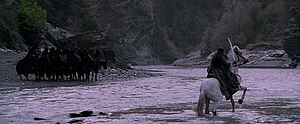
So why am I not pushed over that edge by the violence in the Peter Jackson Middle Earth films? There's plenty of excitement and twenty ways to kill an orc, each sillier and bloodier than the one before, and characters I love in dire peril. Is it the fantastical setting? The characters, even non-humans like Elves and Dwarves, don't feel unreal. Is it the knowledge that all will be well in the end, or as well as can be, given the price various characters play? I still cry at Boromir's death -- he didn't have a happy ending.

And yet, as I wrote in an earlier, watching the films, with all their flaws -- and also reading the books, albeit less vividly -- leaves me with a feeling of peace. Emotionally wrung-out, but brought to a good place by all the adventures I've gone along on.

Truly, we each see and read a different story. They are all colored by what we as individuals bring to them.

Tuesday, November 3, 2015

Peter Jackson’s Middle Earth – Unexpected Gifts


It has often seemed to me that fans of J. R. R. Tolkien’s The Lord of the Rings (and The Hobbit) fall into two categories: those who adore Peter Jackson’s films and those who despise them. I fall into the former category and my husband into the latter. From our conversations, I have concluded that in most cases, it is impossible to change the other person’s mind (not to mention disrespectful to try). This is hardly a problem of cosmic importance, unless one person attempts to drag the other to all six extended cut versions of the movies or prevents the other person from enjoying them. Both sides put forth arguments and reasons, and they are entitled to them. I think just about everything that can be said has already been expounded upon.

I am firmly in the love-them camp. All the objections folks have are absolutely right, and have no relevance to my experience of the movies. The uncritical, immersive, “take me away” quality of my enjoyment of the films has definitely piqued my curiosity. What happens when I spend hours in Jackson’s Middle Earth?

In general, I am far less critical of visual media than of text. Because my own art form is prose, I have developed a keen internal editor and critic that may be regaled to the back seat but never entirely departs. I have no such filters for films or paintings. Only a horrifically bad film can destroy my suspension of disbelief, but horrifically bad films are enjoyable for quite different reasons than good ones.

I devoured Tolkien’s novels as a young adult, although I never wanted to run away to Middle Earth then. I found some aspects of the books frustrating: the “travelogue” passages were often tedious, I had no idea what Tom Bombadil was doing in the story, and I had trouble forming clear images of many of the places, for example Helm’s Deep. Nonetheless, I joined the ranks of fans wearing buttons that said “Frodo Lives!” and “Beware the Balrog.” I stood in line to see the films by Ralph Bakshi and Rankin-Bass (The Hobbit and The Return of the King), all of which I found unsatisfying. The hobbits and dwarves in the animated versions were silly, in bad need of haircuts, and the Bakshi film was just plain weird. The orcs looked like sabertoothed Sand People (from Star Wars), the Balrog was a costume from a bad opera, Boromir looked ridiculous in a Viking helmet, and none of the character moved in a natural way. Et cetera.

I had no idea who Peter Jackson was, but special effects had come a long way since the 1970s. Needless to say, I had excitement but not high hopes. I came prepared to see a live action version of the previous attempts. Five minutes into The Fellowship of the Ring, I was in love. The Jackson films “clicked” for me and brought the stories alive in ways that previous versions, even the original text, fell short.

This is not to say that everyone must feel the same way. Different media and different interpretations work for different people. I’m delighted that some folks prefer Tolkien’s text or even the animated versions. I am also delighted that this one form of presentation worked so well for me. When I go back and re-read the books, I can now immerse myself in the rich and varied landscapes of Middle Earth, and see and hear the characters.

After the extended editions of all three Ring movies came out on DVD (and I had watched all the commentaries and appendices), I set them aside. Every few years, however, I would watch them (3 movies over 2 days, usually, and when my husband – who is in the “doesn’t work for me” camp – was out of town). Either by happenstance or internal prompting, my schedule synchronized with the parole hearings of the man who raped and murdered my mother. That is, I’d gear up for the hearing, get re-traumatized no matter what precautions I took, come home and fall apart, and slowly put myself back together again. Some quality of the Jackson films spoke to me and offered itself as a healing tool.