Showing posts with label medicine. Show all posts

Monday, August 10, 2026

[Reprint] The Science of Bones


Bones communicate with the rest of the body to support overall health – here’s the science behind your skeleton
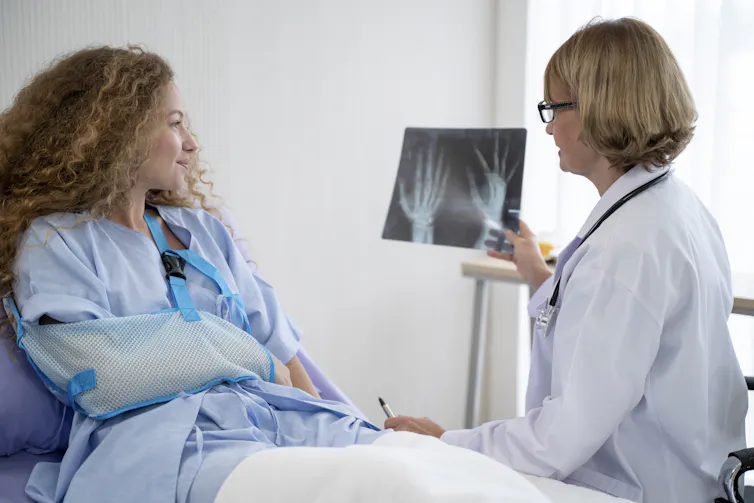
woman talking to doctor about X-rays
Healing after a fracture is just one way your bones contribute to your body’s overall health. seksan Mongkhonkhamsao/Moment via Getty Images
Priya Bhardwaj, Washington University in St. Louis

Each year, doctors treat more than 6 million bone fractures in the United States. And while it takes only a few seconds for a bone to break, the processes that keep your bones strong and allow them to heal are taking place continuously throughout your life.

Beneath their hard surface, your bones are alive with activity, continuously being broken down, rebuilt and reshaped. Far from being static structures that simply support the body, bones are dynamic, living tissues that respond to physical activity, hormones and the body’s changing needs.

I am a research scientist who studies bone biology and mineral metabolism. To me, one of the most striking things about bone is how dynamic it is, despite its static appearance. Research over the past 15 to 20 years has demonstrated that this is even more true than scientists had previously realized.

More than just structural support

For decades, scientists have known that bone provides support, stores minerals and continuously remodels itself. This remodeling is the process bone uses to renew itself, maintaining its strength while allowing the skeleton to adapt over time.

Different kinds of bone cells work together to maintain bone structure. Cells called osteoclasts remove old or damaged bone, while osteoblasts build new bone in its place. Osteocytes, which are cells embedded within bone, help sense mechanical strain and coordinate how bone responds. Together, these cells help the skeleton stay strong.

But over the past two decades, new research has emerged that is changing how scientists and physicians think about skeletal health. More than just a structural framework, bone also functions as a highly active tissue that helps regulate the body’s mineral balance, supports blood cell production and communicates with multiple organ systems.

Growing evidence also suggests that in order to perform these functions, bones produce signaling molecules that influence energy metabolism and balance the minerals the body needs.

Lifelong support

The balance between bone formation and bone breakdown changes throughout life.

Monday, December 15, 2025

Reprint: The Moral Amgiguity of Xenotransplantation


Putting pig organs in people is OK in the US, but growing human organs in pigs is not – why is that?

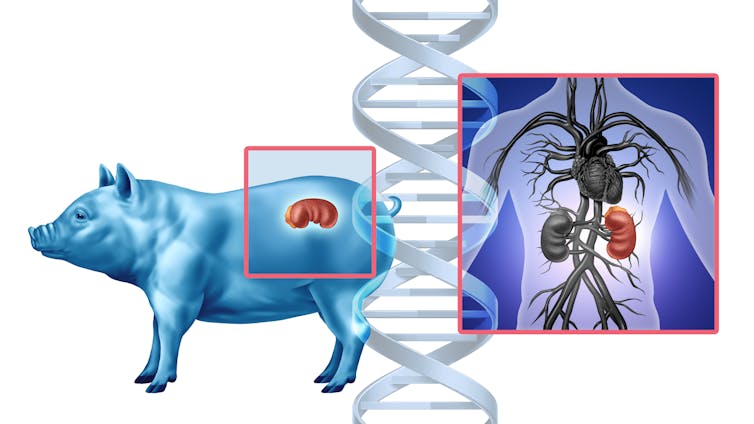
While research on human-pig chimeras is on an indefinite pause, xenotransplantation is moving ahead. wildpixel/iStock via Getty Images Plus
Monika Piotrowska, University at Albany, State University of New York

In a New York operating room one day in October 2025, doctors made medical history by transplanting a genetically modified pig kidney into a living patient as part of a clinical trial. The kidney had been engineered to mimic human tissue and was grown in a pig, as an alternative to waiting around for a human organ donor who might never come. For decades, this idea lived at the edge of science fiction. Now it’s on the table, literally.

The patient is one of six taking part in the first clinical trial of pig-to-human kidney transplants. The goal: to see whether gene-edited pig kidneys can safely replace failing human ones.

A decade ago, scientists were chasing a different solution. Instead of editing the genes of pigs to make their organs human-friendly, they tried to grow human organs – made entirely of human cells – inside pigs. But in 2015 the National Institutes of Health paused funding for that work to consider its ethical risks. The pause remains today.

As a bioethicist and philosopher who has spent years studying the ethics of using organs grown in animals – including serving on an NIH-funded national working group examining oversight for research on human-animal chimeras – I was perplexed by the decision. The ban assumed the danger was making pigs too human. Yet regulators now seem comfortable making humans a little more pig.

Why is it considered ethical to put pig organs in humans but not to grow human organs in pigs?

Urgent need drives xenotransplantation

It’s easy to overlook the desperation driving these experiments. More than 100,000 Americans are waiting for organ transplants. Demand overwhelms supply, and thousands die each year before one becomes available.

For decades, scientists have looked across species for help – from baboon hearts in the 1960s to genetically altered pigs today. The challenge has always been the immune system. The body treats cells it does not recognize as part of itself as invaders. As a result, it destroys them.

A recent case underscores this fragility. A man in New Hampshire received a gene-edited pig kidney in January 2025. Nine months later, it had to be removed because its function was declining. While this partial success gave scientists hope, it was also a reminder that rejection remains a central problem for transplanting organs across species, also known as xenotransplantation.

Decades of research have led to the first clinical trial of pig kidney transplants.

Researchers are attempting to work around transplant rejection by creating an organ the human body might tolerate, inserting a few human genes and deleting some pig ones. Still, recipients of these gene-edited pig organs need powerful drugs to suppress the immune system both during and long after the transplant procedure, and even this may not prevent rejection. Even human-to-human transplants require lifelong immunosuppressants.

That’s why another approach – growing organs from a patient’s own cells – looked promising. This involved disabling the genes that let pig embryos form a kidney and injecting human stem cells into the embryo to fill the gap where a kidney would be. As a result, the pig embryo would grow a kidney genetically matched to a future patient, theoretically eliminating the risk of rejection.

Although simple in concept, the execution is technically complex because human and pig cells develop at different speeds. Even so, five years prior to the NIH ban, researchers had already done something similar by growing a mouse pancreas inside a rat.

Cross-species organ growth was not a fantasy – it was a working proof of concept.

Ethics of creating organs in other species

Monday, June 2, 2025

Reprint: Why we fall for fake health information – and how it spreads faster than facts


Why we fall for fake health information – and how it spreads faster than facts

Should you share that health-related Instagram post? Catherine McQueen/Moment via Getty Images
Angshuman K. Kashyap, University of Maryland

In today’s digital world, people routinely turn to the internet for health or medical information. In addition to actively searching online, they often come across health-related information on social media or receive it through emails or messages from family or friends.

It can be tempting to share such messages with loved ones – often with the best of intentions.

As a global health communication scholar studying the effects of media on health and development, I explore artistic and creative ways to make health information more engaging and accessible, empowering people to make informed decisions.

Although there is a fire hose of health-related content online, not all of it is factual. In fact, much of it is inaccurate or misleading, raising a serious health communication problem: Fake health information – whether shared unknowingly and innocently, or deliberately to mislead or cause harm – can be far more captivating than accurate information.

This makes it difficult for people to know which sources to trust and which content is worthy of sharing.

The allure of fake health information

Fake health information can take many forms. For example, it may be misleading content that distorts facts to frame an issue or individual in a certain context. Or it may be based on false connections, where headlines, visuals or captions don’t align with the content. Despite this variation, such content often shares a few common characteristics that make it seem believable and more shareable than facts.

For one thing, fake health information often appears to be true because it mixes a grain of truth with misleading claims.

For example, early in the COVID-19 pandemic, false rumors suggested that drinking ethanol or bleach could protect people from the virus. While ethanol or bleach can indeed kill viruses on surfaces such as countertops, it is extremely dangerous when it comes into contact with skin or gets inside the body.

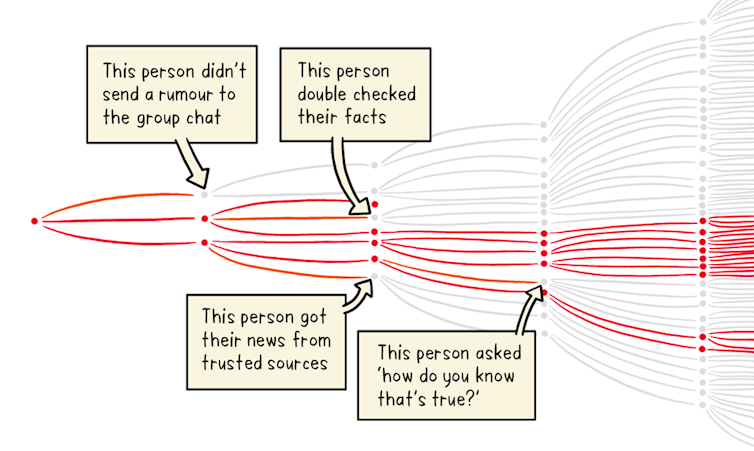
Stopping to check the facts helps stem the spread of misinformation. World Health Organization adaptation from Siouxsie Wiles and Toby Morris in The Spinoff, CC BY-SA

Tuesday, October 23, 2018

Herpes, PTSD, Organ Transplant Rejection, and Stars: Short Science Articles

How to make organ transplants last: New approaches try to train the body to welcome the replacement parts

A discussion of various strategies to prevent rejection in transplanted organs: 

Because transplanted skin has a high likelihood of provoking an immune attack, researchers were skeptical that faces or extremities could be transplanted, Cameron says. But people who have gotten face and hand transplants have needed surprisingly few drugs to minimize rejection. A recipient gets a bit of a donor’s immune system, in the form of blood-producing bone marrow stem cells within the donor’s jaw, hand or arm bones.

No one knows which, if any, of these approaches will free transplant recipients to live without fear of rejection. None of the techniques has been vetted enough yet, and none has worked for everyone, Luo points out. Each patient may need a different strategy or a combination of rejection-soothing therapies. Researchers need to push ahead on all fronts and not be afraid to explore other strategies, she says: At this stage of research, “we just cannot be … fixated on one idea.”


The Cat's Eye Nebula


Cat's Eye Nebula (NGC 6543) is one of the best known planetary nebulae in the sky. Planetary nebulae have long been appreciated as a final phase in the life of a sun-like star. But only more recently have some planetaries been found to have halos like this one, likely formed of material shrugged off during earlier active episodes in the star's evolution. While the planetary nebula phase is thought to last for around 10,000 years, astronomers estimate the outer filamentary portions of this halo to be 50,000 to 90,000 years old.

Monday, July 30, 2018

Scientific Wonders, July 2018 edition

A potpourri of nifty discoveries to remind us, in the midst of so much political anguish, what an amazing universe we live in.

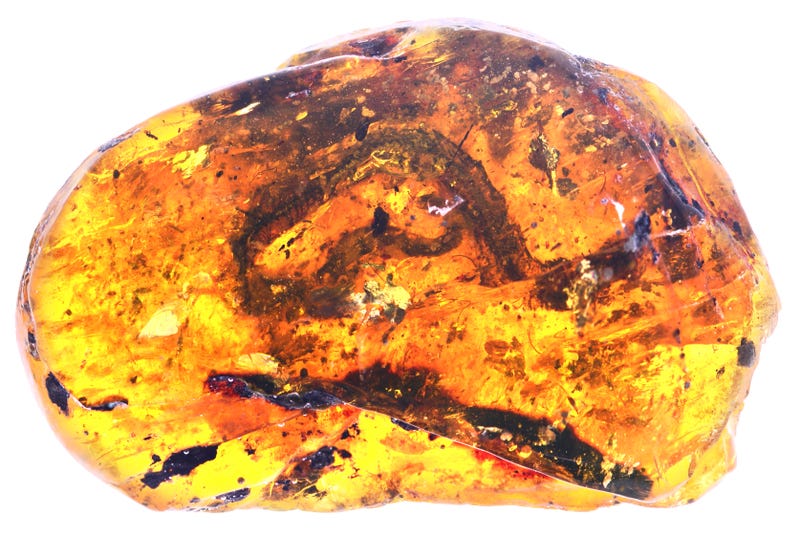
Baby Snake That Lived Among Dinosaurs Found Preserved in Amber


Using uranium-lead dating, a research team led by Lida Xing from the China University of Geosciences and Michael Caldwell from the University of Alberta dated the fossils to about 99 million years old. A technique called synchrotron x-ray micro–computed tomography allowed the researchers to get a close look at the tiny specimens inside the amber without having to break them apart.

Wandering Star May Have Disrupted Outer Solar System's Order


Astronomers have been wrestling with a few puzzles about the neighborhood for a while now. First, there's just not nearly as much stuff out there, all told, as they would expect. Also, it's odd that Neptune is more massive than the closer-in Uranus. And many of the small objects in the outer swath — like Sedna, a strange dwarf planet — follow extreme, stretched orbits at stark angles to the rest of the solar system's more orderly inhabitants.
Those quirks suggest that something must have stirred up the pot after the planets and large moons clumped together and formed out of the cloud of dust surrounding our sun early in its life. One possible culprit is a star that might have slipped next to our solar system and tugged objects off their original paths, throwing some out of the solar system entirely and skewing the orbits of others.

Saturday, April 21, 2018

Detecting Fake Social Media, the Origin of the Dinosaurs, and Other Cool Science News


Ben-Gurion University of the Negev (Beer-Sheva, Israel) and University of Washington (Seattle) researchers have developed a new generic method to detect fake accounts on most types of social networks, including Facebook and Twitter. According to a new study in Social Network Analysis and Mining, the new method is based on the assumption that fake accounts tend to establish improbable links to other users in the networks.The algorithm consists of two main iterations based on machine-learning algorithms. The first constructs a link prediction classifier that can estimate, with high accuracy, the probability of a link existing between two users. The second iteration generates a new set of meta-features based on the features created by the link prediction classifier. Lastly, the researchers used these meta-features and constructed a generic classifier that can detect fake profiles in a variety of online social networks.


Lead author Dr Massimo Bernardi, Curator at MUSE and Research associate at Bristol's School of Earth Sciences, said: "We were excited to see that the footprints and skeletons told the same story. We had been studying the footprints in the Dolomites for some time, and it's amazing how clear cut the change from 'no dinosaurs' to 'all dinosaurs' was."
The point of explosion of dinosaurs matches the end of the Carnian Pluvial Episode, a time when climates shuttled from dry to humid and back to dry again. There were massive eruptions in western Canada, represented today by the great Wrangellia basalts -- these drove bursts of global warming, acid rain, and killing on land and in the oceans.


Astronauts aboard the International Space Station captured this photo while flying over the western United States. The wide field of view stretches from the Sierra Nevada of California to the Columbia Plateau of Oregon and the Snake River Valley of Idaho.

Friday, October 30, 2015

GUEST BLOG: Transgender Genetics

From Open Minded Health, early research on the genetic differences between cis and trans men and women. We don't know what these findings mean...yet.


The science of transgender is still in its infancy, but evidence so far points to it being biological. Differences in brain have been seen, and I’ve covered them before here on OMH. However, genetic evidence is also being published!
This week, let’s take a look at CYP17. CYP17 is a gene that makes enzymes that are part of sex hormone synthesis. Mutations in CYP17 have been noted in some intersex conditions, such as adrenal hyperplasia.
Now, there’s a SNP that’s been noticed in CYP17. SNPs are “single nucleotide polymorphisms”, which takes some explaining. SNPs are very, very tiny mutations in genes — just one letter in the DNA alphabet changes! SNPs don’t usually change the protein that the gene makes very much.
So we have this gene — CYP17, that is involved in making sex hormones. And we have this tiny mutation, this SNP. Now let’s look at the science!
Specifically, let’s look at this one study that was published back in 2008. They looked at the CYP17 gene in 102 trans women, 49 trans men, 756 cis men, and 915 cis women. They compared the CYP17 of trans women to cis men, and trans men to cis women. Unlike many studies, this comparison makes sense. We’re talking about the DNA in the genes here, not something that’s changed by hormonal status.
They found multiple things:
  • There was no difference between trans women and cis men
  • Trans men were more likely to have a SNP in their CYP17 than cis women were.
  • Cis men, trans women, and trans men all had the SNP more frequently than cis women
What does that mean?
We don’t know yet. But it does appear that CYP17 is a gene that it might be worth looking deeper into to find potential causes for transgender.
Want to read the study for yourself? The abstract is publicly available.