Bones communicate with the rest of the body to support overall health – here’s the science behind your skeleton
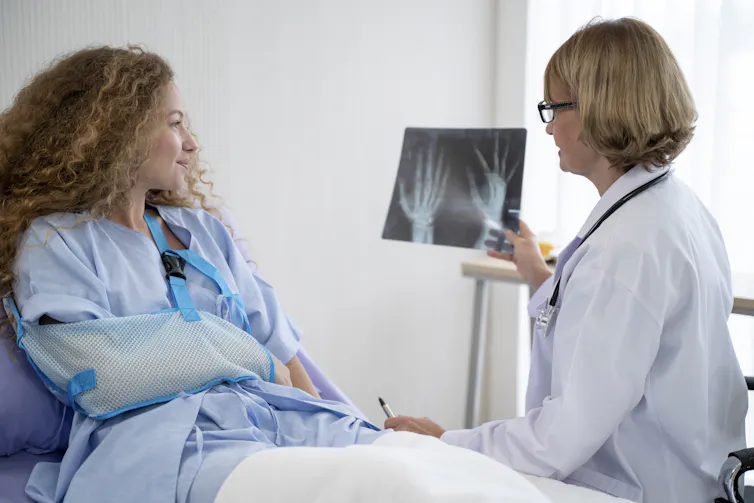
Each year, doctors treat more than 6 million bone fractures in the United States. And while it takes only a few seconds for a bone to break, the processes that keep your bones strong and allow them to heal are taking place continuously throughout your life.
Beneath their hard surface, your bones are alive with activity, continuously being broken down, rebuilt and reshaped. Far from being static structures that simply support the body, bones are dynamic, living tissues that respond to physical activity, hormones and the body’s changing needs.
I am a research scientist who studies bone biology and mineral metabolism. To me, one of the most striking things about bone is how dynamic it is, despite its static appearance. Research over the past 15 to 20 years has demonstrated that this is even more true than scientists had previously realized.
More than just structural support
For decades, scientists have known that bone provides support, stores minerals and continuously remodels itself. This remodeling is the process bone uses to renew itself, maintaining its strength while allowing the skeleton to adapt over time.
Different kinds of bone cells work together to maintain bone structure. Cells called osteoclasts remove old or damaged bone, while osteoblasts build new bone in its place. Osteocytes, which are cells embedded within bone, help sense mechanical strain and coordinate how bone responds. Together, these cells help the skeleton stay strong.
But over the past two decades, new research has emerged that is changing how scientists and physicians think about skeletal health. More than just a structural framework, bone also functions as a highly active tissue that helps regulate the body’s mineral balance, supports blood cell production and communicates with multiple organ systems.
Growing evidence also suggests that in order to perform these functions, bones produce signaling molecules that influence energy metabolism and balance the minerals the body needs.
Lifelong support
The balance between bone formation and bone breakdown changes throughout life.

