Showing posts with label news. Show all posts

Monday, July 13, 2026

[Reprint] Overwhelmed by Bad News? Looking Away is Not the Fix


Why 40 per cent of people are avoiding the news, according to a psychologist

Ali Jasemi, Wilfrid Laurier University

During several recent conversations, people have told me that they’ve stopped checking their phones in the morning. Not because nothing was happening, but because everything was. They described the feeling as standing under a waterfall of perpetual bad news.

This experience is far from an isolated one. According to Reuters Institute’s 2025 Digital News Report, 69 per cent of Canadians at least occasionally avoid the news now.

Globally, 40 per cent report they at least sometimes or often do the same, the highest figure ever recorded. People shared consistent reasons for this: the news put them in a bad mood, they felt overwhelmed and powerless to act.

As a researcher in developmental psychology, focusing on social development and psychological well-being, I argue that news fatigue is not laziness, weakness or a generational decline in civic interest. It’s the predictable response of a human brain meeting an environment it was never designed to navigate.

Wired for bad news

Long before smartphones or even the printing press, our cognitive architecture was shaped by a single problem: stay alive long enough to reproduce. Our ancestors whose attention drifted past the rustle in the grass left fewer descendants than those who froze, looked and listened.

The brain that paid attention to threats was the brain that survived.

This is the foundation of what psychologists call the negativity bias, one of the most replicated findings in cognitive science. Across decades of research, the human mind has been shown to weigh negative information more heavily than positive, attend to it faster and remember it longer.

A predator nearby mattered more than a beautiful sunset. The cost of missing a real threat was death, while the cost of overreacting was a few minutes of wasted vigilance. The asymmetry made this bias adaptive.

Here is the problem: the human brain has not changed since then. We are the same species as we were thousands of years ago. What’s changed is the size of the world it’s asked to scan for threats.

Scanning the whole world

For most of human history, the threats our nervous system processed were local. A neighbouring tribe. A drought. The illness of a child we personally knew. Information about distant places would barely arrive, and if it did, it was mainly irrelevant.

In 2026, the same neurological system is being asked to absorb a war in one region, a financial shock in another, a climate disaster in a third and a violent crime in a fourth, all before lunchtime.

A study published in the scientific journal Nature Human Behaviour examined more than 105,000 real news headlines viewed nearly six million times. Each additional negative word increased click-through rates, while positive words had the opposite effect.

Recent studies suggest people around the world demonstrate measurably stronger physiological responses to negative news than to positive news. The body is reacting before the mind has decided whether the threat is relevant.

Some researchers have introduced a clinical framework for what happens in this instance called Problematic News Consumption (PNC) — a pattern of news engagement that results in preoccupation, dysregulation and disruption to daily functioning. In their 2022 study, the researchers found that 17 per cent of American adults qualified as having severe levels of PNC. Among that group, 61 per cent reported feeling unwell quite a bit or very much, compared with six per cent of those who didn’t.

For minority populations, news fatigue may be even more consequential.

Repeatedly witnessing harm directed at our own groups, even when we’re not the immediate target, can have a significant psychological impact on people from the same group affiliation. For racialized communities, such as immigrants, the cognitive load could be even heavier, and the option to simply stop watching is much harder to exercise when the news is about their country of origin.

Looking away is not the fix

Monday, July 21, 2025

Rabbi Keller's Prayer for Reading the News

 I'm often overwhelmed by the news these days. I take action, but I feel increasingly distressed. I came across this piece by Rabbi Irwin Keller. It's framed in terms of Jewish prayer but could easily be adapted to other traditions or none. I hope it's helpful to you.


Ultimately, the goal of this protective ritual frame is to come away from reading the news not incapacitated by dread and despair, but instead feeling moved, strong, loving, and resolute.


Before reading the news

Elohai neshamah shenatata bi tehorah hi.

My God, the soul you have placed in me is pure and vulnerable. I am afraid that looking at today’s news will be painful. Encircle me in a robe of light so that I can witness the wounds of the world without being wounded myself. Let me learn what I need to know in order to be of my greatest use, without being overwhelmed by despair. I feel your protective light now as I open myself to the world’s suffering and the world’s joys.


After reading the news

Ribono shel Olam, I am Yours, and all that is in this world is Yours. Today I have read stories and seen images, but my knowledge is incomplete. I don’t know how it all connects. But I know I am connected to everyone; I take joy in their joy; I suffer with their suffering. If there is no role for me to play today then let my learning leave me wiser and better prepared. If there is a role for me to play, let clarity rise up in me to see it, even if that role is a humble one. Uma’aseh yadeynu konenehu. Lift up the work of my hands, in anything they might do for peace, for justice, for the wholeness of our planet, or for the betterment of my community. Just as you turned the curse of Balaam into a blessing, so may all my actions accrue to the good. 

[Add here a prayer for the healing of a specific suffering you read about.]

Barukh Atah Adonai, shomea tefilah. Blessed are You who receives my prayer.


Closing Action

The words above may be followed by a simple act: putting money in a tzedakah box, posting an encouragement to peacemakers on line, sitting with breath, walking, moving, cooking, journaling, collaging. This doesn’t need to be a major project, but a clearly defined moment of integration.


Tuesday, January 21, 2025

In Times of War: A Flood of Horrific News

This was originally posted in April, 2022, as the Russian invasion of Ukraine was getting underway. It seems just as urgent now. 

After the 2016 Presidential election, I wrote a series of blog posts, “In Troubled Times.” In them I explored my evolving feelings of disbelief, shock, horror, despair, fury, and rising determination. “Nevertheless, She Persisted” became our mantra. I hoped that my words provided solace and inspiration to others, and the process of putting them down did for me.

Now we face new, often overwhelming challenges to sanity. I find myself reacting to the news of the war in Ukraine, and yet being unable to look away. Then my friend, Jaym Gates, wrote this on her Facebook page, posted here with her permission. 

Be really careful on social media for the next few days, friends. A lot of footage of Russian Federation war crimes, torture, rape, and murder just came out from Mariupol and other occupied cities. It is *horrific.* While it needs to be seen, shared, and remembered, it is going to be extremely traumatic to engage with.

If you're a survivor of abuse or trauma, in particular, please be especially careful.

And send support to Ukraine if you can. What's happening there is awful beyond words.

 My daughter, a psychology student, spotted this article by Heather Kelly in the Washington Post: How to stay up-to-date on terrible news without burning out.

It can be hard to look away from your phone and live your life while terrible events are unfolding, Kelly writes. There’s an unrelenting flow of images, videos and graphic updates out of Ukraine, filling social media, messaging apps and news sites.

It’s important to stay informed, engaged and even outraged. But it’s also important to pay attention to our own limits and mental health by taking breaks, looking for signs of burnout and consuming news in the smartest way possible.

That means setting some ground rules for the main portal connecting us to nonstop tragedy: our phones [or computers]. Here are some suggestions:

1.       Give yourself permission to take a break

It is okay to hit pause on the doom and go live your life, whether that means going outside with the kids or just losing yourself on the silly side of TikTok. It’s necessary for everyone’s mental health.

2.      Take time for self-care

A break is not a few minutes away from Twitter. Start with real breaks of at least 30 minutes to an hour so that your brain has time to come down from what you were last watching or reading. Ideally, you’ll put your phone down and take a technology break … or do some activities known to help with stress reduction, including exercise, mindfulness and meditation, journaling, engaging in hobbies and other activities you enjoy, spending time with family and friends, and doing faith-based activities if you practice.

3.      Change your news habits

Disinformation like propaganda is designed to capture your attention and elicit strong emotions, which can contribute to any anxiety you’re already feeling. Instead, stick with reputable sources. If you can wait, opt for deeply reported stories at the end of the day over constant smaller updates. Avoid using social media for news, but if you do, follow sources and people that contribute to your understanding of an issue rather than those that just generate more outrage.

4.      View your phone in black and white

In your smartphone’s accessibility settings there is an option to make the screen black and white instead of color. Some studies have indicated that turning this on leads to less screen time.

5.      Know when to ask for help

Look for signs that you are burned out or experiencing serious anxiety. First, consider whether you’re predisposed to reacting strongly to a particular issue. Anyone who has personally dealt with similar trauma or war in the past might find constant vivid social media posts about Ukraine to be triggering. [Italics mine.]


In conclusion: be kind to yourself, friends. Practice healthy boundaries and filters, and good self-care. Ask for help, whether it’s a friend or family member screening news for triggers, or a companion on a hike through the redwoods. Find safe people to reach out to. I'll be writing more about our journey together.


Tuesday, April 2, 2019

New Story on Curious Fictions


"Bread and Arrows" from Sword and Sorceress XX is now up on Curious Fictions to read free!

Here's the opening...

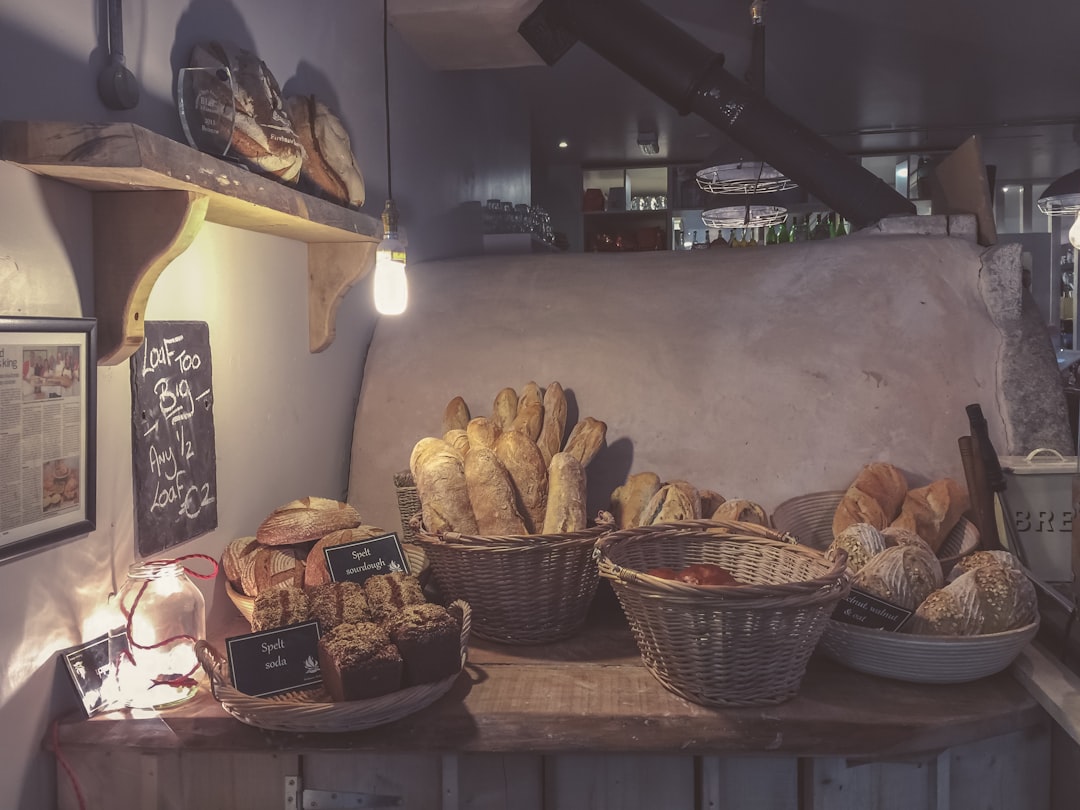
Celine knelt in front of the brick-lined bread oven, her head and shoulders halfway inside the fire pit. Her probing fingertips scraped against a cracked, unevenly heating floor tile. She took out her stone-wand, hoping she wouldn't have to dismantle the entire oven to make repairs. Nestled in a bucket of warm ashes, her salamander kept up an incessant grumble. 
“Fire-go-out! World end!” 
The string of bells on the front door of the bakery shop chimed gently, accompanied by the creaking hinge. Celine crawled backwards out of the oven and clambered to her feet. Basalt stood just inside the opened half-door, feet spread apart as if braced against a storm, an expression of disapproval twisting his thin lips. 
As if I didn't have enough troubles! First, my moon cycles, then this accursed oven, and now him! 
Celine tucked a stray curl back under her widow's coif and tried to pretend Basalt was really here to buy bread. There were a few long-loaves left, arranged on their wooden racks like giant's matchsticks, plus the raspberry tarte her friend Annelys had asked her to make for Herve's name-day and then not picked up. If Basalt would take the tarte and leave, he could have it. 
“Cold-cold-cold!” Fireling insisted. “Waiting here for-ever!”

Tuesday, October 30, 2018

Autumn 2018 Newsletter

Deborah's Autumn 2018 Newsletter (from the redwoods)

(to view or subscribe, go here:

It’s a beautiful autumn here in the redwoods, a time of reflection and appreciation for the richness of life. (This is a longish letter, so look for the three dots on the lower left that mean [More].)


Publishing News

I’ve begun the process of bringing out print editions of my short fiction collections, previously available only as ebooks.

With my usual trepidation, I set up an account, carefully noted the code for the discount, and uploaded the files. To my dismay, I got a series of error messages in red letters. The result was overwhelming paralysis. It was hard enough to get this far and make all these check-the-box decisions, but then to be told the this or the that didn’t meet their requirements and the results would be dreadful, was more than I could cope with. I saved the draft, signed off, and binge-watched Grey’s Anatomy for the evening. The next day I returned to the fray, determined to “do science” and investigate just what they meant by “inferior results.” I ordered a proof copy.


The proof arrived promptly. All the aspects the website got so upset about turned out just as polished and crisp as anything out of a traditional publisher. The interior in particular is elegant and easy to read. With the matte cover finish, the book has an exquisite “hand feel.”

Plus…I did it myself. Well, with a lot of help from my friends, which is why you’ll see the BVC logo on cover and interior. Plus…you can order it through your favorite bookstore as well as online vendors. Or here, through the BVC links. Isn’t that nifty?

Over the next months, moving at the speed of volunteers, I plan to release print editions of my other collections. I have some exciting brand-new projects in the works, too, and those will come out in print and electronic editions simultaneously.

Read more about my adventure here.

A Few Thoughts on Technology and Transitions


In my personal life, my younger daughter graduated from medical school in May, which occasioned a cross-country trip for the rest of the family to celebrate with her. She’s begun her residency in Family Medicine at a (more or less) local hospital but has warned me that I likely won’t see her for the next 3 years. It’s always amazing and heartening how much inspiration we can draw from the next generation, whether they are our own children or someone else’s. My daughter dragged me, kicking and screaming, into the world of social media, into getting my first stupidphone, and into video chatting (during her medical school years). Now these technologies are part of my everyday and work life. I think it’s good to keep learning new things, to use our minds and bodies in different ways. One of the challenges of these new computer-based technologies is that they require us to use different methods of thought. The transition, for example, from keyboard-based word processing programs (like WordStar for DOS, the one I first used) to graphics-based (Windows) programs entailed a different logic and hand coordination. And both of them are a far cry from the old typewriter.

Monday, October 9, 2017

In Troubled Times: Surviving Exhaustion

In previous posts in this series, I’ve written about emotional sobriety, feeling overwhelmed, and finding a personal sanctuary. Now I’d like to talk more about the concrete things we can do to keep our emotional and spiritual balance during the difficult, terrifying, and outrage-evoking recent months.

For me the first step is always admitting that what I have been doing isn’t working. I can get absorbed in one dreadful news story after the other, and with each round I lose more perspective and calm. My adrenaline levels get progressively higher. Sometimes – often! – it seems as if nothing else is happening in my life except reacting to yet another threat to the people, organizations, and principle that are important to me. Old wounds re-open; the ghosts of family tragedies (like the pogroms my father survived as a boy) re-awaken. I fear for my Jewish family and my queer daughters and sister and my trans daughter-in-law, for my black, Muslim, and Hispanic friends. I despair for the future of the entire planet. In other words, I need help.

Sometimes all that’s necessary is for me to admit that matters have gotten out of hand. Then I can scale back on my news consumption enough to think clearly what actions I would like to take. And especially what would be enough for the moment so that I can leave the topic and focus on other aspects of my life – my family, my writing, my local community, the beautiful redwood forest that cloaks the hills outside my windows. Playing classical music on my mother’s piano. Knitting hats for charities in poor areas of the country and world. Cuddling with the cats.

Recently I have noticed how those times of relative sanity come to a screeching halt. There are always new reasons – excuse me, Reasons. Like a hurricane or three. I’ve seen references to “outrage fatigue” but I suspect what is happening is outrage overlap. There isn’t sufficient time in between to return to balance and stay there, catching our breath, before something new and dreadful reels us in.

Monday, December 28, 2015

TRANSFUSION is An Anthology Builder Best Seller

My first excursion into the wonderful world of making my short fiction available (to those fans who don't have the inclination to rush out and buy dozens of anthologies, not to mention old magazines) was through Anthology Builder. This nifty site allows you to choose from a library of short fiction, pick a cover, and create your own anthology.

Some of the work is in the public domain, such as stories by Jane Austen, Louisa May Alcott, Agatha Christie, and Arthur Conan Doyle. But there's lots more by wonderful contemporary writers like Jay Lake, Mary Robinette Kowal, Maya Kaathryn Bohnhoff, Cat Rambo, Sarah Zettel, Aliette de Bodard, and Ann Leckie (and me!)

I put together a bunch of my best stories, slapped on a nifty cover, and came away with a nicely printed book to offer at conventions and give to family.

Later, I published another collection by the same name (and with the same lead story), available as an ebook from Book View Cafe, Amazon, Barnes & Noble, Kobo, etc. Please to notice, dear friends, that the ToCs are not identical. The Anthology Builder version contains some science fiction, like "Mother Africa" and "Madrelita." Here's the list of the stories.

Transfusion and Other Tales of Hope is listed as one of their best selling pre-made anthologies (although technically it's a collection, since all the stories are mine). What a lovely way to start the new year!