Showing posts with label Deborah J. Ross. Show all posts

Wednesday, June 3, 2026

Kindness, Fishtanks, and Getting Banned - June's Newsletter is Here!

Kindness, Fishtanks, and Getting Banned by Facebook!

I just sent out my newsletter for June 2026! Among other things, it's the story of how my cat, Freya, rescued me from being kicked off Facebook. It also features Freya in her very own action-adventure film as she stalks the Denizens of the Fishtank.


You can read the whole thing here:


Don't miss an issue! If you enjoyed Freya's adventures  (and my books) please subscribe here.


Monday, August 18, 2025

What We Lose, What We Gain

Wright & Teague Delphi Rings
I wrote this post in 2011. Still true, perhaps even more so now.

Some years ago - like maybe a decade - most of my jewelry was stolen. None of it was very valuable, although there were some pearls and jade and a little amber, and a lovely pair of moonstone stud earrings. But, as is the way of things, each piece had a story that was part of my life. That was the real value, and hence the deepest loss. I'd had some of them since my childhood, and some had been gifts from loved ones who've since died. Some of it was my mother's.

I went through the expected rage and frenzy, scouring local flea markets in the forlorn hope that I might spot a piece or two. Of course, I did not. When that stage had run its course, the police report filed (and, doubtless, forgotten), anger turned to grief, and grief to acceptance, and acceptance to looking in a new way at what I'd lost.

I wrote in my journal that the thieves had taken bits of minerals, crystals, shells, fossilized tree sap, but they could not steal:

the stories in my mind
the books I've written
my children
the redwoods
my dreams
my friends
their kindness and generosity to me
my capacity for joy...

Monday, April 22, 2024

Sleepy Mind, Great Ideas... Maybe

Why is it that juicy story ideas, as well as brilliant solutions to plot problems, pop into my mind when I'm dozing off? All right, that's a rhetorical question. We all know that as we drift into sleep, our brain activity changes. Logic and other constraints on creativity shut down and we make unusual and often wonderful connections between otherwise disparate bits of memory, thoughts, etc. The point of my question is not why this happens, but what to do about the inevitable waking up and being unable to remember.

Catherine Mintz playfully suggests that "it is a law of writing that wonderful things appear as soon as you are too tired to make notes."

Keeping a pen and paper at bedside is a logical remedy. I've done this for a dream journal, which has a slightly different objective, and I've done it for writing ideas at various times over the years. I don't any more, and here's why.

Monday, April 8, 2024

[archives] Is Darkover Space Opera?

This post from a couple of years ago still gets viewers, so in case you missed it, I'm giving it another day of blog-glory. With the recent publication of The Children of Kings, which takes place entirely on Darkover, but does involve things going 'splody in space, it seems appropriate.


My husband, sf writer Dave Trowbridge, and I were discussing the appeal of space opera at breakfast, what it is and why it appeals. Basically, space opera is a type of science fiction set on a large scale, highly dramatic and sometimes melodramatic. It tends to have military elements -- huge battles upon which hinge the fate of galactic empires, that sort of thing. Although wikipedia says it has nothing to do with the musical form, I think that reflects their own ignorance. What space opera and musical opera have in common is being larger than life, or rather brighter and more intense than life. Opera was, after all, the epitome high-tech special-effects knock-your-socks-off entertainment for centuries. Music, lyrics, sets, and costumes, not to mention trap doors and wire harnesses, exotic animals and fireworks, all enhanced one another. But that's another topic.

We agreed that we love the grand scope of such tales, but that it needs to be balanced by emotionally intimate moments. The same is true, for me at least, in epic fantasy. Monstrous dark forces are threatening the entire world, volcanoes exploding by the thousands, rivers of fire and poison...and then a detail in the characters that's so human, it touches my heart, not just my things-go-boom adrenalin endorphins.

Which brings me to Darkover.

Monday, January 8, 2024

Writer's Block: Lowering Standards?


Today's thoughts on writing arose from Sandra Tsing Loh's review of Battle Hymn of the Tiger Mother (Amy Chua, Penguin) (about which I may write a completely separate blog post) in the April 2011 Atlantic. Loh wrote:

I follow the old writer's chestnut: "When you face writer's block, just lower your standards and keep going."

Cute, I suppose, and encouraging in its own way, but I'm not sure I agree with the mindset. I had never heard such a thing, and I've been publishing professionally for over 30 years. Maybe it's the difference between mainstream writing (and the expectation of peerless prose?) and genre writing. Or that the mentors I've have and and the pros I hang out with have a more organic approach to writing, an appreciation for story-telling over meticulously "beautiful" language? Or has this writer never been truly blocked, only impatient and self-critical?


Whatever the reason for my not hearing this before, I find its underlying premise destructive: that writing (i.e., composing a first draft) must somehow embody one's highest literary standards. Not to put too fine a point on it, but this is nonsense! If you can just "carry on", what's going on isn't writer's block. It's elitist self-indulgent pifflebunk. If worrying about your "standards" interferes with the flow of your writing, then maybe you're trying to write and to critique yourself at the same time, and it might be better to get out of your own way and just write!

You can always edit and polish to your heart's content, but get the story down first.

For a long time in my early career, I wrote perfectly awful first drafts. I mean really bad in almost every sense -- except the passion I brought to them. Grammar, plot, characterization, prose style, you name it, I butchered it. As a consequence, I learned to revise with a vengeance. I learned that all of these things, these "literary standards" things, are fixable. The only thing that can't be changed is inserting "heart" into a story when it isn't there to begin with. (Or maybe some writers can do that, but I can't.) I'd a thousand times rather write--or read--a story with that core of fiery truth than with the most sophisticated technique in the world.

Monday, October 30, 2023

Q & A On NaNoWri Mo (borrowed from Jim C. Hines)

Horace Scudder, 1903
In which I interview myself on National Novel Writing Month (NaNoWriMo)

What are you doing National Novel Writing Month* this year, Deborah?
Cheering on my friends. I'll be finishing up revisions on the next Darkover novel, Arilinn.  Revising is a very different process from drafting. I find that drafting goes better when I do it quickly, so I don't get caught in second-guessing myself or editing as I write. Both are recipes for disaster and paralysis. Revising, on the other hand, does not reliably produce any measurable result in terms of pages or words. I dive into it and call it quits every day when my brain won't function any longer.

How does NaNoWriMo compare to real writing?
Writing is writing! Every writer does it a little differently, and I think most of us change from project to project and also over the course of our careers. Challenges, whether novel-length or short-length, can be fun or oppressive, pointless, or a marvelous way to jump-start a new story.

Doesn’t it bother you when hundreds of thousands of people every year turn your career, the dream job you’ve worked at for 16 years, into some kind of game?
You say "game" as if it's a bad thing. If some aspect of writing isn't fun -- and there are wonderful professional writers who hate to write but love to have written -- then why do it? The community-building that happens during NaNoWriMo is one of its more attractive aspects. Writing is a solitary activity, so it's wonderful to have those "hundreds of thousands" of compadres cheering you on.

Sorry. Do you think it’s possible to write a good novel in 30 days?
Yes and no. Some writers can produce a solid first draft in a month, so that's the yes part. On the other hand, I'm skeptical of any first draft, no matter how long it takes, being "a good novel." I suppose some writers do so much planning and so much reflection on each sentence that their first drafts-on-paper are really third-drafts-in-the-mind. In the end, though, the goal is not to produce a good novel but to write quickly and and consistently and to push through to the end.

Isn’t the emphasis on quantity over quality a bad thing, teaching participants to write crap?
Most writers don't need to be taught how to write crap. We do that very nicely all on our own, thank you. However, writing challenges can teach us to get the story down on paper (or phosphors), which is a necessary first step to a polished final draft. The rewards of actually finishing a novel draft, no matter how much revision it will need, should not be underestimated. Even if that novel is indeed crap, it is finished -- the writer now knows that he or she is capable of completing it. That in itself is worth celebrating.

Another thought on crap. If you aren't writing it and you never have, you aren't doing your job. You aren't taking chances or pushing edges or just splatting out what's in the back of your semi-conscious mind. You are allowing your inner critic to silence your creative spirit.

Eric Rosenfield says NaNoWriMo’s whole attitude is “repugnant, and pollutes the world with volumes upon volumes of one-off novels by people who don’t really care about novel writing.“
I seriously doubt that what is wrong with this world is the surfeit of aspiring novelists. And I can't imagine why anyone would put herself through NaNoWriMo if she didn't 'care about novel writing.' Good grief, if you want to be irate about Bad Things In The World, there are plenty of issues out there, things that actually impact people's health, liberty, and lives. Too many one-off novels is not one of them.

Well, what about Keith DeCandido’s post, wherein he says NaNoWriMo has nothing to do with storytelling; it teaches professionalism and deadlines, and the importance of butt in chair?
Can storytelling be taught? I'm not sure. Yep to the other parts.

Fine, what do you think NaNoWriMo is about?
Why is it about anything than a community of people hell-bent on crash'n'burning their way through a short novel in a month? That makes more sense than it being a nefarious conspiracy.

Any last words of advice, Ms. Very Important Author?
I'd love there to be a parallel track for those of us who have other deadlines, such as revisions or finishing in-progress novels. Certainly FiMyDaNo (Finish My Damned Novel) fits the bill, and I encourage anyone in mid-draft to jump in. Revisions, at least mine, mean taking notes, cogitating, making flow charts of structure, correcting maps, ripping out chunks and shoving them around, not to mention generating piles of new prose. These all count. The thing with revisions is that sometimes a lot of thinking and a small amount of actual wordage change -- if it's the right change -- counts for a solid day's work. It's exhausting, too. So maybe the goal is, "I will think about my revisions every day this month." 


Okay, Ms. Interviewer, if you're not doing NaNoWriMo, what are your goals for this month?

*November 1 - November 30
National Novel Writing Month, also known as NaNoWriMo is a month-long creative writing challenge that takes place every November. During the month participants from all over the world are challenged to write a 50,000 word first draft of a novel.

Monday, October 9, 2023

Pad Thai, Meatloaf, and Learning to Write

I used to make Pad Thai for dinner. If you've eaten this dish at a Thai restaurant, you probably wouldn't recognize mine. Usually, it's made with wide or medium rice noodles, scrambled eggs, bean sprouts, and chicken, with a sprinkling of chopped peanuts. I use brown rice spaghetti (Tinkyada, if you want specifics), onion, carrot, baked tofu, and a bunch of bok choy from a friend's garden. Not a peanut in sight, although I did use canned sauce.

I learned to make Pad Thai from Sunanta, a Thai exchange student whom we hosted some years back. Her mother, perhaps skeptical about American food in general and those crazy vegetarians in particular, used to send her care packages that included the dry rice noodles and packages of dry seasoning (which were undoubtedly mostly sugar and salt, although as I don't read Thai, I can't say for sure). Sue would cook and I would watch and learn. She made hers with nappa cabbage, carrots, and shrimp. (The packages had sesame seeds to sprinkle on top.)

What I learned was this: Pad Thai is like meatloaf. Every family has their own recipe and the best way to learn is to watch mom and then try it yourself. Chances are, you won't be able to duplicate the exact recipe anyway, and once you've figured out your own taste, you won't want to. You'll make it your own.

Monday, October 2, 2023

RevisionLand; Or, Aliens/Robots/Dry-Towners/Mad-Scientists Ate My Brains

Gillray, "The Headache," 1819
One of the delights of living with a fellow writer occurs when I'm sitting at the dinner table, trying to wrap my mind around 200 or 500 pages of text. He raises an eyebrow, Spock-style. I say, "Revisions." And he gets it. I am not only not flying with the rest of the ducks at this moment, I'm nowhere near this planet. I'm in RevisionLand.

Some writers look at me as if Aliens/etc., really have eaten my brains when I say I love to revise. Everyone's different. I'm not a writer who uses detailed outlines. I know some who do, one or two 3 x 5 cards per scene. I work from an outline that tells me I need to get from here to there and this is the emotional tenor of this story hinge, and that is how I want to climax to come together. How I get from a blank screen to ### (the end, in writerese) is an adventure. The story doesn't happen for me in the first draft, but in the revisions.

Friday, September 29, 2023

Here I Fell Asleep: Books I Couldn't Finish

I have a bookmark, a little leather triangle that fits over the corner of a page, that says, "Here I Fell Asleep." It's from Florence (as in Firenze) and has pretty gold decorations stamped on the leather. There is something to be said about books that put me to sleep. I love reading at bedtime, for one thing. It works well for me as a transition from awake-time to dream-time. The sleep hygiene people say your bed should be used only for sleeping and sex, but I disagree. Bedtime reading is sacrosanct. But not reading Stephen King! Reading something interesting enough to be pleasurable and sedate enough to help me relax. Good bedtime books would make a nice blog topic, but that's for another time.

This is about books I didn't finish. Recently, I've been more diligent about posting review of books I liked and it just occurred to me that it's as important to look at books that didn't work for me...and why.

Monday, March 28, 2022

How I Wrote A Star Wars Story (and got paid for it)

One of the most fun writing projects I ever participated in was the second Star Wars anthology,

Tales From Jabba's Palace. At the time I was invited, my first novel, Jaydium, had recently been released and I had a handful of professional-market short story sales to my credit; I was writing then as Deborah Wheeler. I met the editor, Kevin J. Anderson, at a convention.

Kevin had just started reading Jaydium and was impressed enough to think, "Aha! This is just the writer I'm looking for to fill one of the remaining anthology slots." Once he explained that this would be work-for-hire and subject to the approval of Paramount Studios and I'd signed a bunch of forms, we got to work.

Kevin wanted a "braided" anthology, with stories intersecting and overlapping as much as possible. Each author got a different minor character who worked or lurked in Jabba's Palace. Some were described in "the bible" from the movie, but a few were original (like Barbara Hambly's cook, for every gangster needs his own chef). Every story had to include a scene from the movie, as well. We were each asked to circulate an outline of our story to all the other authors and then to correspond with one another on details.

Since I joined the anthology team late, I didn't have much choice of character. I got "Ree-Yees," the three-eyed, goat-headed fellow hovering around the opening scenes. The reference materials said he was not very bright and usually drunk. Okay, I thought, I can have fun with that. Kevin suggested that, in addition to the usual scheming and rivalry among Jabba's underlings, the Empire itself might have reason to get rid of Ree-Yees.

Here's what I sent to the other writers:

Monday, March 14, 2022

Cross Training For Writers

Cross-training is a concept I snagged from athletics. It's a way of improving fitness for one particular sport (or art) by practicing another. The idea is that the body adapts to repetitive exercises and, by becoming more efficient, shows slower progress.

Over the years, I've noticed that if I'm stuck on a story and can't figure out how to even think my way toward a solution, one of the most helpful things I can do is to listen to other storytellers talk about their work. In particular, I'd put on one of those bonus material discs from a favorite movie and listen to directors and screenplay writers discuss their approaches. (My favorites are Peter Jackson, Fran Walsh, and Philippa Boyens talking about how they adapted The Lord of the Rings into film, how they decided what to leave out, what to expand or re-arrange, that sort of thing; because I know the books so well, I can follow their interpretive process.) I come away re-charged because the story-telling is similar enough and yet different enough from what I do in prose. I've also gotten much good perspective from books on screenplay writing for much the same reason. I don't want to write a script for a movie or a play, but I do benefit from that particular way of looking at story, character, dialog, and action.

Monday, February 7, 2022

ARCHIVES Northlight: Evolving a Novel


After I submitted Jaydium, which was to become my first published novel, I began work right away on my next project. Or rather, I took a look at all the ideas and characters which were screaming inside my skull to be made into stories and tried to decide which one would cause me the most anguish if I didn't work on it first. High on my list was to rewrite the last novel I'd written before Jaydium. It had received careful attention, not to mention three single-spaced pages of critical feedback, from the editor who would later buy Jaydium.

I felt that if an editor had taken that much time and trouble with the book, there was something of value, something that perhaps I was now a good enough writer to bring out fully.

The book's working title was Weiremaster, and it was based on the world of my very first professional short story, "Imperatrix", which appeared in the debut Sword & Sorceress anthology. Weires are bipedal ape-like creatures, seven-feet tall, fanged, silver-furred, immensely powerful and receptively telepathic. In the world of "Imperatrix," they obey people of imperial blood. For the purposes of that short story, no further explanation was needed.

Now, years later, my world-building had matured. I wanted to know how these creatures had come into a human world, how the control worked, and how the dynastic characteristic had been established. I concocted an adventure which would lead my hero into the world of the Weires and back home again, changed. He would carry me -- and the reader -- along with him, a classical hero-quest. 

Monday, October 11, 2021

Gossip and Community


The internet is practically an engraved invitation to indulge in gossip and rumor. It's so easy to blurt out whatever thoughts come to mind. Once posted, these thoughts take on the authority of print (particularly if they appear in some book-typeface-like font). Have you ever noticed how much easier it is to question something when it appears in Courier than when it's in Times New Roman? For the poster of the thoughts comes the thrill of instant publication. Only in the aftermath, when untold number have read our blurtings and others have linked to them, not to mention all the comments and comments-on-comments, do we draw back and realize that we may not have acted with either wisdom or kindness.

To make matters worse, we participate in conversations solely in print, without the vocal qualities and body language that give emotional context to the statements. I know a number of people who are generous and sensitive in person, but come off as abrasive and mean-spirited on the 'net. I think the very ease of posting calls for a heightened degree of consideration of our words because misunderstanding is so easy.

I've been speaking of well-meaning statements that inadvertently communicate something other than what the creator intended. I've been guilty of my share of these, even in conversations with people with whom I have no difficulty communicating in person. What has this to do with gossip?

Monday, July 15, 2019

[Archives] How I Find New Authors to Love

E. Duranty by Degas
This post first appeared in 2011, but is well worth repeating.

Once upon a time, I gobbled up every new book of fantasy and science fiction that I could find. I'd trek to my local independent specialty book store or my local branch library and devour each month's arrivals. Now getting to the closest (general) bookstore requires a trek, our local library branch is in danger of closing (or maybe not, it keeps changing), not to mention losing its human librarians, and the number of new books has multiplied beyond any hope of keeping up with everything that's being published. I don't recognize many of the authors, at least not under those by-lines.

One way through the deluge is to connect with authors online. (Shameless Promotion Hint: Book View Café is a wonderful way to get acquainted. A whole community of fabulous writers with a wide range of styles and genres is right here -- we will now pause while you read a short story from a writer new to you. Okay, aren't you glad you did?)

Conventions also work well for me as a way to sort through the enormous number of new titles. I'll hear someone talk on a panel or read aloud from their work and be impressed with what a strange and thoughtful mind they have. Sometimes, I'll meet them afterwards and be curious about their stories. Sometimes when I hear a writer in person, I'll pick up a book whose title or cover would not otherwise appeal to me or I'll be willing to read something outside my usual "taste zone." Since I believe in supporting other writers, especially newer ones, I usually buy (at least) one "unknown" book from the dealers room. This has the additional benefit of helping out my friendly convention dealers, who get even friendlier and more diligent in carrying my own books. The next step is a request for an autograph, which is a pleasure for everyone involved. So many times, the few moments it takes can give a writer, even an established writer, a lift. "Wow! Deborah J. Ross bought my book -- and asked me to sign it!"

Monday, July 1, 2019

Escapism and Pleasure

One of the criticisms of genre fiction that amuses me most is that it's escapism, as if that's a bad thing. I think just the opposite. Nobody, except the unbelievably incompetent, escapes to jail. (I'm not talking about the chronically incarcerated who, unable to function in normal society, deliberately choose actions that will return them to imprisonment, although that's an interesting image when it comes to preferred reading material.) No, the direction of escape is toward freedom, imagination, innovation, pleasure. In other words, we move toward becoming bigger, richer lives. So what is “escapism” an accusation of? Why is it bad to want something better?

What do we mean by “escape”? Escape from what? The critics mean, of course, escape from "real" life: responsibility, order, duty, piety. Underlying this notion is the assumption that life should be serious (serious = grim, humorless, unpleasant, joyless). You should work hard and deny yourself pleasure "for your own good." You should accept the way things are ("be realistic"). If you find reality oppressive and intolerable, it's because there's something wrong with you. You're weak-willed, inadequate, ineffectual, immature, lazy, stupid . . . you've heard the litany. I've exaggerated a bit here to make a point, which is that this attitude ("life sucks, get used to it") arises from a pernicious blend of Puritanical abhorrence of pleasure and the need for conformity in an industrialized society. Under such a system, the two greatest sins are to seek delight and to follow one's own preferences. In other words, to not only be open to change but to create it, to challenge the established order, to question and to dream.  To value joy above productive capacity and meaningfulness above popularity. To be an individual, not a cog in an assembly line, to sometimes be productive but other times contemplative -- in other words, to be unpredictable and unique.

When we speak of pleasure, we cannot avoid the issue of sensory pleasure and sexual ecstasy. Sexuality is a powerful, primal source of energy. No wonder industrialists are afraid of it, except when they can use it to sell things. They want us to be consumers, not originators. This brings me to a second way in which escapism is considered bad, and that is as a force of appeasement, of sedation, a means to drain off rebellious energy and maintain the status quo. I think genre literature, especially fantasy and science fiction, works exactly in the opposite way. The dichotomy and mutual exclusivity between body and mind or spirit is not a universal belief, nor is the insistence on negating or minimizing the importance of the full range of physical sensations. They are, however, tools of a hierarchical society. People are, after all, easier to control when they can be convinced to invalidate their direct experiences of themselves and the world, to distrust themselves and instead trust an external authority. Pleasure must be sinful when it seduces people from abject obedience. And yet, in every age and circumstance, people consistently seek it out, whether through sex or music or drugs or listening to a whopping good tale.

Wednesday, July 22, 2015

[archives] Blackberry Writing

I'll be head down into revisions of Thunderlord for a while, but on my morning walk, I noticed the blackberries are ripening. So here's a post from  a few years ago, Enjoy!

It's blackberry season, and as is my custom at this time, I went out this morning to pick from the brambles along our little country road. (We have our own patch, but the berries ripen later because it's in a shadier place.) I try to do this early, when it's cool and I'm not having to squint into the sun for the higher branches. As I picked, I thought about the story I'm working on (and currently stalled on 2 scenes-that-need-more), and also writing in general.

Blackberries are tricksy things. They can look ripe from where I stand, but turn out to be all red at the base. Sometimes I can tell the moment I touch the berry -- it's too firm and too tightly attached to the stem. I have to be ready to give up on what looked like a great prospect and move on. When I'm in the flow of picking, it seems I don't even have to think about this. Isn't this like a story that seems promising but doesn't yet have the necessary depth? Occasionally -- well, more than occasionally -- my mind gets set on "this berry gets picked" and I force the issue. I'll glare at the red parts and either pop the berry into my mouth ("for private reading only"). Berries that are almost-ready go well in oatmeal. I freeze quarts and quarts of them for winter breakfasts. They're too sour on their own, but they blend well, adding pleasantly tart notes. That's not unlike taking several different story idea, none of which can stand on their own, and setting them at cross-purposes to make a much more interesting tale.

Tuesday, February 26, 2013

The Feathered Edge: A Woman Warrior's Tale

Last year I began this series on "the stories behind the stories" in this anthology of marvelous fantasy stories I was privileged to edit. I got about halfway through when life in the form of writing deadlines intervened. So I'm going to repost them and hopefully finish the series, then put them together in a companion volume. to The Feathered Edge.

"The Woman Who Fell In Love With The Horned King" is the second story with a woman warrior-as-champion/paladin. One of the most interesting things about putting together these anthologies of romantic, swashbuckling fantasy (2 volumes of Lace and Blade, and now The Feathered Edge: Tales of Magic, Love, and Daring) is the synchronicity -- or parallelism -- or "great minds work alike" thematic resonances. The first had 2 stories about Spanish highwaymen, and the second had 2 stories with Chinese generals. I'm not in the least surprised, but I am delighted and a bit awestruck by the way life works. The cover for The Feathered Edge could illustrate either this story or Sean McMullen's "Culverelle." You get to pick.

Now to the story. No, wait, background! I've loved Judith Tarr's work since I picked up A Wind In Cairo when it first came out. The horse got me into the book, as I'm a sucker for well-written horse characters, but the sheer mastery of storycraft, the depth and nuance, the use of language, all kept me wanting more. None of this should come as a surprise. Judy knows more about horses than any ten fantasy writers put together, and what she doesn't know, one or another of her nine amazing Lipizzan horses will enlighten us about. She's written the best guide to horses in writing I've ever seen, Writing Horses; The Fine Art of Getting It Right, and if you are a writer and need a horse in your story, it's a must-read.

Wednesday, February 20, 2013

The Feathered Edge: Raven Girl and a different American discovery

Last year I began this series on "the stories behind the stories" in this anthology of marvelous fantasy stories I was privileged to edit. I got about halfway through when life in the form of writing deadlines intervened. So I'm going to repost them and hopefully finish the series, then put them together in a companion volume. to The Feathered Edge.

Sheila Finch's "Fortune's Stepchild" is linked to other stories backwards-fashion. For so many of us, a tale or legend or bit of history so captured our childhood imaginations that forever after, it is a touchstone for "something wonderful and magic." Kari Sperring, for example, grew up dreaming of joining the musketeers and saving France. (Aside: I wonder if there's something about being British -- Sheila's an ex-pat Brit -- that lends itself to such inspiration; we on the other side of the Atlantic can read about Arthur and company, but he's not our Arthur.) At any rate, Sheila admits to a special fondness for tales about Sir Francis Drake (who was an amazingly colorful fellow, even if only a tenth of the stories told about him are true.)

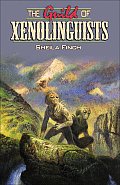
Sheila's best known for her science fiction, including a series of stories about the Guild of Xenolinguists (one of which won the Nebula Award), but she's a writer of many and varied interests. I met her a gazillion years ago, if memory serves me right at the same convention at which I met Sherwood Smith, and thus began a long-running conversation. After I fled from Los Angeles to the redwoods of the Central Coast, we'd get together every so often at one convention or another, grab a few friends, and head offsite for the best fish restaurant we could find. And have meaty, thoughtful discussions on everything under the sun.

Tuesday, December 25, 2012

Goals, Wishes, Intentions

I'm not big on resolutions, New Year's or otherwise. More often than not, all they do is set me up to fail, or put me in competition with others, and who needs that? However, I do see a great deal of value in taking some time to clarify where I'm going in my life, if it's where I want to be going, and what I'd like to see different.

Years (as in, decades) ago, a friend suggested making a list of goals instead of resolutions, and to break them down into 1-year, 5-year, 10-year, and lifetime goals. I did that for quite a while, and I still have the notebook I kept them in. It's fascinating to look back at what I thought I wanted, 30 years ago -- what I have achieved, what I no longer want, and what is no longer possible.

Along the way, I realized that some of these things were within my power to achieve, but others were not. I might long for them, but I could not bring them about, or not entirely by my own efforts. For instance, finishing a novel or studying Hebrew are things I can choose to do, but my children being happy, however much I might want to see that come about, is not something I myself can create. These things are wishes, not goals. Of course, many things are both. On my list is to write a work of enduring value -- I can write the best stories that are in me, but how they are received and how they endure the test of time is another matter entirely. I have no say over that.

Friday, April 13, 2012

The next "Darkover" novel...

The Children of Kings, has been scheduled for March 2013, from DAW Books. I'll post more details as I learnthem.


Meanwhile, here are some earlier posts about the writing process, including two snippets.


Changing Gears: Downshift to Beginner's Mind (May 2011)

Race to the Finish (June 2011) (includes snippet)

RevisionLand; Or, Aliens/Robots/Dry-Towners/Mad-Scientists Ate My Brains (July 2011)

The Children of Kings (is finished) (August 2011)

Progress on The Children of Kings (September 2011) (includes snippet)

You can also read a rough draft of the opening chapter here: Please note that my editor has not made me tear it apart and put it back together again, so it may change. It will change.