Showing posts with label witches in fiction. Show all posts

Friday, February 6, 2026

Audiobook review: A BnB murder mystery with occasional witchcraft

 In the Company of Witches, by Auralee Wallace (Berkley)
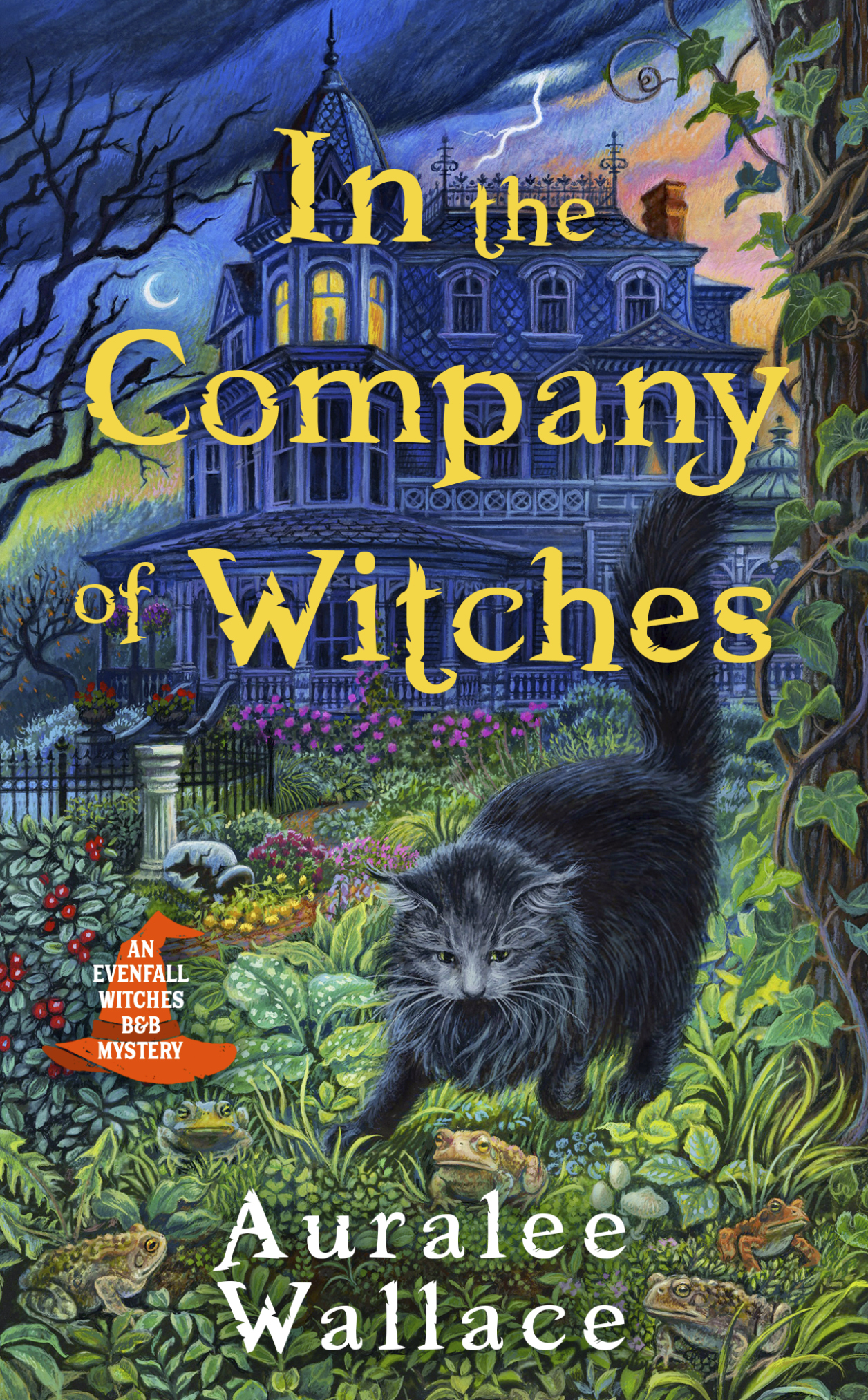

I listened to the audiobook version of this cozy mystery with great delight. Part cozy murder mystery, part family saga, part sweet urban fantasy (witches, ghosts, you know the drill), the story invites the reader to contemplate deeper issues of generational trauma, loss, and healing. I say “invites" because the process involves sitting down with a cup of tea and scones.

The Warren witches have used their powers to help their neighbors in the quiet New England town of Evenfall for four hundred years. Currently, sisters Nora and Izzy, along with their niece Brynn, run a bed and breakfast, complete with a secret garden of poisonous plants used in magic. Brynn, too, has a secret: she once was able to communicate with ghosts, but that talent disappeared with her husband’s recent death. And Brynn has no intention of ever using her magic again. So when an unpopular heir to a historic mansion is found dead (aka, murdered) in the bed and breakfast, Aunt Nora becomes the prime suspect.

The story moves along briskly, with plenty of offbeat characters, revelations, and plot twists. If I had to name a fault, it would be how the aunts kept nagging Brynn to use her magic again and her drawn-out reluctance to tell them why she can’t. Otherwise, an entertaining book.

https://m.media-amazon.com/images/S/compressed.photo.goodreads.com/books/1614518320i/56552949.jpg

Friday, January 30, 2026

Book Review: Librarian to a Wicked Witch

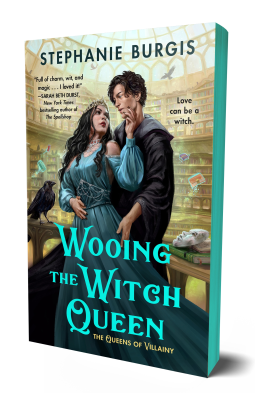
 Wooing the Witch Queen, by Stephanie Burgis (Tor)


Stephanie Burgis continues to delight readers with her playful twists on fairytale stories. In my opinion, her recent books have taken her skill to a new level.

In Wooing the Witch Queen, she combines magic, Victorian-esque politics, vivid psychological family drama (with attendant trauma), and a sweet, believable love story. Archduke Felix has spent his life as a political pawn and abuse victim of his ambitious relative. When he escapes and shows up at the doorstep of the wicked queen, Saskia, he has no idea of the parallels of their lives. Under her incredibly powerful magic, she’s insecure, convinced that she’s unlovable. A twist of coincidence lands him in the position of her masked librarian, tasked with setting to order the literary chaos of her collection. I’m a sucker for libraries and librarians, and Felix’s education, which has been restricted to poetry and the like, not swordsmanship, serves him well. Not only are their kingdoms on the brink of war, but Saskia has vowed to kill him on sight because of the lies told about his role in the war. His life depends on keeping his identity hidden behind his “dark wizard” mask.

Of course, they fall in love.

Over books.

And mutual sexual attraction, which is fine by me.

I admit that I have no idea how original the world of Wooing the Witch Queen is. I found it both familiar enough that I didn’t need a ton of explanation, and fresh enough to keep me entertained. As I said, I’m a sucker for libraries and librarians.

There are more books in this series. I’m looking forward to the adventures of the other members of the Queens of Villainy.


Friday, November 4, 2022

Short Book Reviews: A Witch's Life

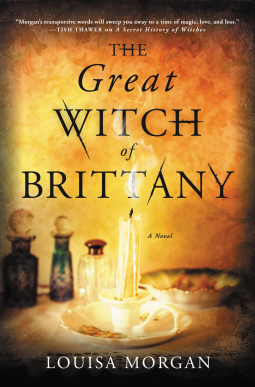
 The Great Witch of Brittany, by Louisa Morgan (Redhook)

In mid-18th Century Brittany, a clan of Romani travels from town to town, trading and earning money by other means. Teenager Ursule Orchière has been raised in the stories and customs of her female ancestors, the great witches of the past. Her fortune-teller mother is not among them, using dramatic skill and common sense on her gullible village women customers. For Ursule, however, the “magic crystal” that has been passed through generations is more than a stage prop. The crystal and the grimoire she learns to read in secret open a world of spirits and spells to her. When her mother is accused of being a witch, the two end up on the run in an increasingly dangerous landscape as the French Revolution draws ever nearer…

The story is full of dramatic tension and plot twists, yet in the end it is not about a series of events. It’s about a life well lived with courage and kindness. Even when Ursule and her mother found shelter working as laborers for a farm family, I kept turning the pages to see what would happen next. Morgan’s authorial touch is deft and sure, inviting the reader to enter fully into this fascinating glimpse into history and the very real people in it.

Highly recommended.


Friday, February 4, 2022

Short Book Reviews: Puritans Vs Forest God, with Animal Cruelty Warning


Slewfoot: A Tale of Bewitchery, by Brom (Tor Nightfire)

I was interested in this book as historical fantasy, with its setting in mid-17th Century New England among the Puritans. The main character, Abitha, was appealing and her situation, as a non-Puritan bride trying to adjust to the rigidity of life in mid-17th Century New England, sympathetic. I liked that the Puritans were not monolithic; some were kind, others cruel and ambitious, some devout, others pragmatic. Abitha’s husband genuinely cares for her and tries to shield her against his greedy, ruthless brother, whose schemes would have both of them working as indentured servants. Then there is Slewfoot, an ancient spirit with amnesia, that the talking animals “wildfolk” want to use to wipe all humankind—Native and European settlers alike—from the forest. What the heck does “slewfoot” mean, anyway? I looked it up: in hockey it means, “using your leg to take someone off balance from behind by sweeping the back of their knee, often resulting in injury.” It could be a version of “slue-foot,” meaning “having big, clumsy, or turned-out feet.” Neither of these really applies to the goat-headed creature that enters into a partnership with Abitha, half-savior, half-demon. Which of course does not go over well in a Puritan community.

Without giving too much away, I found the moral ambiguities unsettling. Clearly, some of the human Puritans are hateful, using piety as an excuse for cruelty. But so, in their way, are the wildfolk. There don’t seem to be any ethical concerns about their deadly interactions with Native communities, or the ease with which even sympathetic European characters are slaughtered. Abitha’s eventual pact with Slewfoot stuck me as one that leaves behind compassion and human fellowship as well as desperate circumstances. There was no resolution, no consequences, no arc of justice. The worst part, though, was the torture and eventual killing of her beloved cat. If I had known such a scene was gratuitously added, I would never have read this book. Consider this fair warning if you, too, are an animal lover who treasures the trust and affection of our feline friends.