Showing posts with label alien life. Show all posts

Friday, March 22, 2019

Book Reviews: Masquerading as Science Fiction?


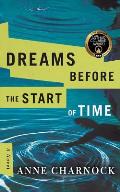
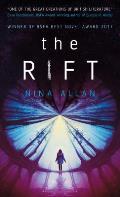
Dreams Before the Start of Time, by Anne Charnock (2017, 47North); and The Rift, by Nina Allan (2017, Titan).

Spoiler Alert...

What makes science fiction a genre? Is it the bells and whistles, the FTL space ships, the futuristic technology? Is it the ability to travel in time or across vast regions of space? Does it involve interactions with alien species, either for the first time or as a matter of course? Or is it simply because the author or the publisher says so? I will not dignify the argument put forth by “litr’ary” types that science fiction is an inherently inferior form of literature. Clearly, they haven’t been reading the superbly imaginative, elegantly crafted work of the last couple of
decades.

Following the principle of showing instead of telling, I refer you to the discussions surrounding The Time Traveler’s Wife (by Audrey Niffenegger, Harcourt, 2003). With due respect to my colleagues who might disagree, I thought the only people who considered this novel science fiction were those outside the genre. Yes, the man of the romantic pair bops about from one time period to another (losing his clothing along the way), but that did not make it science fiction in my eyes. I could accept it as romance. The focus, as in Diana Gabaldon’s Outlander, is the (romantic) relationship between two people. (Although Outlander involves time travel, very few readers I know would classify it as science fiction rather than fantasy or romance.) For me, the aspect that put The Time Traveler’s Wife firmly outside science fiction was the failure to develop the implications of time travel for society. How has this one man’s ability changed the world? What are the moral and political consequences of his actions? Why isn’t he found out and his abilities exploited? How can the “fabric” of time continue linearly with such repeated “tears”?

In other words, science fiction doesn’t just present nifty ideas in a vacuum – it focuses on how those ideas and gadgets and twists of fate have larger effects on the natural and human world. Perhaps back in the age of pulp magazines, a fun gimmick was sufficient to sustain a story with flimsy plotting, cardboard characters, and mediocre prose, but that hasn’t been true for a long time now.

This, too, is why I believe Margaret Atwood’s The Handmaid’s Tale falls squarely in the science fiction genre. Atwood herself refused to consider her dystopian world as science fiction, calling it instead “speculative fiction.” I think that’s a distinction without a difference. One critic (readily identifiable as ignorant of the field by his use of “sci-fi”) wrote, “Sci-fi sells us fantasies. Margaret Atwood’s classic novel is all about the danger of fantasy.” To those of us who are actually conversant with science fiction, the reverse is true, and is a powerful argument for The Handmaid’s Tale belonging on the same shelf as other brilliantly written feminist dystopian science fiction.

Friday, August 3, 2018

Short Book Reviews: The Last Man Alive


Relic, by Alan Dean Foster (Del Rey)

In the far future, humanity has managed to wipe itself out not only on Earth but on every other colonized planet. So far as he knows, Ruslan is the last human in existence. He’s not alone, though. A race of benign (seeming?) aliens, the Myssari, have taken him under their care. Their goal is to use his cells to clone a new generation of humans, thereby extending their knowledge of sapient races. His price for participating: their help in rediscovering Earth, birthplace of humanity. Of course, things go wrong, among them the appearance of a rival alien race who also want to form an alliance with him. And various other things that fall under the “spoiler” category.

This sounds like pure, classical Alan Dean Foster, full of action and imagination.  Alas, that is not the experience I had reading this book. I’ve loved Foster’s work for decades, and I don’t know if he ran out of ideas, got sedate in his prose, or simply tried something more thoughtful, but the result was a soporific, meandering narrative punctuated here and there with a bit of suspense or action. (I highly recommend it for insomniacs.) It felt like a perfectly respectable piece of short fiction padded out to novel length with emotionally distant, almost Victorian prose.

Here’s an example:
He had no doubt that the dedicated if diffident Wol’daeen and her colleagues would try their utmost to successfully revive some of the other cold-stored humans. It would be a scientific triumph for them if they could do so. But having seen what he had seen and heard what he had heard, he was not sanguine.
The ratio of prose to passage of time in the story varies from plodding and repetitious to the whiplash feeling that all the interesting parts got skimmed over and it’s months or years later.

In the end, the story elements came together well. I would expect no less from an author as seasoned as Foster, but on the whole I found it neither absorbing nor satisfying. Which was a pity, because I'd been so excited to read it.

Thursday, May 21, 2015

[links] Fishing With Horses and other cool links

Fishing With Horses:  There are only about 11 horse fishermen in the area of Oostduienkerke but the two men I have photographed are the only ones who actually drag for the shrimp for part of their income the rest just do it for tourism of the town. I am not sure how much longer this old tradition will stay alive in this actual form but I am glad to have a chance to photograph these amazing draft horses and the men that work with them. The horses are so relaxed and I realized after going into the sea my self how much the waves have so much force and the sand shifts under you feet as you sink slowly into the wet sand. I think for these horses it is such a unnatural thing for them to do, but you can see that they have total trust that their riders will guide them and that is what true horsemanship really is, working with a trusted partner to get the required job done easily.Before mules were used for the job but because of the weight of the larger nets the Brabant draft horse is now used because of their tremendous strength and easy going attitudes. They could not have picked a better breed.


The Evolution of Snakes: “We infer that the most recent common ancestor of all snakes was a nocturnal, stealth-hunting predator targeting relatively large prey, and most likely would have lived in forested ecosystems in the Southern Hemisphere,” said Dr Allison Hsiang of Yale University, lead author on the study.


Science Fiction Fodder: Ether-Based "DNA":In the search for life beyond Earth, scientists have justifiably focused on water because all biology as we know it requires this fluid. A wild card, however, is whether alternative liquids can also suffice as life-enablers. For example, Saturn's frigid moon Titan is awash in inky seas of the hydrocarbon methane. Here on warm, watery Earth, the molecules DNA and RNA serve as the blueprints of life, containing creatures' genetic instruction manuals. An immense family of proteins carries out these instructions. A new study proposes that molecules called ethers, not used in any genetic molecules on Earth, could fulfill the role of DNA and RNA on worlds with hydrocarbon oceans. These worlds must be a good deal toastier though than Titan, the study found, for plausibly life-like chemistry to take place.