Showing posts with label white dwarf stars. Show all posts

Monday, March 4, 2024

Science Fiction Worldbuilding: Orbiting a White Dwarf

I'm always on the lookout for great information about world-building, especially fascinating astronomy discoveries. This is an excerpt from an article in Universe Today by Evan Gough. Check it out for the full story. (I find this image evocative and beautiful -- do you?)


Stars end their lives in different ways. Some meet their end as supernovae, cataclysmic explosions that destroy any orbiting planets and even sterilize planets light-years away. Our Sun is not massive enough to explode as a supernova. Instead, it’ll spend time as a red giant. The red giant phase occurs when a star runs out of hydrogen to feed fusion. It’s a complicated process that astronomers are still working hard to understand. But red giants shed layers of material into space that light up as planetary nebulae. Eventually, the red giant is no more, and only a tiny, yet extraordinarily dense, white dwarf resides in the middle of all the expelled material.

Can some planets can survive as stars transition from the main sequence to red giant to white dwarf?  Researchers at the Space Telescope Science Institute, Goddard Space Flight Center, and other institutions have found what seem to be two giant planets orbiting two white dwarfs in two different systems.

If the researchers are correct, and the planets formed at the same time as the stars, this is an important leap in our understanding of exoplanets and the stars they orbit. It may also have implications for life on any moons that might be orbiting these planets.

Some white dwarfs appear to be polluted with metals, elements heavier than hydrogen and helium. Astronomers think that these metals come from asteroids in the asteroid belt, perturbed and sent into the white dwarf by giant planets. “Confirmation of these two planet candidates with future MIRI imaging would provide evidence that directly links giant planets to metal pollution in white dwarf stars,” the authors write.

Astronomers have found that up to 50% of isolated white dwarfs with hydrogen atmospheres have metals in their photospheres, the stars’ surface layer. These white dwarfs must be actively accreting metals from their surroundings. The favoured source for these metals is asteroids and comets.

This artist's illustration shows rocky debris being drawn toward a white dwarf. Astronomers think that giant planets perturb smaller objects like asteroids and comets inside the WD's Roche limit. They're destroyed, and the debris is drawn onto the star's surface. Image Credit: NASA, ESA, Joseph Olmsted (STScI)

This artist’s illustration shows rocky debris being drawn toward a white dwarf. Astronomers think that giant planets perturb smaller objects like asteroids and comets inside the WD’s Roche limit. They’re destroyed, and the debris is drawn onto the star’s surface. Image Credit: NASA, ESA, Joseph Olmsted (STScI)


Monday, August 14, 2023

Trojan Planets, Diamond Stars, and Other Astronomical Wonders

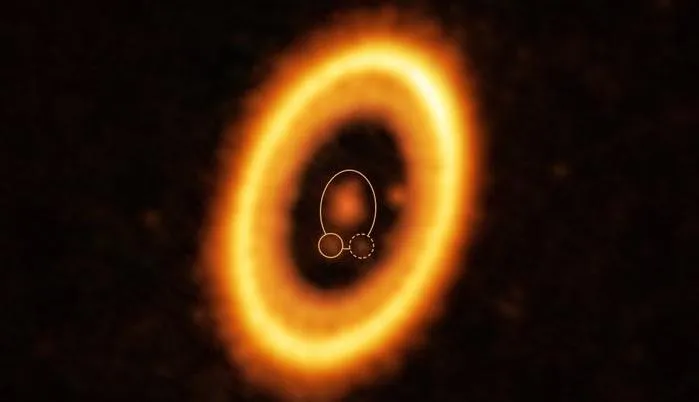
1st known 'Trojan' planets discovered locked in the exact same orbit around a star


Astronomers have discovered the first evidence of ultra-rare 'Trojan' planets: two sibling planets bound on the same orbit around the same star.

The potential co-orbiting planets, dancing around the young star PDS 70 roughly 370 light-years away, consist of a Jupiter-size planet and a cloud of debris — possibly the shattered remains of a dead planet, or the gathering building blocks of one yet to be born.
 
Trojan planets get their unusual name from the two asteroid clusters seen around Jupiter, which, upon their discovery, were split into Greeks and Trojans (the opposing sides of the mythical Trojan War in Homer's Iliad) based on their proximity to the gas giant's gravitationally stable Lagrange points.

Lagrange points are places in a solar system where the gravitational pulls of a star and an orbiting planet balance out the motion of an object's orbit, trapping the object so that it moves in lock-step with the planet.


White dwarfs are truly strange objects. After a lifetime of billions of years of fusion, they transform themselves into something else completely different. They transition from blazing balls of plasma to degenerate lumps of carbon that eventually crystallize into diamonds that last for unimaginably long time periods.

It takes a quadrillion years for a white dwarf to crystallize, and since the Universe is not even 14 billion years old, astronomers will never spot a fully crystallized one. But this research removes some of the mystery by finding one that’s just starting to become a cosmic diamond. Curious astronomers will study more of these bizarre stellar remnants, and one day, we may know exactly how and when something so strange can happen.

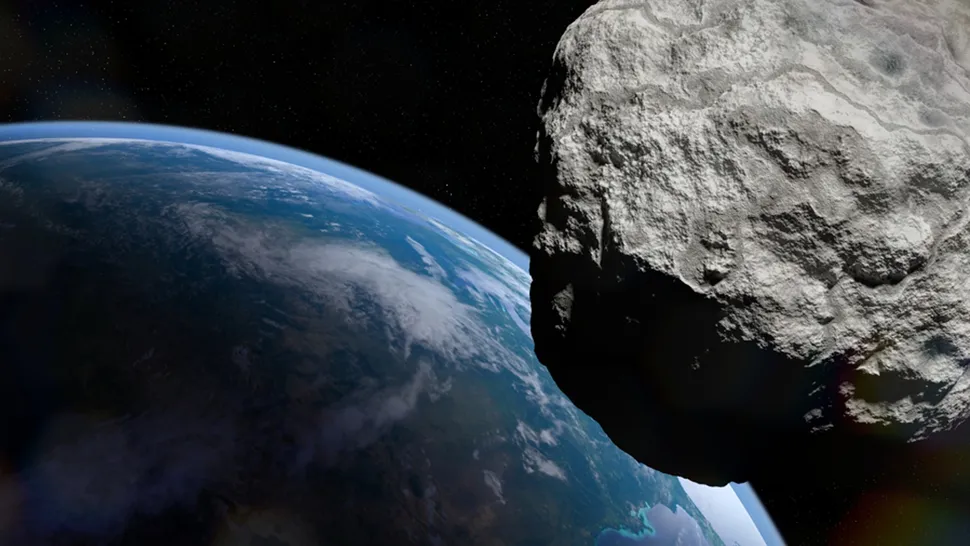
A skyscraper-size asteroid flew closer to Earth than the moon — and scientists didn't notice until 2 days later


Now dubbed 2023 NT1, the roughly 200-foot-wide (60 meters) space rock sailed past our planet on July 13, traveling at an estimated 53,000 mph (86,000 km/h), according to NASA. However, because the rock flew toward Earth from the direction of the sun, our star's glare blinded telescopes to the asteroid's approach until long after it had passed.

Astronomers didn't catch wind of the building-size rock until July 15, when a telescope in South Africa — part of the Asteroid Terrestrial-impact Last Alert System (ATLAS), an array of telescopes designed to spot asteroids several days to weeks before any potential impact — caught the rock making its exit from our neighborhood. More than a dozen other telescopes also spotted the rock shortly afterward, according to the International Astronomical Union's Minor Planet Center.

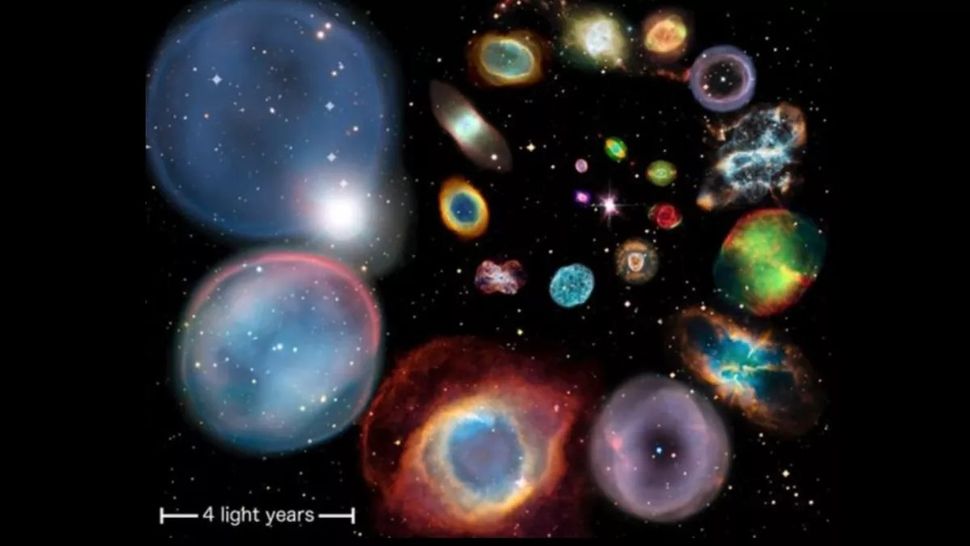
Hundreds of 'ghost stars' haunt the Milky Way's center. Scientists may finally know why


"Planetary nebulas offer us a window into the heart of our galaxy and this insight deepens our understanding of the dynamics and evolution of the Milky Way's bulge region," University of Manchester astrophysicist Albert Zijlstra said in a statement.

Studying 136 planetary nebulas in the thickest part of the Milky Way, the galactic bulge, with the Very Large Telescope (VLT), the team discovered that each is unrelated and comes from different stars, which died at different times and spent their lives in different locations.

The researchers also found that the shapes of these planetary nebulas line up in the sky in the same way. Not only this, but they are also aligned almost parallel to the plane of the Milky Way.

Monday, February 26, 2018

White Dwarf Stars and Other Wonders

White dwarf’s inner makeup is mapped for the first time


Tiny changes in a white dwarf’s brightness reveal that the stellar corpse has more oxygen in its core than expected, researchers report online January 8 in Nature. The finding could challenge theories of how stars live and die, and may have implications for measuring the expansion of the universe.

As a star ages, it sheds most of its gas into space until all that remains is a dense core of carbon and oxygen, the ashes of a lifetime of burning helium. That core, plus a thin shellacking of helium, is called a white dwarf.

Luckily, some white dwarfs encode their inner nature on their surface. These stars change their brightness in response to internal vibrations. Astrophysicists can infer a star’s internal structure from the vibrations, similar to how geologists learn about Earth’s interior by measuring seismic waves during an earthquake.


Saturn’s rings, made of countless icy particles, form a translucent veil in this view from NASA’s Cassini spacecraft.


Saturn's moon Titan sports Earth-like features


Using the now-complete Cassini data set, Cornell astronomers have created a new global topographic map of Saturn's moon Titan that has opened new windows into understanding its liquid flows and terrain.

The map revealed several new features on Titan, including new mountains, none higher than 700 meters. The map also provides a global view of the highs and lows of Titan's topography, which enabled the scientists to confirm that two locations in the equatorial region of Titan are in fact depressions that could be either ancient, dried seas or cryovolcanic flows.

The map also revealed that Titan is a little bit flatter -- more oblate -- than was previously known, which suggests there is more variability in the thickness of Titan's crust than previously thought.

Thursday, May 21, 2015

[links] Fishing With Horses and other cool links

Fishing With Horses:  There are only about 11 horse fishermen in the area of Oostduienkerke but the two men I have photographed are the only ones who actually drag for the shrimp for part of their income the rest just do it for tourism of the town. I am not sure how much longer this old tradition will stay alive in this actual form but I am glad to have a chance to photograph these amazing draft horses and the men that work with them. The horses are so relaxed and I realized after going into the sea my self how much the waves have so much force and the sand shifts under you feet as you sink slowly into the wet sand. I think for these horses it is such a unnatural thing for them to do, but you can see that they have total trust that their riders will guide them and that is what true horsemanship really is, working with a trusted partner to get the required job done easily.Before mules were used for the job but because of the weight of the larger nets the Brabant draft horse is now used because of their tremendous strength and easy going attitudes. They could not have picked a better breed.


The Evolution of Snakes: “We infer that the most recent common ancestor of all snakes was a nocturnal, stealth-hunting predator targeting relatively large prey, and most likely would have lived in forested ecosystems in the Southern Hemisphere,” said Dr Allison Hsiang of Yale University, lead author on the study.


Science Fiction Fodder: Ether-Based "DNA":In the search for life beyond Earth, scientists have justifiably focused on water because all biology as we know it requires this fluid. A wild card, however, is whether alternative liquids can also suffice as life-enablers. For example, Saturn's frigid moon Titan is awash in inky seas of the hydrocarbon methane. Here on warm, watery Earth, the molecules DNA and RNA serve as the blueprints of life, containing creatures' genetic instruction manuals. An immense family of proteins carries out these instructions. A new study proposes that molecules called ethers, not used in any genetic molecules on Earth, could fulfill the role of DNA and RNA on worlds with hydrocarbon oceans. These worlds must be a good deal toastier though than Titan, the study found, for plausibly life-like chemistry to take place.