1st known 'Trojan' planets discovered locked in the exact same orbit around a star
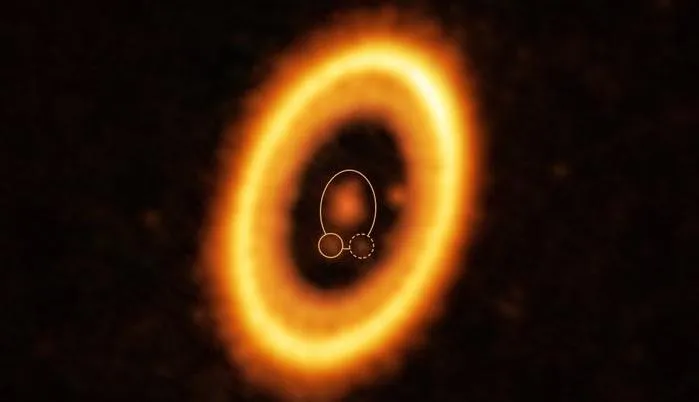
Astronomers have discovered the first evidence of ultra-rare 'Trojan' planets: two sibling planets bound on the same orbit around the same star.
The potential co-orbiting planets, dancing around the young star PDS 70 roughly 370 light-years away, consist of a Jupiter-size planet and a cloud of debris — possibly the shattered remains of a dead planet, or the gathering building blocks of one yet to be born.
Trojan planets get their unusual name from the two asteroid clusters seen around Jupiter, which, upon their discovery, were split into Greeks and Trojans (the opposing sides of the mythical Trojan War in Homer's Iliad) based on their proximity to the gas giant's gravitationally stable Lagrange points.
Lagrange points are places in a solar system where the gravitational pulls of a star and an orbiting planet balance out the motion of an object's orbit, trapping the object so that it moves in lock-step with the planet.
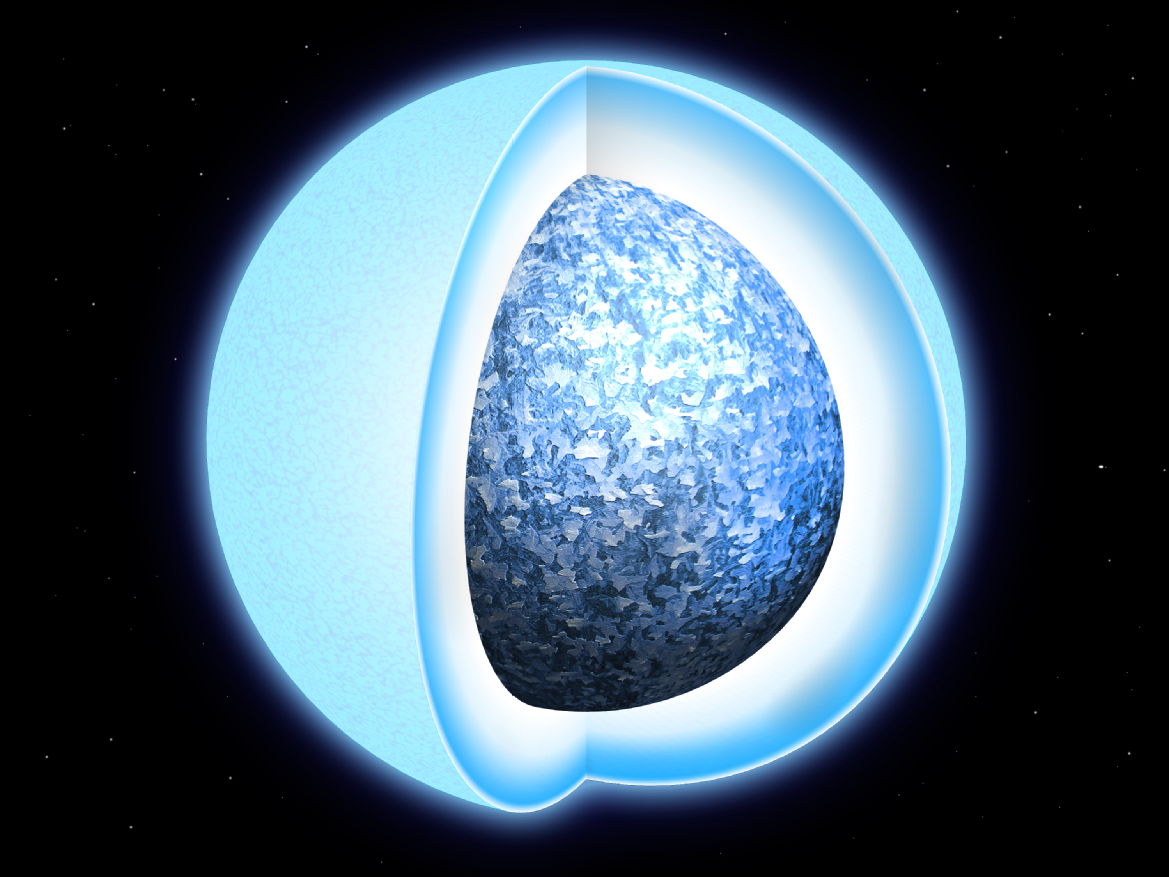
White dwarfs are truly strange objects. After a lifetime of billions of years of fusion, they transform themselves into something else completely different. They transition from blazing balls of plasma to degenerate lumps of carbon that eventually crystallize into diamonds that last for unimaginably long time periods.
It takes a quadrillion years for a white dwarf to crystallize, and since the Universe is not even 14 billion years old, astronomers will never spot a fully crystallized one. But this research removes some of the mystery by finding one that’s just starting to become a cosmic diamond. Curious astronomers will study more of these bizarre stellar remnants, and one day, we may know exactly how and when something so strange can happen.
A skyscraper-size asteroid flew closer to Earth than the moon — and scientists didn't notice until 2 days later
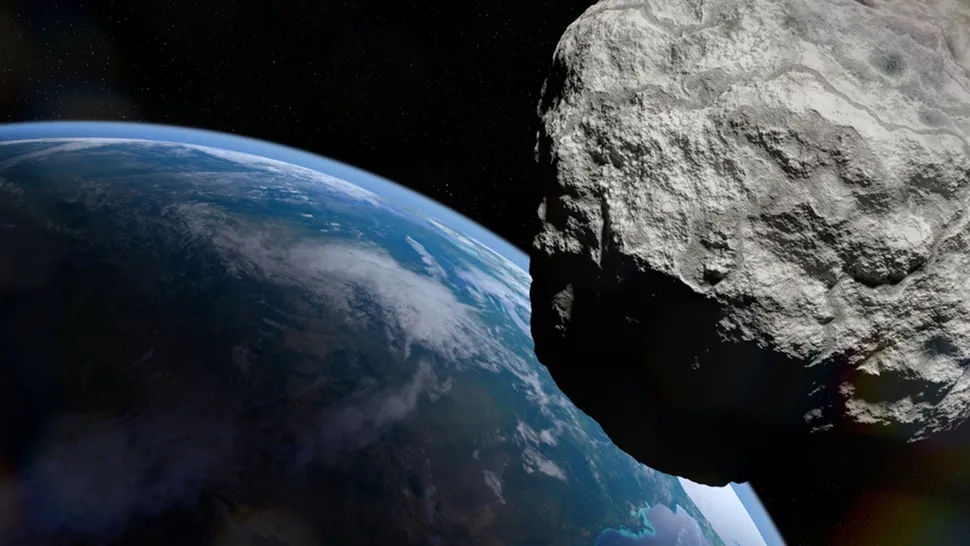
Now dubbed 2023 NT1, the roughly 200-foot-wide (60 meters) space rock sailed past our planet on July 13, traveling at an estimated 53,000 mph (86,000 km/h), according to NASA. However, because the rock flew toward Earth from the direction of the sun, our star's glare blinded telescopes to the asteroid's approach until long after it had passed.
Astronomers didn't catch wind of the building-size rock until July 15, when a telescope in South Africa — part of the Asteroid Terrestrial-impact Last Alert System (ATLAS), an array of telescopes designed to spot asteroids several days to weeks before any potential impact — caught the rock making its exit from our neighborhood. More than a dozen other telescopes also spotted the rock shortly afterward, according to the International Astronomical Union's Minor Planet Center.
Hundreds of 'ghost stars' haunt the Milky Way's center. Scientists may finally know why
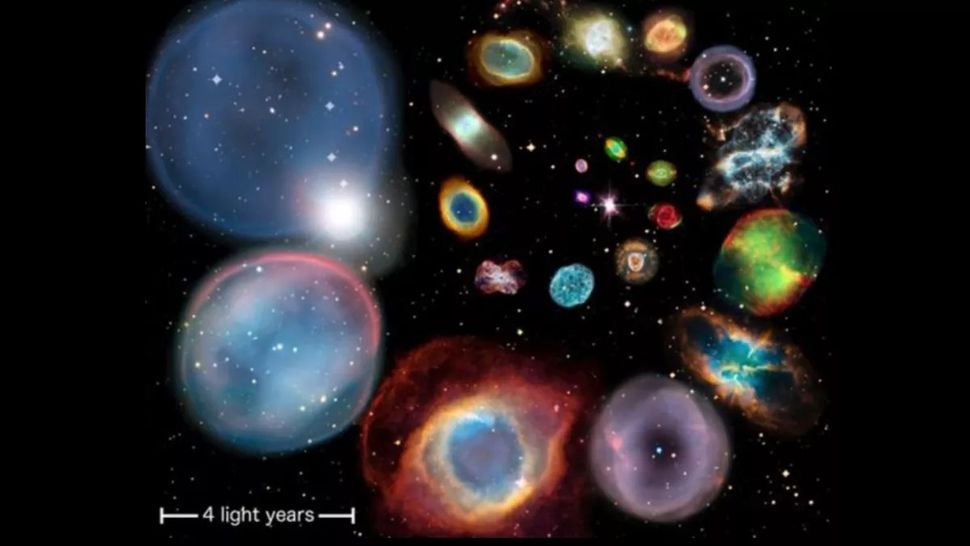
"Planetary nebulas offer us a window into the heart of our galaxy and this insight deepens our understanding of the dynamics and evolution of the Milky Way's bulge region," University of Manchester astrophysicist Albert Zijlstra said in a statement.
Studying 136 planetary nebulas in the thickest part of the Milky Way, the galactic bulge, with the Very Large Telescope (VLT), the team discovered that each is unrelated and comes from different stars, which died at different times and spent their lives in different locations.
The researchers also found that the shapes of these planetary nebulas line up in the sky in the same way. Not only this, but they are also aligned almost parallel to the plane of the Milky Way.


