Live Science, one of my favorite news sources (yay, science!) recently published this fascinating report. It's perfect for futuristic science-fiction world-building!
From the article: Life on Earth could continue for another 1.8 billion years, according to new research. This figure, which is based on complex climate models, is far longer than many previous studies indicated.
In 1982, James Lovelock and colleagues estimated that Earth's photosynthetic biosphere — which includes all plants and forms the basis for most of the planet’s biology — would end about 100 million years from now. Successivestudies have pushed back the deadline for the death of all life on Earth. Published in the journal JGR Atmospheres, researchers suggest that plant life could continue about 1.8 billion years into the future. That nears the time when Earth would lose its oceans to space, either through radiation splitting water atoms or runaway evaporation, in about 2 billion years.
Life on Earth relies on photosynthesis, the process used by plants, algae and some bacteria to turn sunlight into energy. The mechanism chemically converts carbon dioxide and water into sugars and oxygen. It requires both CO2 and sunlight.
But at certain temperatures, plants' photosynthetic machinery shuts down. Eventually, the sun will warm Earth to the point that plants are no longer able to photosynthesize, which would in turn cause entire food webs to collapse and all life to perish.
Another issue is that as the sun dies and it gets brighter, there will be less carbon dioxide in the atmosphere, effectively starving plants.
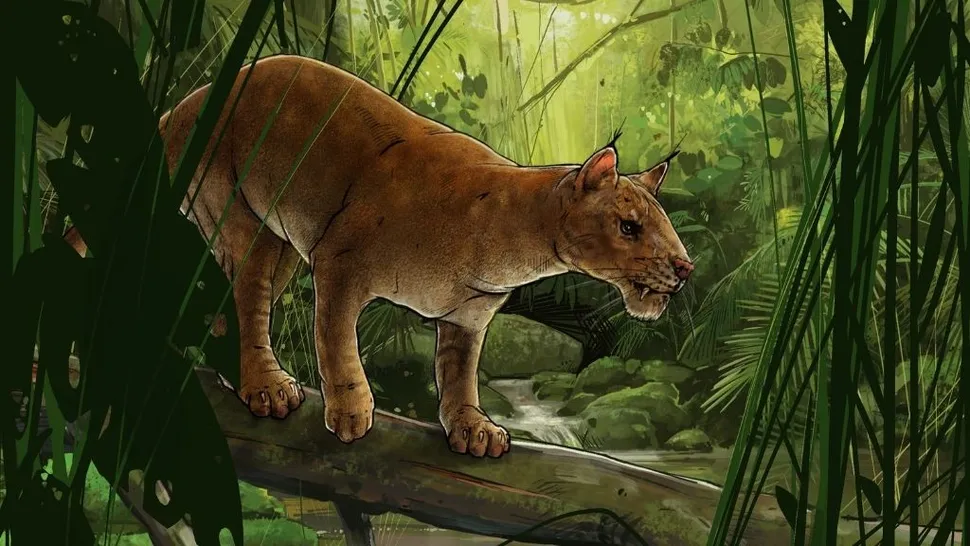
The hypercarnivore may have hunted tapirs and tiny rhinos.
An unidentified fossil collected more than three decades ago was actually a mysterious species of saber-toothed carnivore that once stalked prey through the ancient rainforests of Southern California.
Hugh Wagner, a paleontologist at the San Diego Natural History Museum, later suggested that the jawbone might belong to a more mysterious group of hypercarnivores with scant representation in the fossil record: the machaeroidines. Remains of these strange beasts have been uncovered only at select sites in Asia and North America, and prior to the new study, only 14 specimens had ever been found, according to the PeerJ report. The now-extinct group includes the earliest known saber-toothed mammalian carnivores, which are not closely related to any living carnivores.
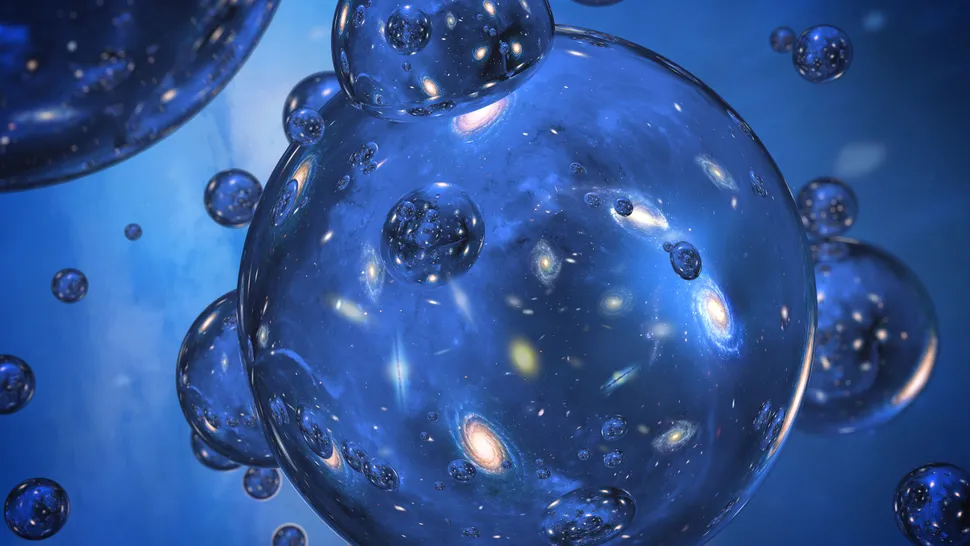
An anti-universe running backwards in time could explain dark matter and cosmic inflation.
A wild new theory suggests there may be another "anti-universe," running backward in time prior to the Big Bang.
The idea assumes that the early universe was small, hot and dense — and so uniform that time looks symmetric going backward and forward.
To preserve the CPT [charge, parity, time] symmetry throughout the cosmos, there must be a mirror-image cosmos that balances out our own. This cosmos would have all opposite charges than we have, be flipped in the mirror, and run backward in time. Our universe is just one of a twin. Taken together, the two universes obey CPT symmetry.[Click through to read the whole article; it's quite accessible to the non-physicist.]
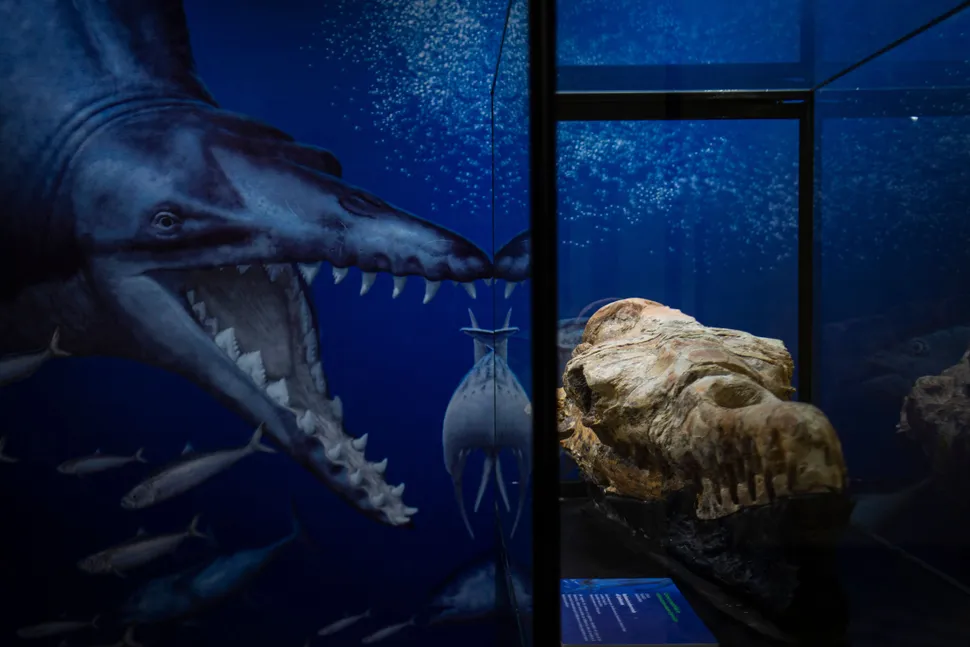
The creature is probably a new species of basilosaurus, a ferocious ancestor of modern whales.
Researchers digging in Peru's Ocucaje desert have uncovered the skull of an enormous marine predator thought to be the ancestor of modern whales and dolphins.
Four feet long (1.2 meters) and lined with knife-like teeth, the skull appears to be a new species of Basilosaurus — a genus of ferocious marine mammals that lived some 36 million years ago during the Eocene epoch, researchers from the National University of San Marcos (UNMSM) in Lima told Reuters. From snout to tail, the creature probably measured about 39 feet (12 meters) long, or about the size of a city bus.
For now, researchers are calling this ancient beast the "Ocucaje Predator." It won't be formally named until the team publishes a scientific description of the species in a peer-reviewed journal.
When the meteor struck, temperatures on Earth’s surface skyrocketed. Many animals had nowhere to flee, but roaches could take shelter in tiny soil crevices, which provide excellent protection from heat.
The meteor’s impact triggered a cascade of effects. It kicked up so much dust that the sky darkened. As the sun dimmed, temperatures plunged and conditions became wintry around the globe. With little sunlight, surviving plants struggled to grow, and many other organisms that relied on those plants went hungry.
Not cockroaches, though. Unlike some insects that prefer to eat one specific plant, cockroaches are omnivorous scavengers. This means they will eat most foods that come from animals or plants as well as cardboard, some kinds of clothing and even poop. Having appetites that aren’t picky has allowed cockroaches to survive lean times since the Chicxulub extinction and other natural disasters.
Another helpful trait is that cockroaches lay their eggs in little protective cases. These egg cartons look like dried beans and are called oothecae, which means “egg cases.” Like phone cases, oothecae are hard and protect their contents from physical damage and other threats, such as flooding and drought. Some cockroaches may have waited out part of the Chicxulub catastrophe from the comfort of their oothecae.
Cockroach egg cases are about 0.5 inches long (10 millimeters) and contain up to 50 eggs, depending on the species.VitalisG/iStock via Getty Images
Cockroach egg cases are about 0.5 inches long (10 millimeters) and contain up to 50 eggs, depending on the species.VitalisG/iStock via Getty Images
The newfound cells help to maintain a healthy respiratory system.
Scientists have discovered a brand-new type of cell hiding inside the delicate, branching passageways of human lungs. The newfound cells play a vital role in keeping the respiratory system functioning properly and could even inspire new treatments to reverse the effects of certain smoking-related diseases, according to a new study.
The cells, known as respiratory airway secretory (RAS) cells, are found in tiny, branching passages known as bronchioles, which are tipped with alveoli, the teensy air sacs that exchange oxygen and carbon dioxide with the bloodstream. The new RAS cells are similar to stem cells — "blank canvas" cells that can differentiate into any other type of cell in the body — and are capable of repairing damaged alveoli cells and transforming into new ones.
More than 85 well-preserved dinosaur footprints -- made by at least seven different species -- have been uncovered in East Sussex, representing the most diverse and detailed collection of these trace fossils from the Cretaceous Period found in the UK to date. The footprints date from the Lower Cretaceous epoch, between 145 and 100 million years ago, with prints from herbivores including Iguanodon, Ankylosaurus, a species of stegosaur, and possible examples from the sauropod group (which included Diplodocus and Brontosaurus); as well as meat-eating theropods.
An international team of palaeontologists, which includes the University of Bristol, has discovered that the flying reptiles, pterosaurs, actually had four kinds of feathers, and these are shared with dinosaurs -- pushing back the origin of feathers by some 70 million years. Pterosaurs are the flying reptiles that lived side by side with dinosaurs, 230 to 66 million years ago. It has long been known that pterosaurs had some sort of furry covering often called 'pycnofibres', and it was presumed that it was fundamentally different to feathers of dinosaurs and birds.
Rare relic is one of only three fossil clouds known in the universe
A relic cloud of gas, orphaned after the Big Bang, has been discovered in the distant universe by astronomers using the world's most powerful optical telescope, the W. M. Keck Observatory on Maunakea, Hawaii. "Everywhere we look, the gas in the universe is polluted by waste heavy elements from exploding stars," says Robert. "But this particular cloud seems pristine, unpolluted by stars even 1.5 billion years after the Big Bang."
Our Earth is an aqua-planet, and is the only planet in our solar system where the presence of water on the planet surface has been confirmed. We are, however, not yet sure how our Earth acquired water. Recent studies have shown that other celestial bodies in our solar system have, or used to have, water in some form. Asteroids are considered to be one of the candidates that brought water to Earth. Note that the liquid water is not flowing on the surface of asteroids, but water is retained in asteroids as hydrated minerals, which were produced by chemical reactions of water and anhydrous rocks that occurred inside the asteroids, that is, aqueous alteration. Hydrated minerals are stable even above the sublimation temperature of water ice. Thus, by looking for hydrated minerals, we can investigate whether asteroids have water.
More strange and wonderful theoretical stuff" As we look backwards in time, the universe gets denser and hotter; we know this from the absorption lines in the background radiation, and it fits with our current theory. The densities of galaxies have also evolved as expected.
In the first seconds after the Big Bang, radiation dominated, then matter dominated with formation of galaxies.
I've been trying to put together my notes from the cosmology lectures at Launch Pad 2011. It's a bit heavy going, partly because the material is heavily mathematical and theoretical, but also because my poor brains were oozing out of my ears by this time. But here are a few of the more mind-blowing ideas for your delectation:
On a large scale, we live in an expanding universe: the galaxies are moving apart, with velocity proportional to distance. This is the cool part --- the galaxies are not moving through space, nor are the galaxies themselves expanding -- space itself is expanding, carrying the galaxies along!! Gravity within a galaxy holds it together. This does not mean we are at the center of the universe; you have the same impression of space expanding in all directions from any other galaxy as well. In local galaxy clusters, gravity can dominate over this expansion. Recessional velocities are greater than small local motions over large distances.