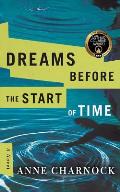
Dreams Before the
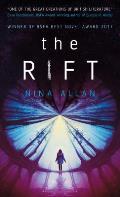
Start of Time, by Anne Charnock (2017, 47North); and The Rift, by Nina Allan (2017, Titan).
Spoiler Alert...
What makes science fiction a genre? Is it the bells and
whistles, the FTL space ships, the futuristic technology? Is it the ability to
travel in time or across vast regions of space? Does it involve interactions
with alien species, either for the first time or as a matter of course? Or is
it simply because the author or the publisher says so? I will not dignify the
argument put forth by “litr’ary” types that science fiction is an inherently
inferior form of literature. Clearly, they haven’t been reading the superbly
imaginative, elegantly crafted work of the last couple of
Following the principle of showing instead of telling, I refer
you to the discussions surrounding The
Time Traveler’s Wife (by Audrey Niffenegger, Harcourt, 2003). With due
respect to my colleagues who might disagree, I thought the only people who
considered this novel science fiction were those outside the genre. Yes, the
man of the romantic pair bops about from one time period to another (losing his
clothing along the way), but that did not make it science fiction in my eyes. I
could accept it as romance. The focus, as in Diana Gabaldon’s Outlander, is the (romantic) relationship
between two people. (Although Outlander
involves time travel, very few readers I know would classify it as science
fiction rather than fantasy or romance.) For me, the aspect that put The Time Traveler’s Wife firmly outside
science fiction was the failure to develop the implications of time travel for
society. How has this one man’s ability changed the world? What are the moral and political consequences of his
actions? Why isn’t he found out and his abilities exploited? How can the “fabric”
of time continue linearly with such repeated “tears”?
In other words, science fiction doesn’t just present nifty
ideas in a vacuum – it focuses on how those ideas and gadgets and twists of
fate have larger effects on the natural and human world. Perhaps back in the
age of pulp magazines, a fun gimmick was sufficient to sustain a story with
flimsy plotting, cardboard characters, and mediocre prose, but that hasn’t been
true for a long time now.
This, too, is why I believe Margaret Atwood’s The Handmaid’s Tale falls squarely in
the science fiction genre. Atwood herself refused to consider her dystopian
world as science fiction, calling it instead “speculative fiction.” I think
that’s a distinction without a difference. One
critic (readily identifiable as ignorant of the field by his use of “sci-fi”)
wrote, “Sci-fi sells us fantasies. Margaret Atwood’s classic novel is all about
the danger of fantasy.” To those of us who are actually conversant with science
fiction, the reverse is true, and is a powerful argument for The Handmaid’s Tale belonging on the
same shelf as other brilliantly written feminist dystopian science fiction.

