Showing posts with label shapeshifters. Show all posts

Friday, September 22, 2023

Book Review: A New Shapeshifter Novel from Samaire Wynne

 Awakening Fae: A Fated Mates ~ Wolf Shifter Magical Adventure (The Meridian Pack Book 1) by Samaire Wynne (Black Raven Books)

“It’s good to read outside one’s familiarity zone” is oft-quoted advice. Usually, it means to try something darker, grimmer, and grittier than usual. But when I’d had my fill of dark/grim/gritty/depressing tales about sociopaths I really didn’t care about, I happily agreed to take a look at Samaire Wynne’s new wolf shifter novel. I dove into it without preconceptions and soon found it to be not only romantic in the best sense but also delicately layered.

Cameron, a foster kid about to age out of the system, is thrown into the world beyond the mundane when a puppy falls from the sky. I know what I’d do—everything I could to save it! In Cameron’s case, although it takes her a while to realize how she’s done it, this involves reaching out with a magical talent she had no previous idea she possessed.

Despite being forced to grow up too quickly when faced with an uncertain future, Cameron is still half a child. She has some, but by no means all, of the skills she’ll need to survive in the outer world. She’s got the grades but not the money for college; her foster parents do their loving best but cannot afford to keep her once she passes the age cutoff. The author perfectly captured Cameron’s loneliness and insecurity about the future and transforms it into loving protectiveness. In bonding with the puppy, Cameron places the welfare of another before her own, an essential step in growing up.

As Cameron encounters the puppy’s wolf shifter pack and her first terrifying encounter with the Nightmare Fae that are now stalking her, she embarks upon a journey into a new world of reincarnating wolf shape-shifters and magic. Much of what she learns comes from the wolf shifter pack. She struggles to define and understand her place among them. Often, their unqualified acceptance of her is puzzling, as are the gaps in their explanations. Later, it’s revealed that the shifter pack recognizes Cameron as a rare, immensely powerful Moon Fae, which is why they treat her with reverence and take on the responsibility of her education. Like a reader faced with too much exposition, Cameron is handicapped in her ability to understand it all at once, but even more so to put together the new relationships with her changing abilities—and her rapidly evolving identity. Being a normal human teenager is difficult enough, not knowing who you’ll be or what you’ll feel from one day to the next (thank you, hormones!). Added to that, Cameron as a Moon Fae is changing—awakening, as the title indicates. As the story progresses, Cameron matures in her understanding of her new world and herself.

Underlying the supernatural elements and slow-burn romance is a beautifully rendered portrait of a family-of-the-heart, and I think this is what gives this story its emotional depth. As Cameron herself puts it:

Me, who had fleeting connections to a dozen foster parents; me, who had never had a real family; me, who had just two black trash bags to hold every last bit of my life and belongings when I moved from foster family to foster family. I had finally found a family that cared about me. And the monsters had risen up, camouflaged in the most devious, deceptive way, and had descended on us and ravaged them.

The world of the Meridian Pack is an interesting blend of wolf shifters, fae, reincarnation, fated mates, teenage sexuality, nightmare menaces, action, and rational discussion. The author draws a distinction between wolf shifters, shapeshifters who transform into the form of a large wolf, as opposed to werewolves (as in the Underworld movies) and which appear in Book 2 of The Meridian Pack series. One of the more fascinating aspects of wolf shifter lore is the rate of aging; handsome Asher appears to be in his 20s, a little older than Cameron, but is in fact only much younger, with predictable and sometimes humorous consequences.

Although there’s plenty of dramatic (and romantic) tension, Awakening Fae: A Fated Mates often has an almost cozy quality. There was plenty to keep me turning pages but not enough to compel me to stay up all night. As I was puzzling this over, I attended a webinar about what keeps readers engaged. One thing that stood out for me was the importance of how the author makes you feel. That is based in the consistency and reliability of the reading experience, conveyed through the implied contract between author and reader. The author says, in effect, “In exchange for your time (and your trust), I promise this kind of story.” Part of this offer is conveyed through authorial voice, but pacing, character development, and more subtle aspects of story-telling are just as important. In order to repay the reader’s trust, the author had better come through. Wynne’s strong, sure command of these elements means the reader can relax into the story journey, knowing that whatever the ups and downs of dramatic tension and plot twists, the reading experience will unfold as promised, consistent and true.

Fans of Wynne’s other urban fantasies will love this one. It’s also a great place to start, especially if wolf shifters, fae, and coming-of-age stories are your jam. It's available now here and on Kindle Unlimited.


Samaire Wynne is a Puerto Rican author of over 20 novels in various genres, including horror and urban fantasy. She is Editor in Chief of Black Raven Books. She has been writing professionally for over 11 years.

A longtime Californian, you can find her skulking about in southern Virginia. If you were to visit her at twilight, she might serve you flower tea or butter whiskey on her back deck. If she excused herself and strolled into the forest, you might be tempted to wander after her. Past a stream, you’d see a stone well at the edge of her property, and you might hear voices coming from deep inside.

If you were to trip and tumble down the embankment, you might be stolen away by faeries keen to offer you a cookie or a bit of mead in a flower cup.

And if you were to drink it, you’d awake to find that a hundred years had passed...


Next Monday, I'll be interviewing Samaire here on my blog. Don't miss it!


Friday, October 16, 2020

Short Book Reviews: Three Tales of Swans


Occasionally I find myself reading books with such similar themes or elements that the reviews naturally group themselves together. Below, on the other hand, are two very different stories that involve swans. Not as metaphors for supernal grace and beauty but as aquatic birds with nasty tempers. When my younger daughter was five, we took a family outing in a park that had swans. Because it was spring, the swans had young cygnets. I cautioned my daughter to not approach them, and she was being very careful when a mother swan took umbrage and came at her, hissing, beak extended. Without hesitation I jumped in front of the swan. I remember thinking I didn't want to use my fists because that would bring my face within reach of the swan's beak. I stood up and aimed a round-house kick at the swan's neck. I have no memory of actually kicking the swan (although family members assure me that I did), only the swan backing away, wings flapping, still hissing madly. Here endeth the first tale of swans.


The Glass Magician, by Caroline Stevermer (Tor)


What a delightful tale, set in an early 20th Century world in which humans are divided into ordinary Solitaires, shape-shifting Traders, and ecology-minded Silvestri. The story focuses on Thalia, a magic performer, and her manager, Nutall, who’s acted as a parental figure after the deaths of her parents. When a rival stage magician gets them booted from their gig using a noncompete clause, their future looks grim. Then the rival turns up dead and Nutall is the prime suspect. To make matters worse, Thalia, who has always believed herself to be a nonmagical Solitaire, under the stress of a trick gone dangerously wrong, shape-shifts (“Trades”). Newly fledged Traders are not yet in control of their powers and become the prey of magic-consuming manticores. Now Thalia’s very life is at risk until she can master her magic, at the same time she’s determined to prove her mentor’s innocence and unmask the real murderer. The world and its characters are beautifully, charmingly drawn, with the effortless skill of a consummate storyteller.

There’s a lot of very cool stuff about stage magic, fine characterization, a murder mystery, and a slew of plot twists. The thing that impressed me most, though, was the subtle use of swan imagery.  Thalia Trades into the form of a swan, hissing in irritation at the unfairness of life when she’s not preening her feathers. But swans also appear here and there, like bits delicate, snowy down.


The Wild Swans, by Peg Kerr (Endeavour Venture)

Silence = Death

At first, I experienced a bit of disconnection in these two parallel stories: one, a re-telling of Hans Christian Andersen’s “The Wild Swans,” in which a devoted sister undergoes a terrible ordeal – about which she must remain silent – to free her brothers from an enchantment that turns them into swans by day, men by night; and a heart-wrenching coming-of-age story about a gay teen at the beginning of the AIDS epidemic. I found myself engrossed in Elias’s tale, which brought up memories of gay friends during that fearful time. The difference in my reading experience was partly due to my experience as a friend and ally, watching one after another of my friends become sick and die, remembering the atmosphere of fear and homophobia, the all-too-often rejection by families, and partly because in the Andersen tale, I knew what was going to happen. Since I was familiar with the story, I had no worries that Eliza, the sister, would prevail and that her brothers, once more restored to themselves, would rescue her from being executed as a witch. I didn’t know that not only would Elias’s lover, Sean, contract AIDS (and die), but that Elias himself would fall victim to the HIV virus. This journey, from Elias initially finding himself homeless after his family kicks him out for being gay, to meeting Sean and being welcomed into the gay and gay-friendly art and music community, to the evolving love story, engrossed me attention as it engaged my emotions.

For much of the book, I was puzzled as to the relationship between the two stories. There were a few obvious intersections, homophobia or rather hatred of homosexuality being one of them. It wasn’t until I closed the last chapter and mulled over the experience that I understood the deeper connection: Silence = Death. In order to break the spell, Eliza must cut, thresh, and weave nettles into shirts for her brothers, a long an excruciating process. I’ve brushed up against nettles, and the stinging is no joke (although to be fair, poison oak is worse). During that time, if she utters a single word, her brothers will remain swans forever. She cannot explain or defend herself, not even to save her own life.

HIV didn’t evolve because gay people hid who they were and whom they loved (for very good reason), but it flourished in an atmosphere of silence born out of fear. Eliza’s faithfulness arose out of love for her brothers, and the loyalty and solidarity of the LGBT+ community gave rise to movements like ACT UP that demanded action, and respect.

Part of the power of this story lies in the subtle resonances between fairy tale and contemporary tragedy. I say, “part,” because Elias speaks for himself. His story alone would have been an engrossing, heart-rending read. The juxtaposition of the Andersen story created a thoughtful, beautifully written pas de deux.


Friday, January 3, 2020

Short Book Reviews: A Jaguar Shapeshifter Murder Mystery

A Study in Shifters, by Majanka Verstraete (Monster House)

This murder mystery set in a high school for shape shifters falls squarely within the “School for Supernaturals” category, so if Harry-Potter-with-wereteens is your cup of tea, this book is for you. Even more so, Marisol Holmes is the heir to the jaguar clan, which holds the throne among shifters, and she’s the descendent of the legendary detective. At the beginning of the story, she’s still reeling from what she refers to as “The Big Betrayal,” in which her much-loved cousin died, and also in which she trusted the wrong charismatic, manipulative, devilishly handsome suitor. To make matters worse, she’s unable to shift into her jaguar form and is desperate to keep that failure a secret.

Now Marisol must earn her place in the law enforcement Conclave again by solving the murder of a high school student from a rival, leopard clan. On the surface, it looks very much as if the jaguar clan (and therefore Marisol’s mother, the Queen) are going to be ousted as a result of their role in the murder. Marisol suspects the evidence is a setup, planted for political reasons. Now all she has to do is find out who really did it, while dealing with her snake shifter supervisor and the haunting memories of her past. Has Mannix, the suitor who lured her into the plot that killed her cousin, returned and if so, for what purpose? (I found it no coincidence that Mannix and Moriarty, Sherlock Holmes’s arch-nemesis, begin with M.) Then there’s Roan, fellow jaguar shifter and intimate pen pal, who’s mysteriously disappeared after attending the same high school Marisol is investigating.

A Study in Shifters fits neatly into the magical high school and teen detective murder mysteries categories. It’s similar enough to stories of both types to be immediately accessible – the students even make reference to Harry Potter. Yet the elements of the shifter clans and their politics and abilities offer fresh, original material, and the mystery unfolds in unexpected ways that kept me turning the pages. I loved Marisol’s “inner jaguar” and her perfectly depicted teenager uncertainties. Marisol is faced with not only solving the mystery but coming to terms with her own nature and choices. For me, that makes for an immensely satisfying story. I look forward to more from this author.

Wednesday, October 3, 2012

ROUND TABLE: Animals in Fantasy (Part II)

Hello and welcome back for the second part of a fascinating discussion of animals in fantasy. 

Valjeanne Jeffers: The Newest Nonhumans on the Block.

My decision to write about shape shifters and animalsespecially werewolves was first met with shock...by me. When I was growing up, and until say the last ten or so years, the cast of animals in science fiction/fantasy was pretty limited. You had your choice of evil and doomed or tragic and doomed. Either way somebody, usually your animal, was doomed. Remember the “salt monster” from the original Star Trek series? It was a beast with no other desire than to assume the shapes of the crewlike a deadly chameleon. All the better to suck the salt from your body until you're dead. That was pretty much the fare of traditional SF films and books.

Whenever I sat down to watch a werewolf film, I already knew the beginning and the end. I already knew the skinny. It definitely wasn't cheerful. Some poor man or woman got bitten or scratched and went through a period of: “I can't believe this is happening to me!” Then eventually, like The American Werewolf In London, they all turned into hairy, psycho killers and proceeded to murder anyone unlucky enough to get in their way—including their own family members. That was the traditional SF nonhuman. That was his or her fate.


So why would I chose such a tragic protagonist? Now the plot, as they say, thickens. There is a nontraditional SF animal, oftentimes also a shape shifter, that has made his/her way into the SF/fantasy genre. These new animals or shape shifters can be loosely grouped into two categories: a thinking being that thwarts the heroine or hero, or one that helps them on their journey.

In The Talisman by Stephen King and Peter Straub, a science fiction/horror odyssey, there is a whole host of supernatural creatures: werewolves, were-goats,  lizards... some good, some malevolent, but all with human intellecta sharp break from the traditional werewolf formula. In fact, “Wolf,” a gentle, werewolf is pivotal to the hero's success. When Wolf runs with the moon, he too becomes a killing machine, losing his human ability to think and reason. Yet Wolf's humanity, unlike that of his literary forefathers, conquers this brutal calling.

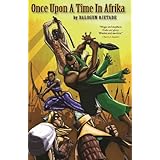
But animals such as the talking familiars of A. Jarrell's Detecting Magic With Dick Hunter, and the magical crow of Balogun Ojetade's Once Upon a Time in Afrika showcase animals that completely belong to a new breed of SF/Fantasy animals.