Showing posts with label animals. Show all posts

Wednesday, October 3, 2012

ROUND TABLE: Animals in Fantasy (Part II)

Hello and welcome back for the second part of a fascinating discussion of animals in fantasy. 

Valjeanne Jeffers: The Newest Nonhumans on the Block.

My decision to write about shape shifters and animals—especially werewolves— was first met with shock...by me. When I was growing up, and until say the last ten or so years, the cast of animals in science fiction/fantasy was pretty limited. You had your choice of evil and doomed or tragic and doomed. Either way somebody, usually your animal, was doomed. Remember the “salt monster” from the original Star Trek series? It was a beast with no other desire than to assume the shapes of the crew—like a deadly chameleon. All the better to suck the salt from your body until you're dead. That was pretty much the fare of traditional SF films and books.
Whenever I sat down to watch a werewolf film, I already knew the beginning and the end. I already knew the skinny. It definitely wasn't cheerful. Some poor man or woman got bitten or scratched and went through a period of: “I can't believe this is happening to me!” Then eventually, like The American Werewolf In London, they all turned into hairy, psycho killers and proceeded to murder anyone unlucky enough to get in their way—including their own family members. That was the traditional SF nonhuman. That was his or her fate.


So why would I chose such a tragic protagonist? Now the plot, as they say, thickens. There is a nontraditional SF animal, oftentimes also a shape shifter, that has made his/her way into the SF/fantasy genre. These new animals or shape shifters can be loosely grouped into two categories: a thinking being that thwarts the heroine or hero, or one that helps them on their journey.

In The Talisman by Stephen King and Peter Straub, a science fiction/horror odyssey, there is a whole host of supernatural creatures: werewolves, were-goats,  lizards... some good, some malevolent, but all with human intellect—a sharp break from the traditional werewolf formula. In fact, “Wolf,” a gentle, werewolf is pivotal to the hero's success. When Wolf runs with the moon, he too becomes a killing machine, losing his human ability to think and reason. Yet Wolf's humanity, unlike that of his literary forefathers, conquers this brutal calling.
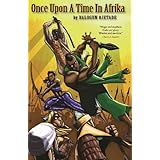
But animals such as the talking familiars of A. Jarrell's Detecting Magic With Dick Hunter, and the magical crow of Balogun Ojetade's Once Upon a Time in Afrika showcase animals that completely belong to a new breed of SF/Fantasy animals. 


Wednesday, September 26, 2012

ROUND TABLE: Animals in Fantasy (Part I)


Pegasus by Odilon Redon
Here we are, back with another Amazing Traveling Round Table, and what a great topic! Animals and fantasy just seem to go together for many of us, whether we love fantastical creatures or wish we could talk to our beloved pets, whether we dream of worlds only horses (or dragons) can take us to or the places we dare not venture without our trusty animal companions.

To get the ball rolling on this topic, I'd like to point out some general aspects of the use of animals in fantasy. The first is simply their presence. Many fantasy tales take place in low-technology worlds (with the recent exception of urban and other contemporary fantasy subgenres). This generally means that animals will fulfill the same functions as they have historically been used for, such as transportation (horses, mules, donkeys, oxen, reindeer...), food, clothing (cattle, sheep, goats, rabbits, pigs...), hunting/protection (dogs, cheetahs), and so forth. The exceptions (exotic animals or using an animal for an unusual purpose) can be lots of fun, but it's important to do the research and understand the proper handling and temperaments of whatever species is being portrayed. The ridiculously romanticized and unrealistic portrayals of horses in fantasy are notable, and what's sad is that there is a wealth of accurate information available, such as Judith Tarr's excellent Writing Horses .

A second role for animals in fantasy involves changing the nature of existing species,
such as making them telepathic or giving them magical abilities. I suspect that much of the allure of these animals is our own desire to communicate, but in our own terms. If a dolphin or a dog or an eagle speaks to us mind-to-mind, it is in human thoughts, from a primate perspective. Once we step outside the paradigm of projecting our own thought patterns and emotional responses on to another creature, however, we open the door to true encounters with the "other," which may not only be our equal but our superior, beings who can teach and inspire instead of be tools that obey us. Is there anything more magical than seeing the world through the eyes of someone -- no less a person -- with radically different senses, desires, thought processes, and knowledge?

A third, and perhaps the most challenging, way animals appear is as fantastical beings in themselves - dragons, phoenixes, unicorns, and the like. Every culture has such beings, so there is a wealth of material from which to draw. They can resemble ordinary animals (the kelpie appearing as a black horse, often to the peril of anyone who accepts a ride) or be chimeras, combinations of different animals, or be ordinary animals modified in some way (winged cats). Or they may be essentially different from animals we know, transcending the limitations of terrestrial biology.

A fourth category, perhaps a subset of the third, involves human/animal combinations -- hybrids, if you like. Certainly werewolves (and were-other-animals) fall into this category, as do centaurs and mermaids. One might argue that vampires do, as well. Whether they are essentially humans with the added physical (and magical) attributes of animals, or have a very different consciousness, culture, and personal goals, they offer a chance to explore what it is to be human, to be a person, to be kin to both people and animals. And that sort of exploration is, after all, one of the most profound gifts fantasy has to offer.


************************************


Theresa Crater: Getting inside the perspective of an animal is one of the pleasures of fantasy. Kate Forsyth’s dragons, horses and the witches who talk to them have always stuck with me. Kate Forsyth is an Australian fantasy writer of two well-known series, The Witches of Eileanan and Rhiannon’s Ride. Kate’s dragons are the most noble of all I’ve read—and they’re damned scary. When people come into their presence, they realize quite quickly how puny humans are. Their bowels always threaten to turn to liquid and their brains are beat upon by intelligence vaster and more powerful than they can comprehend.

One variety of psychics talks to animals, and there is one who is at pains to argue for animal rights. This young woman represents animals in human councils. One horse in her book reminds me of Malcolm X. He is proud and refuses to allow himself to be ridden. He sees horses are somewhat superior to humans, who have treated his kind like brutes. But when the fate of the world and his new human friend rests on him alone, he decides to allow one person on his back—without a saddle or bridle of course. If the human cannot trust him, she cannot ride. She accepts his terms and the day is won.