Showing posts with label fairy tales. Show all posts

Friday, April 21, 2023

Short Book Reviews: Not the Beauty and the Beast You've Known

 The Language of Roses, by Heather Rose Jones (Queen of Swords)


I loved Heather Rose Jones’s “Alpennia” books, with all their derring-do, politics, and intelligent romance, so I grabbed her new book, The Language of Roses, without nary a glance at the description. It soon became clear to me that this was yet another (yawn) retelling of “Beauty and the Beast,” with hints that it will be a lesbian romance. But Jones is a thoughtful author who has never followed the predictable path, so I hung in there during the set-up as the eldest daughter of a merchant who foolishly plucks a rose takes his place in the home of a terrifying Beast and his icy sister, invisible servants and all. This daughter, unlike her boy-crazy sisters, has never fallen in love (hint, hint) and regards marriage as a duty or a financial agreement, with mutual respect and friendship the best she can hope for. Even if she is a stranger to romance, she loves her family deeply and is fearless and passionate in their defense.

From the very beginning, like a twining rose vine, Jones examines the nature and varieties of love. Is it more than intense, all-consuming physical attraction, and if so, how? The story kept remining me of the different hormones involved in infatuation (dopamine and norepinephrine) versus long-lasting, committed love (oxytocin). Jones doesn’t preach or descend into lengthy exposition on the neurochemical nature of love. Instead, she takes the reader on a journey of trust, comfort, cherishing, and self-sacrifice.

As a final note, I encourage readers to not judge this book as a solely a lesbian romance. If you do, and if you think that’s not for you, you’ll miss out on something remarkable. The characters are universally appealing, as are the emotions. There are enough plot twists and unexpected details to keep the pages turning. It’s an absorbing, rewarding read.


Friday, November 12, 2021

Very Short Book Reviews: Marjorie Liu's Delicious Collection


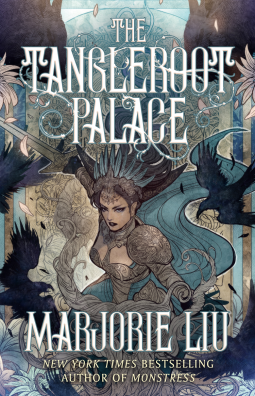
The Tangleroot Palace
, by Marjorie Liu (Tachyon)

This collection was my introduction to the work of Marjorie Liu. I found the stories oddly disquieting while I was reading them but Liu’s skill was so evident, I trusted it all to come together and I was not disappointed. I didn’t like all the stories equally, but that’s to be expected in any assortment of short fiction. These feel as if they’re paced like novels, but I think that’s because of the unusually subtle ways Liu weaves together the various fictional elements. Her work reminds me of that of the late Phyllis Eisenstein, who told emotionally complex, sophisticated stories with simple language. Here the real story lies beneath the mechanics of prose and plot, each thread of the tapestry contributing to a gorgeous and emotionally satisfying whole. And the last piece, a novella that gives its name to the collection, is just jaw-droppingly awesome.


Friday, October 16, 2020

Short Book Reviews: Three Tales of Swans


Occasionally I find myself reading books with such similar themes or elements that the reviews naturally group themselves together. Below, on the other hand, are two very different stories that involve swans. Not as metaphors for supernal grace and beauty but as aquatic birds with nasty tempers. When my younger daughter was five, we took a family outing in a park that had swans. Because it was spring, the swans had young cygnets. I cautioned my daughter to not approach them, and she was being very careful when a mother swan took umbrage and came at her, hissing, beak extended. Without hesitation I jumped in front of the swan. I remember thinking I didn't want to use my fists because that would bring my face within reach of the swan's beak. I stood up and aimed a round-house kick at the swan's neck. I have no memory of actually kicking the swan (although family members assure me that I did), only the swan backing away, wings flapping, still hissing madly. Here endeth the first tale of swans.


The Glass Magician, by Caroline Stevermer (Tor)


What a delightful tale, set in an early 20th Century world in which humans are divided into ordinary Solitaires, shape-shifting Traders, and ecology-minded Silvestri. The story focuses on Thalia, a magic performer, and her manager, Nutall, who’s acted as a parental figure after the deaths of her parents. When a rival stage magician gets them booted from their gig using a noncompete clause, their future looks grim. Then the rival turns up dead and Nutall is the prime suspect. To make matters worse, Thalia, who has always believed herself to be a nonmagical Solitaire, under the stress of a trick gone dangerously wrong, shape-shifts (“Trades”). Newly fledged Traders are not yet in control of their powers and become the prey of magic-consuming manticores. Now Thalia’s very life is at risk until she can master her magic, at the same time she’s determined to prove her mentor’s innocence and unmask the real murderer. The world and its characters are beautifully, charmingly drawn, with the effortless skill of a consummate storyteller.

There’s a lot of very cool stuff about stage magic, fine characterization, a murder mystery, and a slew of plot twists. The thing that impressed me most, though, was the subtle use of swan imagery.  Thalia Trades into the form of a swan, hissing in irritation at the unfairness of life when she’s not preening her feathers. But swans also appear here and there, like bits delicate, snowy down.


The Wild Swans, by Peg Kerr (Endeavour Venture)

Silence = Death

At first, I experienced a bit of disconnection in these two parallel stories: one, a re-telling of Hans Christian Andersen’s “The Wild Swans,” in which a devoted sister undergoes a terrible ordeal – about which she must remain silent – to free her brothers from an enchantment that turns them into swans by day, men by night; and a heart-wrenching coming-of-age story about a gay teen at the beginning of the AIDS epidemic. I found myself engrossed in Elias’s tale, which brought up memories of gay friends during that fearful time. The difference in my reading experience was partly due to my experience as a friend and ally, watching one after another of my friends become sick and die, remembering the atmosphere of fear and homophobia, the all-too-often rejection by families, and partly because in the Andersen tale, I knew what was going to happen. Since I was familiar with the story, I had no worries that Eliza, the sister, would prevail and that her brothers, once more restored to themselves, would rescue her from being executed as a witch. I didn’t know that not only would Elias’s lover, Sean, contract AIDS (and die), but that Elias himself would fall victim to the HIV virus. This journey, from Elias initially finding himself homeless after his family kicks him out for being gay, to meeting Sean and being welcomed into the gay and gay-friendly art and music community, to the evolving love story, engrossed me attention as it engaged my emotions.

For much of the book, I was puzzled as to the relationship between the two stories. There were a few obvious intersections, homophobia or rather hatred of homosexuality being one of them. It wasn’t until I closed the last chapter and mulled over the experience that I understood the deeper connection: Silence = Death. In order to break the spell, Eliza must cut, thresh, and weave nettles into shirts for her brothers, a long an excruciating process. I’ve brushed up against nettles, and the stinging is no joke (although to be fair, poison oak is worse). During that time, if she utters a single word, her brothers will remain swans forever. She cannot explain or defend herself, not even to save her own life.

HIV didn’t evolve because gay people hid who they were and whom they loved (for very good reason), but it flourished in an atmosphere of silence born out of fear. Eliza’s faithfulness arose out of love for her brothers, and the loyalty and solidarity of the LGBT+ community gave rise to movements like ACT UP that demanded action, and respect.

Part of the power of this story lies in the subtle resonances between fairy tale and contemporary tragedy. I say, “part,” because Elias speaks for himself. His story alone would have been an engrossing, heart-rending read. The juxtaposition of the Andersen story created a thoughtful, beautifully written pas de deux.


Friday, September 27, 2019

Short Book Reviews: Not Your Grandmother's Ugly Stepsister


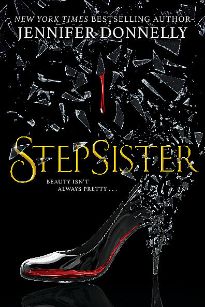
Stepsister, by Jennifer Donnelly (Scholastic)

Stepsister is the latest “fractured fairytale” I’ve read, and there have been many over the years – some pedestrian, some relying only on a single concept, but some brilliant and insightful. Donnelly’s contribution falls squarely in the latter category. It’s based on “Cinderella,” and it takes place after the happy ending, from the viewpoint of one of the Ugly Stepsisters. Ella has gone off to live with her prince in the castle (and they have since become King and Queen of France), and the stepsisters and their mother live in a decaying mansion (Maison Douleur, “House of Pain”) with no money and certainly no social prospects, as they are widely reviled as the ones who heaped so much misery upon sweet, lovely Ella.

Of course, there’s more to the story. That’s only the set-up. Although Maman is very much the scheming match-maker of the popular tale, Octavia and Isabelle (the viewpoint character) are anything but the self-absorbed, selfish creatures we have come to despise. Neither particularly wanted to get married, let alone to a prince. Tavi lived for science and mathematics, while Isabelle was devoted to heroic adventure, military strategy, and her favorite horse (at least, before Maman embarked upon her marriage schemes). Even after Ella goes off to her happy ending, Isabelle’s fate is not their own. Literally, because the incarnations of Chance and Fate have a wager as to whether she can overcome the harshness of her present circumstances, or whether she and her family will fall prey to the invading armies of the evil General Volkmar. In the end, it’s up to Isabelle, with her keen wit and her capacity for growth (and remorse) to thwart the bloodbath and save Queen Ella’s throne.

The characters are wonderful, the details whimsical and grim, the emotional arc pitch-perfect, and luscious prose like this:
“The pieces of your heart are restored. The boy is love – constant and true. The horse, courage – wild and untamed. Your stepsister is your conscience – kind and compassionate. Know that you are a warrior, Isabelle, and that a true warrior carries love, courage, and her conscience into battle, as surely as she carries her sword.”
I’ll be re-reading this one. Highly recommended.


Friday, July 12, 2019

Short Book Reviews: Fairy Tales, Dragons, and the Russian Revolution


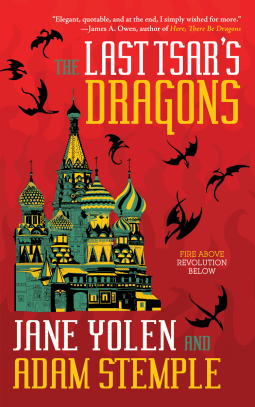
The Last Tsar's Dragons, by Jane Yolen and Adam Stemple (Tachyon)

This dramatic yet playful re-telling of the days leading up to the Russian Revolution (with dragons!) offers a variety of delights, from the courtly intrigues and madness of Rasputin, to the Jews huddling in the burrows to avoid the tsar’s dragons, to the machinations of the revolutionaries, to an entirely new meaning of the term “red death.” I believe the authors, seasoned professionals both, had way too much fun concocting this tale.

A little knowledge of the Russian Revolution is desirable for enjoying this book, and I fear that younger readers, who think “Putin” when they hear “Russia,” had little understanding of the tumultuous events leading to the formation of the Union of Soviet Socialist Republics, and the principle movers and shakers of those days. On the other hand, The Last Tsar’s Dragons would make a great addition to a serious class about the early part of the 20th century. By shifting the narrative of power to metaphor, while preserving actual historical and occasionally fictional characters, this could and should provoke lively discussion.

How to Fracture a Fairy Tale, by Jane Yolen (Tachyon Publications)


When it comes to giving classic (and not-so classic) fairy tales a new twist, nobody does it better than Jane Yolen. This collection includes her children’s book, Sleeping Ugly, which I read aloud innumerable times to my own daughters. Best of all, though, are Yolen’s own comments on the tales, the nature of fairy tales, and how we grow and heal through story-telling.

The usual disclaimer: I received review copies of these books, but no one bribed me to say anything in particular about them. Although chocolates and fine imported tea are always welcome.

Friday, November 28, 2014

[links] A few nifty links for Friday morning

Neil Gaiman takes on fairy tale stereotypes: "You don't need princes to save you," says Neil Gaiman, speaking about his new fairy tale, The Sleeper and the Spindle. "I don't have a lot of patience for stories in which women are rescued by men." And so, in his slim, gilded, wicked book, a beautiful young queen calls off her own wedding and sets out to save a neighbouring kingdom from its plague of sleep.

Yogurt lives up to its rep as a healthy food: Yogurt was linked to a significantly lower risk of diabetes. And this was true even after controlling for factors linked to diabetes risk like body mass index (BMI) and diet. The team then pulled in data from previous studies to add to theirs, and calculated that 28 grams of yogurt per day was linked to an 18% lower risk of type 2 diabetes.

We've got a candidate for life outside of Earth: Scientists think Europa is the best candidate for life outside Earth in the solar system because life depends on three key ingredients - liquid water for chemical reactions, essential chemicals and an energy source - and Europa seems to have all three.

Dogs and humans co-evolved. The scientists found that dog owners' aroma actually sparked activation in the "reward center" of their brains, called the caudate nucleus. Of all the wafting smells to take in, dogs actually prioritized the hint of humans over anything or anyone else.

In memory of Jay Lake's wonderful [linksalad]

Monday, November 19, 2012

Proud Editor Grin - book trailer!

Earlier this year, I had the joy of co-editing (with Phyllis Irene Radford) an anthology of new interpretations of fairy tales - Beyond Grimm from Book View Cafe. One of the stories was an edgy, lyrical version of "The Twelve Dancing Princesses" - Sue Lange's "Princess Dancer." Now Sue has done a book trailer of her story. It's quite an amazing thing to see a story I edited give rise to another art form.

Check it out! (And the original prose story, too -- both are amazing!)


Tuesday, March 13, 2012

A New Anthology: Beyond Grimm: Tales Newly Twisted

First of all, a Happy Editor dance... [dance, dance, dance]

This is the first anthology I've edited (actually, co-edited with Phyllis Irene Radford) for Book View Cafe. It began, lo these many many months ago, with an in-house discussion along the lines of "Hey, wouldn't it be fun to..." Book View Cafe has already published several anthologies (Rocket Boy and the Geek Girls, Dragon Lords and Warrior Women -- which has a story of mine! -- The Shadow Conspiracy I and  II), so there was some precedent. We knew to ask things like, Will this be reprint, original stories, or both? Will it be a benefit for BVC or will the authors receive shares of the proceeds? How will we define the theme? At a certain point, we'd reached a sufficient level of enthusiasm and clarity so that someone had to put on an organizational (aka editor's) hat.

Thinking this would be marvelous fun, I volunteered, and the way it worked out, Phyl co-edited it with me. I supplied time and my own editorial experience, and she had the expertise of working with the BVC anthology publication procedures. Because there were two of us, we could submit our own stories to one another, thereby avoiding the editing-your-own-work scenario.

One of the things I love about editing anthologies is watching the process, the landscape of that adventure, unfold, discovering moments of truth and hilarity and heart-wrenching sadness and sheer beauty and poetry in prose. Beyond Grimm was no exception. Although we started with "let's retell classic fairy tales," our imaginations took us in other directions as well - the sun-drenched islands of Greek mythology, legends from the frozen north, Arthurian tales, nursery rhymes, even my own riff on the plots of classical ballets. Fairy-tale lands, contemporary urban settings, magical and not-so-magical steeds, spells and epistles of the people's revolution, mysterious locked chambers and shape-shifters...moonlight and storms.

Friday, June 3, 2011

Something New on "Read A Story"

This month's story is "Poisoned Dreams," from Sword & Sorceress XI. It's one of my darker, more twisted tales, with an embittered, crippled fay and a princess willing to do anything, pay any price, to earn her father's love. Click "Read A Story." Enjoy!

Thursday, May 26, 2011

Iconic Childhood Books: Red Feather

Red Feather by Marjorie Fischer; with illustrations by Davine; Modern Age Books, 1937.

My favorite childhood books all came from someone else. This one had my brother's name on the inside cover. He was 11 years older than I, my half-brother, and lived with his mother rather than with my family, so I suspect there is an interesting story in how I happened to come by the book, but not one I ever knew. I must have been older than I was when I got Artie and the Princess, for I made no attempt to colorize the illustrations. The book would be considered a "chapter book," 151 pages long, with lots of pictures but lots of text, too, with lovely spoken rhythms for reading aloud.

Red Feather is a changeling story. The usual scenario is that the fairies exchange one of their own babies for a human child, only in this case, the swap is interrupted. The resemblance is so close that when they return, they can't tell which is which. It makes a difference because the fairy child is nobly-born and the human child is destined to be the scullery maid for the Fairy Queen. In this world, only mortals are any good at housework. We follow the one the fairies take back, and like most children, she feels that she doesn't belong, she can't do anything right, she longs to be somewhere else. It's a variation of the "prince-in-hiding" Harry Potter "special-child" theme.