This report also appears in my latest newsletter. To subscribe, click here:
2026 World Fantasy Convention report
It’s been a number of years since I attended a large
convention. Pre-pandemic, I went to a number of such gatherings on the West
Coast. This year, 2026, both World Fantasy (WFC) and World Science Fiction
(WorldCon) conventions were held in California, my home state. As they occurred
only a few months apart and it was clear I had the energy to attend only one of
them, I chose WFC. Historically, it’s oriented more toward books—writers,
publishers, booksellers, and of course—readers. WorldCon abounds with costumes
and media tie-ins. Different fandoms, different energy.
As in previous years, I was an author guest and was
scheduled for a number of events. And, as in previous WFCs, I found the
conversations as nourishing, inspiring, and in general worthwhile as any formal
event. I should preface my idiosyncratic personal remarks by saying that the
time leading up to the convention was highly stressful and I was often so
exhausted that I found myself in tears. Nevertheless, I got myself organized,
practiced my part of a group reading session, and made my way to Oakland. The
drive (over 3 hours, most of it in congested traffic), followed by parking so
impossible, I gave up and paid for valet parking, did not lend itself to a calm
entrance. Once I’d checked in, hugged my roommates (with whom I’ve shared
quarters at many other conventions), and decamped with them to a Chinese noodle
house, I felt up to my first event:
The Mass Autographing. Authors arrive early, grab
a tent card and a place at a table, and wait for the hordes of fans who may or
may not materialize. I found myself between two congenial colleagues: Elisabeth
Waters, with whom I’ve worked for many years as editor/co-editor; and Brenda
Cooper, whom I hadn’t yet met in person. Every once in a while, I’d spot
someone in dire need of greetings and a hug. Beginning-of-convention gladness,
especially in light of how many friends and fellow writers were not local. A
fan came by with a stack of labels for Lisa and me to autograph for the many
Darkover and Sword and Sorceress anthologies in his collection.
I also discovered the need for a CliffsNotes answer to “How
are you?” and settled on, “Writing away!”
In the past, conventions have included room parties, many
of them hosted by publishers or fan clubs. In recent years and especially since
the pandemic, these have been few and far between. I didn’t see any signs for
parties, nor was I invited personally, so I concluded there weren’t any. Since
I can no longer stay up late and I was mindful of the risks of viral
transmission in close gatherings, this was fine with me.
The next morning began with breakfast with two dear
friends, which in itself would have been worth the drive to Oakland, and my
panel:
Typing Uphill Both Ways… What’s the Trick?Veteran writers discuss navigating the opportunity and
pitfalls inherent in traditional publishing, newer formats and platforms,
social media, the loss of mass market paperbacks, and a dwindling midlist.
They’ve seen it all through the years, but they’ve kept publishing despite
these. With Michael Kurland, Bruce
McAllister, Sharon Shinn, and moderator, Tim Melody Pratt.
Some years, the transition from one season to the next proceeds in a gentle, almost meditative fashion. The year graciously allows us plenty of time to change out our wardrobe, prepare our favorite holiday comfort foods, and adjust our circadian rhythms. (The less said about flipping on and off Daylight Savings Time, the better.) This year, however, we seemed to leapfrog all that gradual change, catapulting from sweaty summer into where's-my-sweater weather without so much as a fare-thee-well.
In the whirlwind of a big convention, finishing up the manuscript and query materials for Many Teeth, and digging out warm clothing, I am aware of what an amazing community you all are for me. As Thanksgiving will soon be upon us, I want to express my appreciation for each and every one of you!
What's in this newsletter?
World Fantasy Convention report
Life and writing: Don't hurry up
Cute cat pic
2026 World Fantasy Convention report
It’s been a number of years since I attended a large convention. Pre-pandemic, I went to a number of such gatherings on the West Coast. This year, 2026, both World Fantasy (WFC) and World Science Fiction (WorldCon) conventions were held in California, my home state. As they occurred only a few months apart and it was clear I had the energy to attend only one of them, I chose WFC. Historically, it’s oriented more toward books—writers, publishers, booksellers, and of course—readers. WorldCon abounds with costumes and media tie-ins. Different fandoms, different energy.
As in previous years, I was an author guest and was scheduled for a number of events. And, as in previous WFCs, I found the conversations as nourishing, inspiring, and in general worthwhile as any formal event. I should preface my idiosyncratic personal remarks by saying that the time leading up to the convention was highly stressful and I was often so exhausted that I found myself in tears. Nevertheless, I got myself organized, practiced my part of a group reading session, and made my way to Oakland. The drive (over 3 hours, most of it in congested traffic), followed by parking so impossible, I gave up and paid for valet parking, did not lend itself to a calm entrance. Once I’d checked in, hugged my roommates (with whom I’ve shared quarters at many other conventions), and decamped with them to a Chinese noodle house, I felt up to my first event:
The Mass Autographing. Authors arrive early, grab a tent card and a place at a table, and wait for the hordes of fans who may or may not materialize. I found myself between two congenial colleagues: Elisabeth Waters, with whom I’ve worked for many years as editor/co-editor; and Brenda Cooper, whom I hadn’t yet met in person. Every once in a while, I’d spot someone in dire need of greetings and a hug. Beginning-of-convention gladness, especially in light of how many friends and fellow writers were not local. A fan came by with a stack of labels for Lisa and me to autograph for the many Darkover and Sword and Sorceress anthologies in his collection.
I also discovered the need for a CliffsNotes answer to “How are you?” and settled on, “Writing away!”
In the past, conventions have included room parties, many of them hosted by publishers or fan clubs. In recent years and especially since the pandemic, these have been few and far between. I didn’t see any signs for parties, nor was I invited personally, so I concluded there weren’t any. Since I can no longer stay up late and I was mindful of the risks of viral transmission in close gatherings, this was fine with me. The next morning began with breakfast with two dear friends, which in itself would have been worth the drive to Oakland, and my panel:
Typing Uphill Both Ways… What’s the Trick?Veteran writers discuss navigating the opportunity and pitfalls inherent in traditional publishing, newer formats and platforms, social media, the loss of mass market paperbacks, and a dwindling midlist. They’ve seen it all through the years, but they’ve kept publishing despite these. With Michael Kurland, Bruce McAllister, Sharon Shinn, and moderator Tim Melody Pratt.
To say we’ve seen it all is an understatement. With panelists having over 5 or 6 decades in the field, I (with my mere 45 years as a pro) felt like the baby on the panel. We talked about the changes we’ve seen over the years, from when you could earn a living by churning out a short story for the pulp markets every week, to the implosion of book distributors, the dwindling midlist, the rise of POD (Print on Demand) and ebooks, publishers gobbled up by multinational conglomerates, and the rising threat of AI. Hopeful trends include the ability to self-publish (as an “indie” author) and the emergence of small press publishers that put out some of the best, most innovative genre fiction. We all had stories to tell of disasters and disappointments, friends and colleagues that kept us going, and strategies like editing, teaching, or moving sideways into another genre (mystery, romance, screenplays). In one way or another, we had all “re-invented” our careers over the years. A recurring theme was the vital importance of community. Collectively, we exchange news and ideas, we imagine new forms of storytelling or re-invigorate old ones, and we laugh and cry and carry one another through difficult times.
The afternoon was akin to a water-slide, swooshing from one adventure to the next. On my way to (yet another Chinese) lunch with another long-time fellow author (and fellow martial artist), we got waylaid into sitting for portraits for a photography project, documenting today’s luminaries of the field.
I returned in time for a tour of the Dealer’s Room and Art Show. The wares offered for sale have changed over time. Once, I could find T-shirts with dragons and cats, hand-made knives (also perfumes, stuffed mythical-animal toys, handmade lace, and many amazing artifacts, some of which involved real skulls). Also sellers of new and used books and jewelry. The jewelry was still there, along with a few booksellers, but most of the dealers were indie authors selling only their own books. Two excellent small press publishers, Tachyon and Fairwood attended the convention. Until it was time for:
READING: Treehouse Writers Group, with Chaz Brenchley, Nancy Jane Moore, Pat Murphy, and Madeleine Robins. Treehouse Writers formed at the beginning of the pandemic, when we were looking for virus-free ways to hang out together. Chaz and Pat became honorary members for the purpose of the reading, offering two different but equally delightful riffs on Sherlock Holmes. I got to sit back and listen to some truly awesome stories, a combination of works in progress and published work. I went last and, as everyone – participants and audience – looked tired, I kept mine to one short scene from the beginning of Collaborators, my Lambda Award Finalist novel. And betook myself to a solitary not-Chinese dinner. And fell into bed.
Because the next morning, I had an early check-out and gathering of a zoom-group of writers that has been a vital part of my community support system. The weekend left my heart full and my head buzzing with Ideas! Words! Images!
My weekend concluded in grand style with lunch with fellow Treehouse denizen, after which we encountered a gaggle of friends (and a friendly hotelperson, who snapped this pic of us). L to R front: Kate Johnston, me, Sumiko Saulson; back: Karen and Chaz Brenchley, Nancy Jane Moore.
Don't Hurry Up
From the time we’re small children, it seems that someone is always urging us to hurry up, to not dawdle, to stop procrastinating, to keep “on target,” and to do things faster. We are supposed to race through our lives without paying attention to the wonders around us (except, of course, when we’re supposed to be observant and appreciative). Of course, what is wonderful to a child is all too often invisible to the harried parent or teacher who herself has deadlines and schedules to keep. Homework assignments are Important; watching snails is not.
When I began to write professionally, I found myself juggling motherhood, a day job career, and the inner-driven need to set down the stories in my head. Writing time was precious and all too scant, and I had much to learn about the craft. My initial style involved “pantsing” (writing “by the seat of your pants”) or, as I put it, “taking a flying leap off the edge of reality, ” and then revising, revising, revising. As a consequence of this and the limited, fractured time periods available to me, my stories progressed slowly. I remember meeting a certain published author at one of my first convention, who breezily talked about how he never revised, he sold his first draft novels, and he produced three or four of them every year. I cringed to think of my one or two short stories and maybe one novel draft in that same time period (keeping in mind that I needed three or four – or more! – revision drafts). Was this what professional writers did? I wondered. And how was I ever going to produce that much, that fast, and of that professional quality?
(As a slightly smirky footnote, I have no idea what happened to that writer. I haven’t seen the byline in decades, so maybe that strategy wasn’t so successful after all. Or the name might have been changed, as so often happens.)
To my great good fortune, I also encountered writers who had learned to listen to their own creative rhythms and understood that getting the story right was more important than getting it fast. These were not writers who use “I listen to my inner muse” as an excuse for not writing, or who polish endlessly and never submit their work. These were professional, published authors. Some of them sold many books and others only a few. Not all were genre writers, but all prized their craft. I met writers who considered a day successful if they got a single paragraph exactly the way they wanted it; others measured their daily productivity by hours spent or pages finished. They opened my eyes to many possibilities for measuring progress besides how fast I could turn out a manuscript.
I found that different stages of a story call for different speeds. I work best when I draft quickly from outline and then revise slowly. I give myself permission at all stages to take a break and think about a “stuck place” (whether that is a block in the sense of “I have no idea what comes next” or just a niggling feeling that something isn’t right). I go for a walk, I clean house, or I pick up the phone and chat with a friend about something utterly unrelated to writing. When I’m willing to do this, I end up in fewer dead ends, I need fewer subsequent drafts, and I’m more in touch with the internal fabric of the story. So much of the joy of writing is discovering new experiences, new points of view, stories told by characters who are not like us and who live in worlds not like our own.
All this has a great deal to do with observing and accepting my own creative rhythms, but also with patience. Patience loops the topic back to my opening, which is how we find our way back being fully present with what is unfolding at the present moment and at a pace too often at odds with the regimented, overcommitted, multi-tasking, hurried expectations around us (not to mention the financial pressures for a working writer to produce so many books a year). It’s all very well to recite slogans like, “Stop And Smell The Roses,” and quite another to shield ourselves from those expectations.
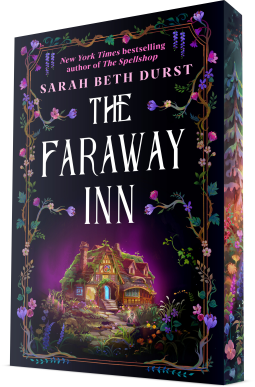
The Faraway Inn, by Sarah Beth Durst (Delacorte Press)
The Faraway Inn is a wonderful example of a story
that is aimed at Young Adult readers but has much wider appeal. Yes, the
viewpoint character, Calisa, is sixteen, but her situation and emotional growth
are have universal appeal. Following an angst-ridden breakup with her boyfriend,
she embarks upon a summer at her great-aunt’s B&B in rural Vermont. Instead
of the idyllic summer-of-forgetting she expected, she finds a dilapidated,
almost empty husk. one door after another is slammed in her face, sometimes
literally and always without explanation. Auntie Zee is not only colossally
grumpy and anti-welcoming but seems determined to send Calisa packing. Calisa,
however, is anything but a helpless victim. She rolls up her sleeves, partners
with Jack, the son of the (mysteriously absent) groundskeeper, and embarks upon
a campaign of cleaning, tidying, and serving afternoon tea, complete with cake.
Soon, she’s also investigating doors that lead to other worlds, when they don’t
open capriciously to closets. Just as she gets a clue what is going on, the magical
gates begin to fail…stranding Jack’s father in limbo.
Although this is a stand-alone unrelated to Durst’s “Spellshop”
series, it shares many of the same elements: a young protagonist with agency, a
complex system of magical worlds shaded with romance, danger, and longing.
These vaccines entered use in the U.S. at different times from the early 1980s through 2000. Prior to that, there were millions of chickenpox cases and thousands of serious bacterial infections and preventable deaths among American children each year. Vaccination has dramatically reduced the toll of these diseases.
Many parents today grew up during the transition to widespread vaccination for these diseases and may never have witnessed the severe complications these vaccines help prevent. I’m an epidemiologist who studies vaccine-preventable illnesses and health communication, and I worry that perhaps the luxury of forgetting about these diseases could end up giving rise to a generation of children who aren’t vaccinated against them.
What Florida would be choosing
School vaccination requirements help communities establish herd immunity, which is when enough people are vaccinated to prevent a disease from easily spreading. When vaccination rates fall, infections can spread among susceptible children throughout the community, placing those who are too young to be fully vaccinated, as well as those who cannot develop adequate protection due to medical conditions, at greater risk.
Florida’s proposal would not eliminate these four vaccines, nor would ending a mandate mean that every family would stop using them. However, it would weaken one of the policies designed to maintain high vaccination coverage. If fewer children are vaccinated as a result, the risks will extend beyond the families making that choice.
The consequences could be devastating.
Hib: The bacterium that can cause meningitis
Before Hib vaccines became widely used in the late 1980s, pediatricians sometimes faced a terrifying emergency: an infant with fever, lethargy and a stiff neck. Testing of cerebrospinal fluid would reveal bacterial meningitis caused by Haemophilus influenzae type b, or Hib, an infection that could kill a child or leave lasting neurological damage.
Today, many doctors have never even seen a single case. The bacterium has not disappeared, but widespread vaccination has made serious Hib disease in young children far less common.
By the early 1990s, there were more than 4 million cases of chickenpox annually in the United States. Of those infected, 10,500 to 13,500 were hospitalized, and 100 to 150 died. More than 90% of cases and about 70% of hospitalizations occurred in children, as did roughly half of the deaths.
Children are contagious before the rash appears, and each case has an incubation period of up to three weeks. A single infection could spread through a school or daycare in waves for a month or more. Since vaccination began in 1995, deaths from chickenpox in people under 20 years old have been virtually eliminated.
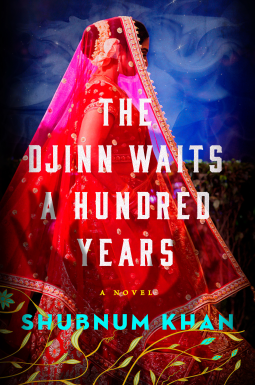
The Djinn Waits a Hundred Years, by Shubnum Khan (Viking)
I wanted to like this book. I really did, and for the
first 20% or so, I enjoyed it. The setting – a mouldering old house in Durban,
South Africa – the widow and his teenaged daughter, Sana, whose way of experiencing
the world is as richly lyrical as it is unusual, the other inhabitants of the
house. Add to that the mystery of what happened in the house and why it’s
haunted by a festering, evil djinn, and all these elements carried the opening.
Alas, it’s a high wire act to use setting and character
as the forward momentum of a novel, no matter how vivid they may be in their
own right. This is not to say that a novel cannot be focused on character or setting,
only that the energy driving the story must arise from them, catapulting events
into dramatic tension. Otherwise, the story drifts from one interesting or
amusing incident to the next, dissipating engagement and curiosity about what’s
going on and why.
This was my experience, although of course, other readers
may have a different take on this book. It was always about to get going and
then sinking back into stasis. Things that might have been charming crotchets,
like the humorous friction between the house’s inhabitants, turned into
irritations when it seemed that was all there was to the story. I never could
figure out why Sana had such an unusual way of experiencing the world because her
semi-hallucinatory state never varied. Without question, the prose is
beautiful, filled with offbeat connections and unusual ways of interpreting
reality.
For me, as a reader, however, “lyrically stunning” can go
only so far in overcoming “lack of story tension.” The book went from always-getting-started
to drifting to slog, in which I found myself looking for something else to do
besides reading it.
The proposed livestream of Nidal Hasan’s execution by a U.S. military firing squad gives an old question a new audience. Hasan, an Army psychiatrist convicted by a military court of killing 13 people at Fort Hood in Texas in 2009, is scheduled to be executed on Dec. 3, 2026.
Whether the broadcast will proceed remains uncertain. But as a historian of the early American republic, I recognize a familiar expectation behind it: that watching someone die will teach a useful lesson. Americans at the republic’s founding debated that premise — and doubted what the lesson might be.
The power of government
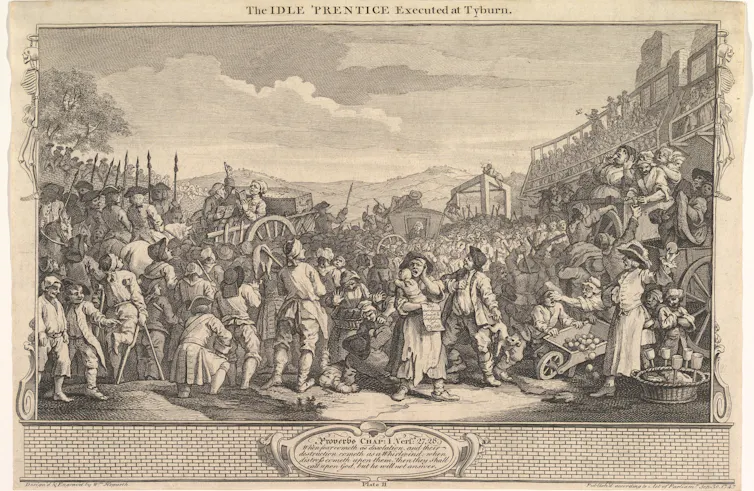
On Aug. 17, 1797, New Yorkers gathered to watch John Young hang.
An English musician and music publisher struggling with debt, Young had shot and killed Robert Barwick, a deputy sheriff taking him into custody. Barwick left a widow and nine children.
Governor John Jay, a leading Federalist who placed greater faith in firm government than in popular judgment, had authorized the military presence after the sheriff reported fears of a rescue. But Jay also wanted the execution to impress its witnesses with the power of the government carrying it out.
Solemnity, however, proved difficult to arrange. The military escort played lively music as the procession made its way to the scaffold. One newspaper critic thought an uninformed passerby might mistake the spectacle for “the celebration of some Festival.”
Soldiers formed a square around the gallows. The crowd remained orderly. Young addressed a few words to the minister, sang a psalm “and with great composure pulled his cap over his face,” reported one newspaper. Then, before the assembled witnesses, he was hanged.
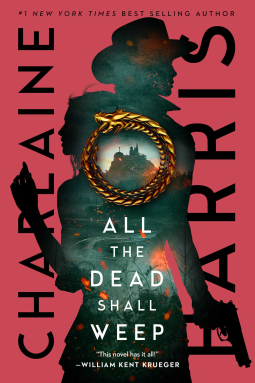
All the Dead Shall Weep, by Charlaine Harris (Saga)
I’m a long-time fan of Charlaine Harris, and she gets
better all the time. All the Dead Shall Weep, the fifth installment in her
“Gunnie Rose” series, is a showcase of her strengths: vivid characters, a
gritty and believable post-apocalytic world with diverse cultures, and superb
handling of dramatic tension and pacing. All conveyed in deceptively simple, evocative
prose that captures the nuanced emotional literacy of the viewpoint characters
(Lizbeth Rose and her sister, the fugitive grigori Felicia). Her portrayal of
the resilience and resourcefulness of poor residents of Texoma is both stark
and compassionate.
Newly weds Lizbeth and Eli, along with Felicia and Eli’s
brother, Peter, take refuge in Lizbeth’s home town after fleeing the Holy Russian
Empire in San Diego. Soon, they’re besieged by strange magic-wielders seeking to
court Felicia because of her powerful death magic, and those with even more
nefarious aims. Matters explode when armed paramilitary ride into town. Part
mystery, part love story, all wrapped up in breathless, page-turner action.
I will be at the World Fantasy Convention in Oakland. Come say hi!
Friday Mass autographing in the Grand Ballroom 8-10 pm;
Saturday, 10:00 AM - 11:00 AM, Room 202: Typing Uphill Both Ways… What’s the Trick? with Michael Kurland, Bruce McAllister, Sharon Shinn, and moderator Tim Melody Pratt
Saturday 5:00 PM - 6:30 PM, Salon 3 & 4: READING: Treehouse Writers Group with Chaz Brenchley, Nancy Jane Moore, Pat Murphy, and Madeleine Robins.
I am appalled by the recent rush to executions, horrified by the possibility of a televised firing squad, and deeply disturbed by the two botched attempts, and this is why:
In 1986, my 70-year-old mother was asleep in her own bed
when a teenage neighbor broke into her home, raped her, and then beat her to
near death and left her face down in a partially filled bathtub. It was a
spectacularly brutal, banner headline crime, called by the District Attorney
one of the most heinous in the history of the county.
Even in light of what happened, I am opposed to capital
punishment, and I'd like to tell you why. I want to emphasize that I do not
speak for anyone else. We all have different experiences, different histories,
different internal and external resources. If there is one thing I'd like you
to take away from my story, it is that not all the families of murder victims
want the perpetrators to be executed.
I believe that capital
punishment harms the survivors by interfering with the natural recovery
process. In other words, when we focus on revenge instead of healing, we never
heal.
A number of years
ago, when I was being interviewed about my mother's death, the interviewer said
to me, “You seem like such a sweet person. Most of us just aren't that
spiritual.” What she meant was, “How could you not want revenge?” What I
thought was, You have no idea how angry I
was and how much I wanted to hurt the man who did this.
The rage I felt
and that I've heard expressed by other murder survivors is so overwhelming,
it's hard to find words to describe it. You feel as if your skin is going to
crack open and out will pour enough molten hatred to incinerate the entire world.
For years after my mother's murder, I obsessed over exactly how I would kill
the perpetrator with my bare hands and how much I wanted him to suffer for
every moment of terror and pain he'd caused her. The images were so vivid, I
couldn't tell if I was awake or dreaming.
Adrenaline-fueled
anger enables us to get through those early days and weeks. It sharpens our
senses and focuses our thoughts. Our hearts pump faster. Biologically, we are
primed to do whatever is necessary to meet the threat. We don't feel our own
injuries, either of body or of mind or spirit. All our resources are devoted to
our immediate survival. In some circumstances, this lasts only a short period
of time. I know people who have lost loved ones to murder, but in that same
incident, the murderer was also killed. At the other extreme are instances
where the perpetrator is never discovered and the survivors must cope with the
nightmare of walking down the street, suspecting every passer-by or wondering
if the murderer has taken another life. I know people in that situation, too.
Anger and the
craving for revenge are normal reactions when someone you love has been
viciously attacked, their dignity as well as their lives stripped from
them.At the same time, these feelings
fuel the illusion that retribution erases pain, and popular media constantly
reinforce this illusion.
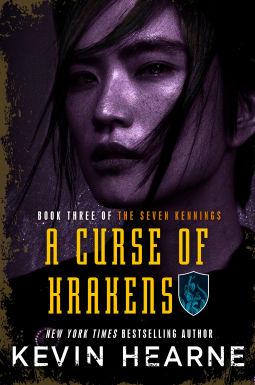
This is the third installment in Kevin Hearne’s “The Seven
Kennings” series, and it’s structured like the others, alternating third-person
present-day narrative with first-person narratives of various characters
involved in the overall story arc. It takes place in a complex, nuanced world,
a “huge canvas” with different cultures, alliances, personalities, and pieces
of the larger plot. It’s a little hard to follow as an entry to the series or
if it’s been awhile since you read it, but I found that by relaxing into the various
stories, the overall picture emerged.
Some of the narratives (channeled through a bard) felt like
sitting down with old friends and savoring the details of their lives. Often,
the stories would overlap, told from different viewpoints. Each character came
to the same set of events from their own unique history and culture. My
favorites remained Pen, a sort of tree guardian, and Abhi, who speaks to
animals.
It’s a long, leisurely read sure to please fans of the
series.
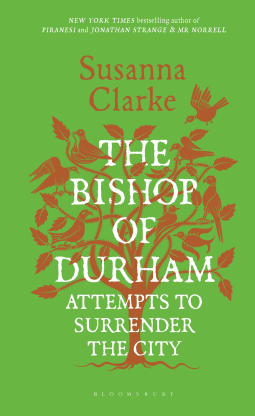
The Bishop of Durham Attempts to Surrender the City, by
Susanna Clarke (Bloomsbury)
First of all, this is a physically gorgeous book with
illustrated borders very much like medieval books. It’s a prequel to Jonathan
Strange & Mr Norrell, set 700 years in the past. Northern England has
been conquered by a fairy host, and the city of Durham is surrounded by a
mysterious, eerie wood. Ranulf, Bishop of Durham, determines to negotiate for
the city’s freedom. That is, if he can find someone to talk to. When he eventually
finds the leader of the fairy host, he encounters an adolescent human boy who is
unable to speak any human language.
The plot is straightforward and the language is understated,
inviting the reader to make connections and fill in the gaps, as it were. To
me, these qualities added to the charm of this book. It can be enjoyed without
having read Jonathan Strange & Mr Norrell, and would make a lovely gift
for a fantasy reader.
Note: This book will be released on October 20, 2026
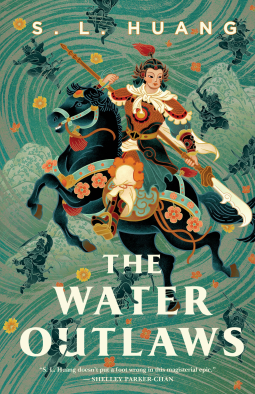
The Water Outlaws, by S. L. Huang won an
impressive list of award nominations and rave reviews. I hesitate to offer a
contrary opinion because it did not work for me. Fortunately, we do not all
enjoy the same books, so I offer these comments as solely my own.
I have a background of over 25 years in Chinese martial arts
and I often feature women warriors in my own novels, so I dove into The
Water Outlaws eagerly, confident that it would be just the kind of story I relish.
I enjoyed the opening, especially the protagonist, expert martial arts
instructor Lin Chong. Her personal prowess and teaching style were portrayed
wonderfully. Other, equally fascinating and sympathetic characters soon
followed. Lin Chong works for the Emperor, training his soldiers even when her
superiors are fine with sloppy technique and incompetent military strategy. She’s
unthinkingly loyal, but more than that, she has a profound ethical center.
About halfway through the book, it was clear to me that the
villains were two-dimensional caricatures of wealthy, powerful, manipulative
but ultimately insecure men. There was not just one, but three major villains,
for the most part interchangeable and acting in highly predictable ways. I have
no idea of the historical accuracy of this portrayal, only that I found them
extremely unpleasant to read about. The real world has enough hideous,
exploitive strong men in it without my giving free rent in my head to those
without any discernible redeeming virtues.
Before too long, Lin Chong fends off a rape attempt by a
corrupt, powerful official and finds herself in disgrace, tattooed as a
criminal, and sentenced to slave labor that amounts to a death sentence. In desperate
condition, she is rescued and then recruited by the women bandits of Liangshan,
mountain outlaws who proclaim their belief in justice. The outlaws are a mixed
group, some spiritual, others brutal, some leaders, some followers, and still
others out only for their own power. The way the story is set up, Lin Chong has
nowhere else to go, so she does her best to forge a new life. After a great
deal of power wrangling within the bandits, she gains a measure of trust and responsibility,
but at the cost of her own integrity.
The turning point for me happened when Lin Chong made a
decision that, in my mind, compromised her ethics and integrity. Here is where
I suspect other readers will disagree with me. I realized that I did not want
to know what happened next. Maybe she redeemed herself. Maybe she found safety
and power as just another outlaw leader. Maybe she used her remarkable skills
to take down the villains. I didn’t care, and most importantly, I didn’t want
to find out.
All this is my highly subjective opinion. I concede that I
might have missed out on a story that is ultimately about redemption,
forgiveness, and the triumph of sisterhood. I just couldn’t bridge the gap. From
the reviews, many other readers loved this book, and I hope that nothing in my
review dissuades someone from checking it out. I leave this review where I
began it: this book did not work for me.
When survivors of trauma recount their experiences, they are often questioned because of how they relay their stories. They may have problems remembering what happened, or their memories may be jumbled or even contradictory. People hearing those stories – attorneys, reporters, healthcare workers or friends – may expect a clearer, linear narrative.
Those unaffected by trauma may also be surprised to hear how the person acted in the moment. It’s easy to assume that someone experiencing a traumatic event would have a “fight or flight” response, instinctively fighting off a perpetrator or fleeing the scene – but that might not be the case.
Understanding the science of how trauma affects memory and behavior reveals why these responses can actually be expected and are not contradictory.
In both my academic and clinical work as a psychologist, I have witnessed the impact trauma has on people’s memories and behaviors, especially when an event in their present life triggers something from their past.
Research shows that taking a trauma-informed approach, which prioritizes understanding and curiosity about someone’s experience as opposed to judgment or critical evaluation, increases empathy for survivors’ thoughts, feelings and behaviors.
How trauma affects the brain
According to the World Health Organization, approximately 70% of people worldwide report experiencing a traumatic event in their lifetime. The majority of these people do not develop PTSD, a clinical diagnosis of symptoms, such as having nightmares and flashbacks about the event, avoiding places that are reminders of it, and increased arousal that can make concentration and sleep difficult. Many survivors don’t meet criteria for PTSD but struggle with feeling distressed, depressed or anxious.
In traumatic situations, people often respond in unexpected ways, and they may second-guess themselves. This may happen particularly when someone experiences a repeated trauma, which is more likely than not due to how many people experience traumatic events.
Research indicates that people experience traumatic memories differently than memories of other significant events, such as sad or positive experiences. Two of the main brain structures scientists believe are involved in storing traumatic memories are the hippocampus – responsible for memory storage – and the amygdala, which is responsible for processing emotions.
During trauma, the amygdala becomes highly active, processing emotions such as fear, and the hippocampus becomes overwhelmed by stress, leading to problems with memory storage.
Traumatic memories do not follow a neat, linear story. Instead, people may experience the memory as disconnected fragments of sensations, emotions, smells or images. Such memories cause the body to reexperience the past threat as if it is happening in the moment. This may cause a person to feel like running away or fighting back – flight or fight. Or they may freeze.
In other words, people don’t have the distant perspective they often feel with other memories from the past. Rather, they may feel they are reliving the original experience.
With this understanding, consider someone who experiences a trauma at the hands of a professional during an appointment. They may appear outwardly calm while it happens and then leave the session as they typically would – checking out, providing payment and possibly even scheduling the next appointment. While their response to act normally may seem odd, such behavior makes sense for someone trying to escape a threat.
Fight, flight or freeze responses have become widely known in popular culture. In a freeze response, a person’s mind goes blank and they may be unable to speak, leading to a “deer in the headlights” behavior.
On the other hand, a person may act paradoxically – perhaps by going on about their day as if nothing happened. They may not report the event or may question whether the incident even occurred. This represents another survival response – the lesser-known fawn response. This way of handling stress occurs when someone acts calm, appeases the threatening person and retreats to de-escalate the situation. Instead of literally backing away, in this example, the person metaphorically backs away by completing the session and exiting as expected without further conflict.
Outsiders may misconstrue these behaviors as evidence that a trauma did not actually happen or that a survivor lacks credibility. But that logic reflects common misconceptions about how people “should” remember or respond to trauma.
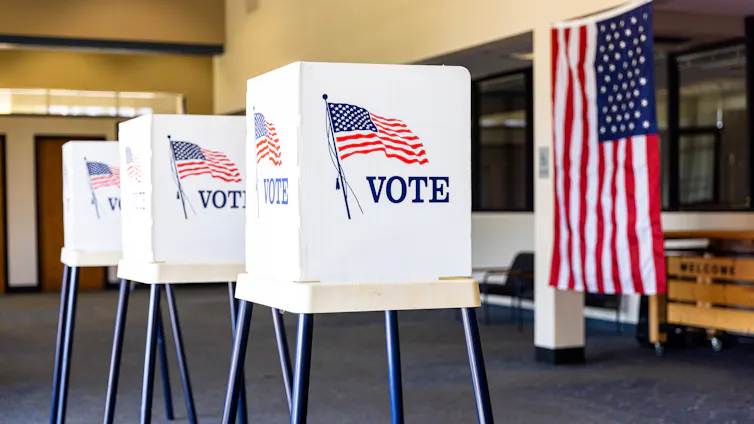
As the 2026 midterm elections enter the final stretch, it’s important to know your rights in case your vote is challenged.
The best way to ensure that your vote is counted is to advocate for yourself. I’m a an attorney and lecturer for the University of Southern California’s undergraduate civil rights advocacy initiative, Agents of Change. Here are several straightforward ways to ensure your vote is counted and two practical remedies for you to consider if your vote remains challenged.
A major part of ensuring that you are able to vote is doing the necessary preparation before you even get to the polling place. Read on to find out how and where to register, where and when you can cast your ballot, and what numbers to call for any information you can’t find online.
Are you registered to vote? Check it out
Before you vote, you need to ensure that you’re registered to vote. You can verify your registration status using this tool. If you can’t use an online tool, then call your local election office or a voter help line like the ones listed in the hotline section below.
If you find you’re not registered, you can use this tool from the National Conference of State Legislatures to find your state’s online registration application. If you need to do this in person, then call your local election office for instructions.
At this point, you may have missed your state’s deadline for voter registration. But it may not be too late to register.
Many states allow same-day registration at the polling site. You can find your state’s same-day voter laws detailed here. Ask the poll worker, at the correct polling location, for a same-day registration form; complete the form and then ask for a “conditional ballot.” A conditional ballot allows election officials to count your vote after verifying your voter eligibility. If you can’t research online, you can call your local election office to find out if you can register on Election Day.
Marchellos Scott, right, helps Morehouse College students fill out a voter registration form at a college registration booth on Aug. 19, 2024, in Atlanta.Elijah Nouvelage/AFP via Getty Images
Gather documents to verify your identity
If you live in a state that requires identity verification to vote in person, gather the required documents – which may range from a driver’s license to bank statements with identifying information – before traveling to the correct polling place. You can find your county election office’s contact information here. This webpage includes a table listing each state’s acceptable ID documents and possible exceptions for some people. You may also call your local election office to find out what’s required.
Absentee voters: Locate your state’s identity verification rules here.
Find the correct polling location
You can ensure that you’re headed to the right polling place with this tool. Or call your county election office to find your polling place and its hours of operation; you can look up your county’s election office contact information here.
Once you know your polling place and its hours, you can go there and check in. In most cases, you’ll be handed a ballot, shown where to vote and asked to put your ballot in a machine or a box, and then you can go merrily along your way.
But the moment of check-in is where things might go wrong.
Fake Query Letters by Dead Authors: A Satirical Craft
Guide to Writing Queries That Survive the Slush Pile, by David Brown
and Michelle
Barker (Darling Axe Publishing)
How-to books for authors abound in today’s market. Not
all the advice is worth taking. Indeed, much of it seems to be based on
outdated practices, flawed “conventional wisdom,” or is intended for novice
self-published authors. Very little is aimed at serious authors interested in
traditional publishing or established midlist authors scrambling to keep up
with today’s rapidly changing market. Much of it is contradictory and involves
a great deal of telling the author how to get an agent instead of showing
pitfalls and best practices.
The latest entry in this field is the delightful, highly
informative book, Fake Query Letters by Dead Authors: A Satirical Craft
Guide to Writing Queries That Survive the Slush Pile, by David Brown
and Michelle
Barker of Darling Axe. They open with this intriguing premise:
What if the greatest novels ever written had to
survive today's slush pile? No reputation to fall back on—just a cover letter
and first page... and an agent who's already read 200 queries before lunch.
Spoiler: most of them wouldn't make it.
Using five classic novels (Pride and Prejudice, Wuthering
Heights, The Scarlet Letter, Anne of Green Gables, and Jane
Eyre) they first demonstrate the worst possible way the authors could query
an agent and how to fix their disastrous mistakes.
Query guidelines for literary agents vary, but most include
a letter, synopsis, and sample pages, which are often the first chapter). We already
know (and, hopefully, love) the text, which gives us a foundation to evaluate each
horrible, rejection-guaranteed sample letter and synopsis. The authors invite
us to imagine ourselves as literary agents at the end of a punishing work week,
facing an Inbox jammed with queries. (So much fun!) What would tempt us to read
the entire query and then—oh joy!—request the entire manuscript?
Highly recommended for fiction writers at all stages of
their careers for whom a literary agent is appropriate. Also highly
recommended for indie (self-published) writers for invaluable insights into how
to craft a compelling novel and then present it at its best. After all, in
today’s overcrowded market, readers will decide to pick up a book on the same
basis of a dynamite pitch.
Whether in an Oval Office proclamation signing about commercial fishing or during a Fox News interview while discussing Iran, President Donald Trump finds opportunities to share his views on transgender people.
During a June 2026 signing event, Trump claimed, in response to a question about proposed legislation regarding election procedures, called the SAVE America Act: “We are talking about saving America, right? No men in women’s sports.” He continued, “And we have no mutilization of your children for transgender purposes … where your child leaves your house, and they take your child from you. … In six states, they take the child and do what they want to do. What they do is, is I don’t even want to talk about it. No transgender mutilization of your children.”
Meanwhile, public approval of Trump’s approach to trans issues is relatively high, as compared with his approval ratings on other issues.
A 2024 report by the Human Rights Campaign decried an “epidemic of violence” against trans and gender-expansive people. A 2025 Pew report found that 70% of trans adults have feared for their personal safety, and only 13% of LGBTQ respondents reported social acceptance of trans people.
Though the causes for changing trans views are complex, research suggests Trump’s rhetoric and policies have powerful influence, the ramifications of which are clear. Anti-LGBTQ+ laws and debates negatively affect young queer people, according to the Trevor Project’s 2025 U.S. National Survey on the Mental Health of LGBTQ+ Young People, and are associated with increased stress, discrimination and suicide attempts.
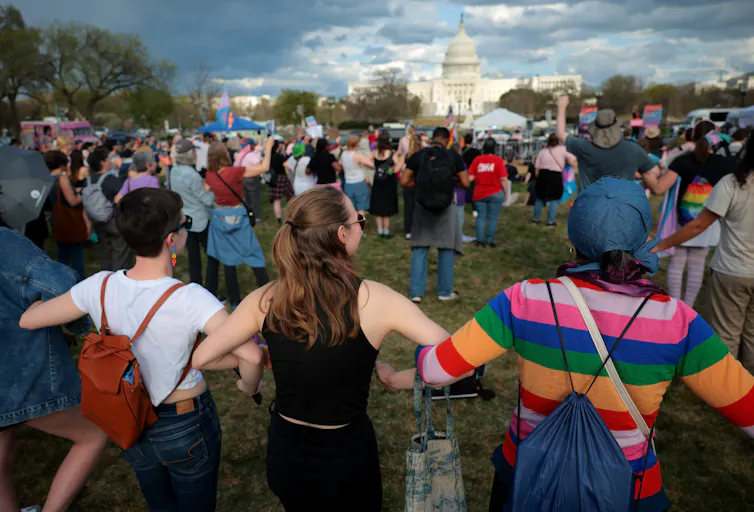
Trans people and their allies have pushed back against a recent wave of restrictions. Here, supporters rally for the Transgender Day of Visibility in March 2025.Kayla Bartkowski/Getty Images
Moral panic as political strategy
From the Salem witch trials in the 17th century to the war on drugs in the 20th century, moral panics have emerged across history to stoke fear against a perceived threat to a society’s values or well-being.
Moral panics, coined by sociologist Stanley Cohen in 1972, follow a similar pattern: a threat is defined, media exaggerates the threat, public concern increases, authorities respond with laws and policies, and society is transformed.
Moral panics elicit a range of negative emotions, but disgust and paranoia are especially potent. Originally a response meant to protect us from disease and spoiled food, disgust has evolved to also express social inappropriateness. Disgust asserts that its object is inherently bad. Since disgust is culturally dependent, it can also be used to marginalize groups of people.
Meanwhile, paranoia focuses on visualizing and preparing for future threats. When experienced as an emotion – outside of psychiatric disorders – paranoia has a righteous undertone, as it seeks to uncover perceived enemies.
Disgust and paranoia are a powerful combination for sustaining moral panics. While disgust produces an intense, immediate physical feeling, paranoia is long-lasting, stewing and existential.
Stimulating disgust and paranoia
Trump’s offhand remarks often invoke disgust and paranoia against perceived enemies – for example, toward immigrants, whom he has repeatedly described as dangerous criminals. These same patterns emerge in the Trump administration’s formal communication regarding trans issues.
The release asserts that former President Joe Biden’s 2024 Proclamation of Transgender Day of Visibility “desecrated Easter Sunday with a ‘transgender’ message that elevated radical leftist ideology over faith, family, and biological truth.” Rousing paranoia, “radical leftist ideology” (and later in the release, “gender ideology”) is portrayed as an existential threat that puts Americans and their beliefs in danger.
The release also claimed that “the Trump Administration is celebrating a decisive victory: the swift and unrelenting dismantling of subversive, woke policies that endangered children, eroded women’s rights, assaulted common sense, and dragged America toward moral and cultural decline.”
As a rhetoric scholar, I read these allusions to religion and war – using words like “desecrate” and “victory,” respectively – as implications that the U.S. is in a battle between good and evil. Schools, hospitals, bathrooms, locker rooms, sports facilities and military bases are spaces declared under attack.
The release also condemns “the chemical and surgical mutilation of minors” and “child mutilation programs” – revolting imagery that misleadingly depicts gender-affirming care and incites shock, concern and disgust.
Similarly, invoking images of nonconsenting, victimized children and women, the release denounces “the un-American indoctrination of schoolchildren” and “the unfair, demeaning practice of forcing women to compete against biological men in sports.” Stimulating anger and moral panic, these descriptions encourage anti-trans views and discrimination.
Recognizing these rhetorical patterns is key to understanding how politicians use inflammatory language to denigrate trans people and other marginalized groups, including women, Black people and immigrants.