Showing posts with label postapocalytic fiction. Show all posts

Friday, June 30, 2023

Book Reviews: Re-Created Extinct Hominids

 The Ice Ghost, by Kathleen O'Neal Gear (DAW)


The Ice Orphan, by Kathleen O'Neal Gear (DAW)

I previously reviewed the first of the “Rewilding Reports” novels (The Ice Lion) and I liked it (The Ice Lion, by Kathleen O'Neal Gear, DAW). The set-up is appealing: In the far future, an attempt to halt the Earth’s runaway warming resulted in a new, apocalyptic Ice Age with glaciers three miles high and a poisonous slime, “zyme” covering the oceans. As the planet descended into this frigid nightmare, the last scientists recreated species that had survived earlier Ice Ages: dire wolves, helmeted musk oxen, cave lions, and extinct, archaic human species like the Denisovans, Neanderthals, and Homo erectus. Remnants of the previous civilization persist in myths (about the godlike Jemen = G-men), an enigmatic scientist with an artificially extended lifespan, and a quantum computer spiraling into loss of function.

Some of the things I liked best about the first volume are here in the subsequent books. Foremost is the humanity, culture, and sensitivity, and poetic imagery of the pre-human characters. We moderns tend to regard our ancestors as dim-witted and lacking in social graces, although recent discoveries reveal such markers of cooperative culture as care for the injured and burial of the dead long before H. sapiens came along. Gear’s characters, although having much smaller brains, are nonetheless resourceful, compassionate, and thoughtful. The Dog Soldiers (H. erectus) may have had small, sloping skulls, but their understanding of ethical issues, not to mention their literacy and reverence for books, marks them as anything but “primitive.” In fact, the most advanced of the three species, the Rust People Neanderthals, are the most violent.

The Ice Ghost and The Ice Orphan continue the adventures of Sealion People (Denisovan) Lynx and Quiller, and members of Quiller’s family, as they struggle against an increasingly hostile terrain and new enemies. Legends mix uneasily with prophecies and dreams, as none of the pre-human species draws precise differences between poorly understood history, inspiration, and the visions born of mental illness or hallucinogens. The disintegrating quantum computer, called “Quancee,” is undoubtedly real, as is the reanimated Jemen general bent on destroying the computer’s autonomy and changing it into a weapon, and the brutal Rust People (Neandertal) shaman whose visions drive him to invade the Jemen stronghold and reawaken the ancient ruler. Who, of course, has an agenda of her own.

These next two volumes have many of the strengths of the first, including smooth prose, sympathetic characters, innovative world-building, and wonderful physical descriptions. The characters are portrayed through their experiences so that only occasionally are their physical appearances important. What matters is the quality of their characters, their courage, compassion, leadership, and honesty.


Each of the three books centers on a different but related quest, and therein lies not only the charm of the series and the independence of each installment, but a flaw in the latter two. The first volume of a series has a lot of work to do, establishing not only viewpoint characters, their goals and conflicts, but the world itself. In this case, the world’s history is critical to the story. To her credit, Gear does not bash us over the head with pages of exposition and backstory. History is gleaned from hints here and there, and the understanding of the characters. In this, Gear does a great job, even when historical facts have become distorted or even erased with time and the demands of survival in an increasingly perilous
environment.

The problem I experienced was that, compared with the first volume (The Ice Lion), what comes next felt lightweight. They seemed more like novellas in the scope of the plot, stories fleshed out with too many repetitive descriptions and inconsequential or trivial events.

My second problem arose from the conflation of imaginary and real events. In books of this type, there’s an expectation that mysterious elements will be revealed (as opposed to fantasy, where magic need not have any relationship to the laws of physics), that the reader will be able to put together the pieces and figure out what the age-warped technology, historical events, and so forth really are. And how much were real technology, events, and so forth, versus how much the imaginative, often superstitious interpretation. Gear’s characters treat superstition as just as real as tangible physical articles, but we the readers lack the clues to distinguish them. Perhaps those clues will be revealed in a future volume. Alas, I for one found two novels too long to be befuddled. This was made worse by hand-waving technology, such as near-immortality antiaging tech, a way for the genetically modified prehumans to receive telepathic communications from a computer, and the dream quest of Quiller’s adolescent son, which left me wondering if he was spiritually “transformed” or actually dead.

I continue to recommend the first volume of this series for all the reasons cited above. As for the rest, other readers may find the same delight in them. The series looks to be continuing. As they say, “YMMV.”

Friday, February 17, 2023

Short Book Reviews: Our Favorite African-Scottish Teen Ghost Talker Returns!

 Our Lady of Mysterious Ailments, by T. L. Huchu (Tor)

I absolutely fell in love with Ropa Moyo, the African-Scottish teenager who lives with her knitting-maven grandmother, younger sister, and fox companion in a broken-down trailer in post-apocalyptic Edinburgh. Hyper-responsible Ropa has been scratching out a living for her family as a ghost-talker by carrying messages from the deceased to their surviving families (who pay a fee). In the first adventure, she stumbles upon an underground occult Library of the Dead and various secret magical academies and societies. With the exception of her loyal, long-time magical student friends and a charismatic higher-up Sir Callandar, who is also her mentor, the magical intellectuals look down on her.

The book opens with, “So, I’m skint again. ‘Nothing new there, Ropa,’ I hear you say. Well, up yours. This time though, a lass is in luck – Sir Callander, Scotland’s premier magical bigwig, has hooked me up with an interview for an apprenticeship. Free food and a proper wage — all for a wee bit of filing. Yay.”

What Ropa hopes would be a paid apprenticeship gets downgraded to a crummy unpaid internship. So when her friend, Priya, who works at Our Lady of Mysterious Maladies magical hospital, offers her a paid gig investigating an enigmatic, possibly deadly illness striking students. Her sleuthing leads her to a lost fortune, a demented vengeful ghost, and a secret buried deep in Scotland’s past.

The action, world-building, and characters move the story right along, but by far the most enchanting part of the book is Ropa’s wonderful voice, a combination of teenage sass, way too many smarts, a huge dose of compassion, and neoScottish slang. I’ll hang out with her any day!

Friday, July 2, 2021

Two Book Reviews Demonstrate the Future is not What We Expect


The Apocalypse Seven
, by Gene Doucette (Houghton Mifflin Harcourt)

My introduction to Gene Doucette’s witty style was his previous novel, The Spaceship Next Door, reviewed here. This newest adventure has all the charm, warmth, and thoughtfulness I’d come to expect.

One morning, a small and disparate group of people – college students, a hermit preacher, an astrophysicist, for example – wake up to find the world changed. Each seems to be utterly alone. Familiar buildings are more or less intact, but wildlife and vegetation has taken over the university town of Cambridge. There’s no electricity, and all the batteries are dead. The astrophysicist notices the stars are in subtly wrong positions. As the group makes contact with one another, gathering at the university, they support one another when they aren’t arguing, for each has a different understanding of what has happened. TourĂ©, a twenty-ish Cambridge coder, calls it the whateverpocalypse. Just as they learn they are not the only humans alive and suspect around a century has elapsed while they were unconscious, they begin to suspect they are not the only intelligent species on the planet, but it’s anyone’s guess whether the ghosts or aliens or whatevertheyare mean the human survivors well or ill.

By far, the sneak star of the book is Norman, the coywolf (coyote-wolf hybrid) tamed by the blind character, Carol.


Tiny Time Machine, by John E Stith (Amazing Select from Amazing Stories)

I’ll read anything by John E. Stith, but somehow I missed this charming short novel. The description says it’s “for young adults,” but I disagree. While teens are going to love it, and it’s a novel featuring young characters, it’s so full of buoyancy and hope that adults will gobble it up, too. Meg describes herself as the daughter of an angry scientist dad, so angry that he in fact turns a smartphone into a time machine that not only peeks into a not-too-distant future but allows people to jump into it. Alas, it’s not a future anyone would want to live in. The planet is dying, and humanity along with it. The oceans have turned into a stiff jelly, reminiscent of ice-9 in Kurt Vonnegut’s Cat’s Cradle. Meg and her new friend Josh embark upon a quest to stop a billionaire technologist whose well-meaning attempts to clean up the ocean’s plastic garbage will lead to this bleak future. Soon they’re on the run from the police, as well.

One of the things I enjoy about Young Adult novels is how teens can have agency, not only in their own lives but in the world. Typically, parents are therefore absent or dead (in Meg’s case, both of them, her father recently so), and that frees the characters from supervision. In this story, not having a parent deprives Meg and Josh of the perspective and resources an adult ally could offer. They have internal challenges of growing up and learning to work together, deal with jealousy, and so forth, all within the limitations that minors face. This is while figuring out what happens in the future and how to stop it.

As a bonus, the book contains a piece of short fiction, “Redshift Runaway,” set in the same world as Redshift Rendezvous. When a sentient alien pet runs wild on a starship traveling a significant fraction of the speed of light, where the laws of ordinary physics no longer apply, chaos ensues, but also understanding. Nobody writes relativity-based science fiction better than Stith.


Friday, September 7, 2018

Short Book Reviews: Another Bannerless Winner from Carrie Vaughn

The Wild Dead, by Carrie Vaughn (Houghton Mifflin Harcourt)


I loved Vaughn’s Philip K. Dick Award-winning novel, Bannerless, and eagerly dove into this, its sequel. Vaughn’s vision of an egalitarian, post-collapse world struck me as a welcome and necessary antidote to the commonly portrayed descent into dog-eat-dog chaos. In her world, people worked cooperatively after “The Fall” to select and preserve technology and to establish social structures that promoted communities living in ecological balance, carefully limiting overconsumption, overproduction and birth rate. In other words, the survivors were intelligent about how they went about rebuilding civilization. That’s just the background, the setting, to the murder mysteries in Bannerless and The Wild Dead.

Given lots of knowledge but scarce forensic resources due to a generation-ago picking and choosing, how would you go about solving a murder? You know basic chemistry and anatomy, and you have solar power and well-machined instruments, but have no way to analyze DNA, trace evidence, or microscopic kerf marks. When Enid and her apprentice, Teeg, arrive at the Estuary as investigators, this world’s traveling magistrates, their initial task, the one they’ve been requested to adjudicate, pertains to the fate of an old house that’s one of the few relics of “Before” yet is too badly damaged to be easily repairable.

As they examine the issue of the house, a body washes up in the river, a young woman of the wild folk who live outside the communities of Coast Road, and it’s up to Enid and Teeg to solve the murder. Without modern forensics or knowledge of the history and social interactions of the Estuary households, yet with a deep moral sense and compassion for this unknown victim, Enid dives into the case. As with Bannerless, Enid’s own intelligence and intuitive understanding of human nature guide her to the unexpected but perfectly prepared result.

I can’t praise Vaughn’s work highly enough. The elegance of her prose rises and falls like harmonic waves, from serviceably transparent to downright poetic, enhancing the emotional beats. Even her secondary characters are beautifully depicted. Most of all, I admire her decision to place her unusual murder mysteries in a world that gives me hope for the survival of sanity and kindness.

The usual disclaimer: I received a review copy of this book, but no one bribed me to say anything about it.

Friday, July 21, 2017

Short Book Reviews: A Postapocalyptic Genderqueer Story

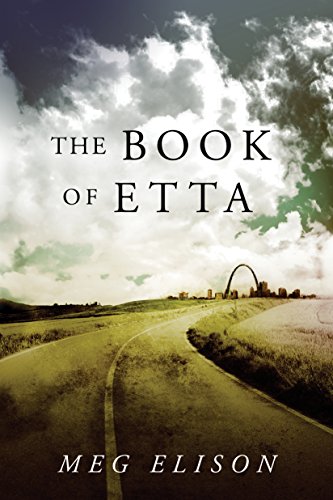
The Book of Etta, by Meg Elison (47 North, 2017). This novel is the sequel to the Philip K. Dick Award-winning The Book of the Unnamed Midwife, but can be easily read on its own. Generations ago, a plague swept the world, killing most of the women and leaving the survivors at grave risk in childbirth. The expected chaos resulted, social disintegration, and enslavement of the few remaining fertile women. 

Now various communities have evolved their own cultures with varying roles for the women, often in isolation and ignorance of one another. Etta lives in Nowhere, a fortified community in which women hold power as Mothers and Midwives. She frets against her mother’s expectations, keeps her lesbian love affair secret, and flees to the outside world under the guise of a scavenger of old technology and rescuer of enslaved women. In this role, she becomes Eddy, but the switch is not mere disguise for safety. The prose shifts to the male pronoun to emphasize the transformation in identity. As the story unfolds, it becomes more and more clear that Etta/Eddy flips back and forth from one persona to the other, and clues emerge as to the origin of the personality split. In his adventures, Eddy encounters underground havens, trading centers where transgender “horsewomen” live openly as women, and a vicious tyrant bent on conquest. 

Elison weaves together elements of dystopia and hope, tense action and inner anguish, into a compelling tale of survival and self-revelation. Highly recommended, although with a caution for younger readers.