Showing posts with label lesbian science fiction. Show all posts

Friday, October 25, 2024

Book Review: Murder on a Jovian Colony

The Mimicking of Known Successes,
by Malka Older (Tor)

I love the premise of this novella: a murder mystery set on a colony circling Jupiter, the last remnants of human civilization after the collapse of Earth’s ecology.  Against the backdrop of the storm-wracked gas giant, linked platforms grow crops, house communities, and provide nooks of academic research aimed at devising the perfect ecology once it is safe to re-seed Earth with life. Cool, huh?


When a man goes missing and it’s feared he has either jumped or been pushed off a platform, to fall endlessly in Jupiter’s atmosphere, the case falls to Investigator Mossa. This leads her to her old lover, Pleiti, a scholar of Earth’s pre-collapse ecosystems. The two of them are on the chase while exploring the resurrection of their old relationship. There are lots of plot twists and revelations along the way.


Despite the wildly exotic setting, I struggled to connect with the characters and their motivations.  Mossa is enigmatic and aloof, emotionally opaque; that’s supposed to be part of her character. The contrast with Pleiti, who is highly emotional, shows how their different strengths combine to solve the mystery. However, Mossa’s distant, intellectual approach is not limited to her own viewpoint and work. It’s hard to imagine her as having feelings about anything. This bleeds into the crux of Pleiti’s work, indeed the decision the entire Jovian colony must make: what is the best way to design a rejuvenated Earth ecology? Put together known species, available in platform zoos, and let adaptation create new species and relationships, taking the risk that the combinations will fail? This approach would save enormous amounts of time, hastening the return to Earth. Or meticulously craft a system that replicates what thrived on Earth (“the mimicking of known successes” in the title), even though you can never be certain you got it right? And that it would take far longer, risking the extinction of preserved samples?


It’s a fascinating question, and the division of opinions drives the murder plot. Or ought to, because it’s presented as a distant, academic discussion, as dry and dusty as the university chambers. Therein lies my issue with this book. There’s too much relative emotional weight on the will-they-won’t-they relationship and almost none on the question upon which rests the fate of a future return to Earth. Nevertheless, the setting is fresh and original, the prose is clear, and the plot moves right along.


Friday, November 6, 2020

Short Book Reviews: A Medical Rescue in White Space

 Machine (A White Space Novel), by Elizabeth Bear (Saga)


My introduction to Elizabeth Bear’s gorgeously inventive “White Space” novels was Ancestral Night (check our my review here). While I highly recommend be read first, Machine stands on its own. Both are huge books in the sense of sweeping plots and vast universe-building.

As before, Bear uses an unreliable but highly competent first-person narrator, in this case Brookllyn Jens, a rescue operations physician ex-cop with a chronic pain condition, who relies on self-administered drugs and an exosuit for support. Despite being estranged from her wife and daughter, she’s formed deep ties with her crew and shipmind, the AI of their rescue vessel. Chance places them first on the scene of a generation ship, drifting far from where it ought to be, with a much smaller ship of methane-breathing aliens attached to it. One mystery unfolds into the next: why are both crews in cryo sleep? What’s going on with the generation ship’s android/ship-computer peripheral unit? Matters take a turn for the much, much worse when one AI after another becomes infected with a meme virus, and all too quickly Llyn realizes there is no one she can trust but herself.

My reactions to this book were very much in line with how I felt about Ancestral Night, so I’ll paraphrase them here: The book is filled with action and reflection that say as much about the different ways of looking at self vs society as they do about Llyn’s journey of self-discovery. It’s all fascinating, if a bit sedate in places, until the pieces start coming together. Then the parts I had previously found slow made brilliant sense and I couldn’t put the book down until the exciting and immensely satisfying conclusion. I say this as an advisory to other readers to hang in there: every piece is there for a reason, and it is richly worth the ride. Machine is in turns dramatic, thoughtful, humorous, hopeful, and tragic. From the government ship name, I Really Don’t Have Time For Your Nonsense to the weird and wonderful aliens to everything I’ve mentioned above, the book is as much about how we balance individual choices with the greater good. Worth savoring, and re-reading, as is the previous book.

Friday, August 28, 2020

Short Book Reviews: A Space Opera Gem from Elizabeth Bear


Ancestral Night, by Elizabeth Bear (Saga)


This is a long, fascinating space opera in a far distant future in which humans manipulate their emotional moods and attitudes, AI shipbrains have dreams and social obligations, sentient squid-whales live in the vast interstellar spaces, and ancient alien technology holds the key to artificial gravity.

The story begins when Haimey Dz, engineer and scavenger of space wreckage, her pilot, Connla, and their shipbrain, Singer, act on a tip and come across an abandoned, repurposed space vessel (see above alien tech) that has been harvesting the corpse of a squid-whale (see above) to manufacture a costly and highly addictive drug. No sooner does Haimey realize (a) this is a moral outrage as well as a crime; (b) OMG there is artificial gravity here!; (c) she’s been infected with what looks like a glowing fungus-like parasite (see alien tech, above), but (d) aieee! The space pirates arrive to nab their prize.

One thing leads to another as the glowing fungus-like parasite grants Haimey the ability to sense, and eventually communicate with, said alien ships, and the charismatic and amoral female space pirate pushes Haimey to confront her own anguished past. Meanwhile, Haimey wrestled with her programmed adherence to mutual collective responsibility, teams up with a gigantic sentient mantis-like alien law enforcement officer from a low-gravity planet, Singer gets summoned to a term of civil duty, and the cats – did I mention the cats? There are two cats on their ship.

As I said, the book is long but filled with action and reflection that say as much about the different ways of looking at self vs society as they do about Haimey’s long-buried sense of self. It’s all fascinating, if a bit sedate in places, until the pieces start coming together. Then the parts I had previously found slow made brilliant sense and I couldn’t put the book down until the exciting and immensely satisfying conclusion. I say this as an advisory to other readers to hang in there: every piece is there for a reason, and it is richly worth the ride. Ancestral Night is in turns dramatic, thoughtful, humorous, hopeful, and tragic. From the government ship name, I’ll Explain It To You Slowly to the weird and wonderful artificial mind that has wrapped itself around a dying sun, to everything I’ve mentioned above, the book is as much about how we balance individual choices with the greater good, all tied up with a big ribbon and two cats. Worth savoring, and re-reading.


The usual disclaimer: I received a review copy of this book, but no one bribed me to say anything in particular about it. Although, come to think of it, fine imported chocolates and roses might have been nice.

Friday, July 5, 2019

Short Book Reviews: Imprisoned in Darkness


Her Silhouette, Drawn in Water, by Vylar Kaftan (Tor)

This lovely novella reminds me of water-colors, painted with a deft touch, often evoked rather than explicitly depicted as layers of illusion are dispelled. The story opens with Bee, incarcerated in a series of caverns with only one companion, her lover, Chela. Although her crime was blowing up a space ship, she has no memory of it. Food and other supplies are delivered, but the two of them never encounter another human being. Gradually, though, Bee realizes she has telepathic powers that are nullified by a chip in her brain, supposedly related to her crime. The more she tries to reach out with her mind, the more agonizing the consequences, and the more frantic Chela becomes to maintain their status quo, to not challenge their imprisonment, and to keep Bee emotionally entangled with her.

Slowly Bee peels away the layers of illusion, and I won’t reveal what comes to light, as “the pleasure is in the journey.” Suffice it to say that I kept turning the pages, pausing to savor the nuanced, exquisitely crafted prose. Her Silhouette, Drawn in Water showcases Kaftan as an author of immense skill and sensitivity. The end suggest that Bee’s story will continue, and I for one will be looking forward to it!

I would not be surprised if this book was an award contender.

Friday, July 21, 2017

Short Book Reviews: A Postapocalyptic Genderqueer Story

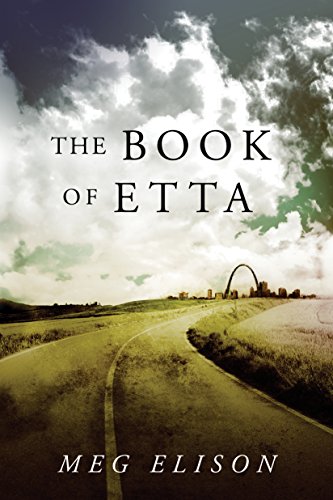
The Book of Etta, by Meg Elison (47 North, 2017). This novel is the sequel to the Philip K. Dick Award-winning The Book of the Unnamed Midwife, but can be easily read on its own. Generations ago, a plague swept the world, killing most of the women and leaving the survivors at grave risk in childbirth. The expected chaos resulted, social disintegration, and enslavement of the few remaining fertile women. 

Now various communities have evolved their own cultures with varying roles for the women, often in isolation and ignorance of one another. Etta lives in Nowhere, a fortified community in which women hold power as Mothers and Midwives. She frets against her mother’s expectations, keeps her lesbian love affair secret, and flees to the outside world under the guise of a scavenger of old technology and rescuer of enslaved women. In this role, she becomes Eddy, but the switch is not mere disguise for safety. The prose shifts to the male pronoun to emphasize the transformation in identity. As the story unfolds, it becomes more and more clear that Etta/Eddy flips back and forth from one persona to the other, and clues emerge as to the origin of the personality split. In his adventures, Eddy encounters underground havens, trading centers where transgender “horsewomen” live openly as women, and a vicious tyrant bent on conquest. 

Elison weaves together elements of dystopia and hope, tense action and inner anguish, into a compelling tale of survival and self-revelation. Highly recommended, although with a caution for younger readers.