Saturday, September 3, 2016

Lifting the Lamp, Locking the Door, by Jane Yolen

I am the daughter of an immigrant, who arrived at Ellis Island, having -- like Jane Yolen's ancestors -- survived pogroms and near-starvation, but whose life was now filled with hope. Let that same light shine for future generations!


By author and poet Jane Yolen: Listening to Donald Trump’s major speech against immigrants yesterday, I wrote this. You have my permission to share it but the © MUST be appended.

Lifting the Lamp, Locking the Door
I am the daughter, the granddaughter
of immigrants, fleeing the pogroms,
not all of my relatives
of high moral character.
But the lamp was lifted for us.

My professor husband’s Irish folk
fled the famines on coffin ships.
They counted cheats, grifters,
drunkards among them.
But the lamp was lifted for them.

And now Trump trims and dims those lamps,
threatens to turn them off at the source,
to send the Lady home to France,
an immigrant like the rest of us.
Slam the door, his followers chant.

Slam the goddamn golden door.


©2016 Jane Yolen all rights reserved, shared by permission only

Friday, September 2, 2016

Supporting A New Writer 2: Following The Dream

Recently, I received this letter from Wendy, a fan with whom I’d been corresponding. It spoke deeply to me, and rather than answer it alone, I asked some of my writer friends to join in a series of round table blogs on the issues raised. If you’ve been there, too, I hope you’ll follow along and offer your own wisdom.


I've been trying to reconnect with writing friends after a hiatus from the creative life. I've spent the past year or so taking care of my mom and working to pay the bills. Mom passed away in October.
When your last parent passes away, it changes you in many ways. That foundation you always relied on -- even as an adult -- is gone for good. Whether you're ready or not, you are truly on your own in the world and must somehow carry on without their nurturing presence. One of the most difficult aspects of my mother's final days was the fact that she had so many regrets about life. She once had goals and dreams, but left them behind out of fear and a belief that these dreams were just not possible.
I'm 54 years old. More than half of my life is over. Writing has been a dream/goal of mine since childhood. My mom was the only one who believed in me. I don't want to leave this world regretting the fact that I never pursued this dream to the fullest. To be honest, my writing "career" never took off. I let fear, doubt and the negativity of others keep me from my dreams. I want so much to be brave, to take risks with my creative life. I truly wish for a group of fellow writers who are willing to give me the encouragement and support I need to write with my heart and soul, to grow as a writer and a human being. And I want to be a support for others as well. How do I get back into the writing life after leaving it on the back burner for so long?
  Katharine Eliska Kimbriel: Do you want to write, or do you want to have written? Is it getting the story down on paper or computer that drives you, or the thought of who will receive the story? Is publishing critical? Are you looking at markets before you even write the tale?

Because these struggles can kill your muse. I wasted a lot of time, once NYC decided that the stories I wanted to tell were not viable, tossing them synopsis after synopsis, trying to get their interest. You don't have to deal with NYC at all, if you don't want to--self-publishing can be done, and done well, if you are willing to pay for good editing and cover art.

The best things I have ever written come when *I do not censor the Writer.* The first draft, you must tell your Editor Voice (and you have several) "There, there, you will get your chance to say something" and keep writing. The first draft of a story, you tell yourself the story. The second pass, you decide what you need to tell this story to other people. There's usually editing--few of us can write a first and second pass in one go.

Beware the Critic Voice. That is the voice of every slighting comment, every undermining statement, every spiteful word ever tossed your way. A strong and smart woman once told me, "The Critic is never you." But the Critic exists, even if no one has ever slammed your dreams of writing because you never whispered that dream aloud. It takes time to smash those slighting words down to dust, to weigh opposites in your hands and mash them together, halving their impact. But you can whittle down The Critic.

Most people I know who adore telling stories can't stop. When they *cannot* tell stories it triggers depression. Right now you are going through that huge transition (it just happened to me, too) where suddenly, at reunions, you are the oldest person in the room. Right there is a huge adjustment. Be gentle with yourself, ask your heart what it wants to write, and give yourself permission to write. That time is NEVER wasted. In my youth I would tell people "I have to work." I didn't say write, because it wasn't how I paid the rent, so they would say "You can do that after the movie, dinner, bike ride"--whatever.

It is for you. Women worldwide are told to put their heart on hold and take care of everyone and everything else. If you don't take something for your own heart, you will have nothing to give others. Take the writing. It may turn out to be something you can offer the world.

Katharine Eliska Kimbriel reinvents herself every decade or so. The one constant she has reached for in life is telling stories. “I’m interested in how people respond to choice. What is the metaphor for power, for choice? In SF it tends to be technology (good, bad and balanced) while in Fantasy the metaphor is magic – who has it, who wants or does not want it, what is done with it, and who/what the person or culture is after the dust has settled. A second metaphor, both grace note and foundation, is the need for and art of healing. Forthcoming stories will talk about new things that I’ve learned, and still hope to learn … with grace notes about betrayal, forgiveness, healing and second chances.” A Campbell Award nominee.


Irene Radford: For as long as I can remember my family told me that writing down my little stories was okay because I would learn to write well, a requirement for succeeding in the business world. Their ambition for me was to run the PTA. However, I mustn’t bother sharing my little stories with anyone because I could never succeed as a writer.

Period. End of conversation.

Except we kept having this conversation every time I got an idea for a new story or book or trilogy…

I’m not certain why my brain suddenly clicked into realizing that I can’t know I’ve failed until I try. It may have had something to do with my 10 year old son entering every mail-in contest the postman delivered. One of those contests was for Harlequin Romances. I won 4 free books every month for 3 months. Then of course I was expected be hooked and start paying for my book fix. But one of the option books I could order was “How to Write Romances for Love and Money.”

I tried it. Over the period of a couple of months I followed the guidelines and deconstructed several of my favorite romances. And then I wrote one. When I thought I was ready to submit I asked a friend of a friend about proper manuscript format. That person put me in touch with another friend of a friend who was active in Romance Writers of America.

I attended one workshop and went home to re-plot the book. The local chapter of RWA led me to a critique group. I re-wrote the book again and again until I submitted. And accumulated rejection after rejection.

At some point in this depressing process I discovered that not only did I need to try before I admitted failure: I had not failed until I gave up trying.

RWA and my critique group led me to an agent, and though we never sold that first romance, I found my voice in fantasy. And I succeeded. October 13, 1993 at 1:33 PM I received THE phone call, that DAW Books wanted to buy, not only the first book I had written for the fantasy market, but also 2 sequels.

Thirty-five books later I still haven’t found a reason to give up trying.

My few words of wisdom for those starting a writing career or re-starting one, is keep on trying. Apply butt to chair and hands to keyboard and keep writing. Five minutes a day, four pages a day, whatever works for your schedule. And keep on until there is nothing left inside you that demands to be written.

Then give it a rest for a bit until the words start bubbling out of you and write some more.


Irene Radford …aka P.R. Frost, aka C.F. Bentley, has been writing stories ever since she figured out
what a pencil was for. A member of an endangered species, a native Oregonian who lives in Oregon,
she and her husband make their home in Welches, Oregon, where deer, bears, coyotes, hawks, owls, and woodpeckers feed regularly on their back deck.

A museum trained historian, Phyllis Irene has spent many hours prowling pioneer cemeteries deepening her connections to the past. Raised in a military family, she grew up all over the US and learned early on that books are friends that don’t get left behind with a move. Her interests and reading range from ancient history, to spiritual meditations, to space stations, and a whole lot in between.

Monday, August 29, 2016

Masques of Darkover (anthology) Table of Contents


I've been editing the next Darkover anthology, Masques of Darkover, which will be released May 2017. It's such a thrill to be entrusted with such wonderful, insightful, and imaginative tales. Here's the Table of Contents. I'll be posting the cover once it's done.
Jane Bigelow, Duvin’s Grand Tour
Rosemary Edghill, Generations

Meg Mac Donald, Upon this Rock

Evey Brett, Only Men Dance
Shariann Lewitt, The Wind

Ty Nolan, Dark Comfort

Steven Harper, Sight Unseen

Robin Wayne Bailey, The Mountains of Light

Marella Sands, Bone of My Bone

Rebecca Fox, Where You’re Planted

Leslie Roy Carter and Margaret L. Carter, Believing

India Edghill, The Price of Stars


In case you can't wait until next spring, you can always enjoy the previous Darkover anthologies I've edited:

Stars of Darkover

Gifts of Darkover

Realms of Darkover

Monday, August 15, 2016

Book Review: Small Great Things by Jodi Picoult

From the very first page of Small Great Things by Jodi Picoult (Random House, October 2016), I knew that I was in the hands of a master storyteller, one who would effortlessly guide me into the lives of her characters, with all their unexpected twists and turns, without a single jolt or bump in the road that was not intentional and expertly handled. Very early in the book, I kept thinking what it must have been like to read To Kill a Mockingbird by Harper Lee for the very first time, without knowing how it was going to turn out. I am a little leery of applying superlatives to a work which has not yet withstood the test of time, but I would be surprised if Small Great Things does not have the same impact and enduring popularity. Picoult has taken one of the defining issues of our age and woven it into a story with universal appeal.

The book begins simply with a day in the life of woman who has attained a high degree of skill and no small amount of professional recognition. Ruth is a labor and delivery nurse with over twenty years of experience, who enjoys the respect of her colleagues and the gratitude and trust of her patients. She is rightly proud of her educational achievements, being the daughter of a housekeeper who has spent her entire life in sacrifice and hard work so that her children might know a better life. All goes smoothly, with mothers giving birth and babies being evaluated, until Ruth and the reader are taken by surprise when two young parents of a newborn react to her performance of her duties with antagonism. Soon Ruth is forbidden to care for the baby and finds herself in the untenable position of obeying those instructions from her supervisor or standing by when the baby stops breathing. Ruth’s dilemma soon becomes a moot point when, despite her heroic intervention and that of the hospital pediatrician and her fellow nurses, the baby dies.

Now comes the conflict that will furnish the emotional and political driving force of this book: Ruth is black and the parents of the unfortunate baby are not only white, they are racist skinheads of the most violent sort. Unable to cope with the loss of their baby, they bring charges that quickly result in Ruth being charged with murder.

The second viewpoint character is the husband of this couple, and I cannot begin to tell you how much I did not want to be inside his head. From beginning to end, I found his behavior inexcusable and reprehensible, but I must acknowledge that such people exist. It seems that every few days I read a story in the news of some outrage perpetrated by people like him. They may not call themselves white supremacists or skinheads, but they promulgate the same vile philosophy. As I was reading this book, I saw a clip on social media of a young white woman screaming racist epithets at a black person. In Picoult’s book such people have not disappeared simply because they are not in the news. They have changed tactics, using the internet and coded language to disguise their agenda. Their hatred extends also to guys, immigrants, Jews, and many others, but in this story it is directed with full force against black people.

With sensitivity, insight, and consummate skill, Picoult examines the question of whether a white person — in this case Kennedy, the public defender who represents Ruth — can ever understand what it is like to be black in America. The author herself acknowledges the limitations of any story that is told by an outsider. Perhaps the most moving parts of the book center around the struggles of Ruth and Kennedy — to understand and to be understood. Kennedy’s initial priority, based on her legal expertise, is Ruth’s acquittal, and her strategy calls for ignoring the racial aspects of the charges to focus purely on the medical and legal. But is it possible to ignore the elephant in the middle of the living room — the reality that race can and does color every aspect our society? Given that truth, what must we — black and white and every color in between — do to overcome it?

Friday, August 12, 2016

Supporting a New Writer 1: Introduction

Recently, I received this letter from Wendy, a fan with whom I’d been corresponding. It spoke deeply to me, and rather than answer it alone, I asked some of my writer friends to join in a series of round table blogs on the issues raised. If you’ve been there, too, I hope you’ll follow along and offer your own wisdom.

I've been trying to reconnect with writing friends after a hiatus from the creative life.  I've spent the past year or so taking care of my mom and working to pay the bills.  Mom passed away in October. 
When your last parent passes away, it changes you in many ways.  That foundation you always relied on -- even as an adult -- is gone for good.  Whether you're ready or not, you are truly on your own in the world and must somehow carry on without their nurturing presence.  One of the most difficult aspects of my mother's final days was the fact that she had so many regrets about life.  She once had goals and dreams, but left them behind out of fear and a belief that these dreams were just not possible.  
I'm 54 years old.  More than half of my life is over.  Writing has been a dream/goal of mine since childhood.  My mom was the only one who believed in me. I don't want to leave this world regretting the fact that I never pursued this dream to the fullest. To be honest, my writing "career" never took off.  I let fear, doubt and the negativity of others keep me from my dreams.  I want so much to be brave, to take risks with my creative life. I truly wish for a group of fellow writers who are willing to give me the encouragement and support I need to write with my heart and soul, to grow as a writer and a human being. And I want to be a support for others as well.  
How do I get back into the writing life after leaving it on the back burner for so long? 


Effie Seiberg: I hear you. Writing is such an inherently lonely business, spending that much time in your own head, that a good support group is critical. When I first started writing I went though wild mood swings ranging from "OMG this is the most hilarious thing ever" to "Why did I ever think I could English? This is total crap," and I began to fear that I wasn't emotionally stable enough to write. It was only after I found a community of supportive writers that I understood that this is just how writing works, and the only thing that improves is your ability to enjoy the highs and survive the lows. A good support group bolsters you through both.

Effie Seiberg is a fantasy and science fiction writer. Her stories can be found in the "Women Destroy
Science Fiction!" special edition of Lightspeed Magazine (winner of the 2015 British Fantasy Award for Best Anthology), Galaxy's Edge, Analog, Fireside Fiction, and PodCastle, amongst others. She is a graduate of Taos Toolbox 2013, a member of SFWA and Codex, and a reader at Tor.com. She lives in San Francisco, recently and upcoming (but not presently) near a giant sculpture of a pink bunny head with a skull in its mouth. She likes to make sculpted cakes and bad puns. You can follow her on twitter at @effies, or read more of her work at www.effieseiberg.com.


Barb Caffrey: For now, though...I can say this much to Wendy. It's never too late to do what you feel you must, as a creative artist. I have often felt like it's too late for me due to how my husband passed away suddenly; I'm now trying to carry on his work, and mine, and sometimes this seems like an overly heavy weight.

The important thing is that I'm doing it. No matter how long it takes, no matter what is up against me -- bad health or family health issues or foreclosures or anything -- I keep on working. Some days, all I can do is look at my works-in-progress and say, "Hmmm," and do a little fiddling but add nothing tangible. The next day, or maybe the day after that, the dam bursts and I have more new words again.

The most important thing you can do -- and it unfortunately is also the hardest -- is to believe in yourself, and that what you are doing is valuable. No matter what anyone else says, no matter what anyone else does, you are going to do what you feel you must.


I wish I had a better answer, but persistence has mostly worked for me.

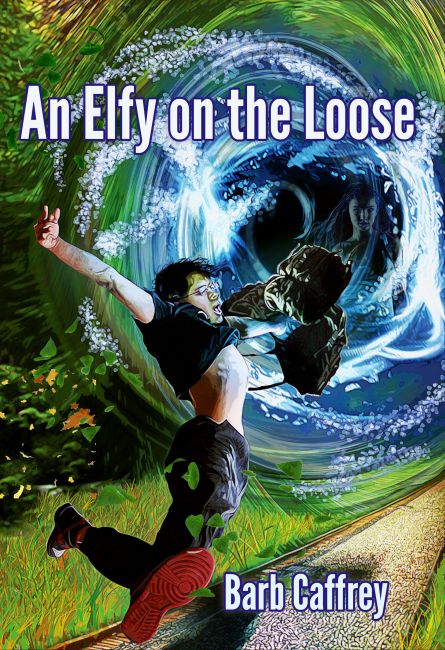
Barb Caffrey has written three novels, An Elfy On The Loose (2014), A Little Elfy in Big Trouble (2015), and Changing Faces (forthcoming), and is the co-writer of the Adventures of Joey Maverick series (with late husband Michael B. Caffrey) Previous stories and poems have appeared in Stars Of Darkover, First Contact Café, How Beer Saved The World, Bearing North, and Bedlam's Edge (with Michael B. Caffrey).


Alma Alexander: I'm roughly of an age with you, Wendy, and I think ours is now the generation which has to grapple with some of life's truths.  I’m technically only "half" an orphan at this point - my dad left us three years ago, my mother is still around, in her eighties now, frailer and more fragile than she's ever been before, both physically and psychologically, and it's something that it's up to me to deal with, I am in full defend and protect mode with her, often, and it takes up a huge swathe of mental and physical resources. But there will come a time when she too is gone and at this point it will be as you say - the foundation is gone. Until that moment you can always "go home". Afterwards, that first home, the foundation home, is gone, forever, and it takes a shift of thinking to adjust to it. So before anything else is said... there's that. There's the acknoledgment, and the understanding. We've been here, or we're coming up on that milestone, and we can look into that shadow and know exactly where you're coming from.