Showing posts with label advice to new writers. Show all posts

Monday, January 9, 2023

Auntie Deborah's New Writing Advice

 It's a new year, and aspiring writers have questions!


Q: Dear Auntie Deborah, I just got the rights for my novel back from my now-defunct publisher. Will I be able to sell it to another publisher?

A: It’s a wretched situation and I’m so sorry you find yourself in it. If it helps, you’re not alone. Not only are publishers going under but mergers are resulting in the cancellation of contracts for not-yet-delivered books, even for long-running series by established authors.

The short but brutal answer is, probably not. The exception might be if your book sold brilliantly, as in NYTimes Bestseller List, but even then it’s unlikely to attract interest because it’s “old news.” Publishers today are extremely conservative in the books they acquire; editors are reluctant to take chances; alas, your book now falls into the category of out-of-print/poor sales figures, regardless of whether it’s the fault of the book or not. The sales numbers might be low because the book was only available for two days, but that doesn’t matter. The other possibility is the few specialty small presses that occasionally acquire previously published books by authors with huge readerships, books that for one reason or another got dropped (as in your case, where the publisher ceased business). Your agent should be able to advise you whether this is a possibility for you.

Your best bet is to get a new, professionally designed cover and ISBN and self-publish the novel yourself. If you do this, I encourage you to go “wide,” that is, hit multiple vendors, not just Amazon Kindle. Draft 2 Digital will allow you to place a book in many markets, including those providing library loans, or you could do it individually. You could also put out an audio version of your book.


Q: Is it better to use names or numbers for chapter titles?

A: There is no “better.” There are conventions that change with time. Do what you love. Just as titles vs numbers cannot sell a book, neither will they sink a sale. If your editor or publisher has a house style, they’ll tell you and then you can argue with them.

That said, as a reader I love chapter titles. As an author, I sometimes come up with brilliant titles but I haven’t managed to do so for an entire novel, so I default to numbers. One of these years, I’ll ditch consistency and mix and match them. Won’t that be fun!


Q: Can I make changes to my self-published book once it's released?


A: Of course, you can. If they’re minor changes, like fixing typos, just upload the corrected file. If the changes are more substantial, like a revision, it’s best to indicate that so your readers don’t think it’s a different book. “Author’s Revised Edition” is one way of indicating this.


The same goes for changing cover art. Traditional publishers and indie authors do this all the time, as styles in cover art and design evolve. Just make it clear it’s a new cover, not a new book. Otoh, fanatical collectors of your work will grab the new-cover edition just to be complete.


Q: What's the best way to collaborate on a novel?


A: There is no best way, there’s only what works for you and your partner. One can draft and the other revise; you can alternate scenes or even chapters; one can dictate and the other edit while transcribing. Or whatever.


The hard and fast rule is: GET YOUR AGREEMENT IN WRITING, including how you will handle a break-up. Consider it an ironclad literary pre-nup. You will save yourselves a world of hurt if you rely on your memory of an oral agreement once money is involved.

Monday, November 7, 2022

A Moment of Writing Inspiration

This is for all my friends who are either doing NaNoWriMo or are just slogging through a Work In Progress:


No one else in the wide world, since the dawn of time, has ever seen the world as you do, or can explain it as you can. This is what you have to offer that no one else can.

- Edith Layton

Monday, January 31, 2022

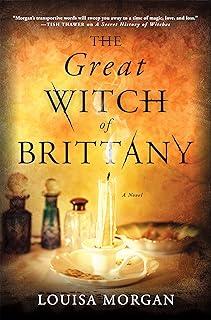
Author Interview: Louise Marley on The Great Witch of Brittany

Award-winning author Louise Marley has long been one of my favorite writers. From the chillingly prescient The Terrorists of Irustan to the deeply touching The Glass Harmonica, to the YA "Horsemistress" series (as Toby Bishop), to the music-themed Mozart's Blood and The Brahms Deception, the scope and insightfulness of her writing mark her as a major voice in fantasy and science fiction. Her newest novel, The Great Witch of Brittany, will be released in February 2022.

Deborah J. Ross: Tell us a little about yourself.  How did you come to be a writer?


Louise Marley: Like so many of us, I was an avid reader as a child, and it followed logically—since I am by nature a performer—that I wanted to write stories myself. My musical ambitions dominated the first part of my life, but I always meant to return to writing. It has been amazing to learn how much the two careers have in common.


DJR: What inspired your book?

LM: There is no one factor that inspires any of my novels, but the witch novels definitely had their origins in my fascination with witchcraft and the practice of it. I had fallen into the habit of writing historicals, and so the historical settings for A Secret History of Witches and now its prequel, The Great Witch of Brittany, came naturally.


DJR: What authors have most influenced your writing?  What about them do you find inspiring?

LM: I love many writers, from the Western authors I read as a girl to the Golden Age gothic mysteries to the great feminist science fiction writers of the latter half of the 20th century. I’m often inspired by the most recent really good novel I’ve read, and I find that enriches my own imagination. I’m not tempted to copy, fortunately, but I learn and absorb from some of the amazing prose and incredible plots I find. Thrillers have been my most recent indulgence, and wow! do those writers know how to plot!


DJR: Why do you write what you do, and how does your work differ from others in your genre?

LM: I’m extremely lucky to be in a place where I can write what I want to write. My last four books have featured witches and witchcraft, and I do hope they have my own particular stamp on them, which is working witches—women who have to study and practice and explore to make their magic work. I’ve found that the witch genre has many facets, and lots of excellent writers are working in it, with results that vary from terrifying to downright funny.

Monday, September 27, 2021

Auntie Deborah Answers Your Questions About Writing


In this installment, Auntie Deborah discusses writing a first draft, the unfairness of publishing, and when to run away from a publisher's contract. 


Dear Auntie Deborah: How can I prevent myself from constantly trying to edit as I draft?

Auntie Deborah: You’re halfway there in understanding why it’s important to plough through that draft so you can look at the whole thing when it’s time to revise. It’s tempting but (for many of us) deadly to halt forward progress and nitpick. Here are a few strategies that have worked for me:

  • Beginning each session with reading the last page or so but not making any changes in it.
  • Reminding myself that the only draft that counts is the one on my editor’s desk. And that what looks like an error may point me in the direction of a deeper, richer story, so I need to preserve all that drek the first time through.
  • Reminding myself about author B, whose work I greatly admire, who told me that no one, not even her most trusted reader, sees anything before her third draft.
  • Giving myself permission to be really, really awful.
  • Falling in love with the revision process. I can hardly wait to get that first draft down so I have something to play with.
  • Writing when I’m tired. Believe it or not, this helps because it’s all I can do then to keep putting down one word after another.
All that said, sometimes editing is the right thing, like when it feels as if I’m pushing the story in a direction it doesn’t want to go, or I’ve written myself into a hole I can’t dig out of. Usually that means I’ve made a misstep earlier, not thought carefully about where I want to go. Or whatever I thought the story was about, I was wrong, and the true story keeps wanting to emerge. How do I tell when this is the case? Mostly experience, plus willingness to rip it all to shreds and start over.


Dear Auntie Deborah: How do you come up with names for your characters?


Auntie Deborah: Sometimes the novel and its setting dictate parameters for last names. For example, if I’m writing a science fiction novel about Scottish colonists on Mars, I’m going to look at Scottish last names.

Often the character herself will suggest a last name, either based in ethnicity or personal traits and history. An aging hippie might have changed their last name to Sunchild or Windflower or Yogananada. A family trying to erase immigrant origins might have a last name like Smith or Jones.

And then there’s the telephone book (do such things still exist?) Or the credits for a really big movie, the ones that go one for screen after screen after screen. Do be careful when using real last names, though. If they’re too different, they might be identifiable. Just use the lists as prompts for your thinking.

Another strategy is to look at first names and then use them as last names. (My middle name is Jean, which was my mother’s last name, so the reverse could also be true.)

That said, always do an internet search for the name you’ve chosen. Even if you aren’t aware of others with that name, it’s good to know.

Monday, August 2, 2021

Auntie Deborah Answers Questions on Writing

Q: What advice would you give an aspiring young writer?
A: There are a gazillion tips on how to write, how not to write, do’s and don’ts galore. The best advice I can give to a young author is to fill your life up with experiences. You aren’t fully formed yet, either as a person or as a writer. So go have adventures; read widely; learn a second or third language; play a musical instrument; dance; study cultures other than your own, history, psychology, sociology, comparative religion, music theory. Anything and everything that interests you. Make friends who come from different backgrounds and listen to their stories with an open heart. Fill up your creative storehouse so that you will have something worth writing about.
In school, we learn how to write literate English (at least that’s the goal). We may analyze English literature, but usually the focus on reading comprehension not the mechanics of fiction. That often creates the illusion that we do or should know how to write effective fiction. That’s a bit like saying that because you can drive a car, you know how to build one from scratch. To create an inspiring story, you need a tool kit and skills. The tool kit includes a deep understanding of how and why stories move us, a wide range of life experiences (the raw material), and the basic mechanics of prose narration (exposition, dialog, theme and metatheme, rising tension that leads to climax and resolution, world-building, sympathetic characters, etc.) The skills are how to put together all these elements, when to introduce them or remind the reader, that sort of thing. There are perhaps as many ways of learning those skills as there are writers. Some benefit from reading widely and mindfully across a range of the best literature they can find. Others respond to “how to” books like John Gardner’s The Art of Fiction or Damon Knight’s Creating Short Fiction. Still others do better with hands-on critiques and explanations (when I was a new writer, I had to have things explained to me in words of one syllable).
Q: What mistakes do new writers make?
A: There are a gazillion lists of specific faults in prose (such as grammar and punctuation) or story craft (such as the rise and resolution of tension). A new writer can get so overwhelmed by “dos and don’ts,” she ends up paralyzed.
So I’d like to take a different tack and suggest that new writers learn to trust their readers. Trust them to figure things out. Trust them to read intelligently and sensitively. Most of all, trust them to experience the story for themselves. If there’s a “don’t” here, it’s don’t tell the reader how to feel. Take the reader on a journey that will be different for each reader because no two of us are alike in temperament and experiences. Give them what they need to know what’s going on, but allow the story to flow through them, seen through the lens of their own lives. At the same time, play fair with your reader. That means no surprise out-of-nowhere endings that have nothing to do with the meat of the story. If you set up expectations for one kind of story, hard-boiled noir detective, for example, it’s not a good idea to switch to a fluffy sweet romance. You and the reader have an agreement: “Give me x hours of your time, and this is the reading experience I promise you.” Just as a new writer must learn to trust her readers, she herself must be trustworthy in fulfilling that promise.

Q: How do you build a science fictional world -- the prospect is overwhelming!
A: The most important thing to understand about world-building is that not every writer does it in the same way. For some, it’s important to have that world fully realized in every detail and all the technology and science worked out before beginning to write. Others begin with a character or plot idea and let the landscape unfold as they explore it. I’m in the latter camp: I often don’t know what questions to ask when I begin a project, but they become clear to me once I start developing those characters and human dilemmas. I end up pausing to do research and map things out in rough draft or outline stage. I used to feel overwhelmed by the notion that I had to know everything first, and only when I understood my own creative process did I follow my intuition and let my stories grow organically.
P.S. My science fiction has been praised for its world-building. So it doesn’t matter how you get there!

Q: What should I keep in mind when starting a science fiction novel?
A: I’d give the same advice to a beginning writer of any genre, including mainstream. Write the best stories you can. The same principles of effective prose and storytelling apply, no matter what type of story it is. Keep pushing your literary craft. Read the best literature you can get your hands on and critically analyze what makes it work.
Of course, you have to do your homework when it comes to science and technology, but also world-building that includes culture, linguistics, sociology, etc. But so does every writer.


Q: Why are books for young people popular when they're not well written?
A: I notice that you are referring to the books your kids read. Kids and adults read for different reasons. Children have not yet developed internal critics, they suspend disbelief readily, and they respond powerfully to tropes that leave adults cold. By trope I mean a motif, device, or cliche that has psychological resonance, for example in Harry Potter, you see The Worthy Orphan, The Prince in Waiting (The Chosen One), The Wise Old Mentor, as well as a school story and The Adventures of Friends. Kids also love stories in which the young protagonists have agency, the ability to have adventures they could never experience in their own lives. All of these things are more important to young readers (and many adult readers!) than literary quality.

Q: How do you write a novel?
A: A crucial part of writing a novel is discerning when you have a novel-sized idea, as opposed to one more suitable for a novella or short story. In order to carry the weight of 100K words, the concept of a novel must have depth and emotional resonance. It must be capable of maintaining tension and forward propulsion, and spinning off subplots that enhance rather than distract from the central theme.
Sometimes I’ll start with a notion (or character or line of dialog or scene) and let it play out in my imagination to see how it develops. In the first decade or so of writing professionally, I’d make mistakes, trying to squash a huge idea into 5K words or, conversely, to stretch out a single gem-perfect nugget into many chapters. But I learned by stepping back and identifying the skills I needed. Now I’m usually accurate (and with short fiction, I can tell within 1K words how long the story will be). That said, there are a gazillion ways to structure, plan, and actually write a novel. Since there’s no right or wrong way, only the final product, you can find what works best for you.

Q: What's the best advice about writing you've ever received?
A: The best advice I ever received came from my mentor. She encouraged me to “play it out,” meaning to explore all the nuances and emotional beats of a dramatic scene. Like many newer writers, I built up to those scenes and then rushed through them, thinking that if the action was happening very fast, so should the scene. I thought that I’d set up all the pieces so the reader would realize their importance when they came together. But really, I was selling my readers short. I didn’t realize that the more action, tension, and emotional weight a scene has, the longer it can — and should — be. Readers want to savor every moment, every breath of breathless action. They don’t want to have pages and pages of not-much-happening and then something incredibly important in a paragraph.

If you like my approach to writing, please check out Ink Dance: Essays on the Writing Life, available  in ebook and trade paperback (with room for personal notes) from all the usual vendors.

Monday, October 12, 2020

Auntie Deborah Returns From Wildfire Evacuation To Answer Your Questions


It's been an exciting couple of months. Back in mid-August, Auntie Deborah and her household fled from the wildfires descending upon their small California town. After a month staying first with friends and then in a hotel, she and her people and all four cats returned home to a herculean clean-up job. Actually, the cats did not contribute, except in a profusion of shed fur. Order and cleanliness are gradually emerging, along with a return to writing her own work and advising younger writers. 

~~~~

Dear Auntie Deborah, 
How can a literary agent tell from the first ten pages whether they want to represent a book?

Auntie Deborah: Most agents can tell from the first paragraph if they want to continue reading. Agents have read thousands of manuscripts by the time they’re in the pro league and they, like magazine editors who plough through mountains of slush, can spot right away if the author has the command of fictional techniques and language that are the bare minimum for a publishable story. It doesn’t matter what comes after that first paragraph if the author has failed to engage and intrigue, with every indication that if the reader places themself in the author’s hands, as it were, the experience will be reliably satisfying.


Dear Auntie Deborah,
Is it okay to write when I'm upset and not feeling like myself, or should I wait until I've calmed down?

Auntie Deborah: What makes you think that when you are “emotional, upset, or worried” you are not yourself? Passion is as much a part of writing as intellect. Let it all out on paper! Give yourself something intense and uncensored to then revise and mine for purest gold.

I am now revising a novel I drafted while caring for my best friend in the final weeks of her life. At the time, it was pure escape, a place to put all my strongest, most painful emotions. Only afterward did I see the amazing heart of the piece. It’s required several rounds of being taken apart and put back together the way fiction needs to be structured. This last round follows a long discussion with my agent, who is very excited about it. (As a note, I’ve been publishing fiction for over 35 years, with 15 novels and umpteen short stories, so I have experience with this <g>)


Dear Auntie Deborah:
Why do people advise me not to address an editor as "Dear Sir"?

Auntie Deborah: I strongly advise you not to address an editor as “sir.” The primary reason is the likelihood that the editor is a woman. In 2016, 78% of editors were women. (All 3 editors at my publisher are women.) Do you want to begin your letter with the assumption that an editor must be male?

Instead, say, “Dear editor.” Better yet, address your letter to the specific editor to whom you are submitting. (“Dear Ms. Jones” — not Miss or Mrs!) You should know this as part of researching your markets. Some publishers have a first or slush reader, usually anonymous, in which case, “Dear editor” or “Dear publisher” would be fine.

Wednesday, November 2, 2016

Supporting A New Writer: Full Circle, Starting Over

This blog series began when I received a letter from a long-time fan.  It spoke deeply to me, and
rather than answer it alone, I asked some of my writer friends to join in a series of round table blogs on the issues raised. Below is another heart-felt letter from another writer with her own struggles.

I've been trying to reconnect with writing friends after a hiatus from the creative life.  I've spent the past year or so taking care of my mom and working to pay the bills.  Mom passed away in October.
When your last parent passes away, it changes you in many ways.  That foundation you always relied on -- even as an adult -- is gone for good.  Whether you're ready or not, you are truly on your own in the world and must somehow carry on without their nurturing presence.  One of the most difficult aspects of my mother's final days was the fact that she had so many regrets about life.  She once had goals and dreams, but left them behind out of fear and a belief that these dreams were just not possible.
 
I'm 54 years old.  More than half of my life is over.  Writing has been a dream/goal of mine since childhood.  My mom was the only one who believed in me. I don't want to leave this world regretting the fact that I never pursued this dream to the fullest. To be honest, my writing "career" never took off.  I let fear, doubt and the negativity of others keep me from my dreams.  I want so much to be brave, to take risks with my creative life. I truly wish for a group of fellow writers who are willing to give me the encouragement and support I need to write with my heart and soul, to grow as a writer and a human being. And I want to be a support for others as well. 


How do I get back into the writing life after leaving it on the back burner for so long? 


Denise B. Tanaka: Do I still have what it takes?

Once I heard an anecdote about someone tearing down a spider's web every day. The spider would come back to the same spot to recreate the web, and the person tore it down again and again. After a while, the spider rebuilt the web less perfectly, with gaps and irregularities, until finally the spider stopped rebuilding the web altogether.

As a writer, I have put my manuscripts through the meat grinder of critique groups and workshops at conventions. For a long time, I welcomed harsh comments because I believed it was necessary to develop a thick skin. I used to invite lengthy brainstorming sessions and I boldly gutted my manuscripts in rewrites. I endured the pounding because I assumed it would make my writing better.

For years, I was starry-eyed optimistic about getting published. Surely all the anguish of workshops and critique groups would pay off, right? I studied all the advice of how to write sparkling query letters. Before there were email submissions, I was a frequent visitor at the post office. And I stacked up piles of rejections. Small press. Big 5 houses. You name it, I've been rejected by it.

The meritocracy myth consumed me. I wrongly believed that if my writing was “good” that a publisher would snatch it up from the slush pile. I wrongly believed that all these rejection slips meant that my writing was “bad” or that I had no talent, that I did not deserve to be one of the chosen few. Disheartened but not entirely discouraged, I kept writing more and more manuscripts in my original universe. I told myself that if one book didn't sell surely another character's adventure could. I kept workshopping and writing and rewriting in a mad frenzy.

Friday, October 21, 2016

Supporting a New Writer 7: Flexibility

"Moving ahead, this is a good time to talk about where to connect with other writers, how to use social media, the benefits/drawbacks of face-to-face, what to look for in a group, workshops -- which ones, pitfalls, etc. And how to use technology like the internet and digital publishing (and why you shouldn't). Any of these spark ideas?"


Barb Caffrey: Today I'd like to talk about social media. I've known some writers who've made great strides in their readerships, using it -- but what I use it for, mostly, is to get to know other fans and writers. I've been able to gain encouragement, support, and appreciation through the use of Twitter and Facebook (I don't use Instagram or Pinterest, but I've heard both of those also are quite useful; find your own platform, and use it).

Most of the writers I know on Facebook, for example, talk about their works-in-progress, or sometimes about the struggles they're having with their works-in-progress. This lets me know that I'm not alone, and gives me the option to talk to them, see what they're doing and how they're doing it, and give them the support they've given me...an unending circle, if you will.

While I stand behind my previous recommendation of the Forward Motion Writers Group (fmwriters.com), I urge you to try the various social media platforms, and see if one -- or more -- may work for you.

Now, as far as how to find other writers locally, in whatever area you live in? I know where I live -- Racine, Wisconsin -- we have a local writers' group that meets every Thursday night in various places. I've only been there once or twice, but I appreciate knowing this group exists; I get their e-mails, and have written back and forth a few times to the various group organizers. (This group, by the way, is absolutely, positively free. Just like Forward Motion is online, except with real-time communication.)

There are a few other ways, mind. If you live near a university (or college), you might see if there's a group meeting there. Or there may be writers doing events at a local book store; going there to talk with the writer (or writers) in question may help you meet someone with similar interests, and perhaps lead to a writerly friendship down the line.

But the main thing to know is this: We all start off as neophytes. And the only way to get any better is to keep trying, keep writing, keep creating, and dare to be the creative person you were born to be.

I hope that helps.

Barb Caffrey has written three novels, An Elfy On The Loose (2014), A Little Elfy in Big Trouble (2015), and Changing Faces (forthcoming), and is the co-writer of the Adventures of Joey Maverick series (with late husband Michael B. Caffrey) Previous stories and poems have appeared in Stars Of Darkover, First Contact Café, How Beer Saved The World, Bearing North, and Bedlam's Edge (with Michael B. Caffrey). 

Doranna Durgin: I admit, the scope of this question was a little daunting.  How many of us have really figured out the answer to all these questions on our own?  Not me!

But I have an approach to figuring them out, which is maybe the next best thing.
Actually, it’s going to sound too simple: Figure out where you want to go.  Figure out what you need to get there.  Choose to do those things.

Ha ha ha ha!

Okay, so, for instance:  there are many social networking platforms.  What do you want yours to accomplish?  How many platforms are you comfortable juggling?  What are you comfortable with in terms of user experience and investment?  With which demographic do you want to connect?  What devices do you have on hand and what do they do best?

Ask yourself ALL the questions!  You may still have to do some eenie-meenie, but questions should winnow things out so it’s not all just one big overwhelming mass.
Also, there are many opportunities for connecting with others of a writerly bent.  Do you want something local, or online?  What are your goals for connecting—are they social, or are they educational?  Can they be met by writers of any experience level, or only those well along their career path?  Can they be met by gathering as a reader, with readers?

What are the downsides to any of those choices?

The thing is, sometimes we don’t know.

Social media platforms change.  The software around engaging with them changes.

Writers’ groups wax and wane with the participants’ real life obligations and their evolving writing paths.  The value of our choices (to us) changes.  This can be hard to acknowledge once one has invested time, energy, and emotion into a situation—I for one am particularly guilty of lingering when I should move on—but it’s important to perceive when a thing that should be supporting your writing is actually taking from it.

So Part Two of the simple approach is this: Maintain reality checks to adjust outreach choices as your experience grows.

Our initial choices don’t need to be perfect—there’s no way that all of them are, no matter how thoughtfully we proceed, so the need to adjust a decision isn’t a fail.  In fact, it might well be a nice indication of progress and growth.  Cool!

So Part Three of the simple approach is a reminder that decisions made/actions taken count as moving forward even when they aren’t perfect.  Endless sit and spin…well, that’s just sitting and spinning.

So figure out your personal goals—your goals, not what everyone says should be your goals or what they’ve all chosen as goals--and go for what meets them.  And then pat yourself on the back.  

(Also, chocolate.)
Doranna Durgin is an award-winning (Compton Crook--best first SF/F/H of the year) whose quirky spirit has led to an extensive and eclectic publishing journey across genres, across publishers, and across publishing lines.  Beyond that, she hangs around outside her Southwest mountain home with horse and highly accomplished competition dogs. She doesn't believe in mastering the beast within, but in channeling its power. For good or bad has yet to be decided...


Friday, October 14, 2016

Supporting a New Writer 6: Connecting

Effie Seiberg: Depending on what kind of writing you're doing, and where you are geographically,
there are a number of ways to find kindred spirits.

Conventions: Whether conventions or conferences, I found these to be an invaluable resource for meeting people. (In fact, that's how I met Deborah!) At one panel about plotting techniques, one person from the audience asked how one might go about finding a critique group. One of the panelists said to look around the audience - the people going to the same panels you are probably have the same needs. After the panel was over I got together with two other people from the audience and formed my first crit group. That was three years ago, and I'm still swapping stories with one of them. 

Classes and workshops: If there are classes in your area, that's another way to get an insta-community. You can also apply to a variety of workshops that are available. Or, many writers offer online classes with a video component, either through YouTube or Google Hangouts. A digital class community still counts!

Industry groups: If you're publishing science fiction, fantasy, or horror, trade groups like SFWA  (the Science Fiction and Fantasy Writers of America, sort of the national guild, with online forums for discussion) and community groups like Codex (an online community full of support and advice) are great ways to meet people. If you're interested in pure horror, there's also HWA (the Horror Writers of America.) For all, you need to qualify to join.

If you're publishing romance, the industry group RWA (Romance Writers of America) is massive and allows anyone to join, and has local events in many places. 

Other sub-genres have their own groups. Just look online!

Local meet-ups: Meetup.com is a great way to find local writing meet-ups. My area has a number of "Shut up and Write" meet-ups, and guess what happens there.

Online critique forums: You can trade work with other writers on groups like Critique Circle, Critters, and more. 

I hope one or more of these options work for you! I find my writing support groups (yes, I have several!) to be incredibly helpful, both in improving my writing and in improving my state of mind. Good luck, and you can do it!

Effie Seiberg is a fantasy and science fiction writer. Her stories can be found in the "Women Destroy Science Fiction!" special edition of Lightspeed Magazine, Galaxy's Edge, Analog, Fireside Fiction, and PodCastle, amongst others. She is a graduate of Taos Toolbox 2013, a member of SFWA and Codex, and a reader at Tor.com.

Barb Caffrey: Here's one more additional resource that helped me, back in the day...it's Forward Motion Writer's Group (or fmwriters.com, I think -- might be .org). Lazette Gifford runs the site now, but it was started by Holly Lisle. It's a group by writers, for writers, and they talk about all sorts of writerly-related things, including things that get in the way of writing.

Barb Caffrey has written three novels, An Elfy On The Loose (2014), A Little Elfy in Big Trouble (2015), and Changing Faces (forthcoming), and is the co-writer of the Adventures of Joey Maverick series (with late husband Michael B. Caffrey) Previous stories and poems have appeared in Stars Of Darkover, First Contact Café, How Beer Saved The World, Bearing North, and Bedlam's Edge (with Michael B. Caffrey).


Friday, September 30, 2016

Supporting a New Writer 5: Hope Heals

Barb Caffrey: The main reason I restarted my writing despite a number of life challenges (including
the loss of my husband Michael in 2004) is because I knew I needed to do it. Sometimes, writing can be stress relief; it allows you to step outside of your own head for a while, and do something else other than grieve -- do something else other than concentrate on all the problems you cannot solve.

It allows you to do something positive. Something meaningful. Something that you can point to later, and ask yourself, "I did that?"

Granted, at the time, I didn't realize at all this was why I was trying so hard to write. I looked at it as an expression of creativity (which, of course, it is); I also saw it as my way to strike back against the darkness of entropy, and of course as a way to continue on with what my husband (also a writer) and I had done all our lives.

In short, writing allowed me to feel more like myself, rather than the person I had unwittingly become after my husband died so suddenly. I didn't like feeling like an open wound all the time; I wanted to heal.

Writing helped me heal.

Barb Caffrey has written three novels, An Elfy On The Loose (2014), A Little Elfy in Big Trouble (2015), and Changing Faces (forthcoming), and is the co-writer of the Adventures of Joey Maverick series (with late husband Michael B. Caffrey) Previous stories and poems have appeared in Stars Of Darkover, First Contact Café, How Beer Saved The World, Bearing North, And Bedlam's Edge (with Michael B. Caffrey).


From Wendy, for whom this blog series was created:

Dreams are possible....

Hope lives....

If you take action....

If you reach out with an earnest, heartfelt plea....

Good people will respond.

I do not take this creative journey alone. What a comfort this realization has been to me.  I am encouraged and deeply grateful for the wonderful words of wisdom you have all shared with me.

I am writing again. Perhaps in fits and starts, but still putting words to electronic paper on a daily basis. 

I am starting to believe in myself again, to see myself as a creative spirit with something to say.

My words matter. My words can entertain and enlighten. I have a voice. All of you have helped me find that voice again.

Thank you!


Friday, September 23, 2016

Supporting A New Writer 4: Where We Go from Here

Each of us has a tale to tell about struggling to start or re-start a writing career. Here's the background on this project, and two responses below.

Recently, I received this letter from a fan with whom I’d been corresponding. It spoke deeply to me, and rather than answer it alone, I asked some of my writer friends to join in a series of round table blogs on the issues raised. If you’ve been there, too, I hope you’ll follow along and offer your own wisdom.

I’ve been trying to reconnect with writing friends after a hiatus from the creative life. I’ve spent the past year or so taking care of my mom and working to pay the bills. Mom passed away in October. When your last parent passes away, it changes you in many ways. That foundation you always relied on — even as an adult — is gone for good. Whether you’re ready or not, you are truly on your own in the world and must somehow carry on without their nurturing presence. One of the most difficult aspects of my mother’s final days was the fact that she had so many regrets about life. She once had goals and dreams, but left them behind out of fear and a belief that these dreams were just not possible. I’m 54 years old. More than half of my life is over. Writing has been a dream/goal of mine since childhood. My mom was the only one who believed in me. I don’t want to leave this world regretting the fact that I never pursued this dream to the fullest. To be honest, my writing “career” never took off. I let fear, doubt and the negativity of others keep me from my dreams. I want so much to be brave, to take risks with my creative life. I truly wish for a group of fellow writers who are willing to give me the encouragement and support I need to write with my heart and soul, to grow as a writer and a human being. And I want to be a support for others as well. How do I get back into the writing life after leaving it on the back burner for so long?
Doranna Durgin:  I turned 56 on the very day my mom died just over a month ago.  Meanwhile my writing has floundered for years—damaged by experiences in traditional publishing, never quite reaching fruition in the first place because I was in a financially vulnerable situation where I didn’t dare take risks.  So I played nice.  Too nice.  Too much fear, too much doubt, and way too much negativity from outside sources.  Familiar, right? I was trying to please everyone else before I pleased the muse, knowing it and hoping for some sort of break that would allow me to return to the muse.  But instead of reaching a break, I hit a breaking point, and then…broke.  Now I’m looking at the journey back and not certain how to take it.


So where do we all go from here?

In this case, I hope knowing you’re not alone is of some solace.  Boy, you’re definitely not!  And to some extent, I think we all wish we were bigger, bolder, better when it comes to our writing.  To that same extent, I think having that desire is the critical part of writing.  How do we do anything but stagnate without it?  And just maybe the fact that we do have that ongoing need doesn’t mean we haven’t already been successful in many ways.  Don’t discount those successes!

More practically speaking, I’m finding that I need to give myself space while at the same time setting reachable goals.  For me, that means noodling on development in the background while working on production stuff and writing-related stuff in the foreground.  For you, those first steps might include finding community online and in person, but I have some hesitation about focusing on these as a starting place.  Writing comes from within, not without—and in my experience, outside influence is often about diluting, not enhancing, those pieces from within.

To that point, I’ve found a good book discussion group comprised of savvy readers and other writers to be an excellent place to practice critical thinking and to see how different writing is absorbed by different people…well, differently.  I see it as a way to immerse in the thought process without subjecting the muse to the push and pull of others’ thinking.

I think one key, as we seek growth, is to recognize the successes we have in fact had, and then to keep our specific goals in mind while making decisions about the future—which means taking the time to truly understand our goals in the first place.  So are the support groups and community part of the goal, or a way to reach the goal?  And what other ways can you reach the specific goal?

Either way, good luck—hope to see you there on the other side!


Doranna Durgin is an award-winning (Compton Crook--best first SF/F/H of the year) whose quirky spirit has led to an extensive and eclectic publishing journey across genres, across publishers, and across publishing lines.  Beyond that, she hangs around outside her Southwest mountain home with horse and highly accomplished competition dogs. She doesn't believe in mastering the beast within, but in channeling its power. For good or bad has yet to be decided...


Meg Mac Donald: On Starting Over:
Just write.

I know, I know.  That’s obvious.  I realize that it may be oversimplifying things, but it is true that the only way to begin again is to (simply) start doing it.  Anything.  Write that story idea, or outline—or even that one scene—that has been playing in your mind for years.  You know, the one about That Character when That Thing happened?  Yeah.  That one.  Jot it down.  Follow it as it begins to grow—give yourself permission to change it.  Keep writing.  If you write something, you have something to edit—or rewrite—later.  Worst case scenario?  You line the cat box with it and start something else.  Put aside any notion about it being perfect, or publishable, or even making the remote bit of sense.  It doesn’t have to.  What it has to do is give you something to work with.  Most of writing is rewriting and editing anyway.  Give yourself permission to make a literary mess if that’s what it takes to break the cycle of doubt that is keeping you from writing at all.

Friday, September 9, 2016

Supporting A New Writer 3: We've Been There

Recently, I received this letter from Wendy, a fan with whom I’d been corresponding. It spoke deeply to me, and rather than answer it alone, I asked some of my writer friends to join in a series of round table blogs on the issues raised. If you’ve been there, too, I hope you’ll follow along and offer your own wisdom.


I've been trying to reconnect with writing friends after a hiatus from the creative life. I've spent the past year or so taking care of my mom and working to pay the bills. Mom passed away in October.
When your last parent passes away, it changes you in many ways. That foundation you always relied on -- even as an adult -- is gone for good. Whether you're ready or not, you are truly on your own in the world and must somehow carry on without their nurturing presence. One of the most difficult aspects of my mother's final days was the fact that she had so many regrets about life. She once had goals and dreams, but left them behind out of fear and a belief that these dreams were just not possible.
I'm 54 years old. More than half of my life is over. Writing has been a dream/goal of mine since childhood. My mom was the only one who believed in me. I don't want to leave this world regretting the fact that I never pursued this dream to the fullest. To be honest, my writing "career" never took off. I let fear, doubt and the negativity of others keep me from my dreams. I want so much to be brave, to take risks with my creative life. I truly wish for a group of fellow writers who are willing to give me the encouragement and support I need to write with my heart and soul, to grow as a writer and a human being. And I want to be a support for others as well.

How do I get back into the writing life after leaving it on the back burner for so long?

Cynthia Felice: Filling the Giving Hole

My similar experience was long and arduous; each time I thought I was ready to pick up my writing career I discovered, painfully, I was so not ready. I went through years of bewildering anniversaries and finding ways to establish new normals for everyday life that re-establishing my writing life was always something I'd do tomorrow. It's different for everyone, so don't assume setbacks are failures. Your loss and mine were different, and that alone changes working through the loss. But when writing life did start working again, it was because I made myself find a listserv (actually several, but only one clicked for me) of writers who were working at their craft. Just checking in every day and lurking for a while helped me feel connected again to the familiar problems and worries writers have and need to discuss. Eventually I was "talking" again and involved, sharing my concerns and experience with other writers. No one understands writing life the way other writers do. Besides, what else are you going to do with all that tender care you've been giving to your loved one for years? I needed a place to put mine; maybe you do, too. Don't let not giving daily leave a hole in you.

Similarly, I attended the Pikes Peak Writer's Conference http://www.pikespeakwriters.com/ because it's well known for great organization and attracting the best speakers (heh, heh, and I'd been one of those speakers years earlier) and because it takes place in my back yard! It was a wonderful long weekend spent rubbing shoulders with like-minded folk and learning what had changed in the industry while I was away. There are other fine conferences and also very good writers workshops, but I have personal experience with this one, so am content to recommend it. Research carefully if you're tempted to plunk down the fee; not all are equal. You'll notice that I did not recommend a specific listserv; the one I favored no longer exists, but others are out there, and if the daily passive contact appeals to you, you will find them.

Good luck, Wendy!

Cynthia Felice writes science fiction novels, and occasionally writes short stories and articles. She
was a John W. Campbell Award nominee for her novel, Godsfire. Felice is a workshop enthusiast, including being an early Clarion “grad” and a frequent Milford attendee. Her experience includes managing technical editors, writers, and designing configuration control software, as well as writing and editing technical articles, essays, and documents, one of which received the Award for Outstanding Paper from the Society for Technical Communication. Cynthia Felice grew up in Chicago, and now lives with her husband on a ridge east of Colorado Springs overlooking the Front Range.

Deborah's note: Cynthia critiqued my very, very first attempt at a fantasy novel (1980?) with such kindness and insight that I am still writing!


Meg Mac Donald: Dear Wendy,

Your letter touched my heart in so many ways—and in so many ways, on so many levels, I could relate to what you were saying.  As will always be the case, we each have our own story—that moment, that feeling, that fear, that loss that seemed to take away the dream that we had nurtured from childhood on.  Those hurdles in life that seem insurmountable.  We are of an age, you and I.  No doubt we share many of the same memories about childhood pastimes, favorite books, iconic films, moments where planet Earth stopped turning to look to the moon…  What a glorious, bright future we were promised—especially for girls.  What a “brave new world” where we believed that if we dreamt it, we could achieve it.  No better time to be alive.  No better time to want to write science fiction and fantasy.  No better time.

Maybe every generation has that hope.  There’s something about our generation, though.  Something about promises that weren’t kept.  Something about the future not being what it looked like it should be.  Where did it go?  And we tried to hang onto the dreams and may have even had some luck.  Found those older and wiser to nurture us and lead the charge.  For all those that managed to keep going or never faced serious setbacks, there are probably far more whose lives became overwhelming.   In the midst of trying to plant that creative garden and keep it blooming, we grew up and life happened and the frailty of our own lives was realized in the frailty of our aging parents—or the deaths of friends and kin, or the trauma of war, or financial hardship, or personal trauma wearing a hundred different, dark cloaks.

Friday, September 2, 2016

Supporting A New Writer 2: Following The Dream

Recently, I received this letter from Wendy, a fan with whom I’d been corresponding. It spoke deeply to me, and rather than answer it alone, I asked some of my writer friends to join in a series of round table blogs on the issues raised. If you’ve been there, too, I hope you’ll follow along and offer your own wisdom.


I've been trying to reconnect with writing friends after a hiatus from the creative life. I've spent the past year or so taking care of my mom and working to pay the bills. Mom passed away in October.
When your last parent passes away, it changes you in many ways. That foundation you always relied on -- even as an adult -- is gone for good. Whether you're ready or not, you are truly on your own in the world and must somehow carry on without their nurturing presence. One of the most difficult aspects of my mother's final days was the fact that she had so many regrets about life. She once had goals and dreams, but left them behind out of fear and a belief that these dreams were just not possible.
I'm 54 years old. More than half of my life is over. Writing has been a dream/goal of mine since childhood. My mom was the only one who believed in me. I don't want to leave this world regretting the fact that I never pursued this dream to the fullest. To be honest, my writing "career" never took off. I let fear, doubt and the negativity of others keep me from my dreams. I want so much to be brave, to take risks with my creative life. I truly wish for a group of fellow writers who are willing to give me the encouragement and support I need to write with my heart and soul, to grow as a writer and a human being. And I want to be a support for others as well. How do I get back into the writing life after leaving it on the back burner for so long?
  Katharine Eliska Kimbriel: Do you want to write, or do you want to have written? Is it getting the story down on paper or computer that drives you, or the thought of who will receive the story? Is publishing critical? Are you looking at markets before you even write the tale?

Because these struggles can kill your muse. I wasted a lot of time, once NYC decided that the stories I wanted to tell were not viable, tossing them synopsis after synopsis, trying to get their interest. You don't have to deal with NYC at all, if you don't want to--self-publishing can be done, and done well, if you are willing to pay for good editing and cover art.

The best things I have ever written come when *I do not censor the Writer.* The first draft, you must tell your Editor Voice (and you have several) "There, there, you will get your chance to say something" and keep writing. The first draft of a story, you tell yourself the story. The second pass, you decide what you need to tell this story to other people. There's usually editing--few of us can write a first and second pass in one go.

Beware the Critic Voice. That is the voice of every slighting comment, every undermining statement, every spiteful word ever tossed your way. A strong and smart woman once told me, "The Critic is never you." But the Critic exists, even if no one has ever slammed your dreams of writing because you never whispered that dream aloud. It takes time to smash those slighting words down to dust, to weigh opposites in your hands and mash them together, halving their impact. But you can whittle down The Critic.

Most people I know who adore telling stories can't stop. When they *cannot* tell stories it triggers depression. Right now you are going through that huge transition (it just happened to me, too) where suddenly, at reunions, you are the oldest person in the room. Right there is a huge adjustment. Be gentle with yourself, ask your heart what it wants to write, and give yourself permission to write. That time is NEVER wasted. In my youth I would tell people "I have to work." I didn't say write, because it wasn't how I paid the rent, so they would say "You can do that after the movie, dinner, bike ride"--whatever.

It is for you. Women worldwide are told to put their heart on hold and take care of everyone and everything else. If you don't take something for your own heart, you will have nothing to give others. Take the writing. It may turn out to be something you can offer the world.

Katharine Eliska Kimbriel reinvents herself every decade or so. The one constant she has reached for in life is telling stories. “I’m interested in how people respond to choice. What is the metaphor for power, for choice? In SF it tends to be technology (good, bad and balanced) while in Fantasy the metaphor is magic – who has it, who wants or does not want it, what is done with it, and who/what the person or culture is after the dust has settled. A second metaphor, both grace note and foundation, is the need for and art of healing. Forthcoming stories will talk about new things that I’ve learned, and still hope to learn … with grace notes about betrayal, forgiveness, healing and second chances.” A Campbell Award nominee.


Irene Radford: For as long as I can remember my family told me that writing down my little stories was okay because I would learn to write well, a requirement for succeeding in the business world. Their ambition for me was to run the PTA. However, I mustn’t bother sharing my little stories with anyone because I could never succeed as a writer.

Period. End of conversation.

Except we kept having this conversation every time I got an idea for a new story or book or trilogy…

I’m not certain why my brain suddenly clicked into realizing that I can’t know I’ve failed until I try. It may have had something to do with my 10 year old son entering every mail-in contest the postman delivered. One of those contests was for Harlequin Romances. I won 4 free books every month for 3 months. Then of course I was expected be hooked and start paying for my book fix. But one of the option books I could order was “How to Write Romances for Love and Money.”

I tried it. Over the period of a couple of months I followed the guidelines and deconstructed several of my favorite romances. And then I wrote one. When I thought I was ready to submit I asked a friend of a friend about proper manuscript format. That person put me in touch with another friend of a friend who was active in Romance Writers of America.

I attended one workshop and went home to re-plot the book. The local chapter of RWA led me to a critique group. I re-wrote the book again and again until I submitted. And accumulated rejection after rejection.

At some point in this depressing process I discovered that not only did I need to try before I admitted failure: I had not failed until I gave up trying.

RWA and my critique group led me to an agent, and though we never sold that first romance, I found my voice in fantasy. And I succeeded. October 13, 1993 at 1:33 PM I received THE phone call, that DAW Books wanted to buy, not only the first book I had written for the fantasy market, but also 2 sequels.

Thirty-five books later I still haven’t found a reason to give up trying.

My few words of wisdom for those starting a writing career or re-starting one, is keep on trying. Apply butt to chair and hands to keyboard and keep writing. Five minutes a day, four pages a day, whatever works for your schedule. And keep on until there is nothing left inside you that demands to be written.

Then give it a rest for a bit until the words start bubbling out of you and write some more.


Irene Radford …aka P.R. Frost, aka C.F. Bentley, has been writing stories ever since she figured out
what a pencil was for. A member of an endangered species, a native Oregonian who lives in Oregon,
she and her husband make their home in Welches, Oregon, where deer, bears, coyotes, hawks, owls, and woodpeckers feed regularly on their back deck.

A museum trained historian, Phyllis Irene has spent many hours prowling pioneer cemeteries deepening her connections to the past. Raised in a military family, she grew up all over the US and learned early on that books are friends that don’t get left behind with a move. Her interests and reading range from ancient history, to spiritual meditations, to space stations, and a whole lot in between.