Showing posts with label collaboration. Show all posts

Monday, February 24, 2020

Auntie Deborah Advises on the Business of Writing


Auntie Deborah is back at her advice desk…

If two authors want to collaborate on writing a novel, how much should each author contribute?
Auntie Deborah: It all depends. There are so many different ways to do this. I’ve seen authors alternate chapters, divide scenes according to their strengths (ex: character/dialog vs action/technology), one writes the draft and the other revises it. I co-wrote a (published) short story in which my partner described a scene while I typed it out, asking questions and filling in details.
For the last 20 years, I’ve written posthumous collaborations with the author who was my mentor. During the last year of her life, we talked about the basic plot arc for the first 3 books, but then she died and I wrote those books (and 6 more and counting…) My natural literary “voice” is very close to hers so the transition was easy. Her Literary Trust approves the manuscript for consistency of style and content before it goes to her agent (who also happens to be my agent), so in a sense they act as a current collaborator. I work under subcontract to them and we have a formal, written, legal agreement.
The one unbreakable rule is that you set down in writing how you will resolve differences, divide payment, and what you will do if it all falls apart. Absolutely do not skip this step!

Is it wise to try and find a literary agent before I've finished writing my novel?
Auntie Deborah: I would advise not. First and foremost, the agent has to have something to sell. Otherwise there’s no point in representing an author without a marketable project. Second, you will be new to the agent and she will have no idea whether you can take those unfinished pages and turn them into something great. On the other hand, suppose they liked the sample chapters but you don’t have the rest ready to submit; you’ll end up either losing that interest in delay or sending something not ready. Either way you’ll have lost a potential agent.
If you’ve made personal contact with an agent, say at a convention, pitched your project, and aroused their interest, follow that with a polite note. Do not send anything less than your polished best! You don’t want to get put into the “talks great but doesn’t deliver” category. Then when you do submit, use the cover letter or query — depending on what the agent has asked for — to remind them of past interest.
Be patient. Do your work to the utmost of your ability.

Monday, June 17, 2019

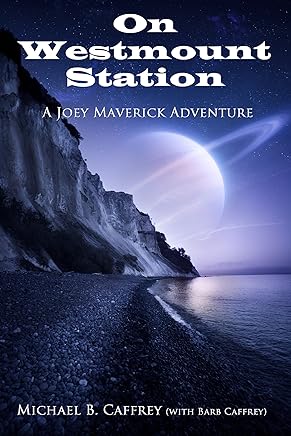
Guest Blog: Barb Caffrey on Writing After Widowhood


"Writing After Widowhood"
By Barb Caffrey

A while back, Deborah J. Ross asked me to talk about the differences between writing while my beloved husband Michael was still alive, and writing now. As I've had many years since my husband's unexpected death in 2004 to contemplate this, I agreed to talk about it. Just know in advance that it's not easy, but it is possible. (Spoiler alert!)

Anyway, when Michael was alive, we wrote some short stories together despite having very different writing styles. We could do this because we'd heard Eric Flint, in 2002, discuss how he collaborated with other authors. It was all about communication, Flint said, “Also, if you could check your ego at the door, that would help immensely.”

That wasn't all Michael did, mind you. He edited for me, as I edited for him. He and I talked about our stories for many hours a day, every day of the week, a great gift…and he made sure to do all the things a good husband does for his wife without prompting—and without fanfare.

It was because of all of this that I was able to write 230,000 good words in thirteen months back in 2002 and 2003. And into mid-September of 2004, I believe I wrote around 100,000 words, which isn't bad at all when you consider we had a big move across-country and had to find work and lodgings in the process.

Then, disaster struck. Michael died in September of 2004 of four massive heart attacks. He was awake after the first, but before the rescue squad could get to him, he had his second heart attack. He was clinically dead for eighteen minutes, and then was revived at the hospital. He later had heart attacks three and four…within eleven hours of the first heart attack, my beloved husband was gone.

There was absolutely no warning of this.

Not long after my husband died, I moved back to Wisconsin to be closer to my family. I wasn't much good for anyone for several years; I admit this freely. I was in deep shock, and in some ways I never completely came out of mourning. But I was able to write again within a few years, partly because my husband had left behind stories of his own that were unfinished.

To my mind, it was bad enough that my husband was dead. It would be even worse if the stories he'd worked so hard on died with him.

So even though I wrote in a completely different way, and had never written any space opera or military science fiction before (Michael's work mostly straddled those two lines), I decided I was going to finish at least some of his work and put it up for sale on my own. It would allow me to keep at least part of my husband alive, and doing that—even though most of the people around me, including several professional authors, did not believe I should be wasting my effort this way—was my salvation.

Sunday, May 19, 2013

Nebulas, first day, afterthoughts

I didn't take a lot of notes during the panel on Shared Worlds that I was on, for which I expect to be forgiven. It seemed more important to pay attention to what everyone was saying. However, I did scribble down something Robert Silverberg said about collaborations, and it strikes me that every writer who is considering this and aims to build a professional career needs to consider it. When you sell a collaboration (to a publisher, remember this is old-school writing career model) you need to get an advance that is at least twice what you would have gotten individually.

(My own thoughts) -- There are many reasons for embarking on a collaboration (as opposed to a novel that's basically ghost-written, with the senior author's name added for sales shiny-ness). Saving time isn't one of them. A good collaboration is not half the work of a solo novel. It's at least twice.

It behooves us all to pay attention to whether we are good collaborators and if so, under what conditions. Sometimes, what makes us good writers (we're visionaries, we answer only to our inner muses, we are pig-headed and recalcitrant, much like our cats) can make it challenging to Play Nicely With Others. Others of us find inspiration and creative nourishment in the process of working together. With some people -- but not others. Pay attention. Play to your strengths.

Tomorrow, the second day (with better notes, I promise!)

Thursday, January 12, 2012