Friday, October 4, 2024

Short Book Reviews: An Occult Mexican Horror Film Thriller

 Silver Nitrate, by Silvia Moreno-Garcia (Del Rey)


Silvia Moreno-Garcia is an amazing writer, bringing together sympathetic (if wonderfully weird) characters, pitch-perfect tropes, and Mexican settings. I adore some of her books more than others, but they’re all really good reads. I didn’t connect immediately with Silver Nitrate but when it grabbed me, it didn’t let go until the breathless finish.

Here, Moreno-Garcia throws together an unlikely pair of lifelong friends (ungainly sound editor Montserrat and tarnished but swoon-worthy soap-opera star Tristán), the 1930s Mexican horror movie industry, Nazi white supremacist obsession with the occult, and magic ignited by movies made with highly flammable silver nitrate film stock. And it all works. Brilliantly.

Just about the time Montserrat finds herself on the way out of a job in a 1990s Mexico City film studio, Tristán takes up with his elderly neighbor, reclusive legendary horror cult director, Abel. Abel convinces the two friends to help him finish a movie that was imbued with magic by a Nazi occultist. Intrigued although skeptical of the claims of the cult’s supernatural powers, Montserrat and Tristán agree. This is when things begin, slowly but with gathering speed, to go seriously pear-shaped.

Glimpses into the lower echelons of the film industry, peeks into a subgenre I never knew existed (Mexican horror films), and two compelling characters carried me along as hints and nuances deepened and formed ever more horrific connections. By the time Tristán started seeing the ghost of his dead girlfriend, it was clear we “weren’t in Kansas anymore.” As with her other works, Moreno-Garcia’s prose is strong and vivid, and she handles relationships as well as thriller-paced action with consummate skill.


Monday, September 23, 2024

In Praise of Community Music

Until not that long ago, music was a participant event. Everyone in the village gathered to sing, play handmade instruments, and dance. If you were especially skilled, you received recognition (and maybe a few rounds of free ale or whatever passed for it). I grew up in the era of folk music, where almost everyone I knew had a guitar, banjo, recorder, or equivalent instrument. Maybe a dulcimer, castanets, or lap harp. Sure, we went to concerts, but we made our own music, too. For the last couple of centuries, folks who could afford it had a harpsichord, clavichord, pianoforte, as well as a harp (ref. any Jane Austen novel or film). Composers wrote for their patrons (or their patrons’ families), music simple enough for an amateur to enjoy playing. Even with the shift through recorded media to professional concert music (everything from symphonies to metallica), folks continue to enjoy playing music. Perhaps it’s a bug they catch in high school band or orchestra. Perhaps their moms forced them into piano or clarinet lessons and they found themselves wanting to play long after lessons went by the wayside.

So I’m not at all surprised at the popularity of community music groups. Amateur choral groups, whether associated with religious institutions or not. Recorder ensembles playing Christmas music. Church choirs. Community bands or string ensembles—after all, where else are those band members or not-quite-good-enough-for-professional violinists going to find kindred spirits and have fun?

My husband, a clarinetist, played in a community band comprised of retired musically inclined folks and high school seniors or graduates, plus two for-credit community college bands. The “symphonic band” in particular drew from current students and ordinary folks. I used to love attending these concerts, well within our budget (aka, free). They varied in quality but it was always clear how much fun the musicians were having.

Fast forward through the pandemic and waning interest…to a sign outside one of the tiny churches in our tiny town: “Concert!” Of course, even at the requisite 25 mph, I couldn’t catch the date and time. Then my piano teacher said, “I’m playing the piano solo at the church, you should come.” I came. I sat where I had a good view of her hands. The church held maybe a hundred people, but the acoustics were marvelous. I went back for a second concert, although I had the same problem finding out when the performances were. At last, I found the website for the “Concertino Strings,” showed up for a performance, and had a marvelous time.

The directors, Joanne Tanner and Renata Bratt, did a brilliant job selecting music that was fun to play, within the skill level of their musicians, and delightful to listen to. This last concert included:

Don Quixote Suite; A Burlesque, by G. P. Telemann

Gigue, by J. Pachelbel (the one written to go with his famous Canon in D)

Pachelbel’s Rhapsody, by Katie O’Hara LaBrie

As Renata Bratz pointed out, we have all heard Pachelbel’s Canon in D umpteen times, although few of us have shared the experience of the cellists, who play the same 8 notes over…and over…and over. Maybe that was what LaBrie had in mind when she arranged a delightful blend of Pachelbelian themes in a sprightly modern setting. I came home and looked it up online. You can enjoy it, too!

The next concert is December 11 and 14, featuring Sammartini's Concerto Grosso “Christmas.”


Friday, September 13, 2024

Short Book Reviews: A Librarian and Her Spider Plant Assistant


 The Spellshop
by Sarah Beth Durst

I’ve been a fan of Sarah Beth Durst for years now, so I was happy to see the attention her latest novel is receiving. Of course, I eagerly grabbed a copy and devoured it. It’s an understatement to say that The Spellshop is wildly inventive, sweet, enchanting, and impossible to put down.

Fleeing the violent revolution in the capital city, librarian Kiela packs a few crates of precious books of spells (which are illegal for non-approved sorcerers to cast, by the way) and escapes with her friendly assistant, a talking spider plant named Caz, who has more common sense than most humans. She lands on the island of her birth, where she thinks to hide in her parents’ abandoned house until—she does not know, she can’t plan that far ahead. Nor can she cope with the sudden appearance of her neighbor and childhood friend, merhorse herder Loran, who shows up on her doorstep with a welcoming gift of cinnamon buns. Soon Kiela and Caz are drawn into the community of humans and magical beings, ever fearful to keep their stash of forbidden hidden. Before long, however, Kiela ends up creating spells (for reasons that seem good at the time) that she calls folk “remedies,” sometimes with hilarious results (like the apple-tree bird or the sentient cactus that Caz falls in love with).

The world building and cast of characters are fresh, original, and charming, but for me the best part of The Spell Shop was the skill and sensitivity with which Durst portrays how those characters change and grow. In particular, she captures Kiela’s voice as the reclusive librarian slowly emerges from her isolation with evolving insight into the motives and emotions of others…and herself. No wonder Book Riot called Durst “a hidden gem of the fantasy world.”

File this tale under: Perennial Comfort Reading. And buy a second copy to lend to special friends.

Monday, September 9, 2024

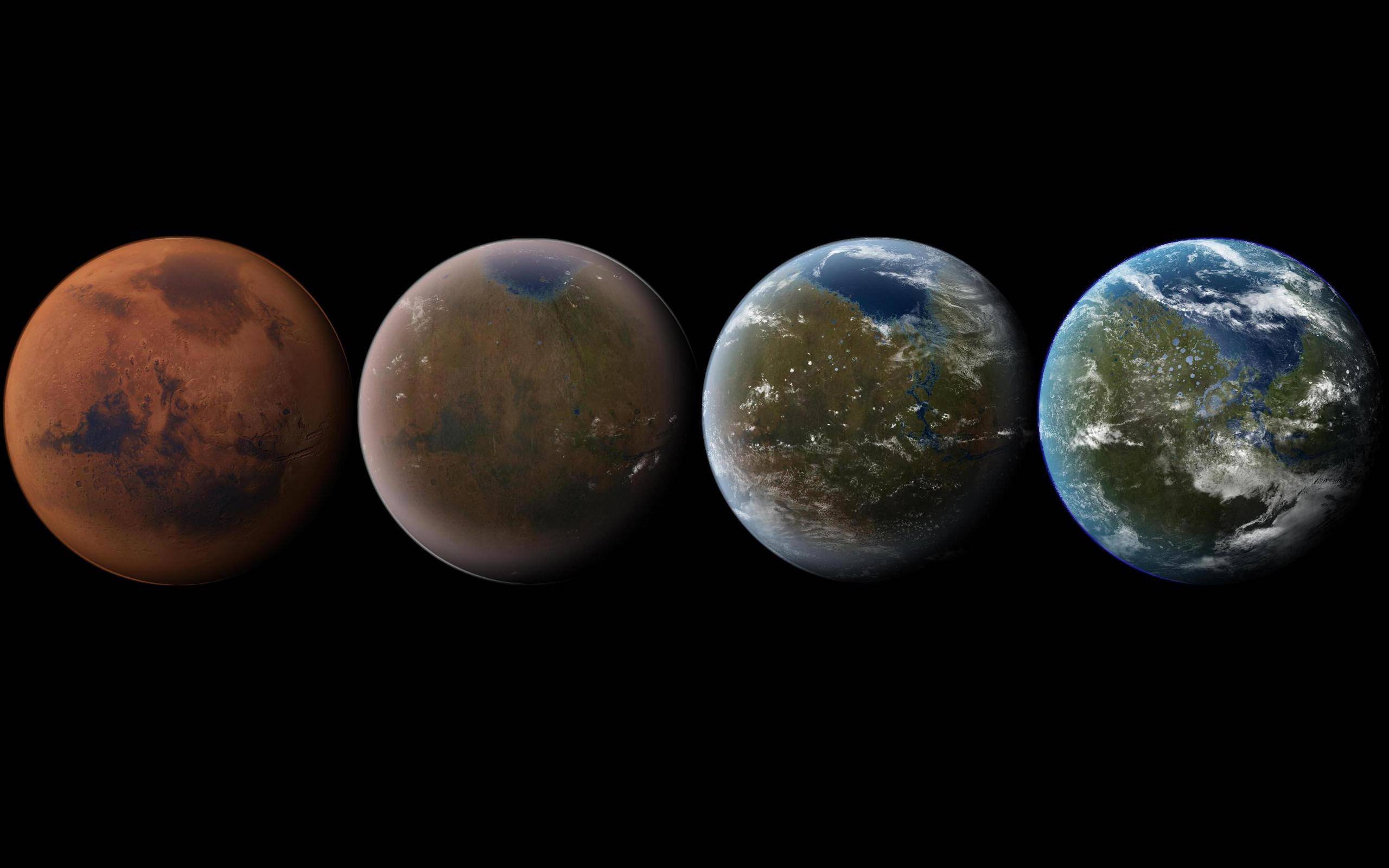
[science] Dark Oxygen, Quark Matter, and Terraforming Mars

So much exciting astronomical news! Click through for all the juicy details.


Mars Could be Terraformed Using Resources that are Already There 


A team of engineers and geophysicists led by the University of Chicago proposed a new method for terraforming Mars with nanoparticles. This method would take advantage of resources already present on the Martian surface and, according to their feasibility study, would be enough to start the terraforming process.


Neutron Star Mergers Could Be Producing Quark Matter


When neutron stars dance together, the grand smash finale they experience might create the densest known form of matter known in the Universe. It’s called “quark matter, ” a highly weird combo of liberated quarks and gluons. It’s unclear if the stuff existed in their cores before the end of their dance. However, in the wild aftermath a neutron-star merger, the strange conditions could free quarks and gluons from protons and neutrons. That lets them move around freely in the aftermath. So, researchers want to know how freely they move and what conditions might impede their motion (or flow).


Recently, two researchers looked at what would happen if a ship with warp drive tried to get into a black hole. The result is an interesting thought experiment. It might not lead to starship-sized warp drives but might allow scientists to create smaller versions someday.