Friday, February 9, 2024

Book Review: A Time Traveling Romance With Pirates and a Ghost

 A Turn of the Tide (A Stitch in Time - Book 3) by Kelley Armstrong (KLA Fricke)

A Turn of the Tide is the third book of Kelley Armstrong’s “A Stitch in Time” series, the “stitch” being a time portal between modern and Victorian times, a room in Thorne Manor, England (now kept locked!). The first two were fun adventure-romances, linked by the women of Thorne Manor. These women also have “second sight,” the ability to see and communicate with ghosts, and to lay to rest the spirits of those who have been murdered by naming aloud their killers. (There’s a catch, which plays a part in the plot, which is that if the person calling aloud the name the murderer gets it wrong, dire consequences ensue for the ghost.)

This third “Stitch” novel features Miranda, a Victorian woman writer of “risqué pirate adventures who, having learned about the wonders and liberation of the 20th Century, decides to embark upon her own time-travel adventure. Miranda’s plans go astray when the “stitch” lands her not in modern times but a century earlier, in the late 1700s. She encounters the love interest, a French expat named Nicolas, on the run from the French Revolution and repaying the locals who have given him shelter by acting as a Robin Hood, stealing from a corrupt lord and fencing smuggled goods on the village’s behalf. Almost immediately, before the couple can even begin to get to know one another, chemistry ignites.

This is where my interest bobbled. I feared I was in for the rest of the book being the typical Romance attraction/pulling back two-step. I enjoy a love story as the frosting on a compelling plot with strong ideas, but not the entire central driving force of the book. However, I’d enjoyed Armstrong’s other books and found her writing to be both pleasant and engaging, so I kept going.

Monday, February 5, 2024

Praise for The Seven-Petaled Shield

The Seven-Petaled Shield is the first volume of my epic fantasy trilogy. Here's what reviewer Reggie Lutz had to say about it:


It has been a while since I've read a fantasy that, at first glance, appears to be categorized in the genre as clearly as The Seven-Petaled Shield. It is almost deceptive in this way. What the author does with the form, and the narrative is engaging, unique and managed to keep me up past my bed time a couple of nights. There are swords, there is sorcery and as the cover suggests, yes. A sea god does appear. Though to many, such themes are familiar territory, what she does with them, how they serve the narrative, and how all of this is viewed through her protagonist's unusually compassionate gaze is unique and engaging. I'm still digesting a lot of this as I've finished reading this book only recently, but one of the things that I noticed as I read it was having the thought, "Oh, this is another Chosen One story," and then of course having that perception proven wrong, which is an absolutely delicious experience as a reader. There are moments like this throughout the book, accomplished with deft prose and subtlety. I agree with another reviewer about how the mutli-cultured worldbuilding is handled well. For me, as a reader, I love a strong character, and in that regard this book does not disappoint. It was a joy getting to know her main character, Tsorreh. I will definitely read the rest of this series.


"A critical, inventive spin brings an exciting uniqueness to the good and evil quest theme." —Midwest Book Review

Buy it at Amazon or your favorite vendor.

If you enjoyed the book, please post a review! 

Friday, February 2, 2024

Book Review: A Disabled Detective in Space

 The Spare Man, by Mary Robinette Kowal (Tor)


A murder mystery set on a space station, what could be finer? When the detectives are Tesla Crane, a brilliant and extremely wealthy inventor with an array of PTSD and physical injuries, her service dog, and her real-life (although retired) detective husband, Shal. No sooner do they embark incognito upon their honeymoon voyage than a fellow passenger is murdered and all clues point to Shal. The ship’s security cuts off their communications (to their Earthside attorney, for one thing, and to one another, for another). Only then do things start to go seriously pear-shaped.

For me, what makes The Spare Man stand out from similar tales is its depiction of a disabled protagonist. Tesla faces the limitations of crippling spinal damage, an implanted pain-suppression device, and the risks of having her trauma re-triggered. She has an array of coping strategies, the most outstanding of which is her service dog, a Westland terrier named Gimlet. As the former owner of a retired seeing eye dog and friend to a number of folks who rely on service dogs (as opposed to the badly behaved pets that sometimes pass as such), I appreciated how Kowal portrayed a service dog at work. These included how Gimlet was “on work” or “released” to be just a dog, and when working, how she was focused on Tesla and her specifically trained behaviors to alert her owner of impending trouble. Sometimes, the dog would physically prevent Tesla from engaging in emotionally perilous behavior. I cheered when another character would ask to pet this absolutely charming dog and Tesla would say, “No, she’s working. If you pet her, you will interrupt her focus.” I wish more people understood this before they walk up to a vested service dog and start interacting without asking first (or, worse yet, allow their toddlers to rush up to a service dog!)

Unfortunately, the mystery unfolded too slowly for me, with many interruptions that dissipated the tension and forward momentum. Halfway through the novel, I began to be increasingly irritated with Tesla. Her propensity for interfering with the investigation by the ship’s security, ignoring her service dog (including leaving her dog behind and going into dangerous situations), dialing up her pain-suppression device at the very real risk of injury through numbness, and especially lying to her husband about being fine when it was obvious she was not fine, all these eroded my sympathies. I thought her lawyer was overhyped and ineffective, although possessed of an extremely colorful and imaginative vocabulary. I had a hard time moving past a point fairly early in the book where Shal has been drugged, probably by the security force who are holding him against his will under the pretext he is a suicide risk. I would have been terrified this was all a set-up to do away with him as the only competent investigator around, but Tesla blithely goes about her way, following clues in a desultory fashion only when it suits her.

In the end, the resolution of the mystery was quite satisfying and put together a wide array of clues. Some of these had gotten buried under inconsequential chit-chat about how cute Gimlet is, not to mention the excessive repetitions of Tesla’s coping strategies (if she’s that successful in using them, why does she end up on the verge of an incapacitating meltdown so often?) This would have been a much better, tighter, more dramatically sound book at half the length.

I loved Kowal’s other work and will continue to read her books as they come out, but The Spare Man was, alas, not up to her best.


Monday, January 29, 2024

When You Can't Write

For a long time, I used to joke that I couldn't afford writer's block. I began writing professionally when my first child was a baby and I learned to use very small amounts of time. This involved "pre-writing," going over the next scene in my mind (while doing stuff like washing the dishes) until I knew exactly how I wanted it to go; when I'd get a few minutes at the typewriter (no home computers yet), I'd write like mad. I always had a backlog of scenes and stories and whole books, screaming at me to be written. The bottleneck was the time in which to work on them.

I kept writing through all sorts of life events, some happy, others really awful and traumatic. Like many other writers, I used my work as escape, as solace, as a way of working through difficult situations and complex feelings. I shrouded myself with a sense of invulnerability: I could write my way through anything life threw at me!

Unfortunately, I was wrong.

I hit an immovable wall during a PTSD meltdown following the first parole hearing of the man who raped and murdered my mother. For weeks at a time, I battled flashbacks and nightmares. I couldn't eat, I couldn't sleep, and I couldn't stop crying. Also, I couldn't write. That creative paralysis added another dimension to the crisis. If I couldn't write, who was I? Where were my secret worlds, my journeys of spirit and heart where people healed and things got better? Gone...and I didn't know if I'd ever get them back.

I was fortunate to have a lot of help, professional and friendly, during those dark weeks and months, some of it from fellow writers. No pep talks, just friendship, constant and true. Eventually, as I recovered, I was able to return to fiction writing as well, although by then, I found myself a single working mom and had a new set of demands on my time.

Writers stop writing for all kinds of reasons. In my case, it was personal and emotional, part of a larger crisis. Other times, however, the well runs dry when the rest of life is going smoothly. Quite a few years ago, I ran into a writer I greatly admired (at an ABA convention), and I'd not seen anything from this writer in quite a few years. I introduced myself and asked when the next book would be coming out. Only when I saw the change in the writer's expression did I realize how difficult the subject was. I was probably the hundredth person that weekend to ask. (Eventually, this writer came out with several new books; I wonder now if the appearance at the ABA wasn't a way of trying to get the head back into writerly-space.)

Sometimes, a writer feels they've said everything they have to say. Or that one book or one series is it; there are no new worlds begging to be explored. They can rest on their laurels with a feeling of satisfaction and closure. For the rest of us, though, not writing is anywhere from excruciating to devastating.

I  think it's not at all helpful to try to "cheer up" a writer in the middle of a dry period. The specific reasons--creative paralysis, personal crisis, discouragement--vary so much. I think it's safe to say that each of us has to find our own way through. For me, it's helped immensely to know I'm not the only one to go through it--and that's the operational term "go through it." Come out the other side. Talk about what happened, in the hopes of being the light in the darkness for someone else.

The Green Skies of Mars and Other Astronomical Wonders

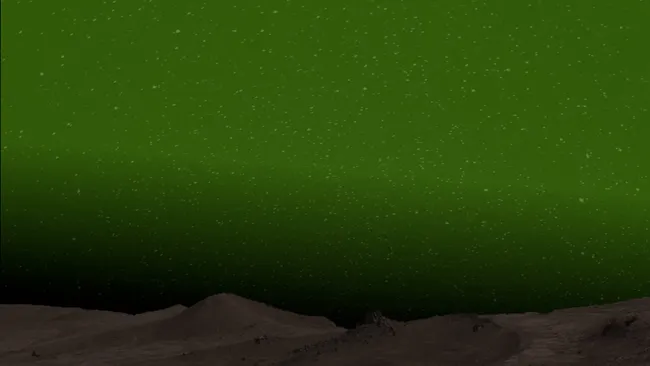
Astronauts on Mars may see a green sky, eerie new study suggests


Using the European Space Agency's (ESA) ExoMars Trace Gas Orbiter (TGO), scientists have observed Mars' atmosphere glowing green for the first time ever — in the visible light spectrum, that is. The effect is called airglow (or dayglow or nightglow, depending on the hour). Nightglow "occurs when two oxygen atoms combine to form an oxygen molecule," according to ESA. On Mars, this happens at an altitude of approximately 31 miles (50 km). Scientists have suspected Mars to have airglow for some 40 years, but the first observation only occurred a decade ago by ESA's Mars Express orbiter, which detected the phenomenon in the infrared spectrum. Then, in 2020, scientists observed the phenomenon in visible light using TGO, but in Martian daylight rather than at night. Now, we've seen the phenomenon at night via TGO.


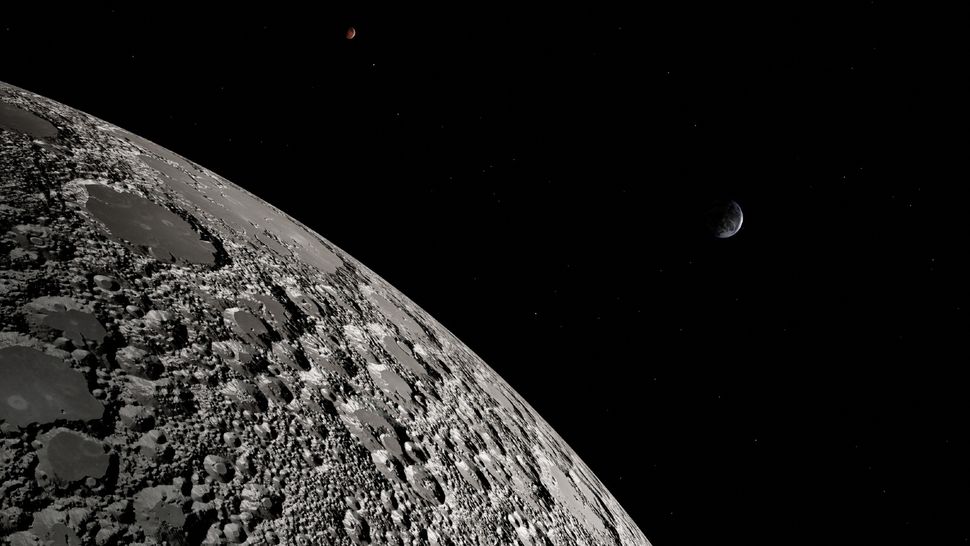
Moon is 40 million years older than we thought, tiny crystals from Apollo mission confirm


The moon is at least 40 million years older than we once thought, a new study reveals. Scientists confirmed our cosmic companion's new minimum age after reanalyzing tiny impact crystals from lunar samples taken by NASA's Apollo 17 mission in 1972. Earth is approximately 4.54 billion years old. So based on the newest study, the zircon crystals were formed around 80 million years after our planet formed. However, the collision that birthed the moon could have actually happened even earlier. After the Earth-Thea crash, the infant moon's surface would have been covered by a magma ocean due to the intense energy of the collision. Therefore, the lunar zircon crystals could only have properly solidified into their current state once the magma ocean had cooled down.


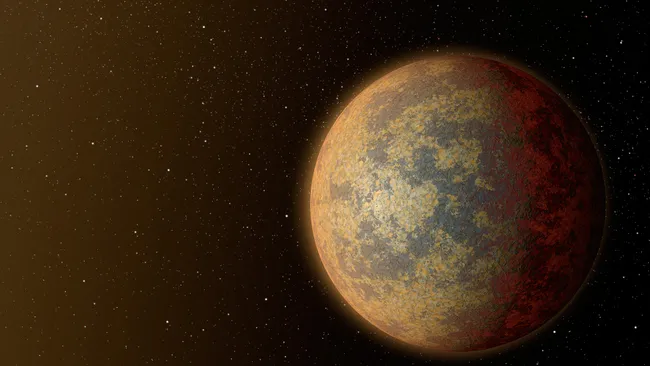
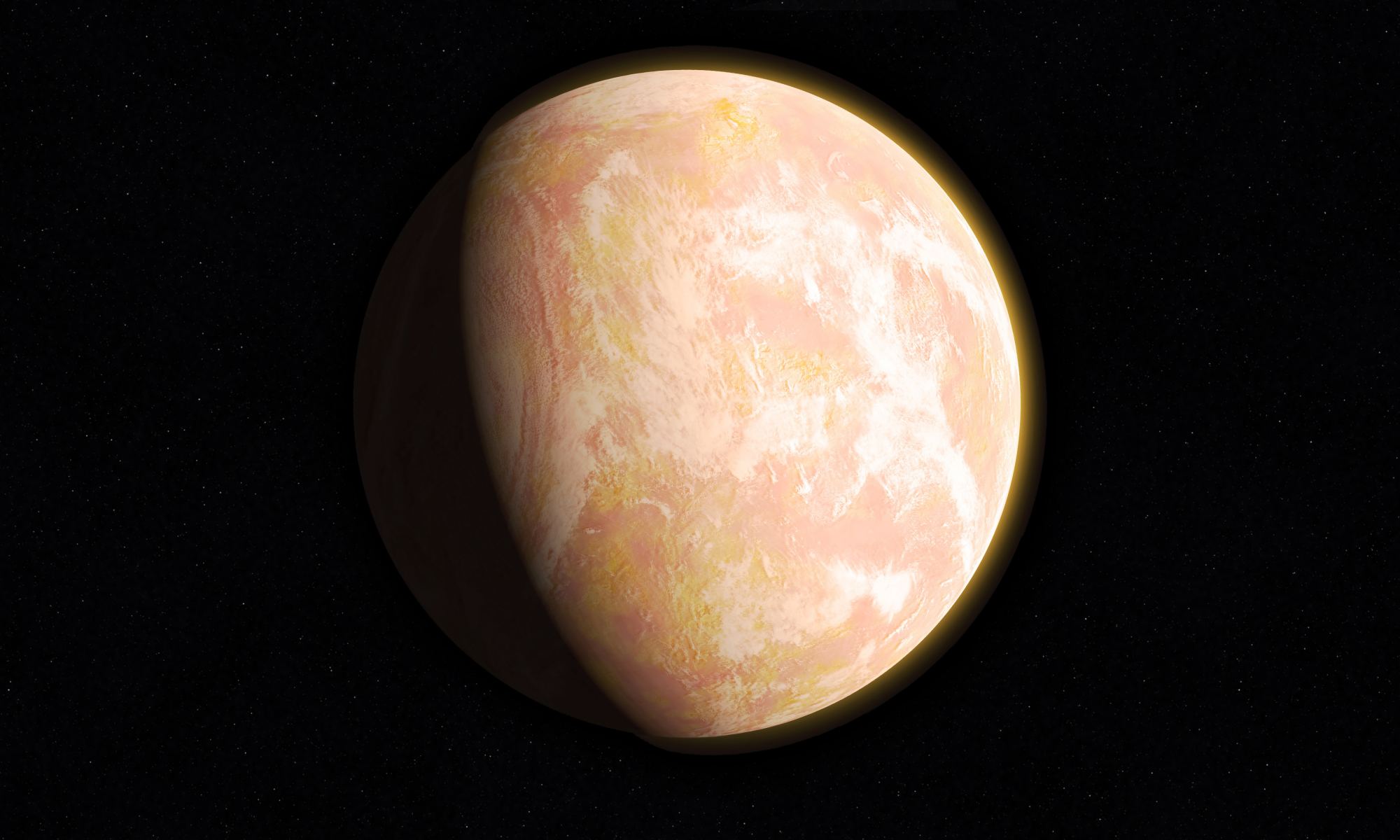
Astrobiologists think a planet needs to have certain features to support life: oxygen in its atmosphere, something to shield organisms from dangerous radiation and liquid water, for a start. Although big land masses aren't strictly necessary for living things to emerge, Earth's history shows that they're important for life to thrive and exist for long periods of time. So, if an exoplanet had continents before Earth, it follows that there might be older, more advanced life on that world.

This line of thought led Jane Greaves, an astronomer at Cardiff University astronomer in the U.K., to answer the question: When did the first continents appear on a planet in our galaxy? Turns out, two exoplanets' continents — and perhaps life — may have arisen four to five billion years before Earth's.


Can a Dead Star Keep Exploding?


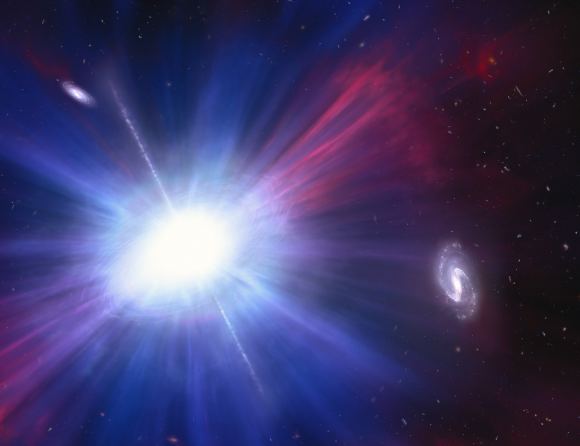
If the Tasmanian Devil is a type of dead star, it’s not behaving like the others. As a dead star, the light coming from it could signal its transition into a sort of stellar afterlife. It could be a new type of stellar corpse.
“Because the corpse is not just sitting there, it’s active and doing things that we can detect,” Ho said. “We think these flares could be coming from one of these newly formed corpses, which gives us a way to study their properties when they’ve just been formed.”


The Echoes From Inflation Could Still Be Shaking the Cosmos Today


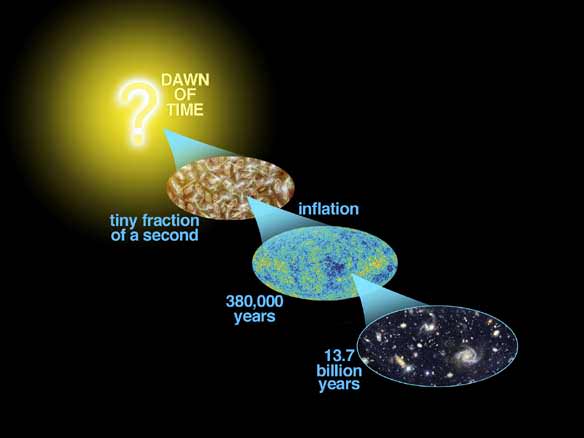
In the very early universe, physics was weird. A process known as “inflation,” where best we understand the universe went from a single infinitesimal point to everything we see today, was one such instance of that weird physics. Now, scientists from the Chinese Academy of Science have sifted through 15 years of pulsar timing data in order to put some constraints on what that physics looks like.


When methane (CH4) and oxygen (O2) are both present in an atmosphere, it’s an indication that life is at work. That’s because, in an oxygen environment, methane only lasts about 10 years. Its presence indicates disequilibrium. For it to be present, it has to be continually replenished in amounts that only life can produce.