Monday, November 15, 2021

Transgender and gender diverse teens: How to talk to and support them

Transgender and gender diverse youth have become more visible than ever. How does transgender history inform us about where society is at in the United States?

Jules Gill-Peterson: A lot of the rhetoric around [trans] kids frames them as totally new – most people are getting to know that there are trans youth for the first time. The visibility that we’re dealing with today is pretty unprecedented. But that doesn’t mean [transgender] people themselves haven’t existed before.

One of the challenges that anyone who’s trans faces is coming to an understanding of yourself in a culture that fundamentally doesn’t recognize that you exist. One of the most remarkable things about trans youth is that they’re able to stand up in this world that we’ve created, that gives them no reason to know who they are, and say, “Hey, actually, I know something about myself that none of the adults in my life know.”

I think history can be a really powerful grounding force to give young people a sense of lineage. It’s not like you look back in time and you see yourself reflected, by any means. But I think it can be profoundly reassuring, in a moment of not just political backlash but the general isolation that trans people face in a cis-normative society, to be able to [see] that you’re not the first person to ever go through this. [I think] that is just kind of a powerful message and one that I certainly subscribe to as an adult too, but I can imagine it’s especially important for young people.


What does “cis” mean and where does it come from?

Jules Gill-Peterson: This is actually a term from chemistry. It’s a prefix that you can put in front of words. So is the word “trans.” Trans as a prefix means across – it’s the spatial metaphor moving across something. Cis means on the same side of. At some point on the internet, people started using that word; they were looking for a word to distinguish between people who are trans and people who are not. Cisgendered came to mean that your gender identity matches what was assigned at birth. That being said, it’s not a totally kind of innocent or uncomplicated term. I’m not sure how helpful it is to think of cisgender as something that people need to own up to, for example, in a pronoun circle (when people introduce themselves by name and by the pronouns they prefer).

I think often the pressure for people to [identify] as cis doesn’t make any sense, either. It’s like, well, what makes you cisgender? Did you really go through that long process of deciding if your gender matched what’s on your birth certificate, like trans people have to deal with? I tend to use the word cis in my work to describe large historical structures that created that very obligation in the first place.

Friday, November 12, 2021

Very Short Book Reviews: Marjorie Liu's Delicious Collection


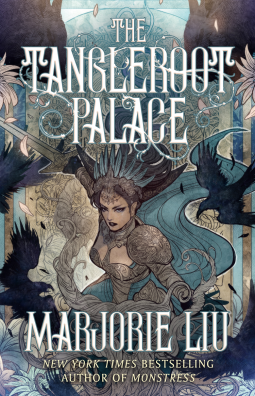
The Tangleroot Palace
, by Marjorie Liu (Tachyon)

This collection was my introduction to the work of Marjorie Liu. I found the stories oddly disquieting while I was reading them but Liu’s skill was so evident, I trusted it all to come together and I was not disappointed. I didn’t like all the stories equally, but that’s to be expected in any assortment of short fiction. These feel as if they’re paced like novels, but I think that’s because of the unusually subtle ways Liu weaves together the various fictional elements. Her work reminds me of that of the late Phyllis Eisenstein, who told emotionally complex, sophisticated stories with simple language. Here the real story lies beneath the mechanics of prose and plot, each thread of the tapestry contributing to a gorgeous and emotionally satisfying whole. And the last piece, a novella that gives its name to the collection, is just jaw-droppingly awesome.


Friday, November 5, 2021

Book Reviews: More Magical Rome


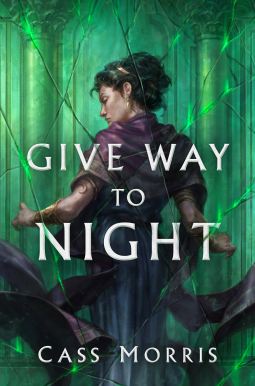
Give Way to Night
, by Cass Morris (DAW)

Rome with magic, how cool is that? In this second volume of “The Aven Cycle,” Aven (aka Rome) is beset by enemies both within and without. Iberian tribes are wielding blood magic against Avenian-held territory, and Sempronius Tarren, our hero from the first volume, has been dispatched to lift a siege. Meanwhile at home, the Discordian magicians plot the city’s ruin through the ascendency of chaos. Latona, along with Sempronius’s prickly sister, Vibia, must discover who’s behind the attacks and stop their dastardly plots.

As with the first book, this is a long, intricately detailed story involving a huge cast of characters (and the author has thoughtfully provided a list, arranged by nationality and family affiliation). The pace varies from dramatic battle scenes to quiet domestic affairs. The threads of plot, character development, relationship, magic, and culture clash are so skillfully handled that each individual scene adds another layer to the tapestry. I especially liked the way the love story between Latona and Sempronius unfolded even though they were many miles apart and each growing in their own way. The descriptions of battle tactics, especially Roman discipline against wild magic, were both vivid and insightful (yep, there’s a reason Rome conquered most of Western Europe). Characters discover clues about the plot underlying the encroaching chaos in much the same way people do in real life, slowly putting together a pattern while desperately beating back the most dangerous manifestations.

Magic in this world comes in different flavors that reflect the distinct cultures. I explored this aspect of world-building in my “Seven-Petaled Shield” trilogy where I contrasted the polytheistic, highly structured magic of my version of Rome with scripture-based, story-based magic of ancient Judea, and both with the expansive nature-based magic of my steppe horse nomads. Morris pits the magic of her version of Rome, with temples and deities, against the blood-fueled magic of the Iberian tribes, with great success.

I strongly suggest that the reader begin at the beginning of this long “cycle” (Give Way to Night is only the second installment and there’s more to come). Although Morris provides plenty of references to what has come before, there’s simply too much backstory and previous character development for most of us to jump easily into the middle. And the world and its characters are so appealing, you won’t want to miss out on how it all started!


Tuesday, November 2, 2021

Book Release Day: Among Friends (stand-alone novelette)


In pre-Civil War Delaware, farmer Thomas Covington is part of a network of Quakers who help escaping slaves headed north. When he shelters a runaway, a slave-catcher comes calling…only it’s not human. The hunter is an automaton, relentless and incapable of mercy. Dealing with the automaton will test Thomas’s Quaker belief that there is “that of God in every person,” and force him to consider whether the mechanical intelligence may be enslaved by its programming, leading to unexpected questions for the Abolitionist movement.


One of my favorite pieces of short fiction in recent years, first published in The Magazine of Fantasy and Science Fiction, reprinted in The Shadow Conspiracy III. Here I read from the beginning, to give you a taste.


If you enjoyed the story, please leave a review! Here's where you can find it.

Amazon Kindle: 

Barnes & Noble, Kobo, Apple, and other vendors:

Google Play:

Monday, November 1, 2021

A Few Thoughts on Technology and Transitions

It’s always amazing and heartening how much inspiration we can draw from the next

generation, whether they are our own children or someone else’s. In my personal life, my younger daughter dragged me, kicking and screaming, into the world of social media, into getting my first stupidphone, and later into video chatting (during her  years of medical school on the other side of the country). Now these technologies are part of my everyday and work life. They've saved my sanity during the pandemic. 

I think it’s good to keep learning new things, to use our minds and bodies in different ways. One of the challenges of these new computer-based technologies is that they require us to use different methods of thought. The transition, for example, from keyboard-based word processing programs (like WordStar for DOS, the one I first used) to graphics-based (Windows) programs entailed a different logic and hand coordination. And both of them are a far cry from the typewriter I used to write my first published stories.

My very first stories (actually, my first umpteen attempts at novels) were written by hand in composition books or on scratch paper. I remember reading an interview with the British mystery writer Dick Francis, in which he described writing in ink in composition books (and that it had never occurred to him that a story, once written, could be revised!) so the method is definitely a time-honored one. Once I learned to type (in high school, on those really heavy manual typewriters) that became my preferred method, although when my children were small, I always carried a spiral-bound notebook on which to work on the Story of the Day in odd moments. Retyping a revision was a major chore, since I had to do it myself. I became expert in the application of white correction fluid. At least carbon copies were no longer necessary, but I had to take my finished manuscript to a copy shop because in those days no one owned a home copier.

I am of several minds about whether the ease of making changes as I go, being able to print out a manuscript at any stage, and so forth, have really changed how I write. I love the saying that the most important word processor is your brain. Perhaps I splat over the page, as it were, more spontaneously when I use a computer just because it’s so easy to tidy up my prose later. 
That can be a good thing as I follow whatever wacky idea pops into my mind. Some of them are truly best expunged but others are quite juicy. In some ways I am more focused now than in 30 or 40 years ago; I know much more about how to put a story together, even if it isn’t one I’ve outlined.

Having multiple writing media available to me is a great thing. I often go back and forth when I’m stuck, especially between dictating and typing or typing and longhand. Dictation using voice recognition software is especially great for dialog or speeches (can you see me acting out the parts of the various characters?) Just as we don’t all write in the same way, I don’t write in the same way all the time. Sometimes words flow and then I want the medium that allows me to best keep up with them. But other times I’m stuck (or sulky, or distracted, or tired) and switching can help get things rolling again.

In the end, though, the only version that matters is the one in the hands of the reader.