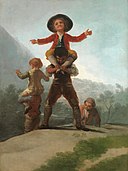
Today's blog post is an excerpt from my post on Book View Cafe. We're doing a series on "Citius, Altius, Sapientius," ("Stronger, Faster, Wiser," according to our resident Latin scholars). I've been struck many times over the years with how many writers are also martial artists, dancers, runners, horse people, mountain climbers...and, as we age, students of yoga or tai chi chu'an. Is there more to this than the simple need to get up and stretch once in a while? And what can we learn from one another about staying strong, flexible, and energetic throughout our creative careers?

It seems that the older I get, the more integral exercise is to my writing practice. The way they are interwoven has
changed with the passing decades, as has the type of physical activity
that appeals to me. I no longer exercise to change my appearance (not
that this ever was a huge motivation, but I think all young people have
at least some small measure of physical vanity). I think more about
staying healthy and maintaining the strength and flexibility that allow
me to do other things I enjoy — like sitting comfortably while I write,
exploring new places…having adventures. First and foremost, however, I
like things that are fun. So I’m not going to give you a litany of all
the reasons you should exercise to prevent heart disease or stave off
Alzheimer’s. I’m going to talk about the ways being active have made me a
better writer, in ways that I couldn’t appreciate when I was a newbie.

Once upon a time, I was an active kid. I didn’t think about exercise
per se, I thought about
playing.
I ran through sprinklers, I rode my bike and attempted to roller-skate,
I played outdoor games with my friends — tag, Red Rover, hopscotch,
Simon Says, jumprope and ball-bouncing games, running around with
dogs…but best of all, I acted out the stories I made up, either with my
friends or by myself. I think this was my first and foundational
experience of how glorious, how unexpected and consuming and enriching
story-telling might be. As kids, we threw ourselves into one adventure
after another. Granted, much of it was derivative, a sort of live-action
fanfic. What we could do physically — climb trees, build snow forts,
crawl under bushes, sneak around buildings — we did, and the rest we
mimed as best we could. Stories were experienced not just with words,
but with our whole bodies.
As readers, haven’t we had the
experience of feeling our heart rate accelerate and our muscles tense
during a particularly gripping or suspenseful scene? Our visceral
reactions intensify the action, helping to link us to the characters and
their plight. So many times, I’ve read a passage that skillfully
depicts some action and thought, I know what that feels like. I’m in
that character’s shoes, or riding boots, or skin-diving flippers, or
crampons, or toe shoes.
Read the rest of it on the
Book View Cafe blog.