Showing posts with label knitting. Show all posts

Saturday, March 15, 2014

Gorgeous lace-weight yarn from Peace Fleece

I'm an avid knitter, and one of my favorite places to buy yarn is Peace Fleece. They started during the Cold War as a way to bring together Russian and American sheepfarmers. Now they buy wool not only from Russia but Native American and Palestinian sources. Proceeds from their "Baghdad Blue" yarn help support "Neve Shalom," a Palestinian/Israeli village that is a workshop for friendship and cooperation.

Now they've partnered with a nonprofit to make available lace-weight mohair yarn that's just gorgeous.

Peace Fleece is working together with Adventure Yarns, a non-profit that assists Tajik women farmers in the production of quality Angora goat fiber and teaches spinners, knitters and weavers how to produce luxury mohair yarns for export. (Click through for more amazing pictures).


These mohair spinners have very few sources of income besides seasonal agricultural work picking fruit or cotton. Their main source of livelihood is money sent by men in the family who work in Russia. About 50% of Tajikistan's GDP comes from these funds - the highest % in the world. Spinning is their only stable source of income. Working part time they can spin 1 skein of yarn in 2 days. With the money they earn from spinning one skein of yarn they can buy: 1 kg of chicken, 1 liter of milk, 1 loaf of bread, 1 kg of potatoes.


Friday, January 31, 2014

The Knitting, er, Writing Life

I'm always impressed by how often writers are creative in other ways. We're musicians, dancers, singers, sculptors, painters, and martial artists as well as story-tellers. (Or maybe these are all other ways of telling stories and it's all the same thing.) Many of us are also knitters or crocheters. That's one of Vonda N. McIntyre's beautiful beaded sea creatures on the right.


I like to knit for a lot of reasons. For one thing, I learned from my mother (and I still have a pair of her double-pointed needles from her own youth). I love the soothing, repetitive movements. I love that I can do it and something else at the same time. I love that when I'm done I have something beautiful and useful to give away. (I do a fair amount of charity knitting, which you can read about here.. I love that friends will scavenge yard sales for supplies for me, thereby creating a living "knitwork" of love throughout the community.

But most of all, I love the enduring lesson of Writing According to Knitting: It doesn't matter how many mistakes you made, you can always unravel the dratted thing and start over. Maybe other people don't need this lesson repeatedly drilled into their brains, but I do. For me, it's the essential underlying principle of revision. If a first draft, like a knitting project, is so well within my skill and comfort zone that I don't make any mistakes, all it takes is a light polish (read: blocking) and I'm done. But I'll never get any better that way. I have to try things I've never done before, often things that call for concentration, consistency, and staying in touch with the tension of my hands or the tension in the story.

It's fine to stretch beyond my abilities. In fact, it's necessary. And delirious and terrifying. But you know what? If I make an awful tangle of it, I can always go back and do it over. And over, until I either set the project aside until I'm more adept or my skills come up to snuff.

So take a flying leap off the edge of reality. Push the envelope harder than you thought possible. Try something you've always believed impossible. Take risks and then grow to meet them.

Thursday, June 14, 2012

One Stitch At A Time: Knitting For Peace


Teddy Bears for African kids
A piece of knitting is, with few exceptions, one long strand of yarn, looped back on itself. Every part of it is connected, and if one pulls the loose end, one can unravel the entire piece of fabric. That’s the philosophical aspect of knitting.

Knitting creates communities, and every knitter has stories of personal connections. I learned to knit as a child. My mother taught me, as her mother had taught her. This is a lineage of love, of people, mostly women, sitting together and passing on stories as well as stitches. Later I learned to hold the yarn in my left hand from a college friend who had learned it from her German host family when she was an exchange student.

My collection of needles is a potpourri of stories. A few I have bought new, including the beautiful set of rosewood double-pointed needles on which I knit a pair of bamboo-silk socks for my sister to comfort her feet after surgery. Some have come to me from my mother, so lovingly used over the years that the printed sizes have worn off. Others appeared in the boxes of yarn from my first mother-in-law, most likely from the senior center she frequented, so I will never know the women--or possibly the men--who began projects on these needles, only to leave them half-finished. I love these untold stories, even as I add my own and pass them on.

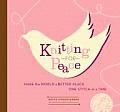
Over the years, I knitted many sweaters, scarves, hats, even an afghan or two, mostly for family and friends. Then about 4 years ago, I came across Betty Christiansen’s Knitting for Peace: Make the World a Better Place, One Stitch at a Time. I read about the history of wartime knitting, the Revolutionary Knitting Circle, Peace Fleece, and programs that teach knitting to prisoners.

My projects shifted to a different focus: I knit a prayer shawl for a dying friend and a lap robe for my second mother-in-law during her final illness. With each stitch, I held in my mind wishes for peace, for love, for understanding.

Tuesday, November 8, 2011

Today's blog... Connections — convention panels, knitting, and Afghanistan

is over at Book View Cafe here. An excerpt:

Now comes the interesting part. At breakfast, I noticed a group of women wearing hijabs (head-scarves) sitting together at a table. Clearly, they were not attending the convention. I greeted them, explaining that I was to moderate a panel on Islamic fantasy and asking if they had opinions about how Muslims are portrayed in contemporary literature, who gets it right, what they find offensive. Only one of the women spoke English, and she referred me to their (male) translator, who was quite willing to speak with me, but only about the purpose of the group. 


It turns out that this was a group of Afghan women, traveling in the United States to heighten consciousness of the plight of women under the resurgent Taliban. “Do not forget Afghanistan,” he told me. “Do not forget these brave women,” and went on to describe how they had, at great cost and danger to themselves, set up schools and businesses.

It turns out that one of my charitable causes is afghans for Afghans, which sends hand-knit and crocheted blankets and sweaters, vests, hats, mittens, and socks to the beleaguered people of Afghanistan.