Showing posts with label covid-19. Show all posts

Monday, March 18, 2024

Reprint: Covid Vaccines Essential for Elders


COVID-19 vaccines: CDC says people ages 65 and up should get a shot this spring – a geriatrician explains why it’s vitally important
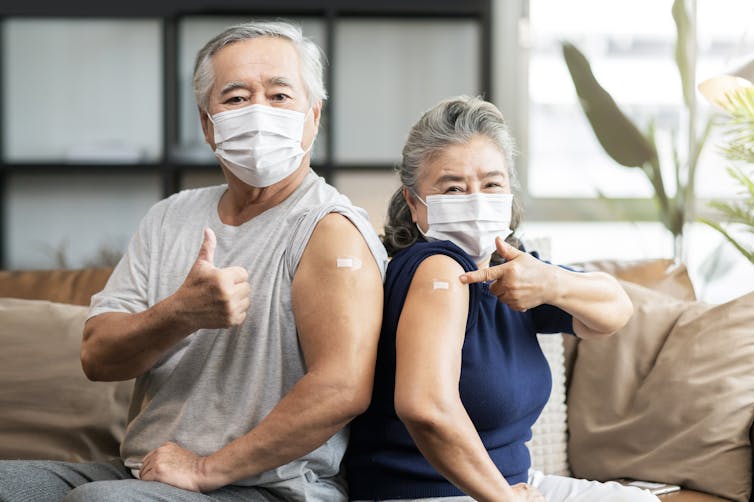
Even if you got a COVID-19 shot last fall, the spring shot is still essential for the 65 and up age group. whyframestudio/iStock via Getty Images Plus
Laurie Archbald-Pannone, University of Virginia

In my mind, the spring season will always be associated with COVID-19.

In spring 2020, the federal government declared a nationwide emergency, and life drastically changed. Schools and businesses closed, and masks and social distancing were mandated across much of the nation.

In spring 2021, after the vaccine rollout, the Centers for Disease Control and Prevention said those who were fully vaccinated against COVID-19 could safely gather with others who were vaccinated without masks or social distancing.

In spring 2022, with the increased rates of vaccination across the U.S., the universal indoor mask mandate came to an end.

In spring 2023, the federal declaration of COVID-19 as a public health emergency ended.

Now, as spring 2024 fast approaches, the CDC reminds Americans that even though the public health emergency is over, the risks associated with COVID-19 are not. But those risks are higher in some groups than others. Therefore, the agency recommends that adults age 65 and older receive an additional COVID-19 vaccine, which is updated to protect against a recently dominant variant and is effective against the current dominant strain.

You have a 54% less chance of being hospitalized with severe COVID-19 if you’ve had the vaccine.

Increased age means increased risk

The shot is covered by Medicare. But do you really need yet another COVID-19 shot?

As a geriatrician who exclusively cares for people over 65 years of age, this is a question I’ve been asked many times over the past few years.

In early 2024, the short answer is yes.

Compared with other age groups, older adults have the worst outcomes with a COVID-19 infection. Increased age is, simply put, a major risk factor.

In January 2024, the average death rate from COVID-19 for all ages was just under 3 in 100,000 people. But for those ages 65 to 74, it was higher – about 5 for every 100,000. And for people 75 and older, the rate jumped to nearly 30 in 100,000.

Even now, four years after the start of the pandemic, people 65 years old and up are about twice as likely to die from COVID-19 than the rest of the population. People 75 years old and up are 10 times more likely to die from COVID-19.

Vaccination is still essential

These numbers are scary. But the No. 1 action people can take to decrease their risk is to get vaccinated and keep up to date on vaccinations to ensure top immune response. Being appropriately vaccinated is as critical in 2024 as it was in 2021 to help prevent infection, hospitalization and death from COVID-19.

The updated COVID-19 vaccine has been shown to be safe and effective, with the benefits of vaccination continuing to outweigh the potential risks of infection.

The CDC has been observing side effects on the more than 230 million Americans who are considered fully vaccinated with what it calls the “most intense safety monitoring in U.S. history.” Common side effects soon after receiving the vaccine include discomfort at the injection site, transient muscle or joint aches, and fever.

These symptoms can be alleviated with over-the-counter pain medicines or a cold compress to the site after receiving the vaccine. Side effects are less likely if you are well hydrated when you get your vaccine.

Getting vaccinated is at the top of the list of the new recommendations from the CDC.

Long COVID and your immune system

Repeat infections carry increased risk, not just from the infection itself, but also for developing long COVID as well as other illnesses. Recent evidence shows that even mild to moderate COVID-19 infection can negatively affect cognition, with changes similar to seven years of brain aging. But being up to date with COVID-19 immunization has a fourfold decrease in risk of developing long COVID symptoms if you do get infected.

Known as immunosenescence, this puts people at higher risk of infection, including severe infection, and decreased ability to maintain immune response to vaccination as they get older. The older one gets – over 75, or over 65 with other medical conditions – the more immunosenescence takes effect.

All this is why, if you’re in this age group, even if you received your last COVID-19 vaccine in fall 2023, the spring 2024 shot is still essential to boost your immune system so it can act quickly if you are exposed to the virus.

The bottom line: If you’re 65 or older, it’s time for another COVID-19 shot.The Conversation

Laurie Archbald-Pannone, Associate Professor of Medicine and Geriatrics, University of Virginia

This article is republished from The Conversation under a Creative Commons license. Read the original article.

Monday, May 29, 2023

Reprint: Preventing Another Pandemic

 From the NY Times Opinion newsletter:


The Covid-19 pandemic exploited a narrow gap in humanity’s outbreak prevention barriers. As the world now knows, SARS-CoV-2 spreads through the air via respiratory transmission. Spread can occur even before people develop symptoms. Our modern, mostly indoor lifestyles constructed the optimal environment for a fast-moving respiratory pandemic. Clean water, clean hands, clean food and clean surfaces did not stop the virus from hitching a ride on airplanes or spreading at packed concerts, bars and restaurants.

As in the past, we need to develop technologies that will fundamentally change our environment. In the United States, all modern buildings are built with fire prevention in mind, despite the last city-burning fire occurring over a generation ago. We provide piped water and sewer systems, electricity to boil water and refrigerate food, and window screens to stop pests. The goal today should be to take respiratory pandemics entirely off the table.

This starts with cleaning the air. The most ambitious version of clean indoor air technology would be capable of rapidly suppressing transmission for even the most contagious pathogens, like measles, at a cost affordable enough to install in all the places people gather and cross paths. Accomplishing this will require innovation beyond better ventilation and ways to filter air. ‌This could include light bulbs that also emit germ-killing wavelengths that are still safe for humans. With this type of innovation, society can reduce transmission and maybe even make the common cold a relic. The Biden administration has declared improving ventilation a priority, but simply upgrading out-of-date filtration systems to the current standard probably won’t be enough to prevent pandemics.

Researchers have made ‌progress toward‌‌ other advanced pandemic-fighting capabilities. It is now possible to take any type of sample from a possibly infected person and sequence the genome of every microorganism in that sample ‌‌ — bacteria, viruses, fungi and all. All pathogens have genomic material, and sequencing allows us to read that material. This method, metagenomic sequencing, functions as a universal pathogen detector. It is beginning to be used to monitor patients for known pathogens, as well as bugs we have never seen before.

Vaccines are, of course, a mainstay of prevention, and even these have seen incredible improvements with the advent of mRNA vaccines. Work is ongoing to deliver pandemic vaccines within 100 days. Efforts toward‌‌ making vaccines effective against entire groups of viruses, such as all coronaviruses, are underway. But for modern vaccines to truly prevent rapid respiratory pandemics, they must be deployed widely and quickly and, when possible, in advance.

The U.S. government‌‌ is investing in microneedle vaccine patches and nasal spray vaccines that can be self-administered. These could be quickly mailed to every household, eliminating the need for clinic- and pharmacy-based administration by trained health care workers. Scientists think that skin patches and nasal vaccines may be able to elicit mucosal immunity, something current injectable vaccines don’t do very well. Mucosal immunity prevents viruses that land on our mucus membranes — in the nose, mouth and lungs — from causing an infection entirely.

Monday, October 4, 2021

A COVID loss: anger, grief, and healing

The COVID-19 pandemic has been raging for many months now, marked from the onset by lies about the disease, its origins, its treatment, and its prevention. No aspect of the pandemic has been free from controversy and misinformation. In the middle of flame wars and whack-a-mole efforts to squelch anti-vaccine, anti-mask internet sites lies the confusion and grief of those who have lost loved ones to this disease (over 700,000 in the US and 4,800,000 worldwide).

Like many others who believe in science, I was first puzzled and then appalled by the cloud of outright falsehoods that grew up around vaccination. Refusing the vaccines based on illogical and unfounded internet rumors struck me as downright suicidal. Equally troubling were the friends who bought into those lies.

One was a long-time, very dear friend, who had supported me through dark times and whom I had supported in turn. Early in 2020, L told me that she didn’t trust the mRNA vaccines and besides, she thought she’d had a mild case of COVID-19, although she was never tested. But she was diligently wearing a mask at work, and it was clear that further discussion would only be confrontational, so I backed off. For the next year, all appeared to be going well. Then she moved to another part of the country, one with low vaccination and mask-wearing rates. I heard from her while she was waiting at an urgent care center for a persistent cough. Her COVID-19 test was positive. A few days later, she was admitted to the ICU. We talked and texted frequently as her condition deteriorated. After a week and a half, she was placed on a ventilator. She died two weeks later. Her last text to me was, “I love you.”

During her hospitalization, I felt not only growing concern for her, but anger. Anger at so many things. After her diagnosis, I wanted to scream at her, “How could you fall for that conspiracy nonsense?” Then my fury spread to everyone who spread those lies, manipulated statistics, and otherwise terrified people into refusing the one thing proven to save their lives. Anger at the last administration and the former president, who failed to take action at the onset of the pandemic. Anger at the officials in her state for their lax measures and cavalier attitudes to the virus. Anger at everyone who touted ineffective remedies in order to make a profit. And most of all, guilt that I hadn’t pressed the vaccine issue harder and been persuasive enough to save my friend’s life.

Grief mixed with anger and guilt isn’t logical. Nor is it simple.

Monday, March 15, 2021

[personal rant] Another Rant About Vaccination


Back in April, 2019, I posted a personal rant, Why I Am Adamant About Vaccination. This was way before Covid-19 and the more than half million American deaths. The issue was childhood vaccination against measles, mumps, rubella, and the like. I shared a deeply personal story:

During my first pregnancy, an antibody titer that revealed I’d had rubella as a child. A series of conversations with my mother and sister put together the pieces of my own family tragedy due to contagious disease. In most cases, rubella is a mild infection, except when a woman is pregnant. Contracted in the first 12 weeks of pregnancy, babies have an 85% chance of Congenital Rubella Syndrome, including deafness, cataracts, heart defects, neurological issues, and other significant problems. The risk goes down as pregnancy progresses.

This is what happened to my baby sister.

My mother had been mildly ill, and I had been, as well. My sister Madeleine was born blind and with heart defects. She lived only 6 months.

At the time (1950) there was no vaccine, but there is now. Today this loss would have been completely preventable by vaccination, not just for the mother but for all the people around her. This is a public health issue that involves us all.

So when I hear the anti-scientific justifications for refusing to vaccinate children, I think of the baby that could have lived and the grief that haunted my mother the rest of her life. I don’t care about personal choice or fears of governmental conspiracies. None of them count in my mind against the lives of my baby sister, and everyone’s sisters and brothers.

I honestly do not care what their reasons are. This is not a “tomaytoe, tomahtoe” discussion where understanding through respectful dialog is the goal. This is about whether we as human beings are capable of acting for our common good (which in this case includes protecting our most vulnerable from preventable severe disability and death itself), at the cost of a much smaller risk and a little inconvenience. Do not ever try to convince me that this area of public health is an infringement on civil liberties, or is a plot on the part of Big Pharma. My sister’s life was more precious than your conspiracy theories.


Fast forward to 2020. People are dying or suffering chronic, debilitating effects from Covid-19.

Monday, July 13, 2020

Two New Approaches to Treating COVID-19


There's a lot of very cool immunology research being done right now in response to the COVID-19 pandemic. Anti-virals and vaccines top the list for many. But there are significant problems with each -- anti-virals have not proven to be wonder drugs, offering only modest help for those already seriously ill, and an effective vaccine is still months or years away. Vaccines may have to be tailored to the age and immune status of various groups, just the way flu vaccines are. But there are other ways of thinking about minimizing both mortality (deaths) and morbidity (illnesses). 

Coronavirus and cancer hijack the same parts in human cells to spread – and our team identified existing cancer drugs that could fight COVID-19

This is from Nevan Krogan, Professor and Director of Quantitative Biosciences Institute & Senior Investigator at the Gladstone Institutes, University of California, San Francisco
Kinases are proteins found in every cell of our body. There are 518 human kinases, and they act as major control hubs for virtually all processes in the body. They are able to add a small marker – a process called phosphorylation – to other proteins and thus change how, if and when a phosphorylated protein can do its work. Many cancers are caused by overactive kinases leading to uncontrolled cell growth, and drugs that slow kinases down can be highly effective at treating cancer. 
Kinases are also fairly easy to target with drugs because of how they add phosphorylation markers to proteins. Researchers have developed a huge number of drugs, particularly cancer drugs, that work by essentially throwing a wrench into the mechanics of specific kinases in order to stop cell growth. 
Viruses also change the function of cellular machinery – albeit on purpose – but instead of causing cell growth, the machinery is repurposed to produce more viruses. Not surprisingly, viruses take control over many kinases to do this. 
It is impossible to actually see which kinases are activated at any time, but since each kinase can attach phosphorylation markers to only a few specific proteins, researchers can look at the phosphorylated proteins to determine what kinases are active at any time. 
Some of the more interesting ones include Casein Kinase 2, which is involved in controlling how a cell is shaped. We also identified several kinases that work together in what is called the p38/MAPK signaling pathway. This pathway responds to and controls our body’s inflammation reaction. It is possible these kinases could be involved in the cytokine storm – a dangerous immune system overreaction – that some patients with severe COVID-19 experience. 
While identifying the kinases involved in SARS-CoV-2 replication, we were also able to learn a lot about how the virus changes our bodies. For example, CK2 becomes much more active during the course of coronavirus infection and causes the growth of little tubes that extend from the surface of the cell. Under a microscope, it looks as if the cell has a full head of hair. We think SARS-CoV-2 might be using these long cell outgrowths – called filopodia – as viral highways to get new viruses closer to neighboring cells, thereby making infection easier. 
There are 87 existing drugs that change the kinase-controlled pathways used by the coronavirus. Most of these drugs are already approved for human use or are currently in clinical trials to treat cancer, and could be quickly repurposed to treat COVID-19 patients.*


Liangfang Zhang, Professor of Nanoengineering, University of California San Diego describes another approach, playing defense instead of offense with the virus, as it were*

We create decoys that look like the human cells the SARS-CoV-2 virus invades. So far, we’ve made lung-cell decoys and immune-cell decoys. These cell decoys attract and neutralize the SARS-CoV-2 virus, leaving the real lung or immune cells healthy. 

Thursday, June 25, 2020

Today's Pandemic Thoughts.

We're in for a rough ride, folks. This is from today's NYT. US death toll on worldometer is 124,406.
Wear your mask. Wash your hands. Stay at least 6 feet away from other folks. Stay home as much as you can. Quarantine yourself if you feel ill. Keep all this up for the long haul.


Monday, May 18, 2020

Guest Blog: Rubi Ariadne on Surviving Covid-19


I often hear from Darkover fans around the world. There’s a large and enthusiastic group from Brazil. Some time ago I became friends with a Brazilian fan, Rubi Ariadne, who is now recovering from Covid-19. I asked her to share her experience of the virus. She wrote:
Fique doente desde o início de abril. Não contei para a maioria das pessoas porque não queria que meus amigos ficassem no pânico. Já estou melhor se comparar com o estado em que fiquei. 
I've been sick with Covid-19 since the beginning of April. I didn't tell most people because I didn't want my friends to panic. I'm already much better now compared to the state I was in.

Deborah: How did you acquire the infection?
Rubi: I believe I picked the virus up while shopping. Here we still didn't have the call to wear masks, and practically no one was taking any care until mid-April. Here from the beginning, we faced two serious problems: the virus, and the president [Bolsonaro] who acts against all health measures and disregards the disease. So there are a lot of people who still don't take the matter seriously today. As an example, today several people in the neighborhood are having a barbecue.

At first I didn't realize it was this disease because I have sinusitis and mild rhinitis. I thought it was an acute episode because those are frequent at this time of year and our climate contributes to respiratory problems. But I don't usually have acute episodes; in fact mine are so mild that I rarely notice them. That's why we got suspicious. I had a very high fever, which did not go away, I started to have difficulties in breathing, and then I completely lost my taste and smell. It was at that moment that we realized that this was more serious than just a rhinitis attack.

Deborah: What it’s like to have Covid-19?
Rubi: I hate being idle, “standing still,” and not feeling useful all the time. So, besides all the strong and insistent symptoms, what is really difficult for me is to rest. Even getting up quickly creates results in coughing and shortness of breath.

Deborah: Was it difficult to get health care while you were sick?
Rubi: In my city it is not difficult to find medical help because the governor and the mayor are working very well, despite the difficulties with the federal government. Here, fortunately, we are not short of beds yet. When the test is positive for Covid-19, we do not need to stay in the hospital. They follow each case daily by phone, e-mail, and Whatsapp. Here at home it's just me and my mom, so she was the one who took care of me.

Deborah: What advice would you offer to others, based on your experience?
Rubi: We all know the preventive measures against the coronavirus, but if I could give everyone a single piece of advice on how to avoid contagion, I would say just one thing: obey the measures recommended by the specialists. They are the people who really know what they are talking about, who study hours without rest to bring us real information.

~~~~~~~~~~~~~~~~~~~~~~~~~~~~~~~~~~~~~~~~~~~~~~~~~~~~~~~~~~~~~~~


Rubi is also a talented amateur artist. You can follow her on Facebook here.

Tuesday, March 24, 2020

Science-based strategies for coronavirus anxiety

These days, so many of us are beset by anxiety. I found this article from The Conversation helpful -- even if I already knew some of these strategies, it's always good to be reminded.

7 science-based strategies to cope with coronavirus anxiety


Anxiety is part of life, but should not take over your life.
fizkes/Shutterstock.com


Jelena Kecmanovic, Georgetown University

As the SARS-CoV-2 virus continues its global spread and the number of diagnosed COVID-19 cases continues to increase, anxiety related to the outbreak is on the rise too.

As a psychologist, I am seeing this in my practice already. Although feeling anxiety in response to a threat is a normal human reaction, sustained high anxiety can undermine constructive responses to the crisis. People who already suffer from anxiety and related disorders are especially likely to have a hard time during the coronavirus crisis.

The following suggestions, based on psychological science, can help you deal with coronavirus anxiety.

1. Practice tolerating uncertainty


Intolerance of uncertainty, which has been increasing in the U.S., makes people vulnerable to anxiety. A study during the 2009 H1N1 pandemic showed that people who had a harder time accepting the uncertainty of the situation were more likely to experience elevated anxiety.

The solution is to learn to gradually face uncertainty in daily life by easing back on certainty-seeking behaviors.

Start small: Don’t text your friend immediately the next time you need an answer to a question. Go on a hike without checking the weather beforehand. As you build your tolerance-of-uncertainty muscle, you can work to reduce the number of times a day you consult the internet for updates on the outbreak.


Limit your daily digital intake.
GaudiLab/Shutterstock.com


2. Tackle the anxiety paradox


Anxiety rises proportionally to how much one tries to get rid of it. Or as Carl Jung put it, “What you resist persists.”

Struggling against anxiety can take many forms. People might try to distract themselves by drinking, eating or watching Netflix more than usual. They might repeatedly seek reassurance from friends, family or health experts. Or they might obsessively check news streams, hoping to calm their fears. Although these behaviors can help momentarily, they can make anxiety worse in the long run. Avoiding the experience of anxiety almost always backfires.

Instead, allow your anxious thoughts, feelings and physical sensations to wash over you, accepting anxiety as an integral part of human experience. When waves of coronavirus anxiety show up, notice and describe the experience to yourself or others without judgment. Resist the urge to escape or calm your fears by obsessively reading virus updates. Paradoxically, facing anxiety in the moment will lead to less anxiety over time.