Showing posts with label Jewish fiction. Show all posts

Friday, July 10, 2020

Book Reviews: A Jewish Teen in 1950s Atlanta


In the Neighborhood of True, by Susan Kaplan Carlton (Algonquin Young Readers)

In the Neighborhood of True is the most powerful, compelling book I have read this year. The story immediately captivated with the first-person narrative of a teenage girl, a secular Jew, who relocates with her widowed mother and younger sister from New York to Atlanta. But the year is 1958, just at the beginning of the Civil Rights movement, and Jim Crow, the KKK, lynchings, and segregation are very much alive. Sent to an elite private (and Christian) high school, Ruth is initially sheltered from these tumultuous events as she is drawn into the world of Southern belles, debutante balls, and a fairy-tale boyfriend. Her mother’s response is to begin regular family attendance at the nearest synagogue, which is already involved in protesting racism. Although torn between the glamour and romance of the conventional white world and the deeper values her Jewish roots, Ruth “passes” as a WASP.

From the opening courtroom scene, though, Ruth’s narrative conveys her understanding of overt and covert bigotry. She’s aware that whites and Negros, to use the terminology of the time, swear on different Bibles, but nowhere is there a copy of her own scripture, Tanakh. Her grandmother hands her a little pink book of Southern feminine etiquette, and her history teacher refers to the Civil War as “The War of Northern Aggression.” Brown v Board of Ed (1954), the decision that desegregated schools, was considered a day of mourning.

Ruth struggles to keep the two worlds separate. She wants desperately to make herself into the ideal of Southern womanhood and for a romance with the most devastatingly cute boy she’s ever met. But her Jewish and her Southern selves move onto a collision course when the synagogue is vandalized with the words, JEWS ARE NEGRO LOVERS and a giant swastika. And from there, the violence against both Blacks and Jews escalates, and Ruth must make hard choices about where her commitment lies – to what is beguiling and easy, or to what is hard and terrifying.

The text is readily accessible and the story moves along with engrossing, page-turning speed, while at the same weaving a tapestry of complex moral issues. Teens may lack the life experience of their parents, but they are also capable of discernment and courage. Even as Ruth wrestles with her youthful insecurity, the longing for approval, and the seductive nature of rewritten history, she also responds to the call to justice that is the heart of her true heritage.

Highly recommended, relevant, and a meaningful read for both teens and their parents.


Friday, August 9, 2019

Short Book Reviews: Indiana Jones in Contemporary Israel, with Insight

Alpha and Omega, by Harry Turtledove (Del Rey)

Harry Turtledove has written a lot of books. Really, a lot. Alternate history, pure science fiction, whimsical fantasy, humor, historical fiction, and more. I haven’t come across a single one that wasn’t a fast, smooth read with plenty of action and a ton of nifty ideas. Every once in a while, though, he so completely nails a story, concept and prose and thematic resonances, that it stays with me and I find myself blabbing about it like a fangirl to all my friends. The Guns of the South (time-traveling racists arm the Confederacy with automatic weapons) was one such. Also Ruled Brittanica (the Spanish Armada prevails and William Shakespeare writes insurrectionist plays) and In the Presence of Mind Enemies (Jews survive in the shadow of victorious Nazi Germany). Now I can add Alpha and Omega to that list.

The elevator pitch for this book might run, “Indiana Jones in 21st Century Israel, complete with American evangelicals, ultra Orthodox Jewish settlers, Muslim terrorists, and journalists on the lookout for a good story, with an occasional miracle.” But it’s much more. It begins in a perfectly ordinary thriller-ish way with a dirty bomb detonated in Tel Aviv and team of Israeli archaeologists (Jewish and Arab, with a nonobservant Jewish American and a dewy-eyed Christian student thrown in for good measure) excavate under the Temple Mount and find (of course, Indiana Jones style) the Ark of the Covenant . . . floating inches above the floor. And the skeptical journalist who unwisely lays hands on it is summarily carbonized.

What to make of this miracle?

Friday, May 10, 2019

Short Book Reviews: A Jewish Homeland in Kenya

Unholy Land, by Lavie Tidhar (Tachyon)

I never quite settled into this highly praised novel. I really wanted to like it, but found myself reaching for something else to read. The review in Publisher’s Weekly said, “Fantasy Award winner Tidhar (Central Station) will leave readers’ heads spinning with this disorienting and gripping alternate history,” and I think that’s an accurate description of my experience. I could never tell which of many connected alternate worlds I was in, or sometimes which character’s point of view I was in.

On the positive side, I loved the premise: in another world, the Jewish people find a homeland in the early part of the 20th Century, not following the horror of the Holocaust. And not in the Middle East but in Africa, in Kenya. As in modern Israel, where Palestinians are exiled from the lands they have lived in for millennia, Africans are relegated to the other side of the (literal) wall and systematically disenfranchised. I appreciated the evocative parallels between this African Palestina and the modern American immigration debate or Israeli-Palestinian conflict.

Our guide to this world is pulp fiction writer Lior Tirosh, returning home (to Kenyan Palestina) from Germany. At first the story reads like a murder mystery, alternating Lior’s discovery of a body (and so forth) with the first-person narrative of a police officer. However, the initial mystery is quickly superseded by others, eventually centering on the breakdown of the barriers between alternate worlds. That’s a pretty tall order for one book, and I found the switching of worlds and viewpoints (third, first, and even second, which just knocked me out of the story every time) to be confusing rather than intriguing.

Others may find Unholy Land to be a brilliant tour de force, but for me it was frustrating to be repeatedly baffled and to be thrown out of the story line just when things were beginning to make sense.

The usual disclaimer: I received a review copy of this book, but no one bribed me to say anything about it. Although chocolates might be nice.

Thursday, August 24, 2017

A Jewish Heroine of the Renaissance

Here's the story behind the story: "Unmasking the Ancient Light," in Nevertheless, She Persisted (ed. Mindy Klasky, hot off the press at Book View Cafe and other vendors)

Back in the 1990s, when themed anthologies were all the rage, I heard about one that was right up my alley and open to submission. Ancient Enchantresses, to be edited by Kathleen M. Massie-Ferch and Martin H. Greenberg for DAW. The editors wanted historical fantasy featuring strong women characters and magic, as is clear from the title. As I cast about for a subject, I found myself more and more – excuse the pun – disenchanted with Western European historical characters. It seemed to me that the women of interest had been portrayed more than frequently enough, and I had little interest in Celtic mythology. When I lamented my lack of inspiration to a friend – not a fantasy writer, but the director of a pre-school at a Jewish community center – she suggested I take a look at Written Out of History: Our Jewish Foremothers, by Sondra Henry and Emily Taitz (3rd ed, Biblio Press, 1988). Posthaste, I ordered a copy of the book and then pored through it. The chapters were short, more summations than in-depth histories. Although quite a few of them piqued my interest, only one suggested a story, that of Dona Gracia Nasi. The section began:
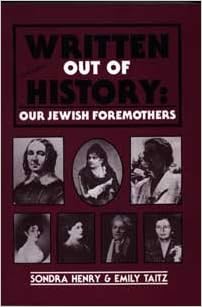
Unlike Benvenida Abrabanel, Beatrice de Luna belonged to a family that had chosen to become Marranos [converts to Catholicism – also known as conversos] so that they could remain in their home in Portugal. They had a successful business and a rich life. Beatrice was born in 1510, thirteen years after the expulsion of all practicing Portuguese Jews. Those remaining in Portugal worked hard to hide any Jewish allegiance from the world…

I devoured the section, all four pages of it, from Beatrice inheriting her husband’s share of an immense commodities business to her flight from one country after another, the Inquisition hot on her heels, to her imprisonment in Venice, her transformation into Dona Gracia Nasi (her childhood Jewish name), to her eventually settling in Turkey. But all this was so abbreviated as to be tantalizing without deep substance.

In the footnotes, however, I discovered that historian Cecil Roth had written an entire book about Gracia, The House of Nasi: Dona Gracia (Jewish Publication Society of America, 1947). Although the book was out of print, I was able to borrow a copy from a local university library. Within those scholarly pages, I discovered a story as dramatic, tragic, and inspiring as anything out of Hollywood or New York.

I could have tried to tell Gracia’s entire story, but that would have meant either another Il Ghetto, the old foundry district. I cut out an image from a tourist brochure of a person in the traditional Mardi Gras costume called bauta (including a white mask, tricorne hat, and a black tabarro, a short cloak) and pinned it on my bulletin board, hoping to find a story that would capture the sense of brooding menace. (As an aside, I’m not comfortable with clowns, either.) Armed with image, memory, and scholarly text, I embarked upon the tale.
abridged version or an extensive tome. I decided, therefore, to focus on a shorter period of her life: the flight from Antwerp (when Queen Marie of Burgundy, Regent of the Low Countries and sister to Charles V of the Holy Roman Empire, schemed to marry off Gracia’s young daughter to one of her courtiers) to Venice. I’d visited Venice briefly during the time I lived in France (1991) and had vivid memories of the shadows under the bridges over the canals, the ancient plazas and towers, and the omnipresence of the sea. I wandered through the original ghetto,

“Unmasking the Ancient Light” is a tribute to the perseverance of a woman under extraordinary reversals and dangers. Life was perilous for European Jews in the Renaissance, as it had been in centuries earlier. Jews had been expelled from (among others) England (1290), France (1182, 1306, 1321, 1394), Spain (1492), and Portugal (1497). The series of expulsions forced Jewish communities to find safe (or safer) havens, in the Netherlands, Venice, and Islamic countries, such as the Ottoman Empire. They developed international systems of commerce and banking, as well as close familial and communities ties. Gracia’s family was no exception. From Spain (“convert, leave, or die!”) they relocated to Portugal, then to Antwerp, and so forth. While in Italy, Gracia dropped the pretense of a converso and began finding ways to support her fellow exiles, whether lending material aid to individuals to becoming a patron of the arts to creating a printing house to publish Jewish texts in Hebrew and also Spanish (the Ferrera Bible) for those unable to read the ancient languages.

The list of Gracia’s accomplishments could easily fill the word count of a piece of short
fiction, but I wanted her story to be more than a list of the amazing things she had done. I wanted to capture the spirit of the woman – if not historically accurate, as is always the challenge with fantasy – but one that would speak to the hearts of readers as Gracia had spoken across the centuries to me. I focused, then, on her struggle to survive the political intrigues and animosities of her time while preserving and nourishing the spirit of her people. The magic, as it were. Here I found a second inspiration in various treatments of the feminine aspect of the divine and the equivalence of the Shekhinah, sometime called the Indwelling Spirit, with light, without getting too dogmatic or theological.


As a final note, since I dutifully returned Cecil Roth’s book to the university library, my husband presented me with a copy of The Woman Who Defied Kings: The Life and Times of Dona Gracia Nasi, A Jewish Leader During the Renaissance (Andree Aelion Brooks, Paragon House, 2002). If you want to know more about her, I recommend this highly accessible book (which has a ton of footnotes, for the historians among you).

Wednesday, August 9, 2017

An Anthology of Persistent Women

My story, "Unmasking the Ancient Light," about Jewish Renaissance pioneer and visionary Dona Gracia Nasi, appears in the newly-released anthology, Nevertheless, She Persisted, from Book View Cafe, edited by Mindy Klasky. You can also find the ebooks and print edition at Amazon.com and Barnes & Noble.


“She was warned. She was given an explanation. Nevertheless, she persisted.”
Those were the words of Mitch McConnell after he banned Senator Elizabeth Warren from speaking on the floor of the United States Senate.
In reaction to the bitter partisanship in Trump’s United States of America, nineteen Book View CafĂ© authors celebrate women who persist through tales of triumph–in the past, present, future, and other worlds.
From the halls of Ancient Greece to the vast space between stars, each story illustrates tenacity as women overcome challenges–from society, from beloved family and friends, and even from their own fears. These strong heroines explore the humor and tragedy of persistence in stories that range from romance to historical fiction, from fantasy to science fiction.
From tale to tale, every woman stands firm: a light against the darkness.
Table of Contents:
“Daughter of Necessity” by Marie Brennan
“Sisters” by Leah Cutter
“Unmasking the Ancient Light” by Deborah J. Ross
“Alea Iacta Est” by Marissa Doyle
“How Best to Serve” from A Call to Arms by P.G. Nagle
“After Eden” by Gillian Polack
“Reset” by Sara Stamey
“A Very, Wary Christmas” by Katharine Eliska Kimbriel
“Making Love” by Brenda Clough
“Den of Iniquity” by Irene Radford
“Digger Lady” by Amy Sterling Casil
“Tumbling Blocks” by Mindy Klasky
“The Purge” by Jennifer Stevenson
“If It Ain’t Broke” by Maya Kaathryn Bohnhoff
“Chatauqua” by Nancy Jane Moore
“Bearing Shadows” by Dave Smeds
“In Search of Laria” by Doranna Durgin
“Tax Season” by Judith Tarr
“Little Faces” by Vonda N. McIntyre