Showing posts with label Lace and Blade. Show all posts

Friday, February 21, 2025

Author Interview: Dave Smeds on "The Wind's Kiss"

Dave Smeds has authored novels (including The Sorcery Within and X-Men: Law of the Jungle), screenplays, comic book scripts, and articles, but is best known for his short fiction. His work has graced the pages of Asimov's SFF&SFRealms of Fantasy, and a plethora of anthologies, including most particularly the Sword and Sorceress series and the Lace and Blade series. His wonderful short fiction piece, "The Wind's Kiss," first appeared in Lace and Blade 4. It's a marvelous story, exquisitely written, full of pitch-perfect heart. Now it's also available in Dave's collection Swords, Magic, and Heart (see the cover below). 

Deborah J. Ross: Tell us a little about yourself.  How did you come to be a writer?

Dave Smeds: I loved fiction from an early age. I was particularly drawn to stories of imaginary worlds, or at least by settings that were in effect imaginary, such as Mars as depicted by Edgar Rice Burroughs. At age fifteen, it occurred to me I might be able to write a short story or two. I did that. The result was crap, of course, but every time I did another story or fragment of a novel, I could see how to improve. (It was, as you might imagine, REALLY OBVIOUS how I could improve.) I felt driven to eventually write something at a level I’d want to read if someone else had written it.


DJR: What inspired your story in Lace and Blade 4?
DS: There is a great deal of me in “The Wind’s Kiss.” The fulfillment I feel in being a father. The contemplation of the pioneer life led by my ancestors as they moved westward, often literally dwelling right at the edge of civilization, first settlers on the scene. The vital need in our hearts for passion between, and admiration of, one’s lover. However, there is also a more specific inspiration for this particular piece. In August, 2016, I was finally able to take a journey through Nebraska. For the first time in my life, and quite possibly for the last time, I visited the grave of my great great grandmother, Marancy Alexander Warner. The land there has a windswept, deeply conscious aspect. I wanted to install that presence in my fiction as soon as possible, and as it happened, that sort of setting and mood was perfect for what I wanted to write for Lace and Blade 4


DJR: What authors have most influenced your writing?  What about them do you find inspiring?
DS: In the early days, I never thought of myself as deeply influenced by any particular author, except perhaps in the sense that I loved to write sword-and-sorcery, and back then, anyone doing that was standing on the shoulders of Robert E. Howard and J.R.R. Tolkien. In retrospect, I see L. Frank Baum’s influence upon the way I structure a story. Baum did not write The Hero’s Journey. He wrote The Heroine’s Journey. That is to say, he wrote books in which the protagonist — usually a girl — makes alliances, as opposed to the Campbell paradigm where a young man pulls himself up by the bootstraps, stands alone, and takes sole credit for defeating an antagonist. I prefer the complexity and subtlety of The Heroine’s Journey.


DJR: Why do you write what you do, and how does your work differ from others in your genre?
DS: At first I wrote to prove I could do it. Next I wrote to earn money. Both motivations, in my view, demanded that I write the best work I could, so in that respect, I have no regrets. But I write now with the awareness that an author of fiction has an obligation to inject meaning into an essentially meaningless universe. That’s our job as human beings. We are creatures of pattern recognition. It’s our chief survival trait. But a fiction writer must do it better than anyone. Hard to do. However, at this point in my life I’ve proven I can write many types of fiction and I’m at a point where I don’t need the money, really, so what keeps me putting the words down on the chance it will move a reader in a way that would not have happened otherwise. As said, hard to do. I try anyway.

Friday, August 21, 2020

"Fire Season," Guest Story by Anne Leonard


When I met author Anne Leonard through a mutual friend, I was reading for Lace and Blade 5. Anne sent me the following amazing story, inspired by her own experience of California wildfires. Now more than ever, it's a reminder that in the ashes of despair grow the seeds of hope. And love. 

She and I independently thought of this story. It's posted here with her permission. If you enjoy it, check out the rest of the anthology.


Fire Season

By Anne Leonard


Ash floats softly down like snow. My eyes are swollen and stinging from smoke, my throat raw. The sky is a murky yellow-grey, the sun a dull copper through the haze. I am taut with readiness. I was one of a dozen people to climb the firetower at dawn when the wind blew into the village with the smell of burning on its back. From the tower we saw blackened hillsides and billowing smoke. The flames seemed to have turned north, away; if they continue on that path, they will burn themselves out in the canyonlands. We are not fleeing yet.

It is autumn, the hot dry time of year when fires are common, and my neighbors speculate about the causes: a hunter’s careless fire, dry lightning, a wind-carried ember. I say nothing. I know what caused it– my lover, the djinni.

~~~

I met him in a bazaar in a city in another country, where he was selling olive oil. He had five varieties; he drizzled a little of each onto a platter and gave me bread to taste them with. One was light, almost grassy, round in my mouth like good wine.

“That is for summer cooking,” he said. His hair was as dark as mine but with a wave to it. His skin was a warm gold-brown, his lips narrow, his eyes an intense black. I could not tell his age – his eyes were far older than his features. Looking at them, I thought of glistening coal, obsidian, onyx. Hard and ancient and reflective. He was handsome, with a lovely voice. Desire, which I had put aside for a long time, flickered in me.

“Thank you,” I said. “How much for one of the smaller bottles?”

He named an absurd price. I laughed at it and offered something much too low. I had the advantage in haggling, because I could take as much time as I wanted while he needed to sell quickly, and I pressed it.

The numbers flew back and forth. We were very close to something fair and in the middle, when impulse seized me.

I said, “I’ll buy at that if you come have dinner with me when I use the oil first.”

It surprised him, but he was quick on his feet. “Done! And I promise you it will be the finest meal you have ever cooked.”

~~~

He arrived at the agreed-upon time, carrying roses and a small volume of poetry. His name was Azhif, firelight, the opposite of my own Rahit, running stream. I lived in a small but well-made flat which overlooked a courtyard garden. The willow in the center was tall and old, and the early evening light on its upper branches had the same green-gold glow of the olive oil. I had dressed carefully and wore the sandals which set off my feet to the best advantage.

We had cucumbers, goat cheese folded into flaky pastry I had cooked with the oil, nectarines. I don’t remember what else. We took wine to the garden with us and sat on the grass under the willow, and he read me poetry. Not love poetry, which would have been precipitous, but poems about beauty and friendship and hope. His lashes were long and dark as he bent over, looking down at the page.

When it grew too dark to read, he shut the book, and we sat silently while night purpled around us. I looked at him and saw the flame in his eyes.

He took my hand. We kissed. Then I knew he was not human. He shifted under my touch like the being of fire that he was. He was heat, light, motion. There are no words to describe the reaction of my body. I was transformed.

~~~

The mistake, it turned out, was not falling in love with him. It was letting him fall in love with me.

~~~

How can I tell the wonder of those first weeks? I can’t. No one can ever tell happiness.

He said, “All things are fire, even water, because without fire there is no life, no movement.”

“Love is movement,” I said.

“Love is fire.”

~~~

That winter, my father died. I am the only child, and I went back to the village where I had grown up to hold his funeral, pay his debts, and sell his animals. The farm house was small and old; the roof leaked and dust was thick in the rooms my father no longer used. I swept and cleaned and hammered, and somehow the silence of the country folded around me so that returning to the city was fearsome.

I wrote Azhif, and he came. He brought small and beautiful things which enlarged and warmed the house: copper statuettes, books with covers calligraphed in gold, crimson teacups that seemed to blaze where they rested. Winter was held at bay. Azhif and I drank tea in the morning while looking over the fog-covered land. When he touched the window glass, steam rose from the condensed moisture.

We loved each other madly. We made love on the kitchen table and the stairs and behind the goat shed. I was never cold. Once when rain fell in torrents, we climbed the slippery wooden steps of the firetower and took each other on the damp floor. The rain that landed on my bare skin was warm as a summer sea. We were scarcely two separate beings, constantly touching, hands and lips on breast and thigh and cheek. I was replete. Replete and burnished.

And in my joy, my pleasure, I failed to notice what was happening to Azhif. He was separate from his kin, from the place that had been his home for years uncountable. One night I lay close to him and put my hand on his chest. His skin was warm. Warm, not hot. I kissed him, and where usually I felt only flame I felt the pressure of his lips and tongue. He was cooling.

~~~

Looking at the thick columns of smoke in the distance, I consider now – I have often considered – whether I should have said nothing. Would things have turned out differently? Inhaling the smoke, I think that silence would have set a secret between us, and secrets kill love faster than anything else.

I run my hand along the rail and by touch find the scorchmarks from Azhif’s fingers. I place my own fingers over the marks, but they are only burned wood. Nothing of him lingers. I imagine being among the flames, feeling the hot smoky air against my skin, hearing the hiss and crackle of dry wood burning. I never knew I wanted that.

~~~

I waited over a day to speak to him. It was evening, rain falling softly, the room cozy with the fire in the hearth. He was reading. I had been tense all day, worrying about this. I gave him his usual after dinner glass of wine and said, “Azhif, we need to talk.”

He looked up. For a moment I thought he seemed older, lines on his face. He moved and the illusion vanished. “What about, my love?”

I sat down opposite him and put my own glass on a side table. I said, “Two nights ago, when I touched you, you were cooling.”

“Impossible,” he said. “Fire is who I am. It cannot be expended or used up as long as I am alive.”

“Then maybe you’re dying,” I said.

“I am not dying.”

“How old are you?” I asked. “Really?” It was a thing we had never talked about.

He was always confident and self-assured, but the question caught him out. He kept his eyes on his glass as he answered.

“I’ve lost count.”

“Two hundred? A thousand? Ten thousand?”

A log shifted in the fireplace, sending up a shower of sparks. Rain tapped on the windowpane.

“Not quite a thousand, I suppose,” he said at last. “What does it matter?”

How many lovers have you had? I thought, but I had the sense not to say it. “How long do djinn live?”

“We die if we are slain in combat or by magic. Otherwise we do not age. I have known other djinn who have lived six thousand years. I am young. Rahit, I’m not cooling. You imagined it.”

I didn’t. I was too cowardly to say the words. I drank my wine, dismissing the topic, and sat watching him with lowered eyelids. It was terrible, in all senses of the word, frightening and magnificent, that he was so old. That I slept with someone who had seen so much history. That he loved me. Because I had no doubt of that.

~~~

He continued to lose heat. I saw the evidence in the absence: the lack of steam from his footsteps when he walked barefoot on the wet porch, the ordinary feel of metal things he had touched, the loss of incandescence when we made love. That he could control his fire, I knew, or he could never have lived in a human world, but he had been less careful around me. Now when he kissed me, I felt the blood pulsing in his lips.

The winter rains ended and the trees bloomed and leafed. The days grew longer. Azhif and I took our meals outside more and more often. Grass which had been green turned brown, then gold, with sun. His cooling was harder to tell as the world warmed. His eyes had lost their flicker, though.

One morning I slept late. When I looked out the bedroom window I saw him standing by the goat shed, and his posture was that of despair.

He came in, and I said, “Azhif, it’s time you go home. It’s damaging you, to be here.”

He was angry. “Do you love me for myself?” he said. “Or for my fire?”

“You can’t separate it that easily,” I shot back.

“Are you banishing me?”

“If you will have me, I’ll come,” I said. “This house, this place, they don’t matter.”

“They do to you,” he said. “You’re happier here. You breathe more.”

“I’ve left it before. I can leave it again.”

He sighed. “I’ll make arrangements,” he said.

~~~

The hills in the north give way to broken, tree-less land, all rock with a bit of scrub. There are wild animals – mountain goats and crows and snakes and mice – but no people. When the fire reaches that far, it will die. It will not even smolder. In that land, flame has no fuel.

Azhif is settled there, somewhere. I imagine that at night he looks at the stars and tells himself the stories about them which everyone else has forgotten. Perhaps he sits on the sandy bottom of a canyon and waits for an animal to approach him. He might read by candlelight or even by the glow of his own fingers.

Or perhaps he walks in this fire, exultant, watching the flames rise in his footsteps, touching the dry leaves of the trees and making the fire dance and swoop as it tears along the limbs. The wind bears to me the gift of his hot breath.

~~~

Azhif had shown no signs of leaving, and finally I confronted him. I waited until night, when I could look up at the dark ceiling.

“I need you to go,” I said. “I can’t stand to watch you withering like this.” His face was that of a middle-aged man, and when he left the bed in the mornings the sheets were cool.

For a long time he was silent. I was afraid to touch him. I knew that he was angry, that he would leave, that I had drawn a knife I couldn’t sheathe.

“I can’t go back,” he said. “Not with you. I am outcast.”

“By your people?”

“Yes.”

“Because you took a human lover?”

“Because I stayed with you,” he said. “A night, a week, a month, that would be of no account. But I left my home and followed you here, and for that I am exiled so long as I am with you.”

“Did you know that would happen?” I was ready to be furious with him, and also full of grief. I didn’t want him to make so great a sacrifice for me.

“When you asked me to return, then they told me.”

“Leave me, then,” I said. It hurt. “You’re dying. Go back.”

“Not dying. Merely becoming mortal.” His hand clasped mine. “To love a human is to become one.”

“Why me?” I asked, afraid that at any moment I would start to cry. “In a thousand years of life, why am I the human you give everything up for?”

“There is no everything, there is only you, Rahit, and I love you.”

Not so much, not so much, please not so much. I couldn’t say it.

He turned onto his side and pressed close to me, his arm across my chest. He kissed my forehead, light and cool as a butterfly.

“Let it be,” he said. “I’ve lived long enough to make many mistakes, often more than once. This is not a mistake.”

I did cry, then, and after a long while fell asleep. I woke once. He was gone from the bed. I listened for the sounds of him in the house and heard only silence. When I could bear it no longer I got up and went to the window.

He sat naked on the grass, facing the hills. He glowed dull orange, like an ember. It was more heat than there had been in months. We would never, not even when the universe wound down, be of the same kind.

It was not a bar to love. But it might be a bar to happiness.

Let this not be the last, I wished, let this not be the last.

~~~

Late summer arrived, fierce and hot. Around us the world dried and dried. The air smelled of dried sage. The sun bleached and cracked the bare earth. Hornets came out of their nests and droned near anything moist. Frogs went silent as their wet places dried up. It was too hot to bake and too hot to eat; we lived on water and fruit and the lettuces we rescued from wilting in the garden. The light was hard and white.

Azhif spent most of his time outside, reveling in the furnace of sun. He wore no shirt or hat. He sweated only a little. When he was inside, we rarely spoke. I wished he would go home, where he could have what he needed. The space between us thickened with the need for change.

~~~

One night, after a particularly hard day where I had simmered alone in anger and grief, he asked me to climb the firetower with him. I went, unhappy, aching for something more. I could not pinpoint the moment where everything had gone askew, but I knew I could not endure much more. One of us would have to leave. I hoped we could do it while we still loved each other.

He pointed at the heat lightning flashing on the horizon and said, “People used to say that was caused by dancing djinn, our feet striking the floor of heaven.”

“Was it?”

“Only sometimes.” I could not tell if he was joking.

We were silent. “This can’t go on,” I said at last.

“I know.” He inhaled, a very human noise of nervousness. I remembered haggling with him, when I had thought he was just a handsome young man. He said, “I have made a bargain with my folk. I can burn again, and stay with you. But there’s a cost.”

“What?”

He put his hand on the rail, and grey smoke threaded upward. “We can be together only during the rains. The rest of the year, I burn, and parts of the world burn with me.”

“Will you go home?”

“Home is with you,” he said. “Always. What burns will be close.” He turned and kissed me, and it felt like the first kiss, heat inside and cool darkness around and our bodies as ephemeral as air but powerful as wind. The gold light was back in his eyes.

“Let the world burn,” I said.

~~~

I climb down from the firetower. When it is wet he will return. He will leave his warmth on the sheets and read poetry aloud to me in his beautiful voice.

The fires he starts are not born of malice. They are simply the signs of his passage, the trace of his being, like steaming footprints on the porch.

I know I should be consumed with guilt. The smoke, the destruction, the fear, they are my fault. But if he had not caused them, something else would have. It is fire season, after all.


The End


Anne Leonard is the author of the novel Moth and Spark. She lives in Northern California,

Monday, January 6, 2020

Sexuality in Fantasy

For a number of years, I had the privilege of editing the anthology series, Lace and Blade. The concept was a certain flavor of elegant, romantic sword and sorcery, witty and stylized, sensual yet with plenty of swashbuckling action (think The Scarlet Pimpernel with magic). Because the publishers wanted to release the first volume for Valentine’s Day, I contacted a group of seasoned professional authors, people I could depend on to understand what I was looking for and to deliver top quality stories to deadline. For various reasons, the publisher insisted that the second volume be open to submissions. If I had any idea what I was getting myself into, I would have refused. Insulated in the world of competent fantasy writers and readers who are versed in the grandeur of everyone from J.R.R. Tolkien to Tanith Lee, I was ill-prepared for what mundanes think of when they hear “fantasy.”

Needless to say, when I talk about sexuality or eroticism or sensuality or gender issues in fantasy, I do not mean pornography. It seems that for far too many people, sexuality is such an emotionally difficult subject that instead of facing it honestly, discussing it openly, they shroud it in prurience and embarrassment, or else turn it into something salacious or forbidden. Yet just about every human being over the age of puberty has had sexual feelings (notice my delicate use of qualifiers). So if sexuality in fantasy does not mean “your most lascivious and pornographic imaginings, regardless of whether you’d really like to do these things, because how would you know what you enjoy if you’ve never been permitted to experiment?” what is the role of sexuality in fantasy? Does it even have one? Should we keep sex out of fantasy literature, restrict the love stories to a chaste kiss now and again, and keep the hero/ine’s mind firmly fixed on nobler causes?


I believe that sex is such a powerful force in human lives that it is impossible to portray the full scope of emotions and motivations without it. People might not, for a whole panoply of reasons, act on their sexual desires, but they have them. They have them in wildly inappropriate situations, as well as those times and places that nurture genuine emotional intimacy. The feelings are ignored or fulfilled, misdirected or frustrated, overly indulged or denied utterly. Freud had a few things to say about what happens when such a basic drive does not find healthy expression, and although his theories were dead wrong on many counts, he was not mistaken about the fact that sex will not go away simply because society (aka The Authorities, secular or clerical) disapprove. So already, we have two ways in which considerations of sexuality are important to any story: character development and world-building.


What are the attitudes and practices regarding sexuality in this culture? Is it permissive, repressive, or a combination? Is marriage live-long or fixed-term? Monogamous, polygamous, polyandrous? Do different cultures in your world treat love, sexuality, and marriage in the same way? (For example, how are sexual fidelity and jealousy regarded? Is marriage a personal or a business relationship? Who determines what is acceptable in sexual behavior? Have norms changed over time and if so, why? What are the social, moral or legal consequences of transgressions? Are there times, places, or partners for whom “anything goes”?

Monday, June 3, 2019

Where’d You Get That Idea? Story Inspirations from Lace and Blade 4 Authors


Reposting a favorite round-table blog.

Carol Berg: One of my aims when I create new heroes or heroines is to make them real people. I want readers to believe they had a life before walking onto the canvas of my story and will (if the story permits!) have a life when they walk off again. But of course, after the traumas/losses/victories of the story, the nature of that life is often irrevocably changed. 
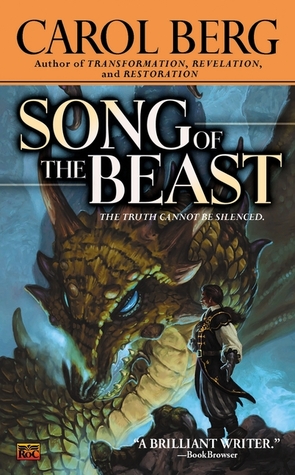
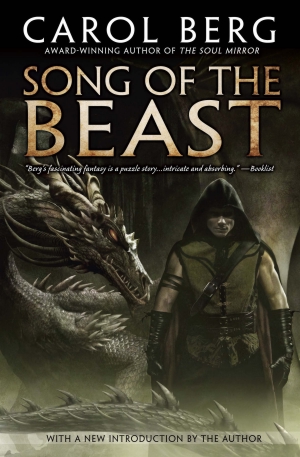
Ever since my novel Song of the Beast was published, I’ve had readers asking what became of Aidan McAllister--a scarred, broken singer of visions, who saved his world from the scourge of dragon warfare. At the end of the story, he abandons his friends and his hope of a normal life to lead the beasts into the wild. I decided that it would be fun to satisfy the readers’ curiosity and mine, and so I wrote “The Heart’s Coda.”


Marie Brennan: Some years ago I bought a pair of black-and-red beaded earrings from the jeweler Elise Matthesen, who habitually gives titles to all the pieces she makes. The earrings are called "At the Sign of the Crow and Quill," and like many authors, I pledged to Elise that I would try to write something by that title someday. The mood that evoked in my mind was very much a Lace and Blade mood, so when I received an invitation to submit to the anthology, that turned out to be the spark I needed to transform the phrase into characters and plot.

Heather Rose Jones:  “Gifts Tell Truth” is set in the same world as my Alpennia series: a 
mildly alternate Ruritanian early 19th century with magic. One of the things I love to do when exploring characters it to make offhand references to events in their past. Events where I may not know all the details of what happened, just that it shaped them in some way. One thing that is very clear about Jeanne, Vicomtesse de Cherdillac, one of the protagonists of The Mystic Marriage and a continuing character throughout the series, is that she is a “Woman With A Past.” The more I write about her, the more fascinated I am by how she came to be the person she is in the novels.

The events in “Gifts Tell Truth” haven’t been specifically referenced in the books, other than a passing comment about how the stories of her youth aren’t appropriate for innocent ears. But I knew in a general way that during the French occupation of Alpennia, just after Jeanne’s unexpected marriage to a much older French aristocratic émigré, she led a wild and scandalous life, spurred on by a tragic event in her coming-out season (which will be told in a later story). The current story grew out of wanting to explore the origins of some of her later attitudes and reflexes, with the added bonus of showing the start of an odd but enduring friendship that features in the novels.

Friday, August 17, 2018

Cover Reveal: Lace and Blade 5

Lace and Blade 5, an anthology of elegant, witty, romantic fantasy, will be released on Valentine's Day 2019. The Table of Contents is here. And here is the gorgeous cover, trade papberback print version, designed by Dave Smeds:


Wednesday, July 25, 2018

Lace and Blade 5 Table of Contents Reveal

The fifth volume of Lace and Blade isn't scheduled for release until next Valentine's Day, but here's a sneak peek at the delicious treasures within. (Stay tuned for the cover reveal, and author interviews...)


THE FERRYMAN
by Dave Smeds
ASCENT
by Shariann Lewitt
THE GOLDEN FIR
by Harry Turtledove
ALLONS
by Gillian Polack
THE CUSTOM OF THE COUNTRY
by India Edghill
THE CLOCKWORK UNICORN    
by Doranna Durgin
SPIRE WITCH
by Marella Sands
THE GHOST OF LADY REI
by Adam Stemple
THE BOTTLE
by Steven Harper
WATER BOUND
by Julia West
SEA OF SOULS
by Robin Wayne Bailey
AN INTERRUPTED BETROTHAL
by Lawrence Watt-Evans
TIL DEATH DO US PART
by Pat MacEwen
FIRE SEASON
by Anne Leonard

Monday, February 12, 2018

Lace and Blade 4 Author Interview With Carol Berg

Just in time for Valentine's Day, Lace and Blade 4 offers a bouquet of sensual, romantic, action-filled stories. Order it from iBookKindleKoboNook. The Table of Contents is here.


Deborah J. Ross: Tell us a little about yourself.  How did you come to be a writer?
Carol Berg: I grew up reading classics, mysteries, fantasy, science fiction, adventure stories, and spy thrillers, but never imagined I could ever write one for myself. Instead I majored in math, had a short stint as a teacher, had a family, got another degree--this time in computer science—and was halfway through a software engineering career when a fellow engineer (and good friend) convinced me to write a series of letters “in character” so she could practice her writing. It was so much fun, I couldn’t quit! After a number of years writing novels just for myself, reading an article about writing now and then and revising with the newfound knowledge, I wrote a story that was most definitely the best thing I’d written thus far. It felt as if I’d made a huge step forward. My friend agreed, and we stuck our toes in the publishing waters by attending a writers conference. A year later I’d sold three books to the publisher who’s bought them all so far.

DJR: What inspired your story in Lace and Blade 4?
CB: One of my aims when I create new heroes or heroines is to make them real people. I want readers to believe they had a life before walking onto the canvas of my story and will (if the story permits!) have a life when they walk off again. But of course, after the traumas/losses/victories of the story, the nature of that life is often irrevocably changed. Ever since my novel Song of the Beast was published, I’ve had readers asking what became of Aidan McAllister--a scarred, broken singer of visions, who saved his world from the scourge of dragon warfare. At the end of the story, he abandons his friends and his hope of a normal life to lead the beasts into the wild. I decided that it would be fun to satisfy the readers’ curiosity and mine, and so I wrote “The Heart’s Coda. “

DJR: What authors have most influenced your writing?  What about them do you find inspiring?
CB: So many! One of the first was Mary Renault, who took the mythological hero, Theseus, and the historical myth, Alexander the Great, and wrote them as fascinating, flawed human beings in worlds that felt real and true. Another Mary--Mary Stewart--showed me the epic story of Merlin and Arthur through a very human Merlin’s personal lens.  And then there’s Ellen Kushner, who created true magic with exquisite prose and deep emotion in her novel, Thomas the Rhymer. Alongside these three are many mystery and thriller writers like Dick Francis and Len Deighton who instilled a love of complex stories and exciting adventures, and fantasy writers like Roger Zelazny and Poul Anderson who taught me the delights of building magical worlds.

Monday, February 5, 2018

Lace and Blade 4 Author Interview: Marie Brennan

Just in time for Valentine's Day, Lace and Blade 4 offers a bouquet of sensual, romantic, action-filled stories. Order it from iBookKindleKoboNook. Table of contents is here.


Deborah J. Ross: Tell us a little about yourself.  How did you come to be a writer?

Marie Brennan: I generally credit that to Diana Wynne Jones, and specifically her novel Fire and Hemlock, which I read when I was nine or ten years old. The main characters in it are writing a story together, and when I put the book down, I thought, I want to be a writer. It was the first time I recall thinking about making up stories, not just for my own entertainment, but for other people to read. I got serious about it when I was eighteen, sold my first novel when I was twenty-four, and have never looked back.


DJR: What inspired your story in Lace and Blade 4?

MB: Some years ago I bought a pair of black-and-red beaded earrings from the jeweler Elise Matthesen, who habitually gives titles to all the pieces she makes. The earrings are called "At the Sign of the Crow and Quill," and like many authors, I pledged to Elise that I would try to write something by that title someday. The mood that evoked in my mind was very much a Lace and Blade mood, so when I received an invitation to submit to the anthology, that turned out to be the spark I needed to transform the phrase into characters and plot.


DJR: What has most influenced your writing?

MB: Definitely my academic background. In college I majored in archaeology and folklore; in grad school it was cultural anthropology and folklore. I never took a single creative writing course. I know that some people find them great; if you have a good teacher you can grow enormously as a writer, and even without that, just having permission to treat writing as something important, rather than just a hobby, can be vital. But for me, the most effective thing was to take classes and read books that gave me something to write about. The real world, in all its multifarious historical and geographical and cultural glory, is an endless source of inspiration to me.

Monday, January 29, 2018

Lace and Blade 4 Author Interview: Doranna Durgin

Just in time for Valentine's Day, Lace and Blade 4 offers a bouquet of sensual, romantic, action-filled stories. Order it from iBookKindleKoboNook. Table of contents is here.

Doranna Durgin interview

Deborah J. Ross: Tell us a little about yourself.  How did you come to be a writer?

Doranna Durgin: I didn’t “come to be” a writer—I was always a writer.  I put my first little book together in first grade and never stopped, and wrote my first novel in 7th grade (Illustrated.  About a Collie, if you must know.)  At that point I was writing daily by hand (in very particular lined notebooks with very particular pencils that I didn’t give up until I realized that pencil fades) and submitting with the naïve confidence of youth.  I didn’t switch to the typewriter until after college, and boy howdy, you should have seen me when I sat down in front of my first word processor (Atari!).

I guess the point is, I started and I never stopped.  I don’t suppose I ever will.

DJR: What inspired your story in Lace and Blade 4?

DD: Oh, there was no way I wasn’t going to stump Kelyn, my straightforward sword & sorcery heroine, with social strictures and subtleties—especially not when I’m in the middle of writing a sequel (Rings of Ranadir) for her first book (Wolverine’s Daughter).  I figured it would be gleeful rubbing-hands-together fun, and it was!  There might be some sly thoughtfulness in there, too. I’m not saying.

DJR: Why do you write what you do, and how does your work differ from others in your genre?
DD: I write what I do because it’s all inside me, and possibly I would explode if I didn’t find a way to let it out.  And I also write what I do because authors before me have made me feel the wonder of their worlds, and I want more than anything to share the wonders I feel from my stories, too.  And I write because I want to explore and reveal things I think are important—things we’ve forgotten about our world, through alternative lenses.

How my work differs as I go about that is, I think, a reflection of how and where I’ve always lived—I’m an environmental ed major and former park naturalist who’s always lived as close to the real world as possible.  Once upon a time, that meant a log cabin on a hundred acres of Appalachian mountainside where I interacted with more critters than humans.  Since then I’ve immersed myself in the land on SW Virginia farm acreage (and spent my summers sleeping in a wee tent anyway) followed by rural high altitude desert foothills.  Always close to my animals—horses and dogs--and training them, an avocation that led me to the current pack of four that includes the most highly performance-titled Beagle breed champion in the nation and two more who are right on his heels.  I think this immersion—combined with a neurosensory syndrome—provides a framework for my work that likely differs from other approaches.

DJR: What have you written recently? What lies ahead?
DD: My writing is in a transition phase.  I’ve recently stepped away from traditional publishing—bought out a contract when publisher restrictions meant I couldn’t do with the book what the book needed done.  Now I have so many projects on my list, it’s hard to know where to go first.  But there will be more for Kelyn, definitely a return to fantasy and a number of heart books that have been waiting, and more for Dale & Sully (a mystery series with a vet and his Beagle companion that I swear, I started before I actually had Beagles.  The prescience of me).  I also recently released the third book in the Reckoners trilogy on top of significantly enhanced Author’s Cuts of the first two books.  I love, love, love that indie publishing has allowed me to do this, after nearly fifty traditional books’ worth of bowing to publisher roadmaps.

DJR: What advice would you give an aspiring writer?
DD: The same advice I’ve always given, even as the market changes: Write lots of what you’re driven to write, know the market, know the different publishing paths, and know which choice is best for you before you make it.  Set your sights first, then figure out your plan for getting there, and then go after it.


Doranna Durgin is an award-winning author whose quirky spirit has led to an extensive
publishing journey across genres, across publishers, and across publishing lines. Beyond that, she hangs around outside her Southwest mountain home with horse and highly accomplished competition dogs. She doesn’t believe in mastering the beast within, but in channeling its power. For good or bad has yet to be decided.

Monday, January 22, 2018

Lace and Blade 4 Author Interview: Heather Rose Jones

Just in time for Valentine's Day, Lace and Blade 4 offers a bouquet of sensual, romantic, action-filled stories.Order it from iBookKindleKoboNook. Table of contents is here.


Deborah J. Ross: Tell us a little about yourself.  How did you come to be a writer?

Heather Rose Jones: I’ve been writing in some form or another most of my life, whether stories, songs, or poetry. I’ve always loved working with language. So it’s hard to point to any particular time point or process of “becoming a writer.” It’s a bit easier to talk about how I came to be a published writer. For that, I got a solid push by getting to know various other published science fiction and fantasy authors in the SF Bay Area, whic got me used to the idea that it was a possible thing to move from having written something to getting it published. My first short stories appeared in the Sword and Sorceress anthology series back in the 1990s. I was working on some novels at that time that still sit in file folders, but my first published book series is one I didn’t start working on until after I’d finished my mid-life PhD and decided I needed an entirely new approach to my fiction writing.

DJR: What inspired your story in Lace and Blade 4?

HRJ: “Gifts Tell Truth” is set in the same world as my Alpennia series: a mildly alternate Ruritanian early 19th century with magic. One of the things I love to do when exploring characters it to make offhand references to events in their past. Events where I may not know all the details of what happened, just that it shaped them in some way. One thing that is very clear about Jeanne, Vicomtesse de Cherdillac, one of the protagonists of The Mystic Marriage and a continuing character throughout the series, is that she is a “Woman With A Past.” The more I write about her, the more fascinated I am by how she came to be the person she is in the novels.

The events in “Gifts Tell Truth” haven’t been specifically referenced in the books, other than a passing comment about how the stories of her youth aren’t appropriate for innocent ears. But I knew in a general way that during the French occupation of Alpennia, just after Jeanne’s unexpected marriage to a much older French aristocratic émigré, she led a wild and scandalous life, spurred on by a tragic event in her coming-out season (which will be told in a later story). The current story grew out of wanting to explore the origins of some of her later attitudes and reflexes, with the added bonus of showing the start of an odd but enduring friendship that features in the novels.

DJR: What authors have most influenced your writing?  What about them do you find inspiring?

HRJ: I always have a hard time talking about influences. It’s not that I don’t think I have them, or that I think I’m a “self-made” writer, but I spent so many years simply devouring so many good (and not so good) books that I don’t know that I could identify my conscious influences. It’s a bit like the majority of my historic background research: I’m constantly tossing material into the compost heap, and when I need the fertilizer to grow a story in, there it is, but it’s digested and changed. If we’re talking about stylistic influences, the only ones I can point to with any certainty are the short stories I’ve written in imitation of various genres of medieval literature.

But I can identify some writers who inspire me in terms of the shape of their career. Writers who are being a direct inspiration by encouraging me when I feel like the publishing world doesn’t have a place I fit into. That would be people like Kate Elliott and Beth Bernobich and Melissa Scott. I’m going to stop with the first three that came to mind because otherwise I’ll worry too much about who I’m leaving out. The non-author who most inspires my writing is the proprietor of the website People of Color in European Art History. Just as she is doing with people of color, I’m trying to write queer stories back into the history they were always present in.

Monday, January 15, 2018

Lace and Blade 4 Author Interview: Marella Sands

Just in time for Valentine's Day, Lace and Blade 4 offers a bouquet of sensual, romantic, action-filled stories.Order it from iBookKindleKoboNook. Table of contents is here.


Deborah J. Ross: Tell us a little about yourself.  How did you come to be a writer?
Marella Sands: In fourth grade, our teacher wrote a sentence on the board first thing in the morning, and we had to use it as the first line of a story. I still have some of those stories, and they are truly terrible in a funny way. My favorite was about me living in a haunted house. The ghost was so powerful, it killed everyone else on my block, so I moved. Apparently, I was a rather practical nine-year-old. Anyway, after that, I never really stopped.

DJR: What inspired your story in Lace and Blade 4?
MS: A few years ago, a Pakistani man I know introduced me to the game of cricket. He was so excited about it that I guess I just caught the fever, because then I started watching it (also, I read "Cricket for Dummies," which is actually a real thing). For my birthday that year, I asked for a subscription to Willow TV (all cricket, all the time). While I was watching a match and wondering what to do for this story, I suddenly thought, why aren't there more team sports in fantasy stories? Not just mentioned in passing, or set up as a bit of world-building, but introduced as something so integral to the plot, you couldn't have the story without the sport. Almost instantly, I had my four main characters, who play a very cricket-like game in a vaguely West African-like land. 


DJR: What authors have most influenced your writing?  What about them do you find inspiring?
MS: The first two that come to mind are Richard Adams and J.R.R. Tolkien, because the two books I couldn't put down for years were Watership Down and The Lord of the Rings -- sweeping fantasy stories that just carried me away into worlds so completely I was almost distraught I couldn't actually go there. If I lived in the world of Fahrenheit 451 and had the opportunity to be a book, I'm not sure I could choose between them.

Monday, January 8, 2018

Lace and Blade 4 Author Interviews: Lawrence Watt-Evans

Just in time for Valentine's Day, Lace and Blade 4 offers a bouquet of sensual, romantic, action-filled stories. Order it from iBookKindleKoboNook. Table of contents is here.


Deborah J. Ross: Tell us a little about yourself. How did you come to be a writer?
Lawrence Watt-Evans: I always wanted to be one. I started to think seriously about it in second grade, when my teacher’s response to my very first creative writing assignment was, “Maybe you’ll be a writer someday!”
My parents convinced me that it wasn’t a likely way to make a living, though, so even though I kept writing I figured it would just be a hobby -- until my stories started selling, and I couldn’t find a decent day job. I wound up making my living as a writer for thirty-some years.

DJR: What inspired your story in Lace and Blade 4?
LWE: I wanted to play with stereotypes and expectations a little -- and I wanted to be in this anthology, having failed to deliver for previous volumes in the series!

DJR: What authors have most influenced your writing? What about them do you find inspiring?
LWE: L. Sprague de Camp and Terry Pratchett have been big influences; both have a knack for looking at the trappings of fantasy and considering how they would work for actual human beings, rather than mythic archetypes. Others have been, in no particular order, Dorothy Sayers, C.S. Forester (from whom I got my love of interior monologues), Robert Heinlein, Fritz Leiber Jr., Robert E. Howard, J.R.R. Tolkien, C.L. Hales, Robert W. Chambers, Anne McCaffrey, Leigh Brackett...

DJR: Why do you write what you do, and how does your work differ from others in your genre?
LWE: I write what I like, what interests me. It differs from other fantasy because I’m not particularly interested in nobility, honor, derring-do, the nature of evil, and so on, but in how people muddle through.

DJR: How does your writing process work?
LWE: Damned if I know. I sit at the computer and type.