Showing posts with label fantasy stories. Show all posts

Friday, February 21, 2025

Author Interview: Dave Smeds on "The Wind's Kiss"

Dave Smeds has authored novels (including The Sorcery Within and X-Men: Law of the Jungle), screenplays, comic book scripts, and articles, but is best known for his short fiction. His work has graced the pages of Asimov's SFF&SFRealms of Fantasy, and a plethora of anthologies, including most particularly the Sword and Sorceress series and the Lace and Blade series. His wonderful short fiction piece, "The Wind's Kiss," first appeared in Lace and Blade 4. It's a marvelous story, exquisitely written, full of pitch-perfect heart. Now it's also available in Dave's collection Swords, Magic, and Heart (see the cover below). 

Deborah J. Ross: Tell us a little about yourself.  How did you come to be a writer?

Dave Smeds: I loved fiction from an early age. I was particularly drawn to stories of imaginary worlds, or at least by settings that were in effect imaginary, such as Mars as depicted by Edgar Rice Burroughs. At age fifteen, it occurred to me I might be able to write a short story or two. I did that. The result was crap, of course, but every time I did another story or fragment of a novel, I could see how to improve. (It was, as you might imagine, REALLY OBVIOUS how I could improve.) I felt driven to eventually write something at a level I’d want to read if someone else had written it.


DJR: What inspired your story in Lace and Blade 4?
DS: There is a great deal of me in “The Wind’s Kiss.” The fulfillment I feel in being a father. The contemplation of the pioneer life led by my ancestors as they moved westward, often literally dwelling right at the edge of civilization, first settlers on the scene. The vital need in our hearts for passion between, and admiration of, one’s lover. However, there is also a more specific inspiration for this particular piece. In August, 2016, I was finally able to take a journey through Nebraska. For the first time in my life, and quite possibly for the last time, I visited the grave of my great great grandmother, Marancy Alexander Warner. The land there has a windswept, deeply conscious aspect. I wanted to install that presence in my fiction as soon as possible, and as it happened, that sort of setting and mood was perfect for what I wanted to write for Lace and Blade 4


DJR: What authors have most influenced your writing?  What about them do you find inspiring?
DS: In the early days, I never thought of myself as deeply influenced by any particular author, except perhaps in the sense that I loved to write sword-and-sorcery, and back then, anyone doing that was standing on the shoulders of Robert E. Howard and J.R.R. Tolkien. In retrospect, I see L. Frank Baum’s influence upon the way I structure a story. Baum did not write The Hero’s Journey. He wrote The Heroine’s Journey. That is to say, he wrote books in which the protagonist — usually a girl — makes alliances, as opposed to the Campbell paradigm where a young man pulls himself up by the bootstraps, stands alone, and takes sole credit for defeating an antagonist. I prefer the complexity and subtlety of The Heroine’s Journey.


DJR: Why do you write what you do, and how does your work differ from others in your genre?
DS: At first I wrote to prove I could do it. Next I wrote to earn money. Both motivations, in my view, demanded that I write the best work I could, so in that respect, I have no regrets. But I write now with the awareness that an author of fiction has an obligation to inject meaning into an essentially meaningless universe. That’s our job as human beings. We are creatures of pattern recognition. It’s our chief survival trait. But a fiction writer must do it better than anyone. Hard to do. However, at this point in my life I’ve proven I can write many types of fiction and I’m at a point where I don’t need the money, really, so what keeps me putting the words down on the chance it will move a reader in a way that would not have happened otherwise. As said, hard to do. I try anyway.

Monday, February 12, 2018

Lace and Blade 4 Author Interview With Carol Berg

Just in time for Valentine's Day, Lace and Blade 4 offers a bouquet of sensual, romantic, action-filled stories. Order it from iBookKindleKoboNook. The Table of Contents is here.


Deborah J. Ross: Tell us a little about yourself.  How did you come to be a writer?
Carol Berg: I grew up reading classics, mysteries, fantasy, science fiction, adventure stories, and spy thrillers, but never imagined I could ever write one for myself. Instead I majored in math, had a short stint as a teacher, had a family, got another degree--this time in computer science—and was halfway through a software engineering career when a fellow engineer (and good friend) convinced me to write a series of letters “in character” so she could practice her writing. It was so much fun, I couldn’t quit! After a number of years writing novels just for myself, reading an article about writing now and then and revising with the newfound knowledge, I wrote a story that was most definitely the best thing I’d written thus far. It felt as if I’d made a huge step forward. My friend agreed, and we stuck our toes in the publishing waters by attending a writers conference. A year later I’d sold three books to the publisher who’s bought them all so far.

DJR: What inspired your story in Lace and Blade 4?
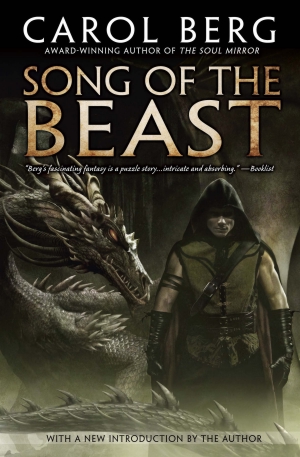
CB: One of my aims when I create new heroes or heroines is to make them real people. I want readers to believe they had a life before walking onto the canvas of my story and will (if the story permits!) have a life when they walk off again. But of course, after the traumas/losses/victories of the story, the nature of that life is often irrevocably changed. Ever since my novel Song of the Beast was published, I’ve had readers asking what became of Aidan McAllister--a scarred, broken singer of visions, who saved his world from the scourge of dragon warfare. At the end of the story, he abandons his friends and his hope of a normal life to lead the beasts into the wild. I decided that it would be fun to satisfy the readers’ curiosity and mine, and so I wrote “The Heart’s Coda. “

DJR: What authors have most influenced your writing?  What about them do you find inspiring?
CB: So many! One of the first was Mary Renault, who took the mythological hero, Theseus, and the historical myth, Alexander the Great, and wrote them as fascinating, flawed human beings in worlds that felt real and true. Another Mary--Mary Stewart--showed me the epic story of Merlin and Arthur through a very human Merlin’s personal lens.  And then there’s Ellen Kushner, who created true magic with exquisite prose and deep emotion in her novel, Thomas the Rhymer. Alongside these three are many mystery and thriller writers like Dick Francis and Len Deighton who instilled a love of complex stories and exciting adventures, and fantasy writers like Roger Zelazny and Poul Anderson who taught me the delights of building magical worlds.

Monday, February 5, 2018

Lace and Blade 4 Author Interview: Marie Brennan

Just in time for Valentine's Day, Lace and Blade 4 offers a bouquet of sensual, romantic, action-filled stories. Order it from iBookKindleKoboNook. Table of contents is here.


Deborah J. Ross: Tell us a little about yourself.  How did you come to be a writer?

Marie Brennan: I generally credit that to Diana Wynne Jones, and specifically her novel Fire and Hemlock, which I read when I was nine or ten years old. The main characters in it are writing a story together, and when I put the book down, I thought, I want to be a writer. It was the first time I recall thinking about making up stories, not just for my own entertainment, but for other people to read. I got serious about it when I was eighteen, sold my first novel when I was twenty-four, and have never looked back.


DJR: What inspired your story in Lace and Blade 4?

MB: Some years ago I bought a pair of black-and-red beaded earrings from the jeweler Elise Matthesen, who habitually gives titles to all the pieces she makes. The earrings are called "At the Sign of the Crow and Quill," and like many authors, I pledged to Elise that I would try to write something by that title someday. The mood that evoked in my mind was very much a Lace and Blade mood, so when I received an invitation to submit to the anthology, that turned out to be the spark I needed to transform the phrase into characters and plot.


DJR: What has most influenced your writing?

MB: Definitely my academic background. In college I majored in archaeology and folklore; in grad school it was cultural anthropology and folklore. I never took a single creative writing course. I know that some people find them great; if you have a good teacher you can grow enormously as a writer, and even without that, just having permission to treat writing as something important, rather than just a hobby, can be vital. But for me, the most effective thing was to take classes and read books that gave me something to write about. The real world, in all its multifarious historical and geographical and cultural glory, is an endless source of inspiration to me.

Monday, January 29, 2018

Lace and Blade 4 Author Interview: Doranna Durgin

Just in time for Valentine's Day, Lace and Blade 4 offers a bouquet of sensual, romantic, action-filled stories. Order it from iBookKindleKoboNook. Table of contents is here.

Doranna Durgin interview

Deborah J. Ross: Tell us a little about yourself.  How did you come to be a writer?

Doranna Durgin: I didn’t “come to be” a writer—I was always a writer.  I put my first little book together in first grade and never stopped, and wrote my first novel in 7th grade (Illustrated.  About a Collie, if you must know.)  At that point I was writing daily by hand (in very particular lined notebooks with very particular pencils that I didn’t give up until I realized that pencil fades) and submitting with the naïve confidence of youth.  I didn’t switch to the typewriter until after college, and boy howdy, you should have seen me when I sat down in front of my first word processor (Atari!).

I guess the point is, I started and I never stopped.  I don’t suppose I ever will.

DJR: What inspired your story in Lace and Blade 4?

DD: Oh, there was no way I wasn’t going to stump Kelyn, my straightforward sword & sorcery heroine, with social strictures and subtleties—especially not when I’m in the middle of writing a sequel (Rings of Ranadir) for her first book (Wolverine’s Daughter).  I figured it would be gleeful rubbing-hands-together fun, and it was!  There might be some sly thoughtfulness in there, too. I’m not saying.

DJR: Why do you write what you do, and how does your work differ from others in your genre?
DD: I write what I do because it’s all inside me, and possibly I would explode if I didn’t find a way to let it out.  And I also write what I do because authors before me have made me feel the wonder of their worlds, and I want more than anything to share the wonders I feel from my stories, too.  And I write because I want to explore and reveal things I think are important—things we’ve forgotten about our world, through alternative lenses.

How my work differs as I go about that is, I think, a reflection of how and where I’ve always lived—I’m an environmental ed major and former park naturalist who’s always lived as close to the real world as possible.  Once upon a time, that meant a log cabin on a hundred acres of Appalachian mountainside where I interacted with more critters than humans.  Since then I’ve immersed myself in the land on SW Virginia farm acreage (and spent my summers sleeping in a wee tent anyway) followed by rural high altitude desert foothills.  Always close to my animals—horses and dogs--and training them, an avocation that led me to the current pack of four that includes the most highly performance-titled Beagle breed champion in the nation and two more who are right on his heels.  I think this immersion—combined with a neurosensory syndrome—provides a framework for my work that likely differs from other approaches.

DJR: What have you written recently? What lies ahead?
DD: My writing is in a transition phase.  I’ve recently stepped away from traditional publishing—bought out a contract when publisher restrictions meant I couldn’t do with the book what the book needed done.  Now I have so many projects on my list, it’s hard to know where to go first.  But there will be more for Kelyn, definitely a return to fantasy and a number of heart books that have been waiting, and more for Dale & Sully (a mystery series with a vet and his Beagle companion that I swear, I started before I actually had Beagles.  The prescience of me).  I also recently released the third book in the Reckoners trilogy on top of significantly enhanced Author’s Cuts of the first two books.  I love, love, love that indie publishing has allowed me to do this, after nearly fifty traditional books’ worth of bowing to publisher roadmaps.

DJR: What advice would you give an aspiring writer?
DD: The same advice I’ve always given, even as the market changes: Write lots of what you’re driven to write, know the market, know the different publishing paths, and know which choice is best for you before you make it.  Set your sights first, then figure out your plan for getting there, and then go after it.


Doranna Durgin is an award-winning author whose quirky spirit has led to an extensive
publishing journey across genres, across publishers, and across publishing lines. Beyond that, she hangs around outside her Southwest mountain home with horse and highly accomplished competition dogs. She doesn’t believe in mastering the beast within, but in channeling its power. For good or bad has yet to be decided.

Monday, January 22, 2018

Lace and Blade 4 Author Interview: Heather Rose Jones

Just in time for Valentine's Day, Lace and Blade 4 offers a bouquet of sensual, romantic, action-filled stories.Order it from iBookKindleKoboNook. Table of contents is here.


Deborah J. Ross: Tell us a little about yourself.  How did you come to be a writer?

Heather Rose Jones: I’ve been writing in some form or another most of my life, whether stories, songs, or poetry. I’ve always loved working with language. So it’s hard to point to any particular time point or process of “becoming a writer.” It’s a bit easier to talk about how I came to be a published writer. For that, I got a solid push by getting to know various other published science fiction and fantasy authors in the SF Bay Area, whic got me used to the idea that it was a possible thing to move from having written something to getting it published. My first short stories appeared in the Sword and Sorceress anthology series back in the 1990s. I was working on some novels at that time that still sit in file folders, but my first published book series is one I didn’t start working on until after I’d finished my mid-life PhD and decided I needed an entirely new approach to my fiction writing.

DJR: What inspired your story in Lace and Blade 4?

HRJ: “Gifts Tell Truth” is set in the same world as my Alpennia series: a mildly alternate Ruritanian early 19th century with magic. One of the things I love to do when exploring characters it to make offhand references to events in their past. Events where I may not know all the details of what happened, just that it shaped them in some way. One thing that is very clear about Jeanne, Vicomtesse de Cherdillac, one of the protagonists of The Mystic Marriage and a continuing character throughout the series, is that she is a “Woman With A Past.” The more I write about her, the more fascinated I am by how she came to be the person she is in the novels.

The events in “Gifts Tell Truth” haven’t been specifically referenced in the books, other than a passing comment about how the stories of her youth aren’t appropriate for innocent ears. But I knew in a general way that during the French occupation of Alpennia, just after Jeanne’s unexpected marriage to a much older French aristocratic émigré, she led a wild and scandalous life, spurred on by a tragic event in her coming-out season (which will be told in a later story). The current story grew out of wanting to explore the origins of some of her later attitudes and reflexes, with the added bonus of showing the start of an odd but enduring friendship that features in the novels.

DJR: What authors have most influenced your writing?  What about them do you find inspiring?

HRJ: I always have a hard time talking about influences. It’s not that I don’t think I have them, or that I think I’m a “self-made” writer, but I spent so many years simply devouring so many good (and not so good) books that I don’t know that I could identify my conscious influences. It’s a bit like the majority of my historic background research: I’m constantly tossing material into the compost heap, and when I need the fertilizer to grow a story in, there it is, but it’s digested and changed. If we’re talking about stylistic influences, the only ones I can point to with any certainty are the short stories I’ve written in imitation of various genres of medieval literature.

But I can identify some writers who inspire me in terms of the shape of their career. Writers who are being a direct inspiration by encouraging me when I feel like the publishing world doesn’t have a place I fit into. That would be people like Kate Elliott and Beth Bernobich and Melissa Scott. I’m going to stop with the first three that came to mind because otherwise I’ll worry too much about who I’m leaving out. The non-author who most inspires my writing is the proprietor of the website People of Color in European Art History. Just as she is doing with people of color, I’m trying to write queer stories back into the history they were always present in.

Monday, January 8, 2018

Lace and Blade 4 Author Interviews: Lawrence Watt-Evans

Just in time for Valentine's Day, Lace and Blade 4 offers a bouquet of sensual, romantic, action-filled stories. Order it from iBookKindleKoboNook. Table of contents is here.


Deborah J. Ross: Tell us a little about yourself. How did you come to be a writer?
Lawrence Watt-Evans: I always wanted to be one. I started to think seriously about it in second grade, when my teacher’s response to my very first creative writing assignment was, “Maybe you’ll be a writer someday!”
My parents convinced me that it wasn’t a likely way to make a living, though, so even though I kept writing I figured it would just be a hobby -- until my stories started selling, and I couldn’t find a decent day job. I wound up making my living as a writer for thirty-some years.

DJR: What inspired your story in Lace and Blade 4?
LWE: I wanted to play with stereotypes and expectations a little -- and I wanted to be in this anthology, having failed to deliver for previous volumes in the series!

DJR: What authors have most influenced your writing? What about them do you find inspiring?
LWE: L. Sprague de Camp and Terry Pratchett have been big influences; both have a knack for looking at the trappings of fantasy and considering how they would work for actual human beings, rather than mythic archetypes. Others have been, in no particular order, Dorothy Sayers, C.S. Forester (from whom I got my love of interior monologues), Robert Heinlein, Fritz Leiber Jr., Robert E. Howard, J.R.R. Tolkien, C.L. Hales, Robert W. Chambers, Anne McCaffrey, Leigh Brackett...

DJR: Why do you write what you do, and how does your work differ from others in your genre?
LWE: I write what I like, what interests me. It differs from other fantasy because I’m not particularly interested in nobility, honor, derring-do, the nature of evil, and so on, but in how people muddle through.

DJR: How does your writing process work?
LWE: Damned if I know. I sit at the computer and type.

Monday, January 1, 2018

Lace and Blade 4 Author Interviews: Pat MacEwen

Just in time for Valentine's Day, Lace and Blade 4 offers a bouquet of sensual, romantic, action-filled stories. Order it from iBookKindleKoboNook. Table of contents is here.

Deborah J. Ross: Tell us a little about yourself.  How did you come to be a writer?
Pat MacEwen: Born that way, apparently. I started doing crayon drawings and telling stories about them when I was four, and put my toy giraffe through endless adventures that cost him one of his four rubber hooves and all of his dignity, but he never seemed to mind very much. I read everything in sight, including cereal boxes, and spent a lot of time playing pinochle with my older relatives. They gossiped like mad and told stories non-stop, and I learned all about how they survived the Great Depression, World War II, the government’s Indian boarding schools, and sometimes each other. At 13, I was given a box full of paperbacks by an older cousin during a cross-country road trip, and promptly fell in love with the works of Andre Norton, Poul Anderson, Terry Carr, Doc Smith, and dozens more. Eventually, I wondered whether I could ever do anything half as good, and decided to try. Probably doesn’t hurt that the MacEwen clan has been spawning bards and shanachies for a thousand years and more.

DJR: What inspired your story in Lace and Blade 4?
PM: My son-in-law runs EuCon – an annual Comic-Con that takes place in Eugene, Oregon every fall. I met one of their celebrity guests last year – Deep Roy – a diminutive actor who has played Yoda and all of the Oompa Loompas, and has had many other roles in science fiction and fantasy films. The man has a delightful sense of humor and such a deep and abiding intelligence, he intrigued the hell out of me. It so happened I’d already run across a biography of Lord Minimus, and I found myself imagining Deep Roy in the role of that valiant though very short cavalier. And then I got to wondering what would happen if the smallest man in British history were to encounter the Little People during the height of the English Civil War. Now I’m working on a screenplay about his further adventures in France, with the Court-in-Exile.

DJR: What authors have most influenced your writing?  What about them do you find inspiring?
PM: Poul Anderson is one of my personal heroes. He built so many amazing aliens and alien cultures, and he did it with so much humanism, you couldn’t help but sympathize with them, including the villains! All while using the most amazing bits of new scientific information. Thomas Costain wrote excellent historical fiction and non-fiction (especially his series about the Plantagenets) that did much the same for the Middle Ages C.J. Cherryh has taken me deeper into plausible but totally alien minds and cultures than I ever thought was possible. Pat Conroy and Connie Willis are two very different authors who have succeeded in reducing me to tears with both the screwball comedy and the sheer heartbreaking pathos in their stories, and they’ve each of them done it within the course of a single book. So that’s who I’d like to be when I grow up – one of those writers.

Saturday, September 10, 2016

Transfusion and Other Tales of Hope on Sale!


Transfusion and Other Tales of Hope, my second fantasy collection, with some of my finest stories,is on special sale this month at Book View Cafe. It's only $0.95.

From the ancient Indus Valley to post-apocalyptic California come fourteen tales of love, redemption, and hope…and occasional humor.
The vampire has known only evil since he was made, until an unlikely friendship reconnects him with life… Two women mourning two dead mothers tread the boundaries between grief and obsession… A ghoulish spirit haunts a refugee in Renaissance Venice… A healer discovers a dying man with the heart of a dragon on her doorstep… Two boys travel back in time to discover the true nature of Tyrannosaurus rex… A mother vampire, struggling to raise two vampire children in Hollywood, encounters her biggest challenge yet: the PTA.
REVIEWS:
“A Borrowed Heart” was a beautiful, touching novelette that will be on my Hugo Short List for next year. —Sam Tomaino, SF Revu.


Here's the Table of Contents:

Transfusion
Green Chains
Heart-Healer
What the Dinosaurs Are Like
Hellhound
Summoning the River
Totem Night
Unmasking the Ancient Light
A Borrowed Heart
The Seal Hunt
Sing to Me
Fire and Fate
Remembering
Survival Skills


Wednesday, April 13, 2016

Leslie Fish on “Old Purity” in REALMS OF DARKOVER

Realms of Darkover®, the newest Darkover anthology, will be released in May 2016. You can pre-order it at Amazon (and it will be available at other outlets soon). Here’s a contributor interview to whet your appetite!
Marion Zimmer Bradley’s beloved world of Darkover encompasses many realms, from glacier-shrouded mountains to arid wastelands, from ancient kingdoms to space-faring empires. Now this all-new anthology welcomes old friends and new fans to explore these landscapes of time and place, history and imagination.


Leslie Fish says she learned to sing and to read at a very young age, playing guitar at sixteen, and writing the first of hundreds of songs shortly thereafter, including settings of Rudyard Kipling's poetry and the “all-time most notorious” Star Trek filksong ever written: “Banned From Argo”. She’s recorded a number of albums and composed songs, both alone and collaborative, on albums from every major filk label. She was elected to the Filk Hall Of Fame as one of the first inductees. In college, she majored in English and minoring in psychology, protest and politics, joined the Industrial Workers of the World, and did psychology counseling for veterans. Her other jobs included railroad yard clerk, go-go dancer, and social worker. She currently lives in Arizona with her husband Rasty and a variable number of cats, which she breeds for intelligence.

Deborah J. Ross: When and why did you begin writing?
Leslie Fish: As soon as I learned to write, I started writing stories, jokes, songs, poems, anything I could put on paper. I'd always loved storytelling, and writing was a way of preserving a story, plain and simple.

DJR: Tell us about your introduction to Darkover.
LF: I was poking through a local bookstore and came across The Sword of Aldones in paperback -- and I was hooked.

DJR: What about the world or its inhabitants drew you in?
LF: I was fascinated with the idea of a society of psychics, complete with a technology of psionics.  And of course there were all the other fascinating intelligent beings on the planet.

DJR: What do you see as the future of Darkover?
LF: Expanding!  My latest story is about one of the native non-human(?) species plotting and politicking to survive and succeed in the aftermath of the Terran Empire.  I can imagine countless tales about the human and non-human Darkovans dealing with that future.

Wednesday, March 30, 2016

Robin Wayne Bailey on “Sea of Dreams” in REALMS OF DARKOVER

Realms of Darkover®, the newest Darkover anthology, will be released in May 2016. You can pre-order it at Amazon (and it will be available at other outlets soon). Here’s a contributor interview to whet your appetite!
Marion Zimmer Bradley’s beloved world of Darkover encompasses many realms, from glacier-shrouded mountains to arid wastelands, from ancient kingdoms to space-faring empires. Now this all-new anthology welcomes old friends and new fans to explore these landscapes of time and place, history and imagination.


Robin Wayne Bailey is the author of numerous novels, including the Dragonkin trilogy and the Frost series, as well as Shadowdance and the Fritz Leiber-inspired Swords Against The Shadowland.  His short fiction has appeared in many magazines and anthologies with numerous appearances in Marion Zimmer Bradley's Sword And Sorceress series and Deborah J. Ross's Lace And Blade volumes. Some of his stories have been collected in two volumes, Turn Left To Tomorrow and The Fantastikon, from Yard Dog Books.  He's a former two-term president of the Science Fiction and Fantasy Writers of America and a founder of the Science Fiction Hall of Fame.  He's the co-editor, along with Bryan Thomas Schmidt, of Little Green Men - Attack!

Deborah J. Ross: When and why did you begin writing?
Robin Wayne Bailey: It's a cliche for writer to answer this with "When I was a child," but that's pretty much true in my case. I remember writing a poem in third grade -- call it a Hiawatha pastiche, although I wouldn't learn the word "pastiche" for years -- but it impressed the teacher. She made me read it to the class, then to the principal who made me read it before a school assembly, then at a PTA. Then my parents made me read to to relatives. It got to be embarrassing but, on the other hand, I realized, "Hey, an easy road to attention!" So I kept at it with lots of stories and poems.  I started my first novel in what was once called Junior High School, writing a spy novel mostly during study halls.  About sixty pages into it, I turned my back briefly, and somebody stole my work.  In a crazy, utterly dysfunctional family of wildly talented, but self-destructive people, writing became my way of standing out.  Note, I did not say, "staying sane."

DJR: Tell us about your introduction to Darkover. What about the world or its inhabitants drew you in?
RWB: Toward the end of high school, already a compulsive science fiction reader, I discovered a book called Darkover Landfall. The idea of a shipload of colonists going off-course and becoming lost to the rest of humanity and having to create their own culture wasn't exactly new to me, but Bradley's handling of it fascinated. I read four or five more Darkover novels after that, but must admit that I eventually drifted away from the series.  But that early paperback edition of Darkover Landfall, now signed by Marion, still resides in an honored spot on my bookshelves.

Wednesday, March 16, 2016

Marella Sands on “Impossible Things” in REALMS OF DARKOVER

Realms of Darkover®, the newest Darkover anthology, will be released in May 2016. You can pre-order it at Amazon (and it will be available at other outlets soon). Here’s a contributor interview to whet your appetite!
Marion Zimmer Bradley’s beloved world of Darkover encompasses many realms, from glacier-shrouded mountains to arid wastelands, from ancient kingdoms to space-faring empires. Now this all-new anthology welcomes old friends and new fans to explore these landscapes of time and place, history and imagination.


Marella Sands says she was born in a yurt on a windswept plain in Outer Mongolia (thereby preparing her to write stories set in the Hellers), but one especially frigid winter convinced her to move somewhere she could enjoy central heating. These days, she spends her time teaching, traveling, and enjoying life with her husband and pets. She has recently become a fan of cricket and is in giddy anticipation of the next T20 World Cup, which will be held in India in 2016. Besides writing stories for Darkover anthologies, she has three books out from Word Posse, the most recent of which was Restless Bones, an anthology of dark fantasy and horror.

Deborah J. Ross: When and why did you begin writing?
Marella Sands: I was always writing things. Even when I was in trouble as a little kid, I'd write my mother notes about why I was angry and slip them under the door. Writing was always the most natural way for me to express myself.
Reading was also something I took to quite early on. My mother said she never tried to teach me to read; it was just always something I seemed driven to do.
It took me until I was 22 to realize that someone might actually pay me to write, and that the things I'd been doing during my down-time might be worth something (they weren't, actually). It took several more years and a lot of horrible manuscripts before I managed to acquire enough skill at storytelling to start selling my work.

DJR:  Tell us about your introduction to Darkover. What about the world or its
inhabitants drew you in?
MS: I think my dad had a used copy of Hawkmistress, and after he read it, I did. I loved it. From there, I read all the Darkover novels I could get my hands on, but I was always a little disappointed that the Ages of Chaos seemed to be ignored.

Tuesday, April 28, 2015

New Collection: Transfusion and Other Tales of Hope

I have a new collection of short fantasy fiction, just out from Book View Cafe. And am quietly, quiveringly proud of it. I hope you'll enjoy it, too. You can download a free sample from the BVC site.


Here's the skinny:

The vampire has known only evil since he was made, until an unlikely friendship reconnects him with life… Two women mourning two dead mothers tread the boundaries between grief and obsession… A ghoulish spirit haunts a refugee in Renaissance Venice… A healer discovers a dying man with the heart of a dragon on her doorstep… Two boys travel back in time to discover the true nature of Tyrannosaurus rex… A mother vampire, struggling to raise two vampire children in Hollywood, encounters her biggest challenge yet: the PTA.

From the ancient Indus Valley to post-apocalyptic California come fourteen tales of love, redemption, and hope…and occasional humor.

Friday, December 20, 2013

The Artist Behind The Cover

My story, "The Hero of Abarxia" appeared in When the Hero Comes Home 2, edited by Gabrielle Harbowy, from Dragon Moon Press.The story was a particular delight to write because the hero was a horse and my love of horses was in full swing. Also, my friend Bonnie got to enjoy the story in pages proof form while she could still focus enough to read. The book has a beautiful cover, and here it is, with the proud artist.