Wednesday, November 13, 2019

Monday, November 11, 2019

"Many Teeth" in Sword and Sorceress 34.

The last volume of Sword and Sorceress, edited by Elisabeth Waters, is now out (at all the usual venues), and it contains my novelette, "Many Teeth." Like many others, I am sad to see this series end, although 34 issues of an anthology demonstrates extraordinary staying power. My very first professional sale was to the debut issue, and I've been in almost every one since (except the overflow volume, the year I lived in France and the year my younger daughter was born -- a month after the deadline). I co-edited Sword and Sorceress 33, which was a delight and allowed me to work with a number of splendid authors who were new to me.

Much has been said about this series and its importance in the genre. That first volume, edited by Marion Zimmer Bradley, came out in 1984, a tidal surge of women's voices in science fiction and fantasy. Sword and Sorceress extended that inclusion to the romantic, action-adventure style of "sword and sorcery." Bradley wanted strong, resourceful women characters who were more than cardboard copies of the male heroes ("Conan in drag"). To this end, she sought out writers like C. J. Cherryh, Mercedes Lackey, Elizabeth Moon, Pat Murphy, Rachel Pollack, Laurell K. Hamilton, Charles de Lint, Diana L. Paxson, Emma Bull, and Jennifer Roberson.

As I contemplated what I might submit to this final volume, I returned to an image that had come to me after watching a well-known movie with animated dinosaurs: a swordswoman wielding a katana, facing down a velociraptor.* As with most inspirations, that scene didn't exactly feature in the story...but close.

*Yes, I know the critters in the movies are paleontologically inaccurate...


Here's a snippet from the story:

The inner door swung open and a young woman entered. Karan’s first impression was of a lioness suddenly finding herself in the midst of a fancy dress ball. The gown was of silk, the hair set with pearls and tiny winking gems. But the skin was sun-browned, the cheeks innocent of rouge powder, and the expression one of determination. 
“Leave us,” the young woman said to her attendant. Once they were alone, she approached Karan. “Please, let us sit together.”   
Karan lowered herself into a chair, choosing one that put her back to the nearest wall.    
“I’m Estelle Rockland, and my father is Sir Henry Rockland.” 
When Karan looked blank, Estelle explained that he was a founding member of the Royal Society of Naturalist Adventurers. 
“Never heard of it,” Karan said.  
“There’s no reason you should. I’m not sure anyone cares who they are or what they do, beyond their own membership and the Lord of the Keys, who supervises the royal charters. For the past twenty-five years, my father has been on a single-minded quest, and now he’s gone missing. I want you to find him.”

Friday, November 8, 2019

Short Book Reviews: Teaming up To Stop the Apocalypse


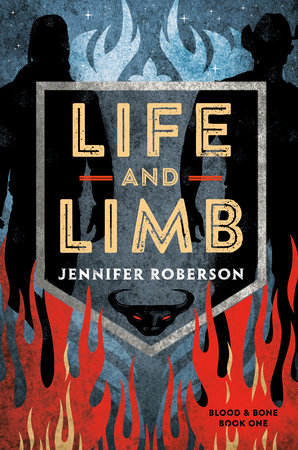
Life and Limb, by Jennifer Roberson (DAW)

A new Jennifer Roberson novel is always a treat, but a new Jennifer Roberson series is a cause for celebration. It should be obvious from my opening sentence that I am a huge fan. I’ve been an avid reader since her debut, Shapechangers (1984, the first “Cheysuli” novel). The way she combines action, ideas, internal struggle, and romance hit just the right notes for me. More importantly, I love how her work has matured and deepened over time. It seems to me that every time she takes a break or begins something new, I see a quantum leap in skill and insight.

Life and Limb, the first volume in her new “Blood and Bone” series, is no exception. She’s begun with a nifty concept: an ex-con biker (Gabriel Harlan) teams up with a clean-cut cowboy (Remi McCue) to fight supernatural nasties and stop the looming apocalypse. And oh yes, they both grew up with a mysterious grandfather, Grandaddy Jubal Horatio Tanner who isn’t human, and neither are they, or not entirely.

In many ways, Life and Limb is the set-up for that conflict, the origin story. Certainly, there’s plenty of action, both internal and external, and a host of adversaries and allies. Grandaddy Jubal has other teams to enlist, so he leaves our heroes in the care of Lily Morrigan (as in “The” Morrigan, the Celtic goddess of war, fate and death). Hell’s vents have opened, pouring forth an army of mythological nasties (ghosts, vampires, black dogs, and the like) which now can get infected by demons. Their skills are complementary: Gabe is a crack shooter with guns, but Remi is expert with throwing knives. Gabe has an unerring sense for the rightness (or wrongness) of a place, while Remi’s gift is reading people. And while they’re sniffing out and doing away with demonic presences, the Morrigan tells them, “hell knows you’re here.”

The narrative voice, from Gabe’s first-person perspective, is richly evocative, and the handling of detail, setting and nuance is top-notch, flavored with my favorite cultural references. Therein lies both the book’s strength and its challenge. The heart of the book’s energy, its center, is the emotional and spiritual journey of these two characters. Neither just accepts at face value their angelic nature or their destiny. Much of the story revolves around challenging what they have been told, grappling with how their lives will never the same, figuring out what each means to the other, and along the way making near-fatal mistakes, either from inflated self-confidence or ignorance. They learn by slow steps, often circling around to the same questions before moving on. This is how we humans deal with events and information that changes our entire understanding of the cosmos and our role in it. We question, we negotiate, we accept, then we question some more. Sometimes we have to ask the same questions over and over in different ways until the answers make sense. All the while, these characters get to know one another, overcoming skepticism and distrust. Much of the pleasure of reading a character-rich novel is in falling in love with those characters.


Bottom line: I adored this awesome urban fantasy and can’t wait for the next volume.

Wednesday, November 6, 2019

Today's Moment of Art


The Flowering Desert, John (Jack) Frost (1890-1937)

Friday, November 1, 2019

Short Book Reviews: Scathing Industrial-Political Science Fiction

The Warehouse, by Rob Hart (Crown)

This dystopian thriller with shades of Kafka and Frank Norris’s The Octopus centers on a bloated industrial empire in which merchandise of all kinds is stored, picked, packaged, and delivered via drones. The vast complex, set in a desert 100 miles from the nearest town, is not only the workplace for thousands, but its living quarters, medical, food, and recreational facilities. It’s all presided over by an avuncular “old white dude” who prides himself on having passed legislation to outlaw unions, do away with worker safety, and so forth, all under the guise of providing environmentally clean delivery of goods and great jobs for anyone willing to work hard. The true “MotherCloud” warehouse complex is anything but utopian. Work, especially for the “pickers,” is unrelentingly brutal, and security turns a blind eye to sexual harassment and other crimes for the sake of good reporting statistics. The enclosed environment, although air conditioned, is monotonous and humdrum, with few choices beyond soporific entertainment, alcohol, and illegal drugs.

Into this world come two applicants. John is an ex-prison guard whose dream of independent entrepreneurship came to a screeching halt with “The Cloud” stole his invention. He hopes to work anywhere but security, but that’s his assignment. Zinnia presents as a bright young teacher, taking time off to earn extra cash, but she is actually a corporate spy, hired to find out why the MotherCloud uses so much less energy than it actually requires. The mind-numbing work changes each of them.

Scathing condemnation of computerized factory life and its dehumanizing brutality, along with the naïve blindness of the privileged few, makes this book a stand-out for thoughtful political science fiction. If you aren’t outraged, you’re not paying attention.