I was – note the past tense – going to write a post about
re-entry after Covid-19 vaccination and how awesome it was to give my younger
daughter a hug after over a year, but then I saw this
story from Science magazine and
could not resist.
Did you ever wish you could see a living dinosaur? I sure
did! (I still do…but from a safe
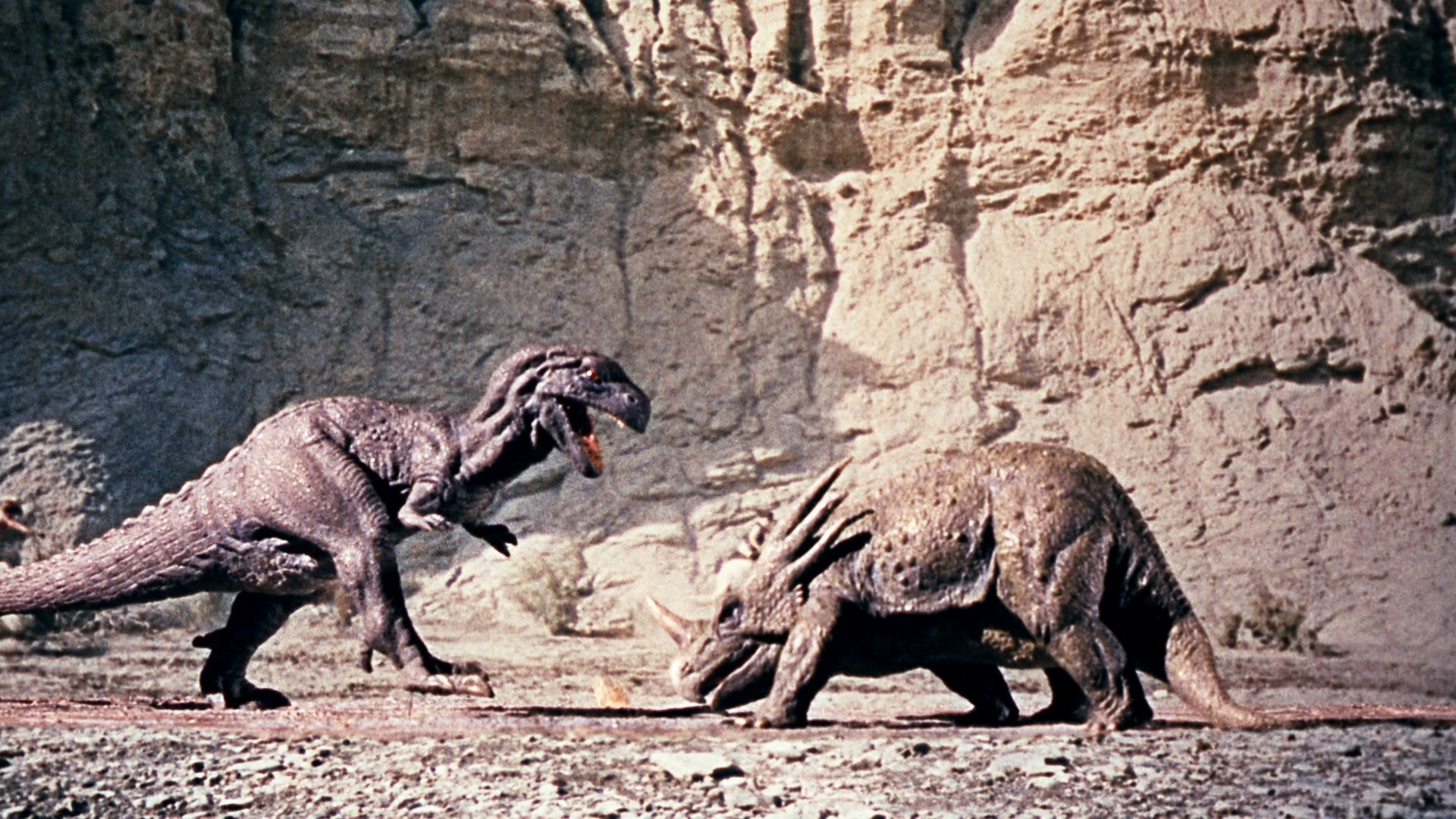
distance.) As a child I loved movies with
stop-action animation of dinosaurs, like the original
King Kong or the Ray Harryhausen movie,
The Valley of Gwangi. In high school I wrote a short novel about
two teenagers and their horses who discover a hidden valley where dinosaurs
still roam.
Jurassic Park and its
sequels blew me away, the movies even more so than the novels. The novels were
longer on explanation, the movies far more powerful in vividness. The moment
when Alan Grant, upon learning that Professor Hammond has created a
T. rex and almost faints, that’s how
I would have felt. Great acting and directing aside, these books
and films spoke to a universal or near-universal human longing to see amazing
charismatic animals from the distant past.
The earlier stories, at least the ones I read and watched,
made no effort at a scientific basis for the present-day existence of prehistoric
animals. It was all “Land That Time Forgot” hand-waving. Crichton took a
different tack: dinosaurs did not persist in some undiscovered corner of or
beneath the Earth: humans re-created them using DNA preserved in amber. We’ve
been able to recover DNA from Pleistocene mammals, but never anything as old as
65 million years. Many scientists doubt that DNA could survive that long, no
matter how preserved. When an animal dies, its DNA begins to decay. A 2012 study on moa bones showed that genetic material
deteriorates at such a rate that it halves itself every 521 years. This speed
would mean paleontologists can only hope to recover recognizable DNA sequences the
past 6.8 million years. In 2020, Chinese Academy of Sciences paleontologist
Alida Bailleul and her colleagues proposed they
had found a chemical signature suggestive of DNA in a 70 million year old
baby hadrosaur fossil. If confirmed, this material would be so degraded into
components, not sequences. It’s also possible the chemical signature was that
of bacteria, not the dinosaur itself.

The Siberian permafrost that has yielded mammoth DNA is about
2.6 million years old, but freezing turns out to be a pretty good preservative
of DNA.
Scientists
have now been able to sequence DNA from extinct mammoths 1.2 million years ago.
That’s a world record. The previous record, in 2013, was
from a 750,000-year-old horse. The
new study includes DNA from three species of mammoth from three time periods (1.2
million, 1 million, and 700,000 years ago) and there are all kinds of reasons
to be excited about it, not just the age but the evolutionary relationships and
a previously unknown type.
Which brings us to the question we’re all asking: Once we’ve
sequenced this DNA, whether from mammoths, saber-toothed cats, ground sloths,
or whatever – what do we do with it?
What we can do now is better understand
the evolution and relationships of these amazing animals. What popular media
want, however, is to use the material to create living extinct species. The
process of de-extinction can proceed
either by cloning – taking material from a recently extinct species and
replicating it – or by using ancient, fragmentary DNA. We’ve got a long way to
go with either technique. Many extinct species lack contemporary surrogates to
carry the artificially created embryos to term. For others, suitable habitat no
longer exists (really? Where would you turn a giant ground sloth loose? A
saber-toothed cat? Or would these animals exist only in the unnatural
environment of zoos?) Back in 2009, Spanish
scientists cloned a newly extinct Pyrenean ibex, although the clone died
within a few hours of birth.

There are, however, a few good candidates for which possibly
viable DNA sources exist. Species like the passenger pigeon and Carolina
parakeet might fare well, given the human responsibility for their
disappearance, although they might turn out to be temporally invasive species.