Monday, January 26, 2026

Reprint: The Joy of Mindful Reading


Deep reading can boost your critical thinking and help you resist misinformation – here’s how to build the skill

Just slowing down gives you time to question and reflect. Morsa Images/DigitalVision via Getty Images
JT Torres, Washington and Lee University and Jeff Saerys-Foy, Quinnipiac University

The average American checks their phone over 140 times a day, clocking an average of 4.5 hours of daily use, with 57% of people admitting they’re “addicted” to their phone. Tech companies, influencers and other content creators compete for all that attention, which has incentivized the rise of misinformation.

Considering this challenging information landscape, strong critical reading skills are as relevant and necessary as they’ve ever been.

Unfortunately, literacy continues to be a serious concern. Reading comprehension scores have continued to decline. The majority of Gen Z parents are not reading aloud to their young children because they view it as a chore. Many college students cannot make it through an entire book.

With their endless scrolling and easy reposting and sharing of content, social media platforms are designed to encourage passive engagement that people use to relieve boredom and escape stress.

As a cognitive scientist and a literacy expert, we research the ways people process information through reading. Based on our work, we believe that deep reading can be an effective way to counter misinformation as well as reduce stress and loneliness. It can be tough to go deeper than a speedy skim, but there are strategies you can use to strengthen important reading skills.

woman sits on end of bed holding head in hand while looking at phone
Counterintuitively, social media can make you feel more bored and lonely. Dmitrii Marchenko/Moment via Getty Images

Deep reading versus doomscrolling

People use smartphones and social media for a variety of reasons, such as to relieve boredom, seek attention, make connections and share news. The infinite amount of information available at your fingertips can lead to information overload, interfering with how you pay attention and make decisions. Research from cognitive science helps to explain how scrolling trains your brain to think passively.

To keep people engaged, social media algorithms feed people content similar to what they’ve already engaged with, reinforcing users’ beliefs with similar posts. Repeated exposure to information increases its believability, especially if different sources repeat the information, an effect known as illusory truth.

Deep reading, on the other hand, refers to the intentional process of engaging with information in critical, analytical and empathetic ways. It involves making inferences, drawing connections, engaging with different perspectives and questioning possible interpretations.

Deep reading does require effort. It can trigger negative feelings like irritation or confusion, and it can very often feel unpleasant. The important question, then: Why would anyone choose the hard work of deep reading when they can just scroll and skim?

Friday, January 23, 2026

Short Book Reviews: A Queer Lovecraftian School Mystery


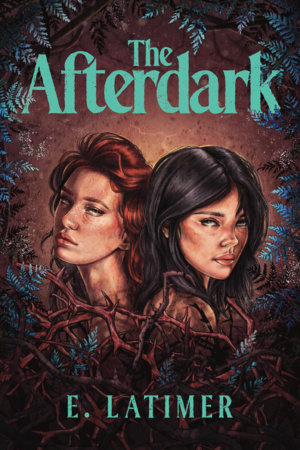
The Afterdark
, by E. Latimer (Penguin)

After her twin sister drowns under questionable circumstances, Evie questions whether the darkness she has always known lurks inside her was responsible. In the blink of an eye, she gets shipped off to an elite boarding school where her father is the principal. Northcroft, located on a remote island and surrounded by dense, old-growth forest. Spooky things happen, beginning with a nightly bell and shutters slamming down, to her father refusing to see her, to a masked cult and mysterious warnings. To make matters worse, Evie falls for glamorous film star Holland Morgan, not knowing that Holland was her dead sister’s old flame. Every day, it seems, Evie discovers another layer of creepiness. If the school and the members of the clandestine mask-wearing “honor” society weren’t bad enough, the woods themselves are a thousand times worse. Something is out there, something ancient and utterly inhuman, something that Evie is increasingly unable to resist.

The Afterdark hits so many story tropes: it’s a school story with a spooky cult, a lesbian romance, a tale of a teen struggling to break free from a highly dysfunctional family, a Lovecraftian dark horror story, and a murder mystery, all tied up with one cliffhanger plot twist after another. The story grabbed me right away and kept me turning pages, and although I’m not a typical horror reader, for me the dark fantasy elements enhanced and intensified the story in appropriate and emotionally manageable ways. So don’t pass up this marvelous book because of the genre.


Monday, January 5, 2026

Another rave review of ARILINN

Just spotted this on Goodreads:

Darkover is my favourite fictional world. It has held me captive through many volumes and through many years. I find it is a place I yearn for sometimes, and I will gladly pick up a favourite book to reread. Something that seldom happens with other books.

Arilinn snared me in from beginning to end. Fast paced and action filled with characters I truly came to care for. The now, to me, familiar world and culture of Darkover marvellously supports the story of hardship and growth of Leora Hastur.

I could not put the book down, and read well into the wee hours of the morning. An absolute must read if you love the Darkover world, and a good introduction to other world travellers.

-- B