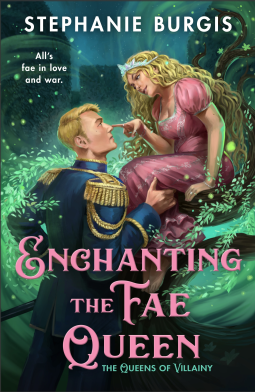
Enchanting the Fae Queen, by Stephanie Burgis
(Tor)
Enchanting the Fae Queen is the second installment in
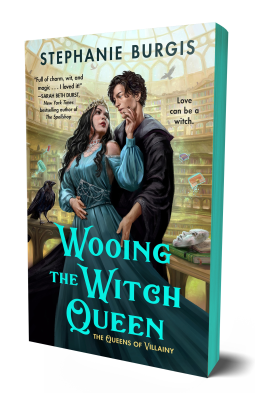
Stephanie Burgis’s “Queens of Villainy” series. We met all three in the first
volume, Wooing the Witch Queen. (Read my review here.) Now Lorelei, the temptress fae Queen of
Balravia who showers glitter and rainbow-colored sparkles everywhere she goes
without the slightest regard for good taste, decorum, or royal dignity, takes
center stage. Her love interest is the Evil Empire’s most famous (and virtuous)
general, Gerard de Moireul. Because of escalating tensions between the
aforementioned Evil Empire and a consortium of smaller kingdoms ruled by the
Queens of Villainy, Lorelei decides to remove Gerard from the political stage.
The two have various adventures, including as partners in a Fae Tournament,
grow to understand one another, and fall in love.
In true “enemies to lovers” style, Lorelei and Gerard could
not be more different at the beginning of the story. She’s an unrelenting, promiscuous,
no-holds-barred flirt, whereas he is highly disciplined to the point of
forsaking emotion and physical pleasure for razor-sharp analytical intellect.
This is one of the many qualities that make him a formidable general. Lorelei’s
powerful magic and her unpredictability likewise make her a daunting opponent.
As the story progresses, we see that the two are not nearly as different as
they seemed. Both are still grappling with unhealed childhood rejection, and
both have difficulty trusting others. But where Lorelei’s loyalty to her fellow
Queens of Villainy is founded in respect and common purpose, Gerard harbors an
unsuspecting, naïve allegiance to his Emperor.
One of the book’s strengths is the gradual revelation of the
characters to the reader, to each other, and to themselves. The tournament is
full of inventive detail and suspense, providing ample opportunity for Lorelei
and Gerard to demonstrate the depths beneath the masks they show the world.
My concern arises from the initial scenes when Lorelei holds
Gerard prisoner. Since I didn’t like Lorelei to begin with (from her appearance
in Wooing the Witch King), it was uphill going to stay with her as a
sympathetic character. She thinks she’s using playful seduction and bedroom
banter as a weapon, and he’s doing his best to ignore the highly suggestive way
he’s tied up and how his body is acting. In the current awareness of the
devastating effects of sexual coercion and power inequality, these
scenes held implications of rape, psychological if not bodily. Consent is
fundamental for men as well as women, and a visceral response does not equal
willingness, desire (or love). Readers who are survivors of sexual abuse might
find this material disturbing and miss out on how the relationship develops.
Trigger warning.