Monday, June 29, 2015

Guest Blog: Steven Harper on Greek Mythology and Sexual Abuse

Several years ago, I realized I wasn't dealing with my son's autism diagnosis very well. Too much rage, too much helplessness. Just too much. So I started seeing a counselor, and I saw her for several years.

During that time, I decided I wanted to write about Ganymede, the teenager who was kidnapped by Zeus to serve as his cupbearer on Olympus. Zeus sees Ganymede on the earth below, decides he's the coolest kid ever, changes into an eagle, and snatches Ganymede up to Olympus. Zeus then persuades Hebe to make Ganymede immortal, then dumps Hebe as his cupbearer and gives that exalted position to Ganymede.

Only two and a half stories about Ganymede have survived--the story of his kidnapping, a mention in the Iliad about Zeus giving Ganymede's father a set of horses in payment for the loss of his son (that's the half), and a story in which Ganymede loses a game of dice against Eros, and gets mad at him. That's it.

When I got older and read the actual material instead of the summaries and children's versions, I learned that Ganymede was more than Zeus's cupbearer. Zeus also took Ganymede to his bed. This was part of Greek culture--a powerful man would often serve as a mentor/teacher/second father/love interest to a teenaged male. Usually the parents went along with this: "Good news, son! Your uncle has offered to be your mentor!" So Ganymede was a mythological parallel to this mortal custom.

The stories, however, never went into what it was like. What was it LIKE for Ganymede to be
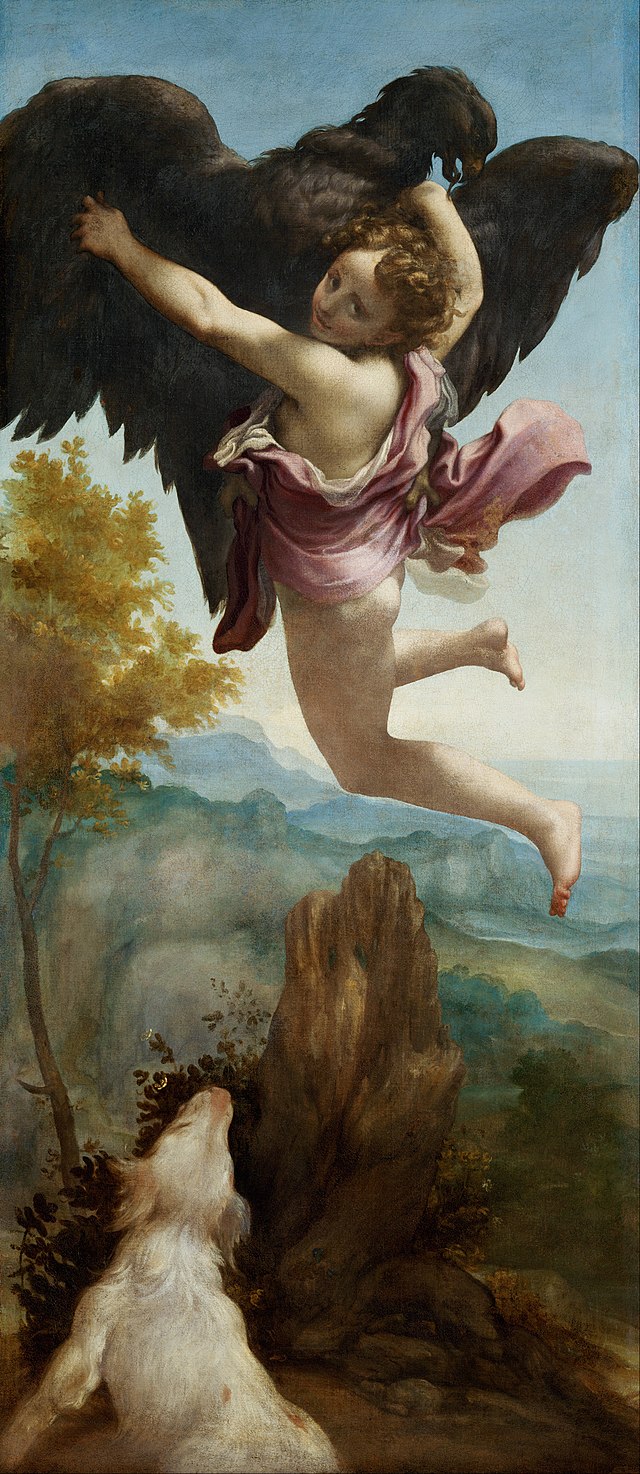
snatched away from his family and friends and suddenly make into the cupbearer and lover of the king of gods? You have the ultimate mentor, but it wasn't anything you'd asked for. Your culture
teaches you that being taken to this guy's bed is a good thing, or at least something you can put up with because all of us men went through it, but how do you =really= handle it?

I ended up using my therapist as a resource here. She had counseled many survivors of sexual assault and was an expert. I told her about the book and said my theory was that a teenager in Ganymede's position would have a lot of mixed feelings.

Sexual assault victims often feel shame because our society has (incorrectly) decreed that victims of sexual assault have done something wrong, that they're bad people who have become further soiled. But Ganymede's culture says that being chosen as a mentee is an honor and a duty, and if you're chosen by the king of gods himself, you must be an amazing person.

And yet . . .

Ganymede at a stroke loses his family, his friends, and his home. He changes from a mortal into an immortal. He is thrust into a group of powerful people who see him as a pawn in a greater game that Ganymede himself doesn't quite understand. He's at the beck and call of Zeus, who does some pretty dreadful things. And he'll be a teenager for the rest of his immortal life.

Some major mixed feelings there.
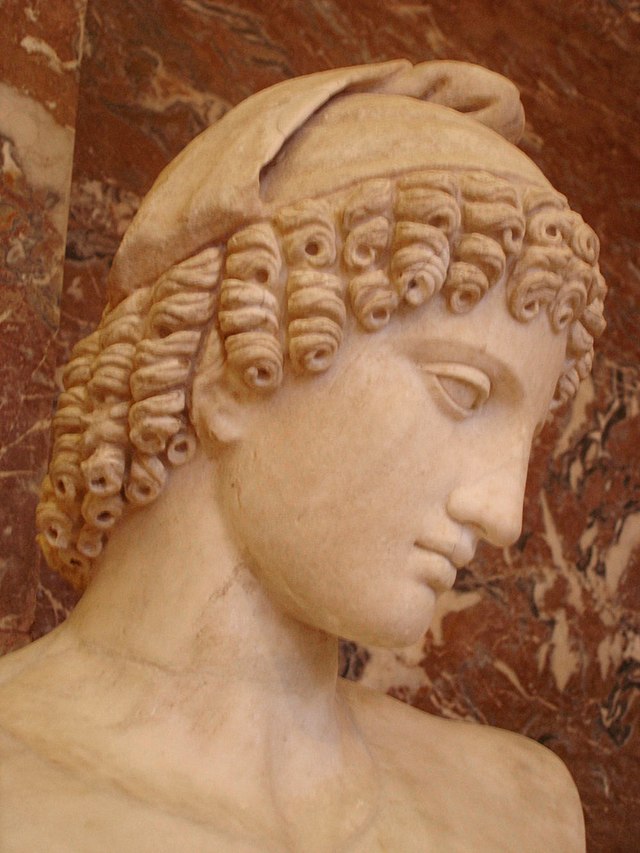
My counselor agreed. "This would be way too complex for it to be one-sided," she said (or my notes
say she said).  "He would love it one moment and hate it the next.  There would likely be periods of great sadness and great happiness until he adjusted. You can love and hate someone--people do that all the time, especially when it comes to sex, or to someone you're =supposed= to love but aren't sure you do, or with someone you think you love but don't understand why. Don't be afraid to show that between Ganymede and Zeus."

I set out to explore this in DANNY.  Or at least, partly. Half the book is set in ancient Greece and half the book is set in modern America. Danny tells Ganymede's story while he tells his own, and the two overlap in strange ways. It's the most complicated, layered novel I've ever written, with plenty of shout-outs to lovers of Greek mythology.

Available at Book View Cafe: http://bookviewcafe.com/bookstore/book/danny/
Steven's Blog: http://spiziks.livejournal.com
Steven's web page: http://www.stevenpiziks.com

Saturday, June 27, 2015

Cataract Journey 2: Choices

With my diagnosis of cataracts (in both eyes), I began to consider my alternatives. The simplest, which is to do nothing and rely on eyeglasses for increasingly inadequate visual correction, was not very appealing, especially since lens replacement surgery was now “medically necessary.” Medicare, like most insurance plans, covers only the bare minimum: a single focus (“monofocal”) artificial replacement lens, usually for distance, with the natural lens being removed and the new one inserted by scalpel. Monofocal lenses give most people excellent distance vision, although they do not correct for astigmatism, and usually require the use of glasses for reading and intermediate distance work.

These are not the only lenses available. Lenses can be toric (astigmatism correcting), or can correct for more than one distance. Multifocal lenses can provide a full range of vision (or so the literature says), including presbyopia, the difficult in reading that comes with age, but they can also result in halos around street lights and other visual difficulties at night. They also don’t come in all powers of correction. Accommodative lenses can correct for distance and intermediate vision, which means that glasses may be needed for reading; they flex like a normal, healthy lens. Even more technological innovations are in the works, especially as baby boomers age and demand better solutions.

Thursday, June 25, 2015

Revision Round Table 3: Kari Sperring, Marie Brennan

So you've finished your novel -- but have you? That first draft needs work, but where to begin? In
this round table series, I asked professional authors how the approach revision -- not polishing, but truly re-visioning a story.


Kari Sperring:
Ah, revisions.

I’m revising a book right now, and, as a result, my instinctive response to any question about revisions is ‘revisions are the worst. Apart from writing the first draft. That’s the worst, too.’ When it comes to writing, I definitely tend to the Eeyore. Whatever I’m doing right now is the hardest thing, the most uncontrolled, unfocused, worrisome thing.

I’m a very ill-disciplined writer. For preference, I write without an outline – and if I do outline, it tends to consist of a handful of possible scenes plus notes on theme and feel.  My desk is littered with scraps of paper on which I have scrawled ideas for future scenes and plot-turns, many of them only semi-legible and usually out of order. Whether or not I get to them is very random: it depends on what turn the book takes and on what I remember. None of which helps when it comes to revising. 

With both Living With Ghosts  and the book I’m currently working on, I wrote a complete first draft and then rewrote the book from scratch, ending up with a different plot, new characters, and a different outcome. Quenfrida didn’t enter LWG until draft 2. Nor did Joyain. The first draft of the current project seemed to consist mainly of walks and conversations. This new one is full of riots and acts of sabotage, and one of the protagonists is currently disembodied. It’s not the book it was, and I hope it’s better for it, but right now – as always seems to be the case with me and revisions – it feels vast and sprawling and random, a morass of scenes and ideas galloping off in nine different directions, and me in the middle trying desperately to get the whole thing back under control.

Thursday, June 18, 2015

Revision Round Table 2: Judith Tarr, Elizabeth Moon

So you've finished your novel -- but have you? That first draft needs work, but where to begin? In
this round table series, I asked professional authors how the approach revision -- not polishing, but truly re-visioning a story.

Judith Tarr:

How do you approach revising a book?
I prefer to revise than to write first draft. Revision is my reward for slogging through the draft. Since I do most of my "prewriting" either in notes or in my head, and generally have my plot either outlined or again, clear in my head, my drafts tend to be very spare but pretty much complete. My editor will usually tell me to expand; I've never had to cut, I've always had to add. Sometimes a lot.

Of cuss the editorial letter can make me say bad words, because in my dreams I submit a perfect draft that needs no more than a light waft of proofreading before it bursts out upon the world. In reality, if I'm lucky, I don't have to add or change much. If I'm not...well, there was that time I had to rewrite the whole thing with a different but much more appropriate protagonist. Or the time I had to add 50,000 words. Or...

What makes revision different from polishing or rewriting, or is there a difference?
Revision for me is what I do after I've received outside input. Usually that's the editorial letter. I don't use beta readers in general; have pulled in a reader once in a while for expert advice or clear-eyed input, but mostly it's just me and my ms. until it meets its editor.

Do you work things out in your head, work only from the manuscript (and if so, on the computer or a printed hard copy), some combination of both?
I work on the computer with my editorial letter in hand, with however many passes the ms. needs. Picky stuff first (wording, clarifications, continuity notes, etc.). While I'm going through to get the small stuff cleared up, the back of my mind is mulling over the big stuff: expansion of character roles, plot elements, worldbuilding notes, and so on. Those get done in waves as I can handle them.

I try to find the spot where a change or expansion has the maximum effect. A change in a word or a line at the exact right place can resonate through the whole ms. That's the dream change.

Or, doing the minimum required to make the book work according to my vision and the editor's input. It's the lazy writer's technique, and if I do it right, it makes a huge difference to the quality of the work.

Tuesday, June 16, 2015

Cataract Journey Side Note: Lunar Haloes

Over on APOD, I see this beautiful image:


And its description: Rings like this will sometimes appear when the Moon is seen through thin clouds. The effect is created by the quantum mechanical diffraction of light around individual, similarly-sized water droplets in an intervening but mostly-transparent cloud. Since light of different colors has different wavelengths, each color diffracts differently. Lunar Coronae are one of the few quantum mechanical color effects that can be easily seen with the unaided eye.


And I am so relieved that this is a real phenomenon, and not further proof that I need cataract surgery. I don't see multiple colored rings, but a soft halo the same color as the object (white, in the case of the Moon).