Friday, June 7, 2019

Short Book Reviews: A Heroine of the Martian Revolution


Arabella The Traitor of Mars, by David D. Levine (Tor)

First I must offer an explanation of why it took me so long to review this book, which entails a bit of background. I was introduced to the work of David D. Levine through his science fiction short stories, which by the way are awesome and utterly award-worthy. I loved the concept of the first “Arabella” book, Arabella of Mars. Intrepid heroine/coming of age! Steampunk airships travel between planets! Adventures on Mars! What more could I want? Oh yes, a bit of stowawaying and a touch of romance. I loved that first book.

Alas, when I picked up Arabella the Traitor of Mars, I did not realize there was a middle book (Arabella and the Battle of Venus). I started reading Traitor but quickly (as on the first page) realized that much, too much had happened. Who are these other people and why does Arabella have a prosthetic foot? I set it aside, thinking to pick up the middle book at some vaguely future time and then return. In the way of things, that future time kept stretching further and further away.

Then, as fate would have it, I heard Levine read the opening chapter at a convention, FogCon to be exact. First of all, Levine is an amazing reader, expressive and elegant, perfectly conveying the mildly Victorian steampunk flavor of the narrative. Two sentences in, I was captivated. Ignorance of the middle book evaporated into insignificance. So I returned to Traitor, now perfectly willing to let the story carry me along in trust that all would be made clear from context. And it was.

The Victorian sensibilities of steampunk play out in a parallel to English imperialism, with striking echoes of the occupation of India and the Opium Wars in China. Arabella remains true to her Martian roots, loyal to her principles and her alien friends, and courageous enough to leave her dearly loved husband to warn Mars of the impending assault. The chase sequence is one of the best, most dramatically perfect, I’ve ever read, worthy of the best of Patrick O’Brien or C.S. Forester. And the rest of the book is just as good. The series is highly recommended.

The usual disclaimer: I received a review copy of this book, but no one bribed me to say anything in particular about it. Although chocolates and fine imported tea are always welcome.


Monday, June 3, 2019

May Was Convention Month for Deborah

I don’t attend many conventions, and most of the ones I do appear at are local. The last
Mass autographing, Nebula weekend
couple of years have presented me with more opportunities. Some have involved a bit of driving and staying either with a friend or in the convention hotel. This year began with one such, FogCon in March. I’d enjoyed last year’s so much, I found a friend to share the hotel room with.

Usually it takes me a while to settle back into my usual schedule after a convention. For one thing, I normally move more slowly through my days, and conversations with family and close friends, while often rich in ideas, are more slowly paced, with lots of pauses to listen deeply and reflect on what has just been said. So I need to “revv up” the pace for conventions and then “spin down” afterward.

This year was not going to cooperate with that principle. I got a good long rest after FogCon, but then back to back conventions in May.

The first was the SFWA Nebula Awards Weekend, which is held in different parts of the country. I try to attend whenever it’s on my coast. Unlike other conventions, where I put on my “pro writer speaking to fans” hat, the Nebs are for professional writers and editors. Not a costume in sight, unless you count the elegant garb worn at the awards banquet itself. The panels are uniformly excellent, plus it’s a chance to see friends and colleagues from far away. This year, the Nebs involved a day-long drive. Originally I wasn’t going to attend, but inspiration struck — in the form of the same friend I shared the room with at FogCon, Juliette Wade. I already knew we got along really well, so it seemed reasonable to drive down together.

Juliette had been scheduled to moderate a panel on “The Gentle Art of Cursing,” but the time was late on the last day, which would have meant either staying an extra night (and she has school aged children) or driving all night. Fortunately, the programming folks were able to not only reschedule it (to the night we arrived) but add me. So, a few notes on cursing in world-building:

“Cursing” can mean use of an intensifier (“not f--ing likely”), an expression of dismay (“#$%^&*(!!!”), an insult (“you m--f--er!”), or a ritual to invoke harm upon another. In English, we tend to use the same words for the first three, and frown upon the fourth as dark magic. Obscenities typically involve reference to bodily functions or religion. Certain words sound like “cuss words.” We tried out some invented words and found that some worked better than others. I sang “frell” as if it were operatic Italian.

I made it to the last half of the panel on Managing a Creative Career with a Mental Illness, and wish I’d gotten there sooner. Here are my notes, wonderfully insightful concepts we can all use, whether we have a diagnosis or not:

  • “I have brain measles.”
  • “I am having symptoms.”
  • Practicing saying, “Thank you, I appreciate that,” when receiving praise. Give more compliments to others.
  • Get support from others who’ve been there. Strive for good brain health. Get enough rest.
  • Allow yourself to have down/off/rest days/times.
  • Remember that you have been through an episode like this before. You have written, and you will write again. This too shall pass.
  • Crazy VR (virtual reality) doesn’t resolve just because you recognize it for what it is. You still have to live with it.
  • If you’re having a down day, let people know, especially if it involves deadlines and other commitments.

Another of the “money shot” quotes came from David D. Levine, when describing how to make an effective pitch: don’t impose a cognitive burden on your listener; make it easy to grasp the concept.

Where’d You Get That Idea? Story Inspirations from Lace and Blade 4 Authors


Reposting a favorite round-table blog.

Carol Berg: One of my aims when I create new heroes or heroines is to make them real people. I want readers to believe they had a life before walking onto the canvas of my story and will (if the story permits!) have a life when they walk off again. But of course, after the traumas/losses/victories of the story, the nature of that life is often irrevocably changed. 
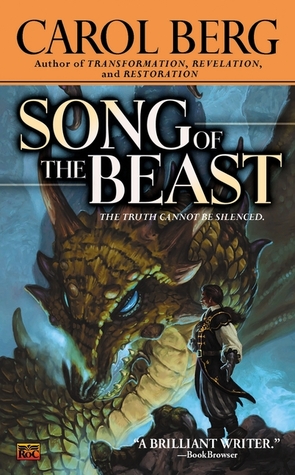
Ever since my novel Song of the Beast was published, I’ve had readers asking what became of Aidan McAllister--a scarred, broken singer of visions, who saved his world from the scourge of dragon warfare. At the end of the story, he abandons his friends and his hope of a normal life to lead the beasts into the wild. I decided that it would be fun to satisfy the readers’ curiosity and mine, and so I wrote “The Heart’s Coda.”


Marie Brennan: Some years ago I bought a pair of black-and-red beaded earrings from the jeweler Elise Matthesen, who habitually gives titles to all the pieces she makes. The earrings are called "At the Sign of the Crow and Quill," and like many authors, I pledged to Elise that I would try to write something by that title someday. The mood that evoked in my mind was very much a Lace and Blade mood, so when I received an invitation to submit to the anthology, that turned out to be the spark I needed to transform the phrase into characters and plot.

Heather Rose Jones:  “Gifts Tell Truth” is set in the same world as my Alpennia series: a 
mildly alternate Ruritanian early 19th century with magic. One of the things I love to do when exploring characters it to make offhand references to events in their past. Events where I may not know all the details of what happened, just that it shaped them in some way. One thing that is very clear about Jeanne, Vicomtesse de Cherdillac, one of the protagonists of The Mystic Marriage and a continuing character throughout the series, is that she is a “Woman With A Past.” The more I write about her, the more fascinated I am by how she came to be the person she is in the novels.

The events in “Gifts Tell Truth” haven’t been specifically referenced in the books, other than a passing comment about how the stories of her youth aren’t appropriate for innocent ears. But I knew in a general way that during the French occupation of Alpennia, just after Jeanne’s unexpected marriage to a much older French aristocratic émigré, she led a wild and scandalous life, spurred on by a tragic event in her coming-out season (which will be told in a later story). The current story grew out of wanting to explore the origins of some of her later attitudes and reflexes, with the added bonus of showing the start of an odd but enduring friendship that features in the novels.

Friday, May 31, 2019

Short Book Reviews: Greek Gods Teach the Classics


By Jove, by Marissa Doyle (Entangled Pub. and Book View Café)

I picked up this romance set in a university Classics (Greek, Latin) department, hoping for a light-hearted love story, probably involving one or more Greek gods in disguise, and found much more. At first, it read like standard fare, romantic, occasionally humorous with a game of figuring out which professor was which god (and wondering why our heroine, Theodora Fairchild, who is supposedly well versed in the Classics, didn’t have a clue). But the story took a turn into satisfying depths as Theo and Grant Proctor begin courting, and she steps into the role of teacher – not just about romance but about the rich panoply of emotions that make up being human. He grows, but so does she, in the very process of verbalizing and practicing the dance of relationships. I won’t tell you which mythological character he is, since half the fun was figuring it out. Suffice it to say that he is very far from the all-powerful, perfect lover one might expect.

All is not sweetness and light at Waldrop University, for the charismatic, autocratic chair of the Classics Languages department, Julian d’Amboise, has his own agenda, and his own aeons-long grudge against Grant. When he sets his manipulative, coercive sights on Theo, it’s as much to cause Grant anguish as to win Theo herself.

I loved how Theo battles her way out of Julian’s clutches, rescuing not only herself but Grant. She makes mistakes, but she owns up to them and takes responsibility for making things right. The emphasis on the importance of mutual, respectful consent added to the emotional depth and maturity to the story. Julian uses magical potions to strip Theo of her will, while both Theo and Grant check in with one another. Too often, romance tropes involve force overcoming resistance, and we need better role models. Verdict: A fast, enjoyable read that rises about clichés about damsels in distress.

Wednesday, May 29, 2019