At the end of You Sexy Thing, the crew of the space
yacht found themselves on the run from a vengeful pirate king. Not only that,
but each of them is left grappling with wounds old and recent. The most
poignant of these is Talon, a teenaged were-lion whose twin brother was killed
by the pirate, and who can barely function alone. A captain grieves the loss of
a love, her second-in-command can’t forget his lost daughter, a cloned princess
searches for meaning in her life, and the ship itself tries to figure out
emotions. Their next step involves transit through an intergalactic Gate, or so
they hope. The Gates, created by the mysterious, vanished Forerunners, are
supposed to be eternal, yet rumors abound of them dying. When a xenoarchaeologist
claims to be able to fix the problem, the captain suspects a con. Nevertheless,
the Gate opens as promised, taking them to the most dangerous place known, the
corpse of a gigantic space moth, where they might be able to find the one
weapon that can put an end to the pirate king.
Rambo’s writing is inventive, sympathetic, and full of vivid
imagery. Best of all, her characters invite the reader into their lives and
thoughts, weaving together a diverse crew bound by respect, affection, and
suspicion. This novel, like the one before it, is a joy from one page to the
next.
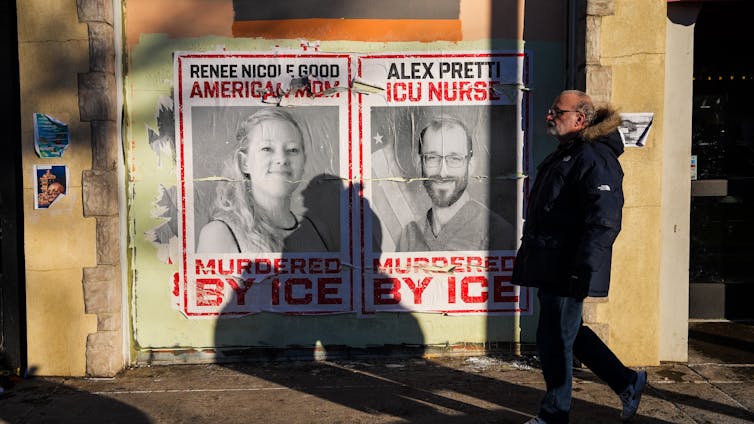
Neither of them was the first person to be shot and killed by immigration enforcement officials over the past year. There have been numerous shootings and some deaths.
In September 2025, Silverio Villegas González was killed in Chicago under circumstances similar to Good’s death. Ruben Ray Martinez was shot multiple times by Immigration and Customs Enforcement agents in Texas in March 2025, but their involvement was not revealed until nearly a year later. Neither Martinez nor Villegas González has become a household name, and their deadly encounters with federal agents have not drawn nearly the same level of media attention as Good’s or Pretti’s.
As a media historian, I’ve been struck by the similarities between the media’s coverage of Minneapolis and its coverage of Selma, Alabama, in 1965, when voting rights protests led to violence that left three people dead, including two white victims.
These two events reveal that the deaths of white activists often draw and sustain far more attention than the deaths of Black or Latino people in similar contexts. But the Selma and Minneapolis events also show that male and female white activist victims aren’t necessarily treated the same way.
Remembering Selma
Video footage of law enforcement beating and gassing marchers on Selma’s Edmund Pettus Bridge remains an iconic visual document of the Civil Rights Movement. John Lewis, who later became a congressman, was an activist at the head of the march on March 7, 1965, and was beaten in the head at the base of the bridge by Alabama state troopers. But he was not a household name in 1965, and media coverage at the time did not identify him.
Reporters also didn’t pay much attention to what had motivated the march: the killing of Black voting rights activist Jimmie Lee Jackson by an Alabama state trooper during a nighttime march a week earlier.
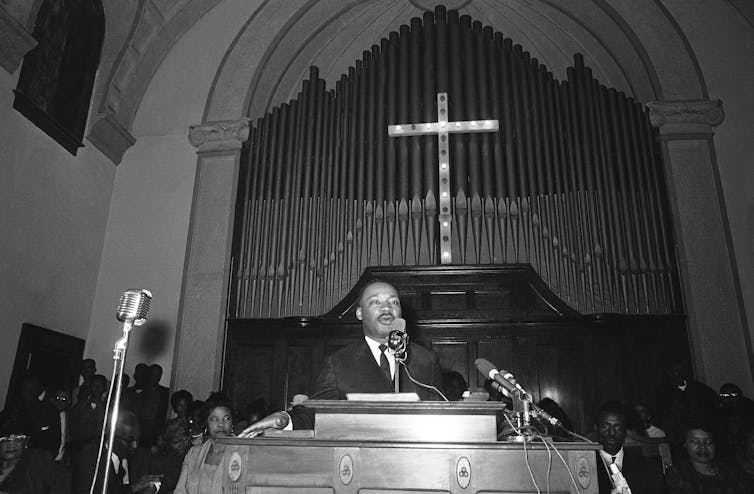
Martin Luther King Jr. delivers a eulogy in Selma, Ala., for James Reeb, a fellow minister who was beaten to death.AP Photo
Still, the prime-time television broadcast of footage from “Bloody Sunday” at the Pettus Bridge shocked Americans, just as footage from Minneapolis has similarly distressed and disturbed many people today.
In 1965, a small number of white Americans from around the country, including numerous members of the clergy, descended on Selma to stand with the brutalized voting rights activists. They included James Reeb, a Unitarian minister from Massachusetts, and Viola Liuzzo, a wife and mother of five from Michigan.
President Lyndon B. Johnson contacted Reeb’s widow. She gave media interviews about her husband. Johnson also extolled Reeb at the beginning of his joint address to Congress calling for robust voting rights legislation, four days after Reeb’s death. Johnson never mentioned Jackson’s death.
Liuzzo was ferrying people back to Selma from Montgomery on March 25 after the conclusion of the final, successful march to the state capital when a carload of Ku Klux Klansmen, one an FBI informant, chased her down and shot her through her car window. Her death received even more coverage than Reeb’s, keeping Selma in the news.